It began with a message that was almost lost as quickly as it appeared.
A young woman named Ksenia, living in a small village in Ukraine, shared a desperate Facebook post. Her words were brief, emotional, and deeply alarming. A neighbor had moved away, she said, leaving two dogs chained behind a locked gate.
They had been there for a month.
No food.
No water.
No one coming back.
But fear took over. After facing pressure from people around her, Ksenia deleted the post. In a matter of moments, the only visible trace of those dogs seemed to disappear.
No address.
No clear contact.
No easy way to find them.
But some stories do not let you look away so easily.
Somewhere, two lives were still waiting.
A Search Driven by What Could Not Be Ignored
The rescue team set out with only fragments to guide them.
For hours, they drove from village to village, asking questions, showing screenshots, following uncertain directions, and holding onto the possibility that they were not already too late. It was the kind of search built on instinct, urgency, and the quiet refusal to give up on lives that had almost vanished from view.
Then, finally, they found it.
A worn-down house standing in unnatural silence.
Before they even reached the gate, something in the air told them what they feared. The smell came first—heavy, rotten, impossible to mistake. It carried the kind of truth no rescuer ever wants confirmed.
They broke the lock and rushed inside.
One of the dogs was already gone.
The other was still alive.
But only just.
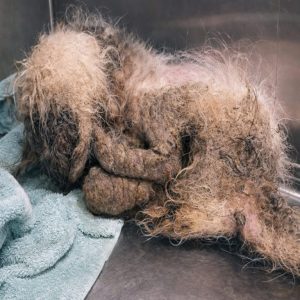
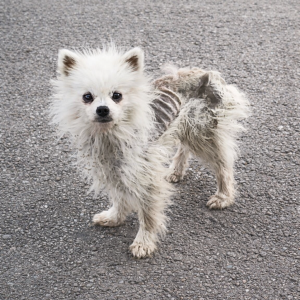
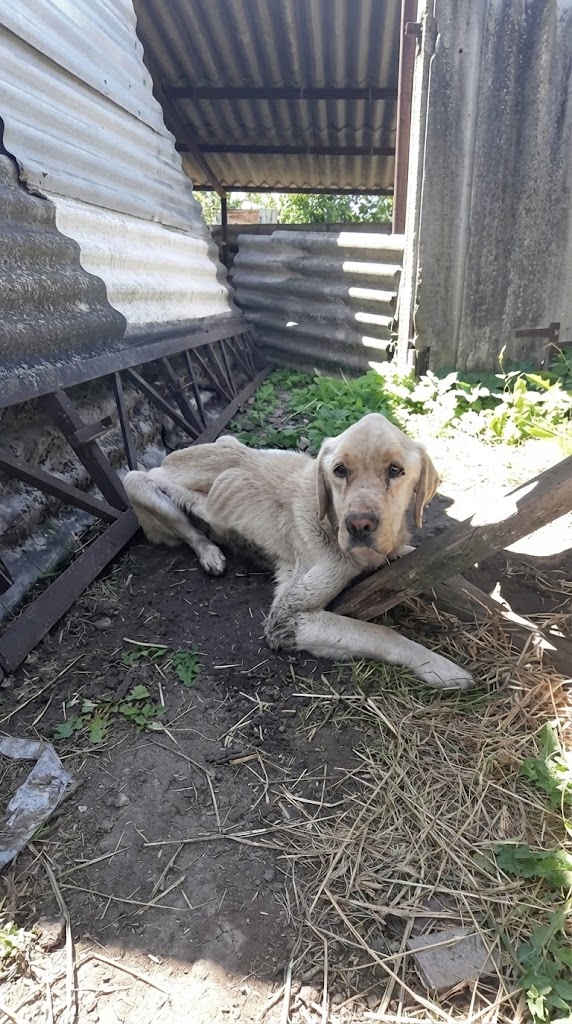
He was a male Labrador—or what remained of one. His body had been reduced to almost nothing. Skin stretched tightly over bone. Every part of him reflected prolonged starvation, isolation, and a body pushed beyond what it should ever have had to endure.
The sight was almost unbearable.
And yet, he was still there.
Still breathing.
Still waiting.
VIDEO: He Waited Behind a Locked Gate Until Almost Nothing Was Left — Then Boss Finally Got His Chance to Live
A Dog Too Broken to Resist
When rescuers approached him, he did not bark.
He did not try to run.
He did not protest.
He did not even seem to have the strength for fear.
He simply looked at them.
His face carried the kind of emptiness that comes from too much suffering and too much waiting. Hunger had hollowed him out. Grief had settled into him. The locked gate he had stared at for so long had become the whole shape of his world.
And now, at last, someone had come through it.
They named him Boss.
As they lifted his fragile body into the car, trembling and barely holding on, they made him a promise in that moment:
this would be the last time he would ever be left in darkness waiting for someone who never returned.
Fighting to Bring Him Back
At the clinic, the seriousness of Boss’s condition became even clearer.
He was in critical danger. His body had been deprived for too long. He needed immediate medical support, including a blood transfusion, and there were real concerns that his organs were beginning to fail under the weight of what he had endured.
Everything about his condition said the same thing:
time mattered.
Those early hours were fragile. No one could know with certainty how much his body could still recover. The damage was severe. The risk was high. But even in that condition, Boss gave everyone something to hold onto.
He began to eat.
Slowly.
Weakly.
Carefully.
But he ate.
And in rescue, sometimes that is enough to change the emotional atmosphere of an entire room. Because eating is not only physical. It is often the first sign that life is still reaching forward.
That was the moment hope began to feel possible again.
From Survival to Something More
Boss surprised everyone.
For a dog who had endured so much, he remained gentle. He was quiet, observant, and calm in a way that made his recovery even more moving to witness. Little by little, day by day, his body began to answer the care surrounding him.
He gained weight.
His coat softened.
His eyes began to change.
Where there had once been only exhaustion, there was now awareness. Then calm. Then something brighter. The dog who had seemed almost ghostlike when he was found slowly began to look present again—truly present, as though he was returning not just to health, but to life itself.
His transformation was not sudden.
It was steady.
And that made it even more powerful.
The Home That Changed the Ending
As Boss’s story spread, people followed his progress from afar.
Among them was a family in Kyiv.
They did not see only the signs of what he had survived. They saw the soul behind them. They saw his gentleness, his resilience, and the quiet dignity he had carried even through the worst of his suffering.
And they chose him.
Boss was officially adopted.

What had once seemed impossible became his reality.
Today, he no longer wakes to chains, hunger, or silence behind a locked gate. He wakes in a home. He is cared for. He is loved. He belongs to people who see him not as a burden, not as property, but as family.
The dog once carried out of that yard in a skeletal, heartbreaking state is now living a life defined by comfort and security.
What His Story Leaves With Us
Boss’s story is about cruelty, yes—but it is not defined by cruelty alone.
It is defined by what happened after someone chose not to ignore a disappearing plea for help. It is defined by the people who kept searching when there was almost nothing to go on. It is defined by those who stepped in, treated him, believed in him, and carried him toward a future he never should have been denied.
He waited too long behind that gate.
But not forever.
And his journey leaves behind a truth that is simple, powerful, and worth holding onto:
No matter how long suffering has lasted, a life can still change when compassion arrives in time.