
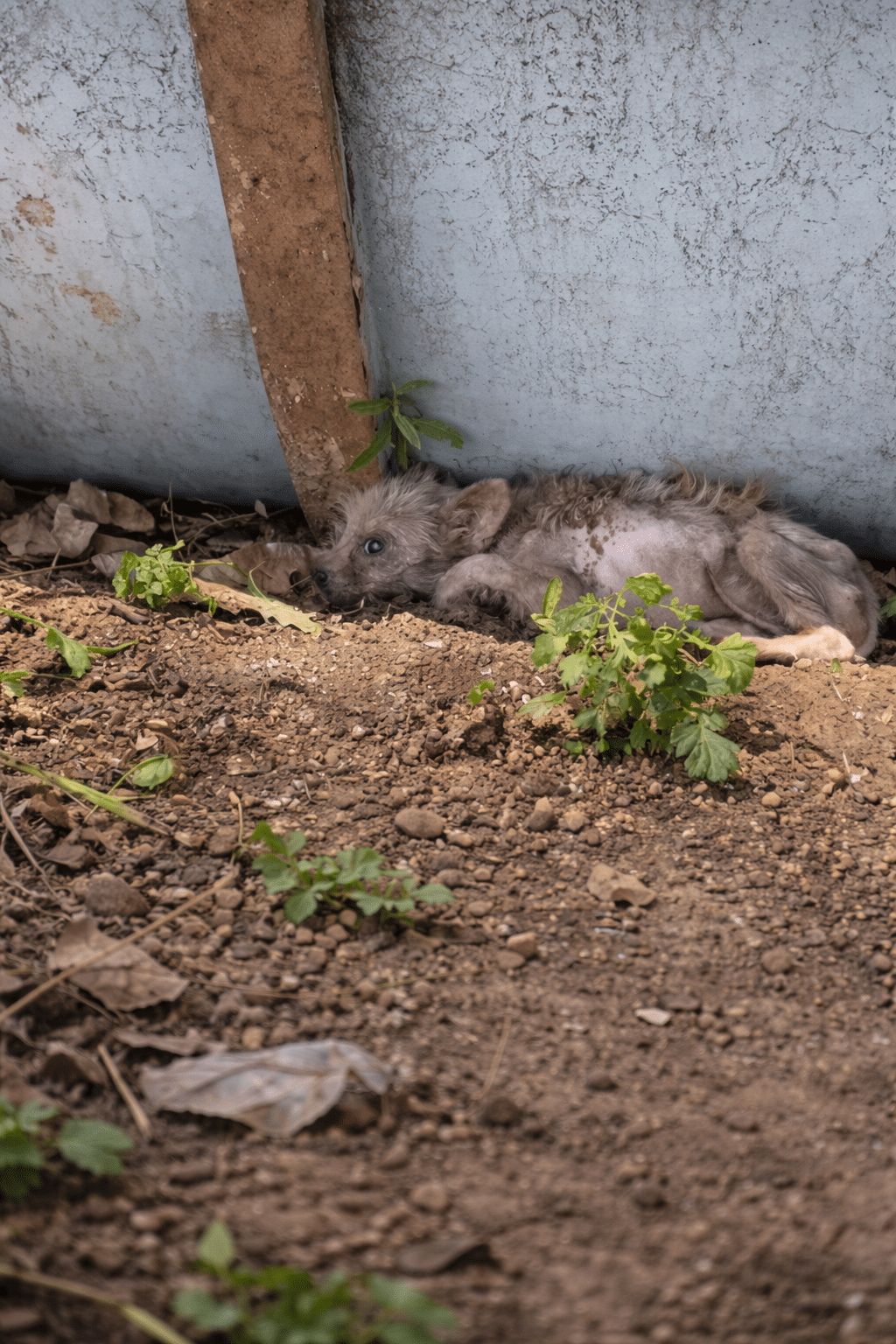
Sunsimi rested on a flattened piece of cardboard, his back legs unable to carry him anywhere.
When he needed to move, he relied on his front legs, pulling his small body across the ground while his hindquarters followed helplessly behind.
It was a difficult way for any dog to live.
Yet something about Sunsimi stood out.
Despite everything his body had endured, he still responded to kindness. He still enjoyed food and affection. And when someone familiar approached, his tail could still express the happiness his legs could not.
In Miryang, a city in South Korea's South Gyeongsang Province, this little dog had been living with circumstances that seemed almost impossible to overcome.
His rescue would not be simple.
There were injuries that had gone untreated, a dangerous infection that threatened his heart, and medical decisions that carried serious risks.
But before any of those challenges could be addressed, Sunsimi needed one essential thing.
Someone willing to believe his life was worth protecting.
A Small Dog Left Behind When His World Changed
Sunsimi had not always been without someone to care for him.
For a time, he lived with an elderly woman who loved him. She was the person responsible for his daily needs and the familiar presence in his life.
Then she became seriously ill.
Her condition required hospitalization, and she never returned home.
For Sunsimi, the loss of his caregiver meant more than the absence of a familiar face. It also meant losing the person who had been looking after him.
Eventually, he was abandoned.
By the time his situation drew attention, his ability to move had been severely compromised.
His hind legs were no longer functioning normally. Rather than standing and walking, he had to pull himself forward using the strength remaining in his front legs.
Even moving a short distance demanded considerable effort.
He was found spending his time on flattened cardboard, a modest surface that offered little protection or comfort.
Around his neck was a heavy metal chain.
Its pressure against his skin added another source of discomfort to a body already struggling with serious physical limitations.
There was no clear indication that Sunsimi could escape these circumstances on his own.
He could not simply walk away.
He could not search freely for a safer place.
And without someone intervening, his chances of receiving the medical attention he needed were uncertain.
The situation was especially difficult because his injuries were not minor problems that could be resolved through rest alone.
Something serious had happened to his body.
The full extent of that damage, however, would only become clear after veterinary examinations.
For the moment, all anyone could see was a small dog who had learned to move through the world without the use of his back legs.
And he was still trying.
The Woman Who Saw More Than His Disability
Yoon Hee-soon first encountered Sunsimi while volunteering to help elderly residents in the local community.
Through that work, she became aware of the little dog's condition.
What she found was deeply concerning.
Sunsimi could not walk normally, and the challenges ahead were obvious even before a veterinarian examined him.
Some people believed there was little reason to continue trying.
His physical limitations seemed too severe. The possibility of meaningful improvement appeared uncertain, and there were concerns about how much suffering he might continue to experience.
But Hee-soon did not believe that his disability alone should determine whether he deserved a chance.
She chose to help him.
That decision became the turning point in Sunsimi's life.
Instead of accepting that nothing could be done, she committed herself to finding out what care might still be possible.
It was not a promise that he would walk again.
It was not a guarantee that treatment would succeed.
It was simply a decision that Sunsimi should not be left without help.
And once he began receiving attention and care, another side of his personality became impossible to ignore.
He was not withdrawn from the people trying to help him.
He welcomed them.
When Hee-soon entered the room, Sunsimi greeted her with an enthusiastic wag of his tail.
His appetite remained strong, and he clearly enjoyed the affection he received.
Those small responses mattered.
They showed that, despite his limitations, he continued to engage with the world around him.
He could not use his hind legs, but he could still respond to a gentle voice.
He could still enjoy being cared for.
He could still show excitement when someone he recognized came near.
His physical condition was serious.
But it was not the whole story of who he was.
VIDEO: Unable to Walk, Sunsimi Dragged Himself Forward — Until One Woman Refused to Give Up on Him
The Hospital Visit That Revealed the True Extent of His Injuries
Giving Sunsimi a chance meant understanding exactly what had happened to his body.
He was taken to a specialized veterinary hospital in Seoul, where examinations revealed injuries far more complicated than his visible inability to walk.
His pelvis had been fractured.
His spine had also sustained severe damage.
These findings helped explain why he could not support himself with his hind legs.
The problems had not received appropriate treatment for months, and the consequences had become increasingly serious.
Without normal movement, the muscles in his back legs had deteriorated significantly.
His hind limbs had become weakened and deformed.
For the veterinary team, this presented a difficult orthopedic challenge.
Repairing the damage, if feasible, would require careful planning and specialized treatment.
But the examinations uncovered another problem that changed the priorities completely.
Sunsimi had an advanced heartworm infection.
Heartworm disease is a serious parasitic condition, and in Sunsimi's case, the infection had already reached a dangerous stage.
The parasites were present in his heart and pulmonary arteries, placing significant pressure on his cardiovascular system.
This was not something the veterinarians could overlook while concentrating on his legs.
Any operation requiring anesthesia could carry substantial danger because of his heart condition.
The medical team now faced two major problems, each demanding attention.
His orthopedic injuries affected his ability to move.
His heartworm infection threatened his ability to survive the treatment he might need.
And the order in which those problems were addressed mattered enormously.
The doctors could not safely treat every condition at once.
Before considering surgery to repair his damaged bones and spine, they needed to reduce the immediate danger associated with his heart.
It was a difficult reality.
The very treatment that might eventually improve Sunsimi's mobility could place his life at risk if performed too soon.
For Hee-soon and those supporting him, the diagnosis meant that the road ahead was longer and more uncertain than they had hoped.
Yet the examinations also provided something important.
A clearer understanding of what Sunsimi was facing.
Instead of guessing why he could not walk, the veterinary team could begin developing a treatment plan around his actual medical needs.
And that plan began with his heart.
Two Weeks of Care Before Another Difficult Decision
Following the hospital examinations, Sunsimi's immediate care focused on his dangerous heartworm infection.
Medication, close observation, and careful medical stabilization became the priorities.
His orthopedic problems remained serious.
His hind legs were still unable to support him.
But trying to correct those injuries before addressing the condition of his heart would have exposed him to unacceptable danger.
For the next two weeks, treatment centered on preparing him for the next medical step.
It was a period that required patience.
There was no quick solution to the complicated combination of injuries and illness affecting his body.
Every treatment decision had to account for the possibility that helping one part of him could place additional strain on another.
This is one of the hardest realities of caring for an animal with multiple serious medical conditions.
The most visible problem is not always the one that must be treated first.
Anyone looking at Sunsimi could immediately understand why his inability to walk was concerning.
His hind legs dragged behind him.
His movement was limited.
His body had already endured months without the treatment it needed.
Naturally, the hope of seeing him stand again was powerful.
But his heart condition required more urgent attention.
Without addressing that danger, the possibility of future orthopedic treatment would remain severely limited.
Hee-soon's commitment now involved accepting that progress might not look the way people initially imagined.
Progress did not necessarily mean taking a step.
Sometimes, it meant becoming stable enough to receive the next stage of care.
Sometimes, it meant allowing the veterinary team to concentrate on the most immediate medical danger.
And sometimes, it meant facing another frightening decision because there was no easier option.
After two weeks of intensive care, Sunsimi returned to the veterinary hospital.
This time, the purpose of the visit was not to repair his pelvis or spine.
The medical team was preparing for a procedure to remove the heartworms.
It was a delicate intervention, carrying significant risk because of the location of the parasites and the seriousness of his condition.
But the procedure also represented an important opportunity.
If the dangerous burden on his cardiovascular system could be addressed, it might become possible to consider additional treatment for his other injuries.
Nothing about the situation was guaranteed.
The doctors understood the risks.
The people caring for Sunsimi understood them too.
Still, they had reached a point where carefully planned intervention offered a chance that doing nothing could not provide.
A Quiet Moment Before a High-Risk Procedure
As Sunsimi was prepared for surgery, Hee-soon was not alone in supporting him.
Her sister was there as well.
The two women remained close to the little dog during the preparations, speaking gently and offering him familiar attention.
It was an emotionally important moment in a journey already filled with difficult choices.
Sunsimi had once been left struggling to move across the ground.
Now he was receiving specialized medical attention, with people beside him who were deeply invested in giving him the best chance possible.
Despite the seriousness of the situation, he remained calm during the preparations.
For a dog facing such complicated medical challenges, that quiet moment carried considerable meaning.
His caregivers could not explain the medical risks to him.
They could not promise that everything would go well.
What they could offer was their presence.
A familiar voice.
A gentle interaction.
The reassurance of not being left alone during an unfamiliar experience.
Hee-soon and her sister stayed with him as the veterinary team prepared to take him into the operating room.
The final moments documented before the procedure showed Sunsimi being wheeled toward surgery.
His back legs were still unable to carry him.
His orthopedic injuries had not yet been repaired.
And his heart condition remained a serious concern.
But the circumstances surrounding him had changed.
He was no longer simply a disabled dog struggling without adequate help.
He was a patient receiving treatment.
He had caregivers advocating for him.
He had veterinarians working through the difficult decisions required by his condition.
Most importantly, he had been given an opportunity that might never have existed without Hee-soon's intervention.
His Journey Is Not Finished, but His Life Has Already Changed
The available account of Sunsimi's journey ends at a moment of uncertainty.
He had been prepared for the heartworm removal procedure, but the account does not confirm the outcome of that surgery.
It also does not establish whether his orthopedic injuries were eventually repaired or whether he regained the ability to walk.
Those questions remain unanswered.
And it is important not to turn an uncertain medical situation into a recovery story that has not yet been confirmed.
What is known, however, is meaningful.
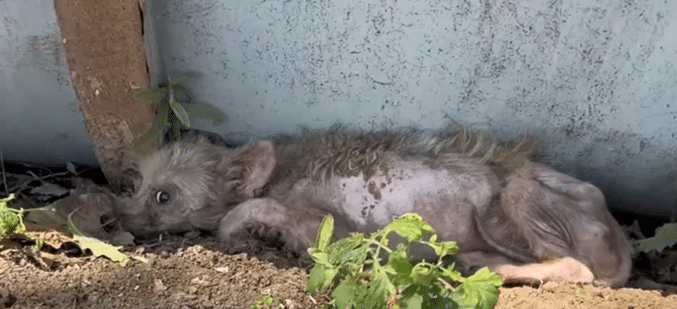
Sunsimi was found in a condition that made ordinary movement extremely difficult.
He had lost the care of the elderly woman who once looked after him.
He was living with serious untreated injuries, and later examinations revealed an advanced infection affecting his heart.
His needs were complicated.
His treatment carried risks.
And some people believed that his physical condition left little hope for a different future.
Hee-soon chose another path.
She recognized that the little dog's inability to walk did not erase his need for care or his capacity to enjoy life.
His happy greetings, steady appetite, and response to affection gave those around him reasons to continue supporting him.
These signs did not guarantee a successful medical outcome.
But they made it clear that his story deserved more than a judgment based solely on his disability.
The Kind of Hope That Does Not Require Guarantees
There is a particular kind of compassion involved in helping an animal whose future is uncertain.
It is relatively easy to celebrate a rescue after a full recovery has been confirmed.
The difficult part often comes earlier.
When the medical answers are incomplete.
When the treatment is complicated.
When improvement may take time, and no one can say exactly what the result will be.
Sunsimi's story belongs to that quieter side of rescue.
He did not suddenly recover after receiving help.
His damaged legs did not immediately become strong again.
His heartworm infection introduced another serious obstacle before his mobility problems could even be considered for surgical treatment.
Every stage required careful decisions rather than simple optimism.
Yet Hee-soon's willingness to care for him created the possibility of a different future.
It meant Sunsimi could receive professional examinations instead of remaining without answers.
It meant his heart condition could be identified and addressed.
It meant that difficult treatment options could be considered with veterinary guidance.
And it meant that his life was not defined entirely by what his legs could no longer do.
The little dog who once had to pull himself across the ground became the center of a determined effort to protect his health.
Whether he will eventually walk again remains unknown from the information available.
But one part of his journey is already clear.
Someone saw his suffering and decided that uncertainty was not a reason to abandon him.
Sometimes, the beginning of a better life is not a dramatic recovery or an extraordinary transformation.
Sometimes, it is simply the moment a person chooses to stay.
For Sunsimi, that choice opened the door to medical care, companionship, and the possibility of a future that had once seemed out of reach.
His journey is still unfinished.
But he no longer has to face it without someone trying to help.


