
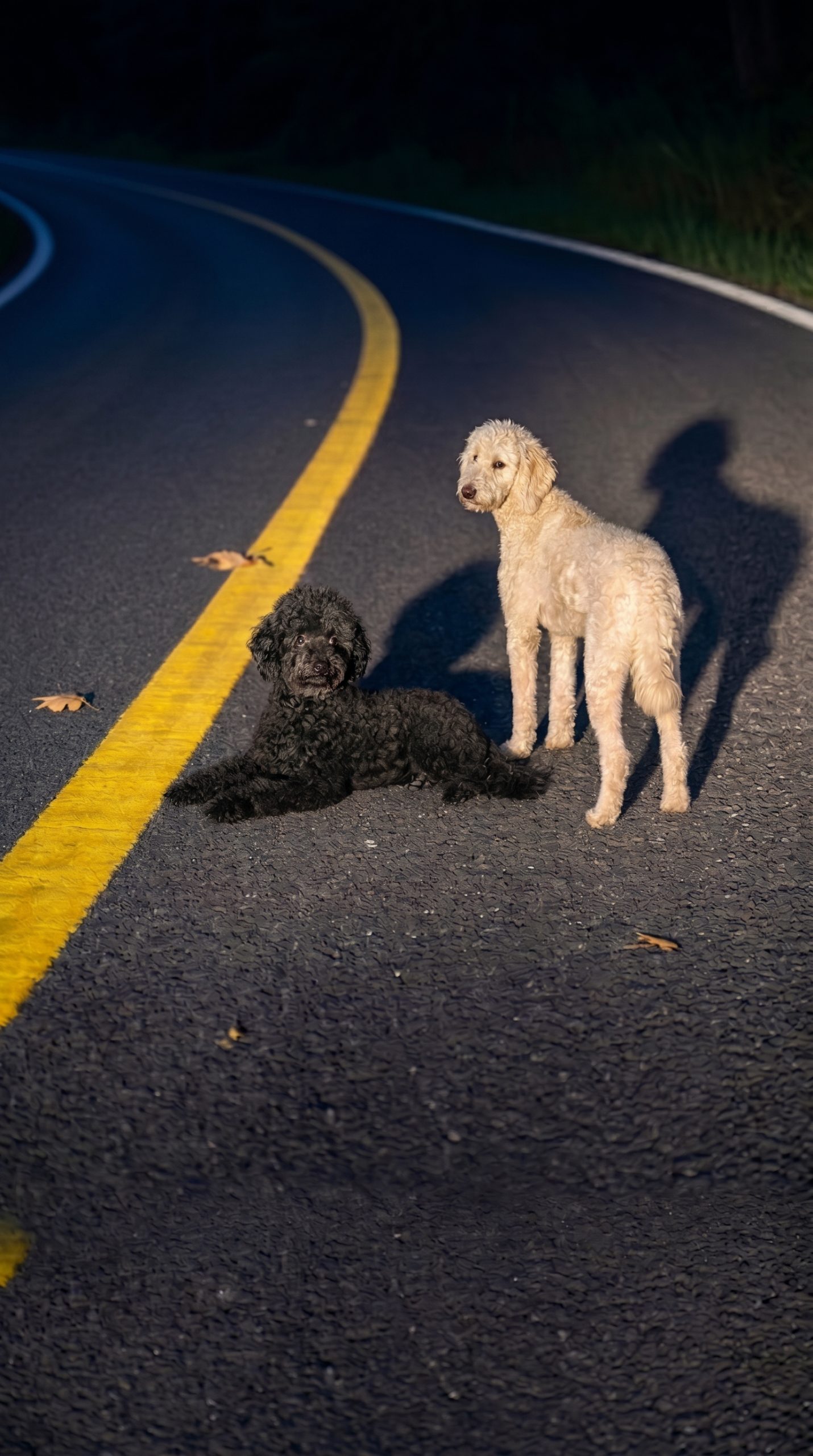
Two small poodles sat close together in the middle of a winding road in rural Georgia.
One had yellow fur. The other was black.
Cars could come around the bends at any moment, yet the two dogs remained near the place where they had apparently been left behind.
They seemed to be waiting for someone.
Neither could understand why the familiar person they had depended on was no longer there. And neither appeared ready to leave the other behind.
For a while, their loyalty kept them together.
But on this dangerous stretch of road, staying together would come at a terrible cost.
Only one of the two dogs would eventually make it to safety.
Her name would become Princess Anastasia.
And although her new life would be filled with kindness, the beginning of her rescue would remain a painful memory for everyone involved.
Two Little Dogs Who Would Not Leave the Road
The road near Murphy Hollow Spring was already familiar to Audray Luck, the founder of Luck's Rescue.
According to Luck, the area had a troubling history. Unwanted animals were sometimes abandoned along this isolated stretch of road, leaving them exposed to passing vehicles and other dangers.
When she received a report about two small dogs sitting directly in the roadway, she understood the urgency.
Finding them quickly was important.
Getting them away from traffic would be another challenge entirely.
When Luck arrived with her rescue partner, the description proved accurate.
Two poodles were sitting together on the road, one yellow and one black.
They were close enough to each other that their companionship was impossible to miss.
Neither appeared willing to move far from the place where they had been found.
To someone passing by, they might have looked like two lost pets waiting to be collected.
But the location made the situation much more serious.
They were not waiting safely outside a house or behind a fence.
They were in the path of moving vehicles.
Even a small delay could have dangerous consequences.
Luck and her partner knew they needed to earn the dogs' trust before they could bring them to safety.
And that trust was not going to come easily.
Three Hours of Patience, With No Safe Way to Reach Them
The rescuers approached carefully.
They brought food, treats, and equipment that could help secure the dogs once they were close enough.
Their first goal was simple: encourage the poodles to leave the road without frightening them into running.
For a moment, there was reason to hope.
Both dogs were willing to accept food directly from the rescuers' hands.
That small response mattered.
It showed that the poodles were not completely unwilling to approach people.
But accepting food was different from allowing someone to fasten a leash.
Whenever Luck and her partner tried to secure them, the dogs pulled away.
They would come near enough to eat.
Then, as soon as the rescuers tried to take the next step, they retreated.
The pattern continued.
The rescuers gave them space, tried again, and waited for another opportunity.
But the poodles remained frightened.
There was no way to know exactly what they had experienced before being discovered. Their behavior, however, made one thing clear: they were not comfortable being handled by unfamiliar people.
And because they were beside a dangerous road, every unsuccessful attempt carried additional concern.
A frightened dog can move unpredictably.
Trying to rush the process might have made the situation worse.
Luck and her partner continued their efforts for approximately three hours.
Three hours of careful approaches.
Three hours of offering food and reassurance.
Three hours of hoping the next attempt would finally succeed.
Yet the dogs remained beyond their reach.
As evening approached, the rescuers faced an increasingly difficult decision.
They had not managed to secure either poodle.
The light was fading, and continuing the same approach was becoming less practical.
Eventually, Luck had to leave the area without them.
It was not the outcome she wanted.
And it left her deeply worried about what might happen before she could return.
A Return at Daybreak That Changed Everything
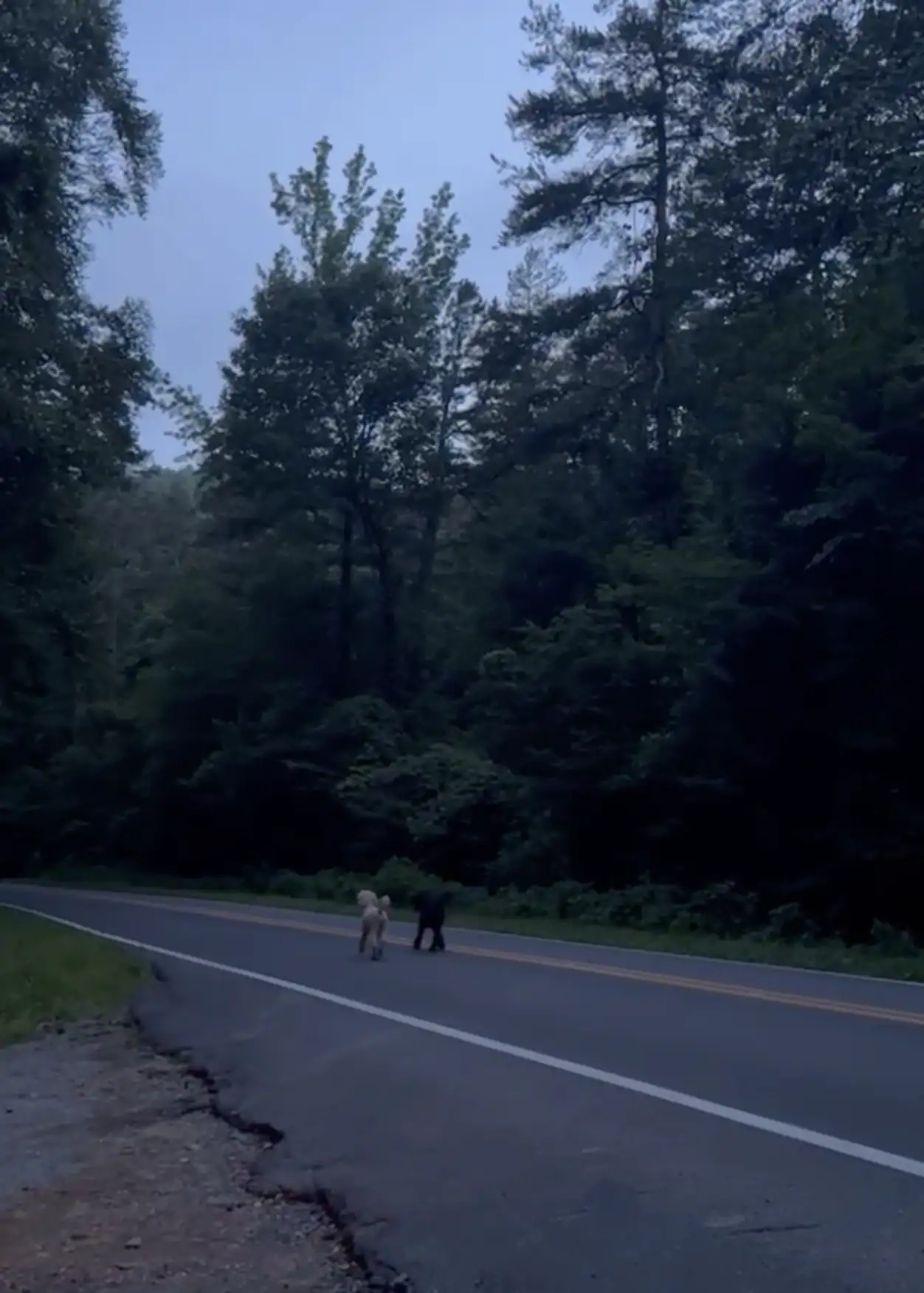
The black poodle was particularly difficult to see once darkness settled over the road.
Her dark coat offered little contrast against the pavement.
Luck knew how vulnerable both dogs remained, but she was especially concerned about the one who might be nearly invisible to approaching drivers.
The following morning, she returned as early as she could.
She was hoping to find both dogs alive.
Instead, she discovered that one of them had died after being struck by a vehicle during the night.
It was the black poodle.
The rescue attempt had not succeeded in time to protect her.
Nearby, the yellow poodle was still there.
She had remained beside her companion.
For Luck, the discovery was especially painful because she had already spent hours trying to bring both dogs to safety.
Now there was only one life left to protect.
The yellow poodle had survived the night, but she was still on the same dangerous road.
And she was still frightened.
The loss of her companion did not make her easier to approach.
Luck needed another way to reach her before the situation could become even worse.
The experience reflected one of the hardest realities of animal rescue.
Sometimes, help arrives.
Sometimes, rescuers do everything they can.
And sometimes, circumstances still leave them facing a loss they cannot undo.
But Luck had another dog in front of her.
The yellow poodle still had a chance.
That chance was now the priority.
VIDEO: Two Frightened Poodles Refused to Leave a Dangerous Road — Rescuers Fought to Bring Them to Safety
One Last Chance to Bring Her to Safety
After the heartbreaking discovery, Luck changed her approach.
The surviving poodle had already shown that she was too frightened to allow anyone to attach a leash.
Trying the same method again could mean losing more valuable time.
Instead, Luck prepared a humane trap.
The purpose was to give the little dog a way to enter a secure space without being physically pursued or restrained by hand.
It required patience.
The poodle needed to approach on her own.
And after everything that had happened, there was no guarantee she would cooperate.
But this time, the plan worked.
Approximately one hour after the trap was set, the yellow poodle stepped inside.
At last, she was secure.
She was still frightened and visibly upset by the experience, but the immediate danger had ended.
No more waiting in the roadway.
No more attempts to escape from a leash beside passing traffic.
No more uncertainty about whether rescuers could reach her before another vehicle came along.
For the first time since Luck had found the two poodles, one of them was safely in her care.
The relief was mixed with sorrow.
The yellow poodle was alive.
Her companion was not.
Nothing could change what had happened during the night.
But the surviving dog could now begin a different chapter.
A New Name for a Dog Who Had Lost So Much
After being rescued, the yellow poodle was taken to a veterinary clinic.
Her physical examination brought encouraging news.
Despite her ordeal on the road, she was found to be physically okay.
That was an important relief.
But her behavior showed that feeling safe around people would require more time.
The little dog had spent hours avoiding the very humans who were trying to help her.
She had experienced the loss of her companion.
And she was now entering unfamiliar surroundings.
Her rescuers understood that getting her off the road was only the first step.
She needed stability.
She needed gentle treatment.
Most of all, she needed an environment where she would not be pressured to trust before she was ready.
The surviving poodle was given a new name.
Princess Anastasia.
It was a name that marked the beginning of a new stage in her life.
The dog who had been found sitting on a dangerous road would no longer be defined only by that moment.
There was still uncertainty ahead.
But there was also the possibility of a home where she could feel secure.
Learning That Gentle Hands Could Be Trusted
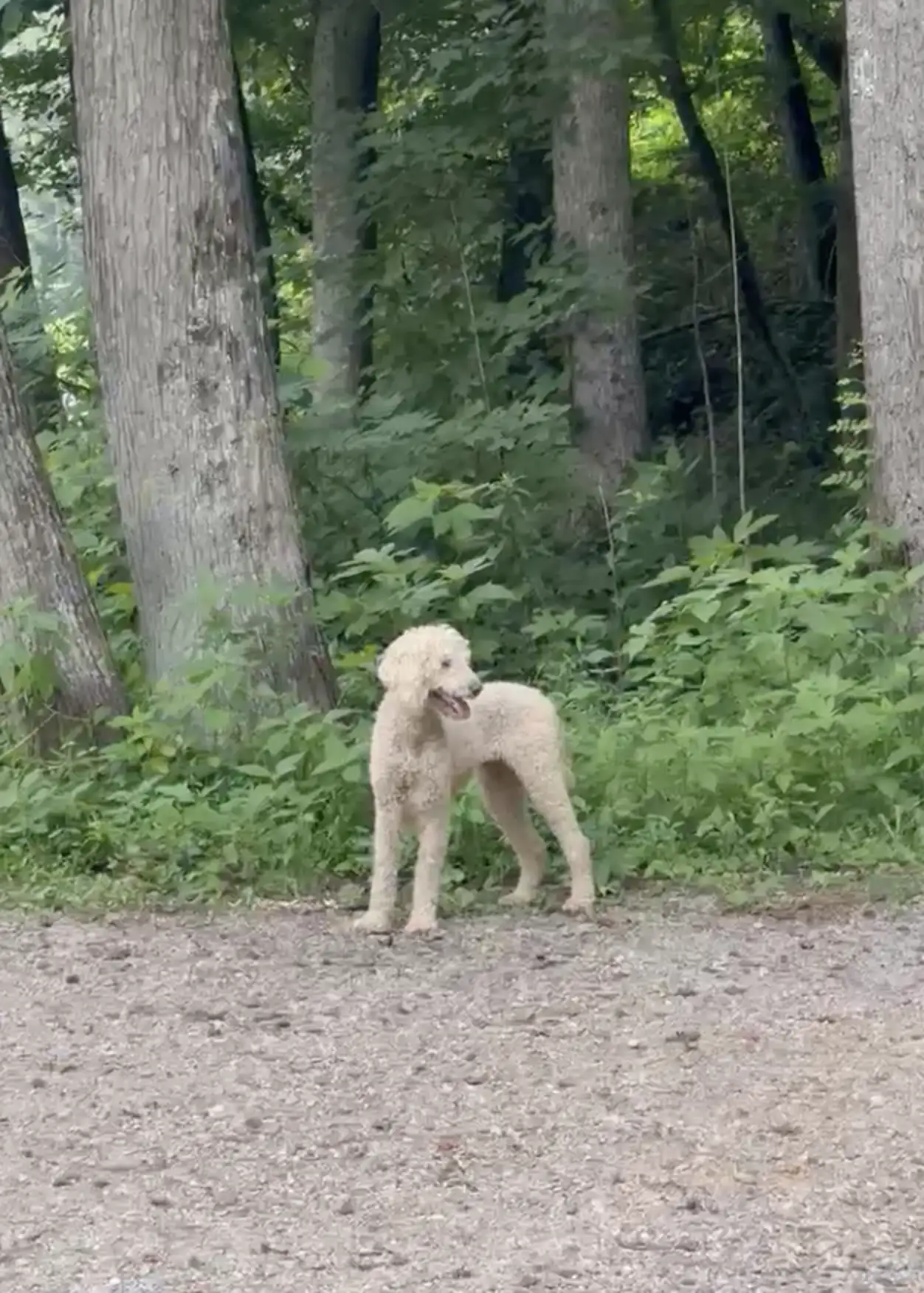
Princess Anastasia was placed in a quiet foster home.
After the frightening events surrounding her rescue, the focus shifted away from urgent action and toward patience.
There was no expectation that she would immediately become relaxed or affectionate.
She was allowed the time she needed.
That approach was important because physical safety and emotional comfort are not always achieved at the same moment.
A dog may be removed from immediate danger yet still behave as though something frightening could happen again.
In Anastasia's case, her fear around people had already been apparent during the rescue.
She had accepted food from human hands while refusing to be leashed.
That hesitation did not disappear simply because she was indoors and away from traffic.
Her foster home gave her an opportunity to experience human care without the same urgency and pressure.
There was no dangerous road to escape.
No need for rescuers to hurry before daylight disappeared.
No immediate struggle to secure her.
Instead, there was time.
Time to become familiar with her surroundings.
Time to observe the people caring for her.
Time to discover that gentle contact did not have to mean something frightening.
Her progress was gradual.
Days passed.
Then weeks.
Eventually, months.
Throughout that period, Anastasia began to respond differently to the people around her.
The fear that had once dominated her behavior slowly softened.
She became more comfortable accepting gentle touch.
Her willingness to trust grew.
These changes might sound small compared with the dramatic moment of rescue.
But for a frightened dog, they can mean a great deal.
Rescue had removed Anastasia from physical danger.
Her foster home was helping her learn how to live without that constant uncertainty.
The Home That Finally Gave Anastasia a Future
As Anastasia became more comfortable with human care, another possibility opened.
She could have a permanent family.
Her journey had begun with abandonment on an isolated stretch of road.
It had continued through an unsuccessful rescue attempt, the loss of her companion, and a second effort that finally brought her to safety.
Then came veterinary attention and months of patient foster care.
Each stage had helped her move farther from the circumstances in which she was found.
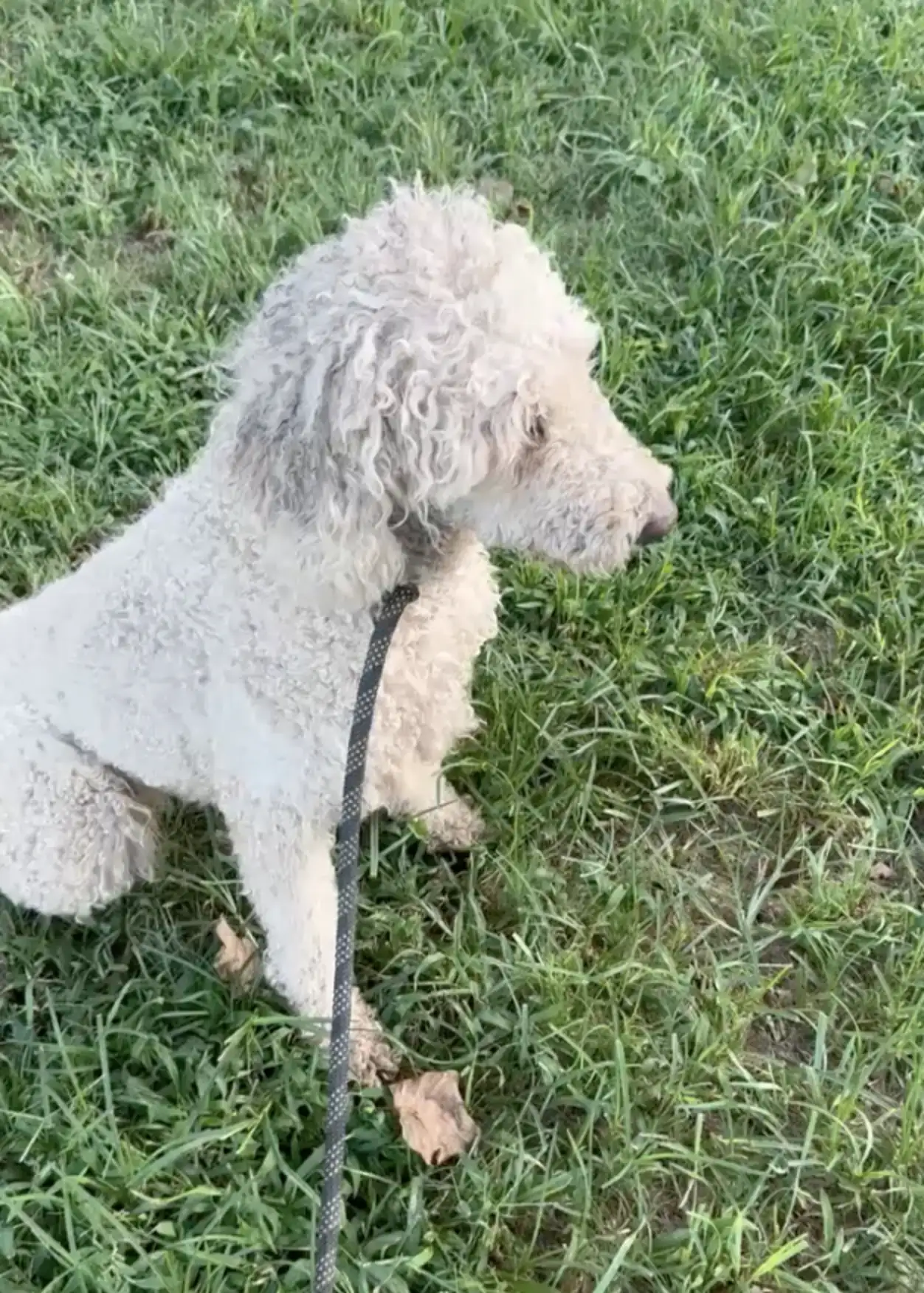
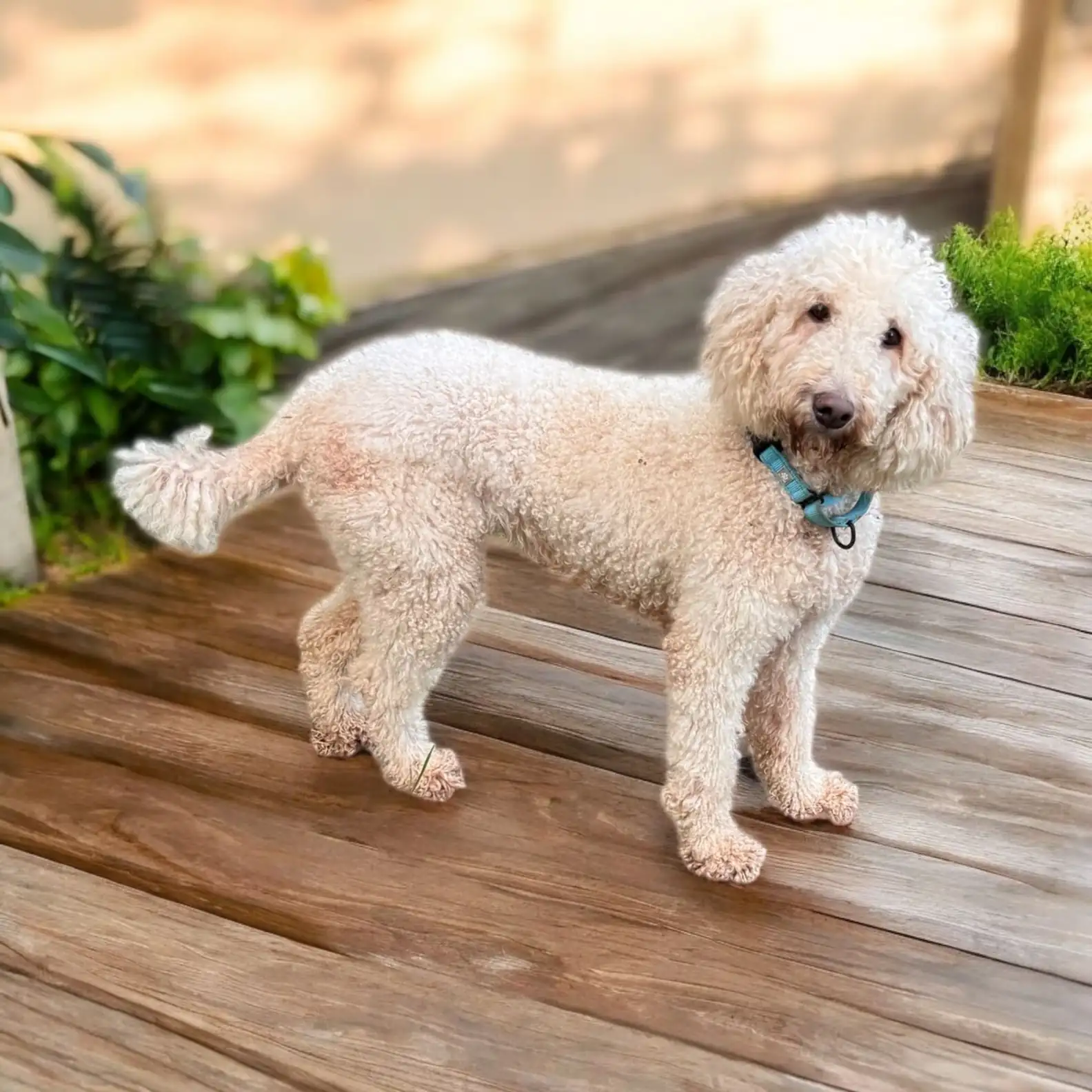
Eventually, Princess Anastasia was adopted into a permanent home.
It was the happy outcome her rescuers had hoped she might one day experience.
The poodle who had once remained frightened and difficult to approach was now surrounded by people prepared to care for her.
Instead of facing the uncertainty of a roadside, she had a place where she belonged.
Instead of depending on strangers to notice her before disaster struck, she had a family.
Her story did not become happy because everything painful had been erased.
The loss of the black poodle remained part of what had happened.
But Anastasia's adoption showed that the tragedy did not have to determine the rest of her life.
She had survived.
She had gradually learned to trust again.
And she had found a home where her future could be built around care rather than fear.
Remembering the One Who Could Not Be Saved
For Audray Luck and those involved in the rescue, Anastasia's happy ending came with a lasting sadness.
Two dogs had been found together.
Both needed help.
Both had been frightened.
Both had stayed near the same dangerous stretch of road.
Yet only one reached the safety of a new home.
The black poodle never had the opportunity to experience what Anastasia eventually received.
That loss matters.
It is part of the story, and it should not be forgotten simply because the surviving dog found happiness.
Luck's experience is also a reminder of why rescuing frightened animals can be so difficult.
Kind intentions are not always enough to persuade a scared dog to approach.
Even when food is offered and people move gently, the animal may remain too fearful to be handled.
In this case, the first rescue attempt lasted hours without success.
The change came only when a different, humane method allowed Anastasia to enter a secure space on her own.
And once she was safe, the importance of patient care became just as clear.
Anastasia did not transform overnight.
Her progress unfolded over weeks and months, supported by people who understood that trust could not be forced.
Her life now stands as a reflection of what compassionate rescue and patient care can make possible.
It is also a quiet tribute to the little black poodle who remained beside her until the end.
One dog was lost.
Another was given the chance to begin again.
Princess Anastasia's journey is not a story without sorrow.
It is a story about the value of trying, even when the outcome is uncertain.
About recognizing that frightened animals may need more than food and shelter.
And about giving a rescued dog enough time to discover that human kindness can be lasting.
On that rural Georgia road, two little poodles had only each other.
Today, Anastasia has a family of her own.
The companion she lost cannot be brought back.
But the life that was saved continues in a place where she is loved.
And that is a second chance worth remembering.


