
Some dogs fight quietly.
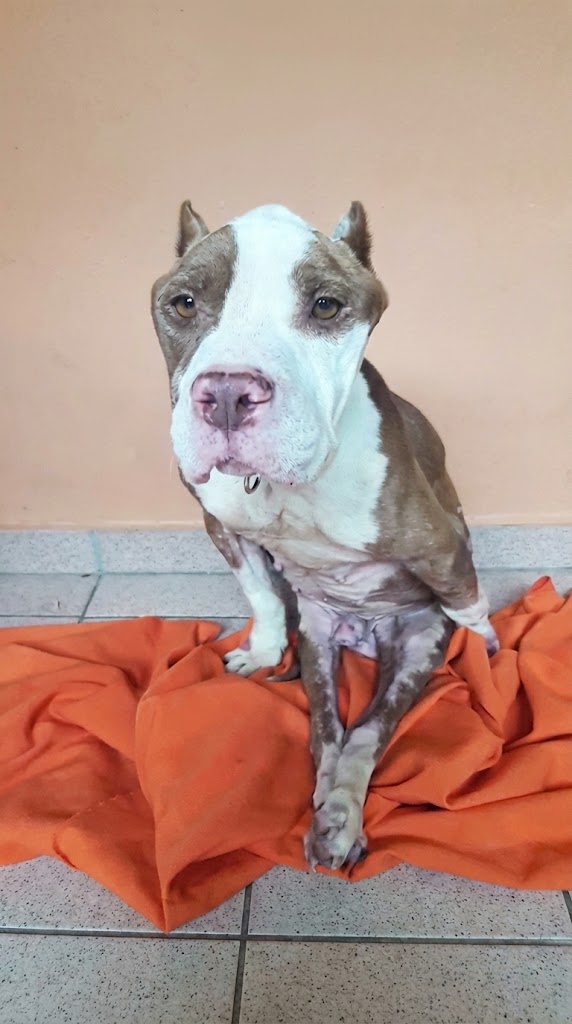
When Iron was found on a dusty roadside in Puerto Rico, he could barely use the back half of his body. Instead of walking, he pulled himself forward with his front legs while his hind legs dragged behind him.
There was no way to know exactly what he understood about his condition.
But one thing soon became clear.
Iron was not finished trying.
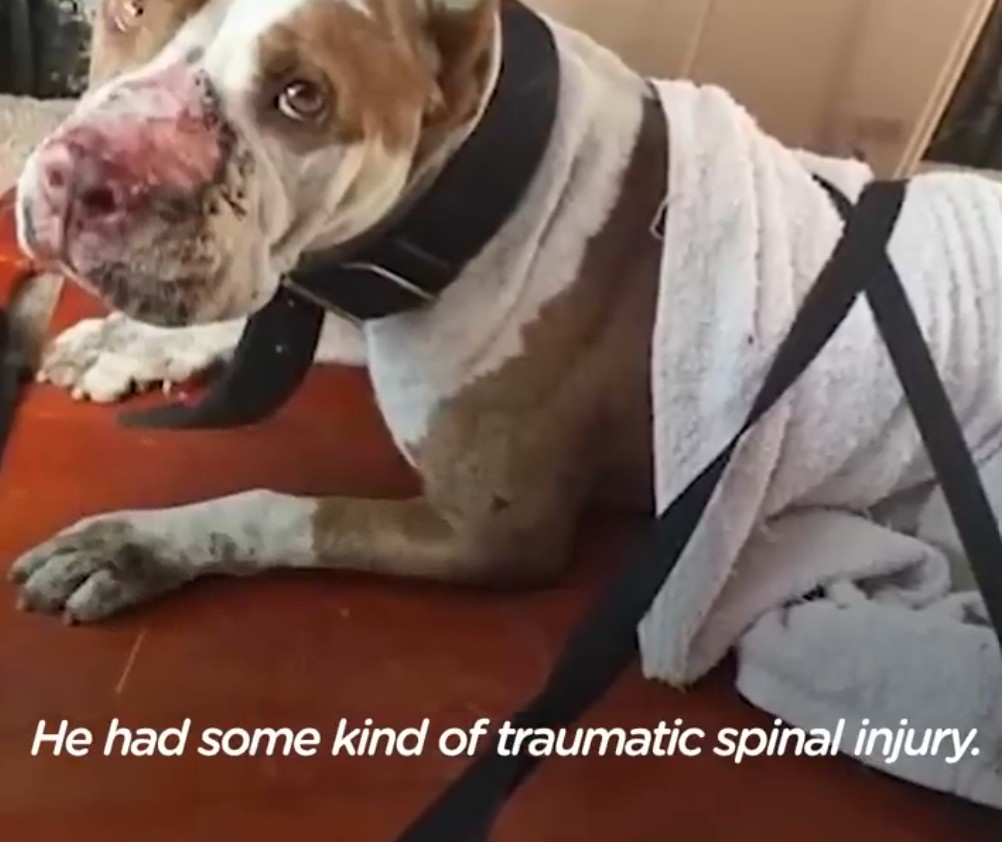
Veterinary evaluation revealed a serious spinal injury believed to have been caused by a car accident. The outlook was difficult to hear: there was a strong possibility that Iron would never walk normally again.
For a dog already struggling simply to move, it sounded like an enormous limitation.
Yet the diagnosis would eventually become only the beginning of his story.
A Much Smaller Dog Than Anyone Expected
Before Iron arrived in care, videos made him appear larger and sturdier than he really was.
Seeing him in person told a different story.
He weighed only about 27 pounds. His body was thin and fragile, carrying both the effects of his injury and the exhaustion of everything he had already endured.
His emotional condition seemed just as concerning.
Iron was not aggressive or restless. Instead, he appeared withdrawn, staring quietly as though he had stopped expecting much from the world around him.
That silence became part of the challenge.
Helping Iron would require more than supporting his legs. His caregivers also needed to give him time to rediscover interest in life.
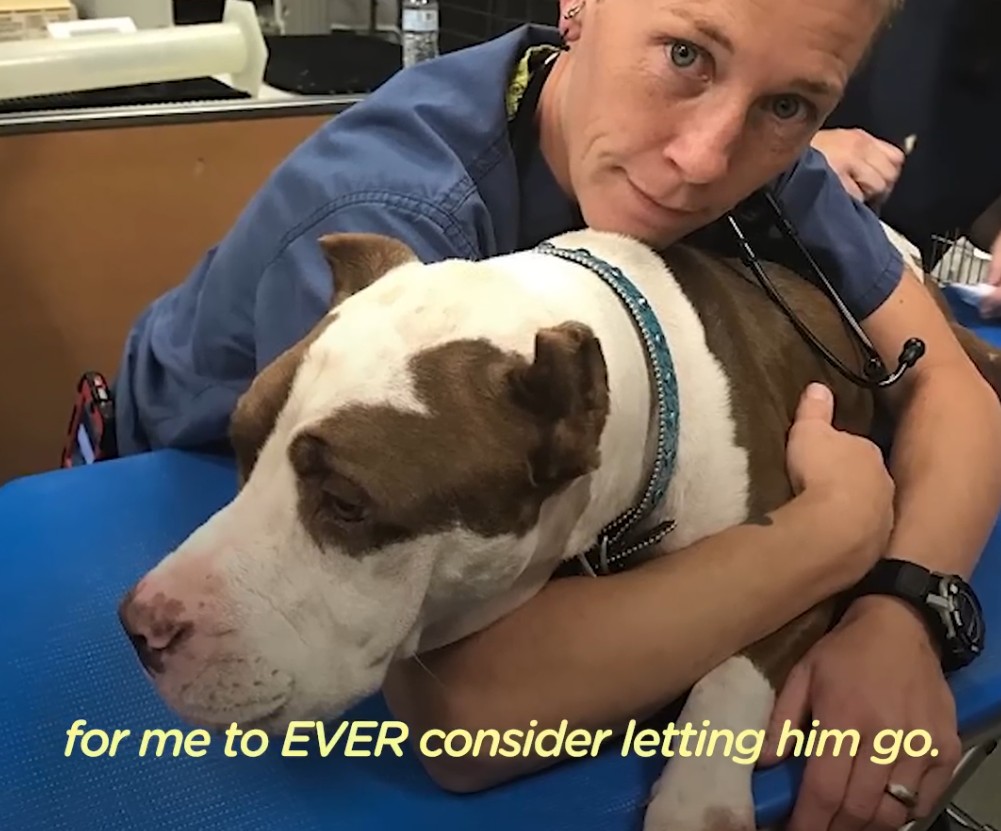
One of the people caring for him, a veterinary nurse, believed progress was still possible.
She could not promise that he would ever walk normally.
But she believed he could walk again.
That belief became the foundation of everything that followed.
Progress Measured One Step at a Time
Iron began physical therapy.
The work was repetitive and slow: exercises designed to encourage movement, strengthen his body, and help him regain as much control as possible.
At first, there were no dramatic breakthroughs.
Much of rehabilitation looked ordinary from the outside.
A leg moving slightly farther.
A body holding itself upright for a little longer.
A few seconds of balance before collapsing again.
For Iron, those tiny changes mattered.
His wheelchair gave him mobility while his body was still too weak and unstable to carry him reliably. For a time, the wheels were the safest way for him to move around.
Then came a moment his caregivers had been waiting for.
Iron took three steps.
Later, he managed five.
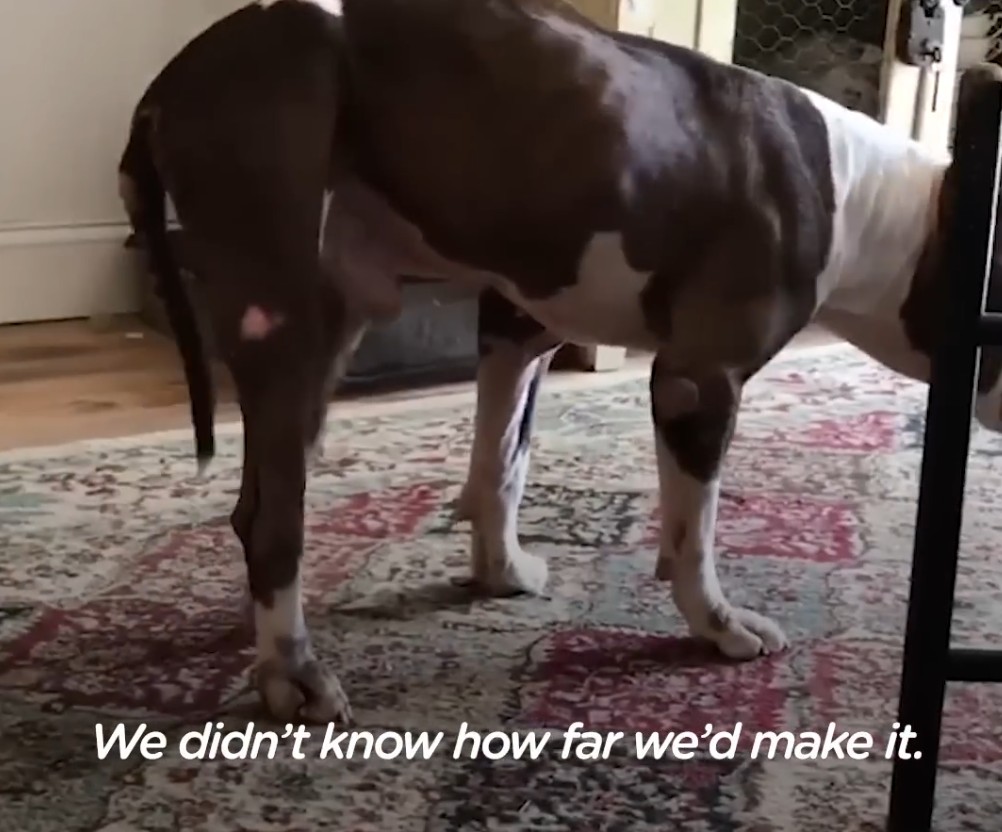
By the third week, he was sometimes able to stand and briefly walk with surprising control before his hind legs gave way again.
The progress was real, but so were the setbacks.
He could look steady for a few moments and then suddenly lose his balance.
Recovery did not move in a straight line.
Still, Iron kept trying.
VIDEO: Told He Might Never Walk Again, Iron Began Fighting for Every Step
The Dog Behind the Injury Began to Return
Physical improvement was only part of the transformation.
Several weeks into rehabilitation, Iron's personality began showing itself more clearly.
The withdrawn dog who had once seemed disconnected from everything around him started becoming curious again.
He interacted more.
He played.
He began engaging with other dogs.
Those changes were important because they suggested that Iron was no longer simply getting through each day. He was becoming involved in life again.
And then his caregivers noticed something almost comical.
Iron had developed an opinion about his wheelchair.
He was tired of it.
At first, the chair had represented freedom. It allowed him to move when his hind legs could not reliably support him.
But as Iron became stronger, the same device seemed to become something he wanted to leave behind.
He began deliberately bumping the wheelchair into things.
Then he would wriggle himself free.
Instead of waiting patiently to be placed back into it, Iron appeared far more interested in trying to move on his own.
His steps were not always smooth.
His balance was not perfect.
But he wanted his paws on the ground.
The wheelchair had helped him through one stage of recovery.
Iron seemed determined to reach the next one without it.
From Shaky Steps to a Confident Personality
As the weeks passed, Iron continued gaining strength.
The physical changes were remarkable, but perhaps the most striking transformation was his confidence.
The quiet dog found beside the road gradually became a dog with opinions, energy, and a surprisingly commanding presence.
In his permanent home, Iron now shares life with four energetic Pitbulls.
Despite being smaller, he has developed a reputation for keeping the others in line.
His family jokingly calls him the "Fun Police."
When the younger dogs become especially noisy or rowdy, Iron often steps in as though it is his responsibility to restore order.
It is a very different image from the fragile 27-pound dog who once struggled to support his own body.
Yet confidence is only one side of him.
Iron also shows a noticeably gentle nature around the animals he trusts.
His family has watched him lick his canine siblings on rainy days, almost as if he is helping dry their faces.
On the farm, he has even developed an affectionate relationship with a baby goat.
For a dog whose early story was defined by limited movement and uncertainty, his world has become wonderfully full.
The Wheelchair Was Never the End of His Story
People sometimes describe rescue animals as having "won the lottery" when they finally find a loving home.
Iron's family sees it differently.
From their perspective, they were the fortunate ones.
The connection with him felt natural from the beginning, and the dog who once depended on others for nearly every movement became an important personality within the household.
His transformation was not instant.
There was no single moment when everything suddenly became easy.
There were exercises.
Unsteady steps.
Falls.
More practice.
And days when the smallest improvement had to be enough.
Eventually, those small victories accumulated.
Iron, once expected to remain dependent on a wheelchair, learned to move on his own.
Then he did something that once seemed almost impossible.
He began to run.
What Iron's Journey Leaves Behind
Iron's story is powerful because recovery did not begin with certainty.
No one could guarantee what his body would eventually be capable of doing.
The original prognosis was serious.
His spinal injury was real.
His weakness was real.
And during those first days, even standing was difficult.
But rehabilitation gave his body a chance, while patient care gave his personality time to return.
Three steps became five.
A few moments of balance became longer periods on his feet.
The wheelchair that once provided his freedom eventually became something he no longer wanted.
Most importantly, Iron was given the opportunity to discover what was still possible.
His journey does not mean every animal with a spinal injury will have the same outcome. Recovery can be different for every dog, and medical expectations exist for important reasons.
What Iron's experience does show is something simpler.
Sometimes progress cannot be measured by the first diagnosis alone.
Sometimes it is found in a paw placed forward.
Then another.
Then another.
The dog once dragging his hind legs along a Puerto Rican roadside is now surrounded by animals, people, movement, and affection.
He has a home.
He has a family.
And instead of watching the world from a wheelchair, Iron can now run through it on his own four paws.


