Some animals don’t just wander through city streets.
They linger like shadows, quietly carrying evidence of how badly the world can sometimes fail them.
A Shadow on the Streets of Paraná
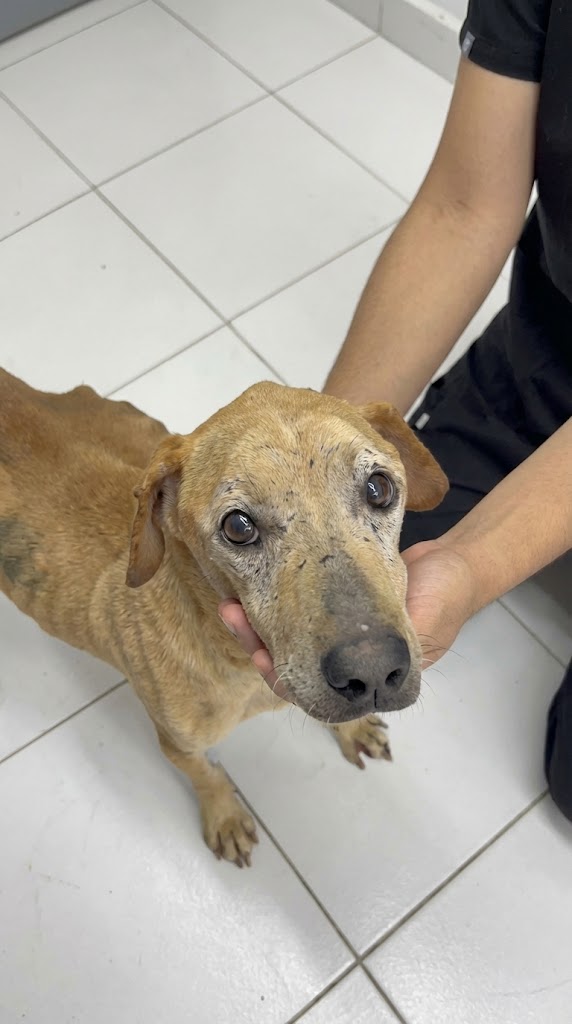
That’s how rescuers found Ravioli, on the streets of Paraná, Brazil.
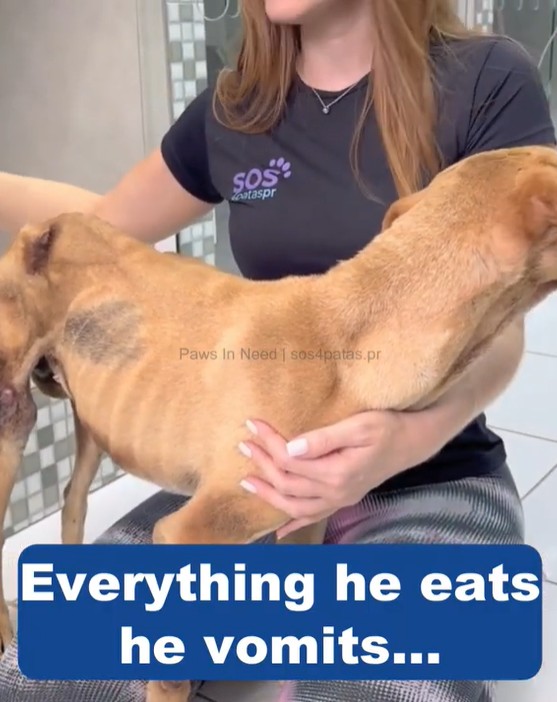
At first glance, he barely looked alive. His body was so thin that it seemed almost impossible he was still breathing. His bones pressed sharply against fragile skin — his ribs, spine, and hips painfully visible, as though his body had been stripped down to its basic frame. Ravioli had also been struck by a vehicle at some point and left behind afterward, his broken bones healing in the wrong position, with patches of damaged skin already showing signs of serious infection.
When volunteers from Instituto SOS 4 Patas lifted him off the pavement, they understood right away this wasn’t simply a case of hunger.
This was a race against time.
VIDEO: From Near Death to Survival — The Rescue of Ravioli
Trapped Between Hunger and Something Worse
Inside the veterinary clinic, Ravioli’s condition became even more concerning. He ate like a dog who had known nothing but emptiness for a long time — desperately, urgently — but moments later, everything came back up.
At first, vets suspected megaesophagus, a condition that prevents food from properly reaching the stomach. But further examination revealed the actual danger: a solid blockage lodged deep in his intestines.
No one could say for certain whether it was something he had swallowed while scavenging for food, or something that had developed inside his body over time. What they did know was this — without surgery, Ravioli would never be able to absorb nutrients properly again.
Operating on him was genuinely frightening. His body was weak enough that anesthesia alone carried real risk. But doing nothing meant a much more certain outcome.
The team chose to move forward with surgery anyway.
A Body That Refused to Quit
Against real odds, Ravioli made it through the operation.
Days passed. Then something encouraging happened — the vomiting finally stopped.
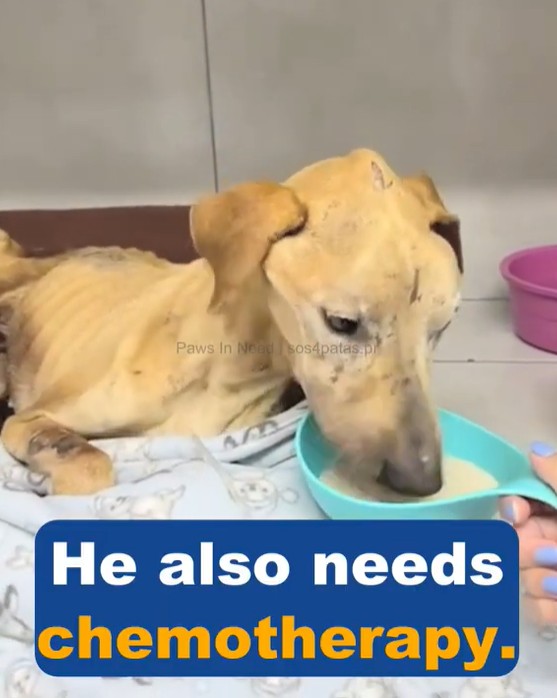
For the first time in what may have been a very long while, his body began accepting food properly. Slowly, some strength started coming back. His eyes, once dull and hollow-looking, began to show a bit of life again. In updates shared by the rescue team, Ravioli could be seen standing on shaky legs, dragging himself carefully toward his food bowl. One day, his tail managed a small, hesitant wag — but a real one.
As colder weather moved in, his caregivers wrapped him in soft blankets and set him up on a warm mattress. Comfort, safety, and basic kindness — things he had likely never really known before — slowly became part of his daily care.
At his most recent weigh-in, Ravioli had gained just over one kilogram.
To most people, that number might not sound like much.
To Ravioli, it was everything.
Still Thin, Still Fighting
Ravioli is still affectionately known by his nickname, Magrelo — “the skinny one.” His ribs are still visible, though less sharply than before. Each day, his body fills out just a little bit more than the day before. More importantly, something in his spirit has genuinely shifted.
He’s no longer just the broken dog once left behind on the street to fend for himself.
He’s a survivor, slowly learning how to trust people again.
What Ravioli’s Story Is Still Teaching Us
Ravioli’s recovery, even mid-story, is a reminder of a few things. That starvation isn’t always simply about access to food — sometimes the body itself is fighting an internal battle that food alone can’t fix. That rescue genuinely takes a whole group of people willing to show up, again and again. And that compassion tends to heal more than just physical wounds; warmth, patience, and steady care can slowly rebuild a life that looked, at first, like there wasn’t much left to work with.
Ravioli still has a long road ahead of him.
But with every meal he manages to keep down, and every gram he gains, he’s quietly proving one simple thing: no life is ever too far gone to be worth trying to save.