
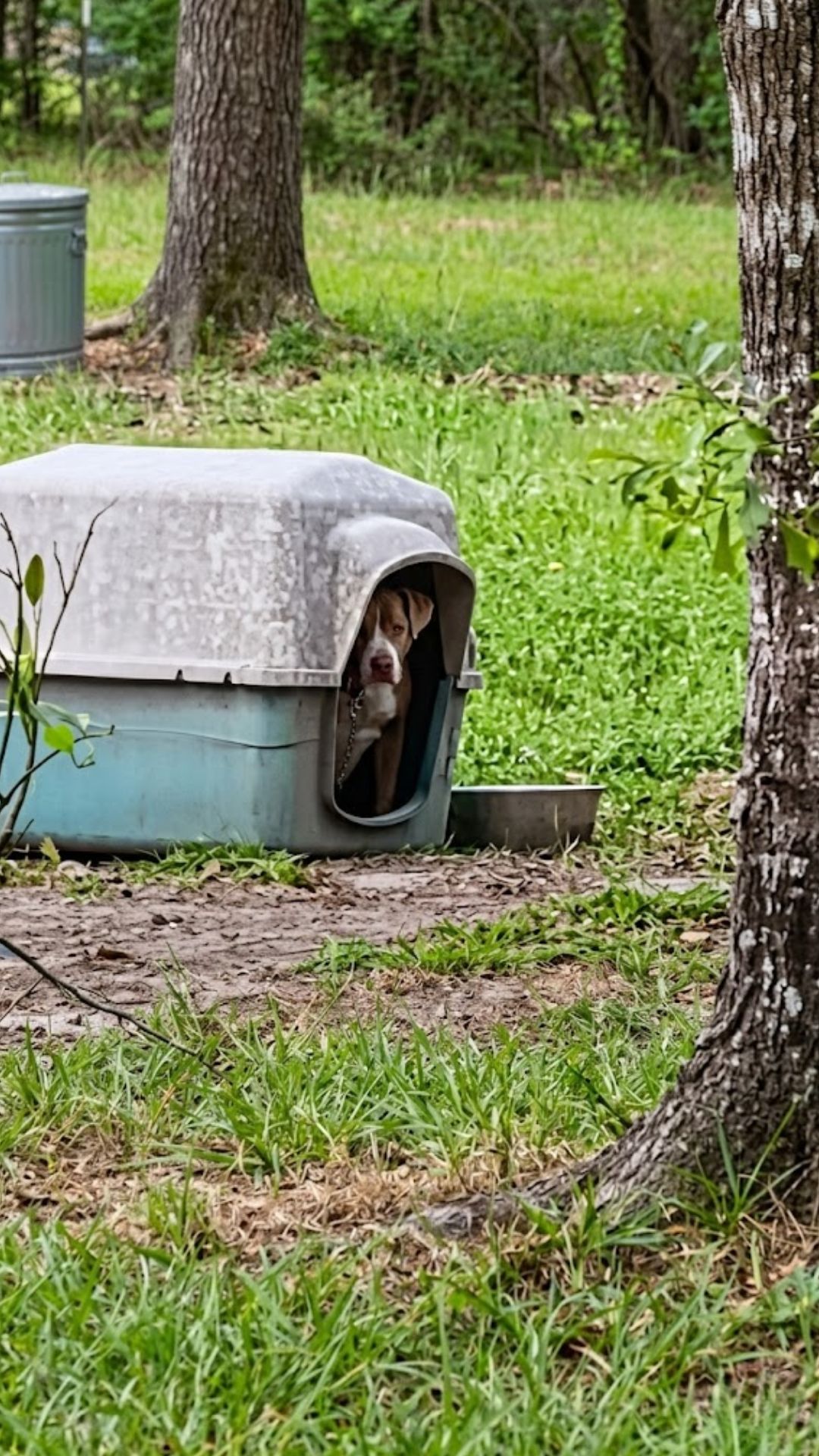
In the far corner of a backyard, an aging dog sat tethered to a tree beside a weathered doghouse. Her gray muzzle showed the passing years, and her eyes remained focused on the back door of the home she had always known.
The people who once lived there were gone.
The dog was still waiting.
For April Morgan and her fiancé, J.C., discovering her during the final walkthrough of their future home changed what should have been an ordinary real estate transaction into something far more personal.
They had come to inspect a house before beginning a new chapter of their lives.
Instead, they found a living reminder of the family that had already moved on.
And the most painful part was learning that her presence in the backyard was no accident.
A Family Moved Away, but One Member Was Left Behind
The previous homeowners had lived in the property for approximately ten years.
During those years, they had raised a dog from puppyhood. She had spent virtually her entire life with the same family, growing older alongside the people who were supposed to care for her.
But when the time came to sell the house, the owners made a decision that April struggled to understand.
They would move.
The dog would stay.
According to the account, the sellers even included a note in the purchase agreement explaining that they were leaving the dog because they no longer wanted her.
There was no confusion about whether she belonged to someone else.
She was not a stray who had wandered into the yard.
She was a family dog who had been deliberately left behind.
By the time April and J.C. discovered her, she was approximately ten years old. Her muzzle had begun turning gray, and she remained attached to a tree near an aging doghouse.
What particularly affected April was how quietly the dog waited.
She wasn't making a scene or desperately trying to escape. She simply remained near the place she knew, looking toward the house.
Perhaps she still associated that door with familiar people, familiar routines, and the life she had always lived.
No one could know exactly what she understood about her family's departure.
But the sight of her sitting alone was enough to make April deeply concerned.
An older dog depends on stability. Familiar surroundings and trusted caregivers can become especially important after years of living with the same household.
For this dog, the surroundings were familiar.
The people were missing.
And the two prospective homeowners suddenly found themselves worrying about something much more important than the property they hoped to buy.
The Question April Could Not Stop Asking
April later spoke about how painful it was to imagine the dog continuing to sit there, waiting.
Yet another fear troubled her.
What if the house purchase fell through?
At that point, April and J.C. did not yet have ownership of the property. They had discovered the dog, but their plans for the home were still dependent on the transaction being completed.
April admitted she was frightened by the possibility that they might not get the house because she did not know what would happen to the dog.
That uncertainty gave the purchase an emotional weight neither of them had expected.
For most people, the final stages of buying a home bring questions about paperwork, moving arrangements, and preparations for a new life.
April was thinking about the elderly dog waiting in the backyard.
She could not simply forget what she had seen.
The dog had already lost the people who had cared for her since she was young. April feared what might happen if the chance to give her a safe home slipped away as well.
Fortunately, the transaction eventually went through.
April and J.C. received the keys.
The house was officially theirs.
And now they could do something about the dog who had been left behind.
One Simple Action Ended Her Days Tied to the Tree
After getting the keys, J.C. went directly to the backyard.
The senior dog was still there.
She watched him approach, her tail making a small, uncertain movement.
It was a subtle response, but an encouraging one.
She did not yet know what these new people intended to do. The source describes a dog who appeared hesitant, even as she showed a small sign of interest in the person coming toward her.
J.C. reached down and unclipped her leash.
With that simple action, her circumstances changed.
She was no longer required to remain tethered beside the tree while the people inside the house came and went.
The couple had decided that the dog would become part of their family.
They gave her a name.
Molly.
After approximately ten years with her previous owners, she was beginning another chapter of life with people who had met her through an unexpected act of abandonment.
There was no way to undo her past.
But April and J.C. could change what happened next.
VIDEO: Her Family Moved Away and Left Her Tied to a Tree — Then the New Homeowners Found Her
A New Name and a Different Kind of Home
Giving Molly a home did not mean that everything immediately became easy.
She had spent years with one family before being left behind. Her adjustment to a new household involved much more than removing a leash and opening a door.
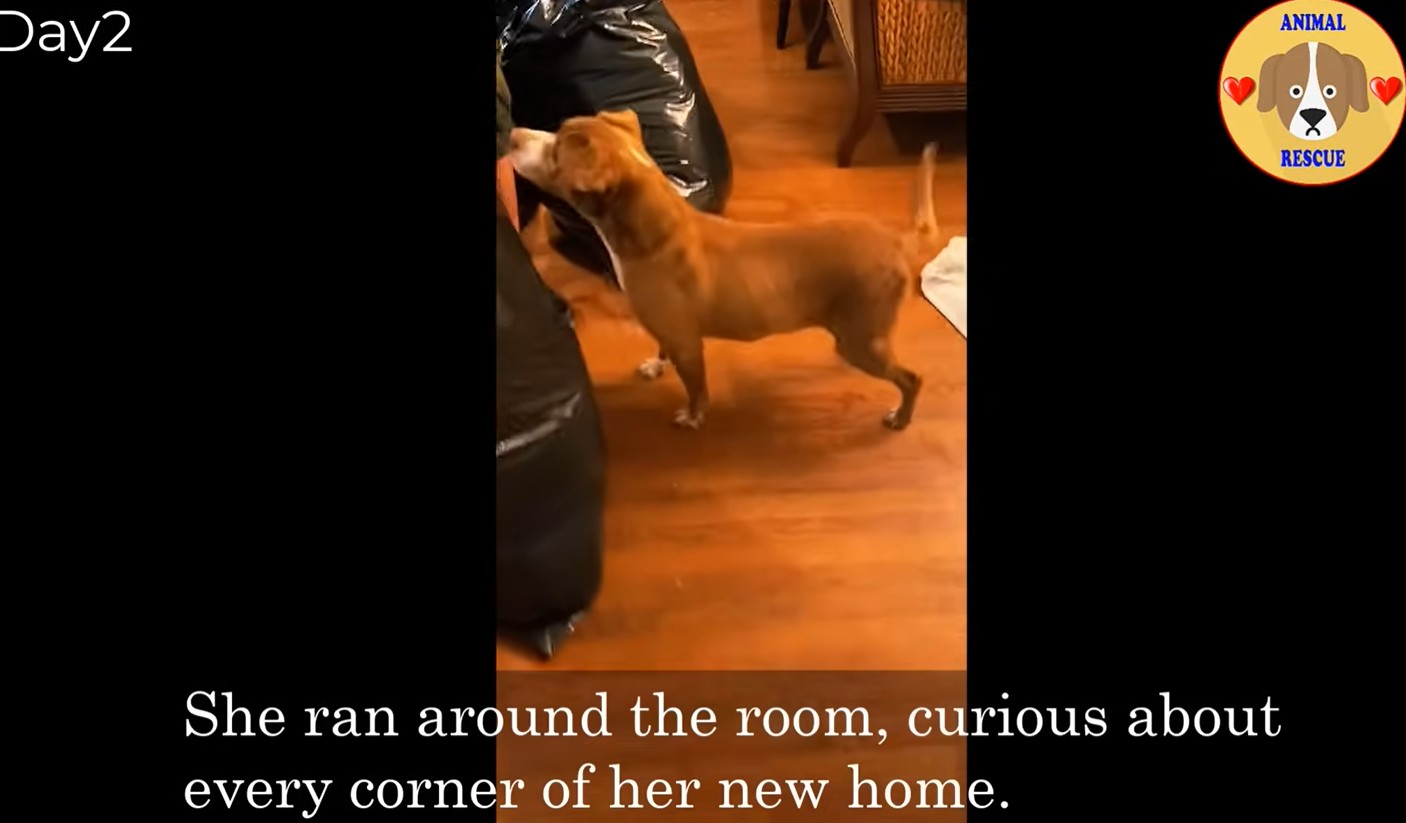
April and J.C. began noticing that Molly wanted to remain close to them.
She followed them from one room to another.
When April went into the kitchen, Molly came along.
When J.C. sat down, Molly moved close to him.
Her behavior suggested that reassurance had become especially important to her.
Perhaps remaining near her new caregivers helped her feel more secure. Perhaps she was still adjusting to the sudden change in the people around her.
Whatever the reason, Molly was clearly seeking companionship.
For an elderly dog who had experienced a major disruption, this was an important part of settling into her new life.
April and J.C. did not treat her need for closeness as an inconvenience.
They allowed her to remain nearby.
They offered the attention and comfort she seemed to need.
The backyard where Molly had once been left alone was no longer the place that defined her daily life.
She had people to follow, people to lean against, and people who wanted her company.
The Fear That Did Not Disappear Overnight
Although Molly was now living with her new family, some situations remained difficult for her.
Thunderstorms were particularly frightening.
When thunder sounded, she trembled and tried to hide.
The source describes these moments as among her hardest challenges after joining April and J.C.'s household.
It is not possible to know whether her fear of storms began during her time outside or existed long before her abandonment.
What was clear was that the experience caused her significant distress.
For April and J.C., helping Molly through these episodes became another part of caring for her.
They used a ThunderShirt, a snug-fitting garment intended to help some dogs feel calmer during stressful situations.
They also comforted her with gentle contact, reassuring voices, and their presence.
A frightened dog cannot be expected to understand that every unfamiliar sound is harmless simply because her living circumstances have improved.
Adjustment takes patience.
Molly still had moments when she became overwhelmed.
But now, when she was afraid, she was not facing those moments alone.
That difference mattered.
Her new caregivers were learning what unsettled her and how they could help.
And Molly was learning about the people who had welcomed her into their home.
Trust was not something that could be restored through a single kind gesture.
It was built through many ordinary moments of care.
Small Experiences Began to Replace the Sadness
As Molly became more comfortable, April and J.C. introduced her to experiences that brought out a different side of her personality.
One of those experiences was a warm bath.
For a dog who had been found tethered outdoors beside an old doghouse, being gently cleaned and cared for represented an especially meaningful change.
The bath was a simple part of her new routine.
But it also reflected the attention she was finally receiving.
Another happy moment came when Molly tried a pup cup, a small dog-friendly treat often served in a cup.
Her reaction delighted her family.
She wagged her tail with such enthusiasm that the movement seemed to involve her entire body.
It was a joyful contrast to the hesitant tail movement J.C. had noticed when he first approached her in the backyard.
Molly was no longer simply watching a stranger come toward her.
She was participating in her new life.
There were other introductions as well.
April and J.C.'s household included dogs and cats, and Molly gradually became acquainted with the other animals.
Learning to share a home with new companions was another step in her adjustment.
Not everything happened at once.
Her progress came through familiar daily activities, positive experiences, and opportunities to feel included.
A comfortable place to rest.
The company of her caregivers.
A treat she clearly enjoyed.
A household where she was welcome.
These were ordinary things that many family dogs experience without anyone giving them much thought.
For Molly, they helped create a life that looked very different from the one April and J.C. had discovered in the backyard.
Medical News Brought Another Challenge
As Molly settled in, her new caregivers also took responsibility for her health.
A veterinary visit revealed two concerning conditions.
Molly had heartworm and a heart condition.
The findings meant that her new beginning would involve medical care as well as emotional adjustment.
Heartworm is a serious condition that requires veterinary evaluation and appropriate treatment. For a senior dog with an existing heart problem, professional guidance is particularly important.
The original account does not provide detailed test results or explain the precise nature of Molly's heart condition.
It does, however, confirm that April and J.C. began treatment.
They were committed to caring for her despite the challenges.
Molly had already spent approximately a decade with her previous family. Now, at an age when many dogs need additional attention and support, she was facing health concerns that could not simply be ignored.
April and J.C. understood that her remaining years might come with uncertainty.
But they were determined to make those years as comfortable and happy as possible.
Their decision to welcome her was not dependent on her being young, perfectly healthy, or easy to care for.
They had chosen Molly knowing she was an older dog.
When medical needs became apparent, they continued to stand by that choice.
There is no confirmed long-term medical outcome in the source, so her eventual response to treatment remains unknown.
What is clear is that she was receiving care from people who wanted to help her.
For Molly, that was another important part of her second chance.
A Quiet Moment of Affection Said More Than Words
Molly's growing attachment to her new family showed itself in small, affectionate ways.
One evening after dinner, she approached April.
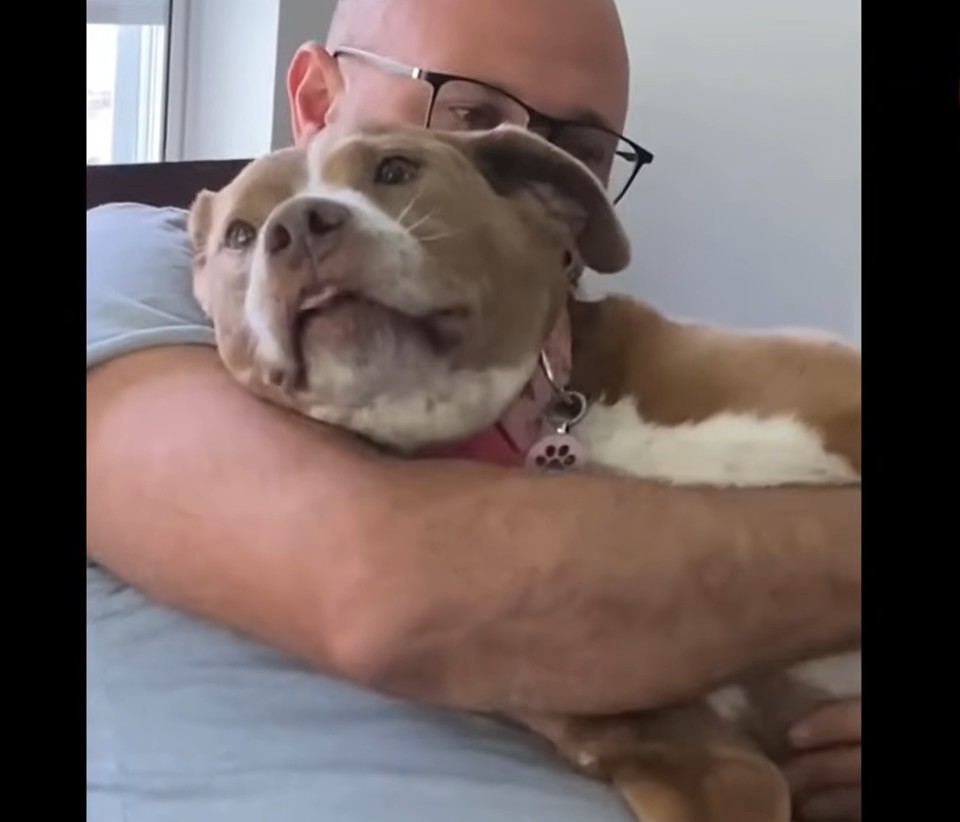
She moved close and gently licked her cheek.
It was a simple interaction, the kind of affectionate gesture many dogs share with people they trust.
But given everything April knew about Molly's past, the moment carried special meaning.
The dog she had first seen sitting alone beside a tree was now comfortable enough to seek out affection.
There was no dramatic event.
No sudden transformation.
Just Molly approaching someone who had made space for her in a new home.
The gesture did not need to be interpreted as proof that Molly understood everything her new family had done.
Dogs communicate affection and social connection through many behaviors, including physical closeness and licking.
What mattered was the comfort Molly appeared to feel with April.
For a dog who initially followed her caregivers everywhere and struggled during storms, those peaceful moments of connection were encouraging.
Her story was no longer defined entirely by the people who had left her.
It was becoming a story about the people who stayed.
The Dog Once Left Outside Now Has a Place to Belong
Molly's life eventually came to look very different from the quiet scene that had first captured April's attention.
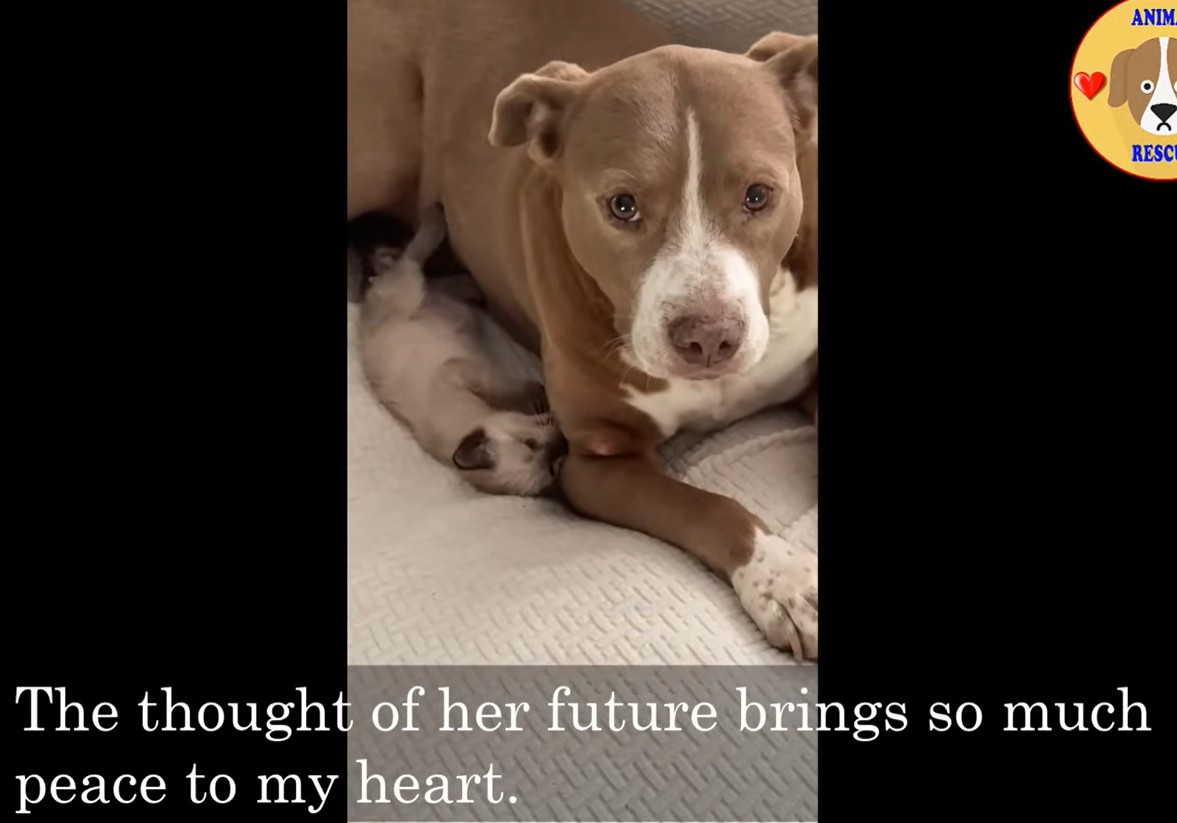
Instead of remaining tethered beside the tree, she could relax inside her home.
She stretched out across the bed.
She played.
She rested.
She enjoyed the company of the people and animals around her.
The elderly dog who had been abandoned when her previous owners moved away had become a cherished member of another household.
Her circumstances had changed, but she was still the same Molly.
She still needed reassurance.
She still experienced fear during storms.
She still required medical attention for the health conditions discovered after her rescue.
A second chance did not erase every difficulty.
It gave her the support to face those difficulties with people who cared.
April made her intentions unmistakably clear: Molly would not be left outside again, nor would she be allowed to face loneliness and abandonment as she had before.
It was a promise about the kind of life the couple wanted to provide.
For an animal who had already experienced the loss of her longtime family, that commitment was especially meaningful.
Sometimes a New Beginning Is Waiting Where Nobody Expects It
April and J.C. began their journey hoping to buy a house.
They imagined a new place to live and the memories they would create there.
They had no reason to expect that an elderly dog would become such an important part of that beginning.
Yet the discovery in the backyard changed their priorities.
They saw a dog who had spent almost her entire life with one family, only to be left behind when that family moved.
They worried about what would happen to her.
And when they finally had the opportunity, they gave her a different future.
Molly's story is a reminder that older dogs still need affection, stability, and the chance to belong.
Age does not make companionship less meaningful.
Medical challenges do not make a life less deserving of care.
And a painful experience does not mean that better days are impossible.
Molly may never understand why the people who raised her disappeared from her daily life.
But she does not need to understand every part of her past to enjoy the comfort available to her now.
She has a home where she can rest.
She has caregivers who respond when she is afraid.
She has companionship, affection, and the simple pleasures of being part of a family.
April and J.C. purchased a house.
In the process, they gave a senior dog something that mattered much more than a change of address.
They gave Molly a place where she was wanted.
And after all those years, she finally had people determined not to leave her behind.


