
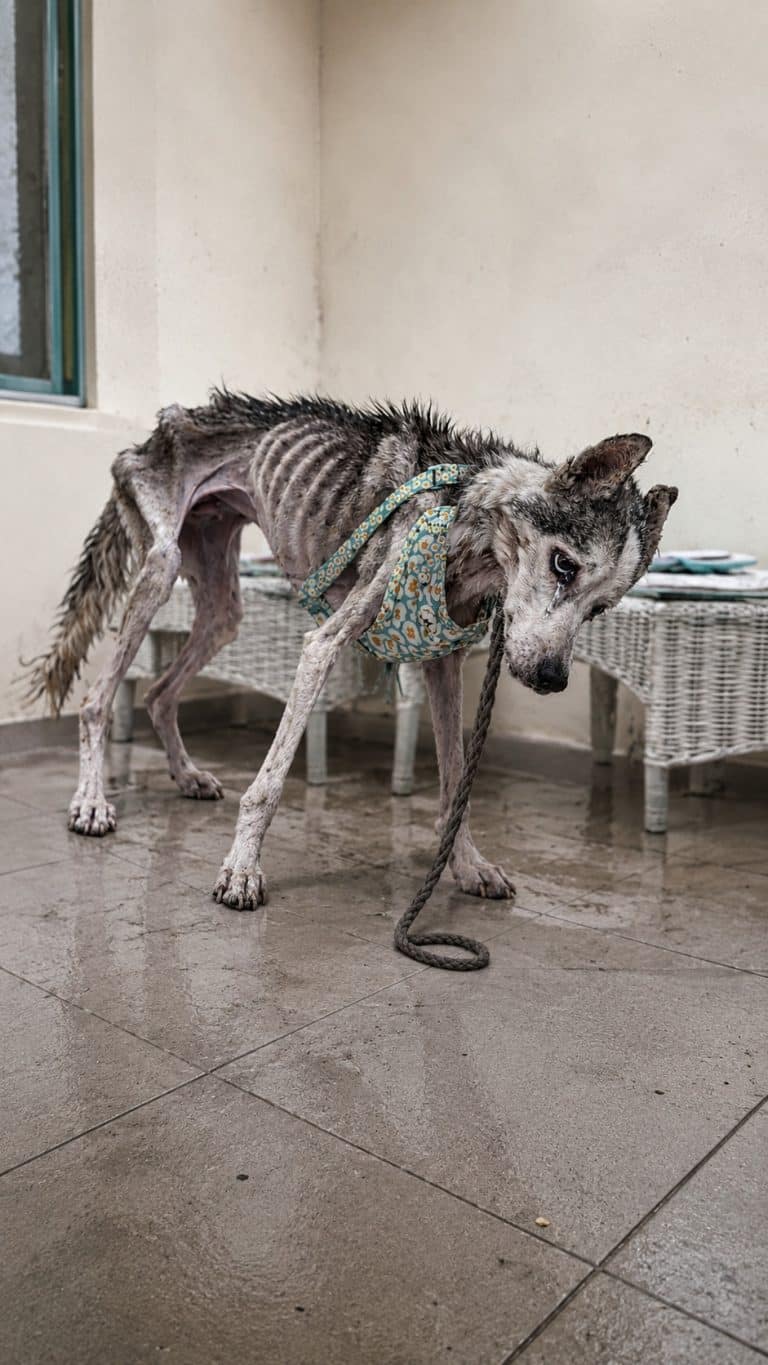
When rescuers first saw Wolf, the Husky could barely support his own weight.
His once-strong body had become painfully thin. His ribs were visible beneath his coat, and the simple effort of standing seemed to take almost everything he had left.
He weighed less than 9 kilograms.
For a breed normally known for its strength, energy, and lively personality, Wolf's condition was especially troubling.
Yet what stayed with the people who found him was not only how weak he looked.
It was how little he responded.
There was no excited greeting. No curious approach. Almost no reaction to the people who had come to help.
Wolf seemed to have reached a point where simply making it through another day required more strength than he could spare.
And the rescuers would soon discover that his struggle was far more serious than hunger alone.
A Husky Who Had Almost Nothing Left
Before being rescued, Wolf had endured a period without adequate food or water in intense heat.
His body showed the consequences.
Severe malnutrition had left him fragile, while dehydration made an already dangerous situation worse.
Hunger had also driven him to eat spoiled food scraps he found outside.
For an animal desperate to survive, eating whatever was available may have seemed like his only remaining option.
But those scraps were followed by a serious medical emergency.
By the time help arrived, Wolf was barely able to stand, and his condition demanded immediate attention.
Rescuers could see that this was not a dog who simply needed a good meal and a quiet place to rest.
He needed urgent veterinary care.
There was another difficulty, too.
Wolf appeared emotionally withdrawn. He showed little interest in what was happening around him, even as people approached.
It was impossible to know everything he had experienced before that moment.
But his physical condition made one thing unmistakable.
He had gone without the basic care every dog deserves.
Food.
Water.
Safety.
The chance to rest without struggling to survive.
Those ordinary necessities had become the very things Wolf needed most.
And now, with his strength nearly exhausted, he had to depend on people he did not yet know he could trust.
The Emergency That Could Not Wait
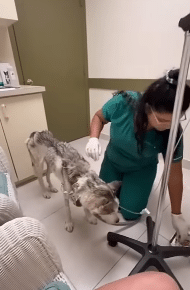
Rescuers brought Wolf to a veterinary clinic, where his condition quickly became a matter of serious concern.
An infection had developed in his abdomen.
The veterinary team determined that emergency surgery was necessary to give him a chance of survival.
For a healthy dog, undergoing a major operation is already a significant medical event.
For Wolf, the danger was considerably greater.
He was severely underweight.
He was dehydrated.
And his body had already been weakened by prolonged hardship.
Even administering anesthesia carried serious concerns.
The people caring for him understood that there was no guarantee he would survive the procedure.
Yet without urgent intervention, his prospects were equally frightening.
The decision was not about choosing an easy treatment.
There was no easy option.
It was about giving Wolf the best chance available.
The operation went ahead.
And despite the risks, Wolf survived.
The medical emergency was not the end of his difficulties, but it marked an important turning point.
For the first time since rescuers found him, the Husky was receiving the treatment his condition required.
He also had something he had been missing outside.
A protected place where he could rest.
There would be more difficult days ahead, and nobody could know how much strength Wolf would regain.
But he had made it through the first major crisis.
VIDEO: Starving Husky Wolf Was Barely Able to Stand — His Desperate Fight for Survival Led to Emergency Surgery
Learning That Gentle Hands Could Bring Comfort
Surviving surgery was only the beginning.
In the days that followed, Wolf remained extremely weak.
His body needed time to recover from the operation, and the effects of severe malnutrition could not disappear overnight.
Physical healing was only part of the challenge.
Wolf was also nervous around people.
Even gentle contact could make him uncomfortable, suggesting that he was not yet accustomed to feeling safe in human company.
For the rescuers, this meant that patience would matter just as much as persistence.
They could not expect him to become energetic and trusting simply because his immediate medical emergency had passed.
Instead, they focused on manageable steps.
They stayed close to him.
They offered food by hand.
They allowed small improvements to happen gradually.
A little more willingness to eat was progress.
A calmer reaction to someone's presence was progress.
Each sign of returning strength mattered because Wolf had started his recovery from such a vulnerable condition.
There was no single moment when all his difficulties disappeared.
His recovery required repeated care, observation, and the willingness to keep helping even when improvement was slow.
Eventually, Wolf began eating again.
That change carried enormous significance.
For a dog who had been so severely deprived of food, accepting nourishment was an essential part of rebuilding his strength.
Then another small change appeared.
One day, as someone came near him, Wolf lifted his tail slightly.
It was not an energetic wag or an excited greeting.
Just a little movement.
But it was different from the defeated behavior rescuers had seen when they first found him.
Something in his response to human attention was beginning to change.
A dog who had once seemed almost unreachable was showing the first signs of comfort.
Just as Hope Returned, Another Crisis Arrived
During the following weeks, Wolf continued to make progress.
His body gradually became stronger.
He appeared more alert.
The small signs of confidence that had begun to emerge were becoming easier to recognize.
For those who had watched him struggle through the first operation, these improvements offered welcome reassurance.
Wolf was no longer the same motionless, exhausted animal they had initially encountered.
Recovery was happening.
But it had not yet become secure.
Then, unexpectedly, Wolf collapsed.
The sudden change was alarming.
After everything he had already survived, the Husky was once again facing a medical emergency.
Rescuers rushed him back for urgent veterinary attention.
The examination led to deeply concerning news.
Wolf needed another exploratory operation.
The doctors estimated his chance of surviving at approximately 10 percent.
It was a difficult situation to confront.
The first operation had already placed enormous demands on his weakened body. He had spent weeks working toward recovery, slowly regaining the strength that severe neglect had taken away.
Now he was facing another major procedure.
And this time, the reported odds were even less encouraging.
The rescuers had already invested so much care in helping him recover.
They had watched him begin eating.
They had seen his first tentative tail movement.
They had witnessed the gradual return of his energy.
Those were not small things to the people who had been beside him.
Each represented a part of the life they hoped he would be able to enjoy.
Once again, the veterinary team faced a difficult operation.
And once again, Wolf survived.
The Long Road Back to Strength
The second surgery gave Wolf another opportunity to recover, but it did not bring an immediate return to health.
He remained physically fragile.
Even ordinary movement required support, and rehabilitation became an important part of helping him regain his abilities.
His progress unfolded over time.
The Husky who had struggled simply to remain standing now had to rebuild enough strength to move comfortably again.
It was a demanding process for an animal whose body had already endured severe malnutrition and two major surgeries.
There was no reason to expect a quick transformation.
Recovery required consistency.
It required attention to his limitations.
And it required the kind of patient care that does not end when the immediate danger has passed.
Day by day, Wolf began to improve.
His physical strength gradually returned.
The changes in his behavior became increasingly noticeable, too.
Where he had once responded to people with uncertainty, he started showing more interest in their attention.
The small tail movement that had meant so much during his earlier recovery eventually became a happier, more confident wag.
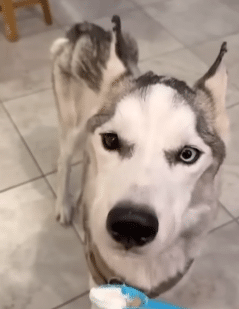
He began greeting people with excitement.
He became playful.
And the fearful hesitation that had characterized his earliest days in care slowly gave way to a more relaxed personality.
For a Husky, these changes were particularly meaningful.
The breed is often associated with lively behavior and enthusiasm, but Wolf had been too weak and withdrawn to express much of that energy when he was first rescued.
Now, his own personality was finally becoming visible.
He was not simply getting through each day.
He was beginning to enjoy it.
A Different Dog, Given a Different Future
Looking at Wolf after his recovery, it is difficult to reconcile the healthier, happier Husky with the dog rescuers first encountered.
His condition had changed dramatically.
The severely underweight animal who could barely stand had grown stronger.
His eyes appeared brighter.
His movements became steadier.
And perhaps most encouragingly, his behavior around people had transformed.
Wolf no longer reacted to every approach with the same fear and uncertainty.
He welcomed attention.
He played with other dogs.
He showed the joyful energy that had been almost impossible to imagine during his earliest days.
These changes did not erase what had happened to him.
His journey had included serious illness, painful physical weakness, two emergency operations, and a lengthy period of rehabilitation.
But the life surrounding him was different now.
Instead of struggling alone without enough food or water, he was receiving care.
Instead of facing unfamiliar people with constant apprehension, he had learned to enjoy their company.
Instead of spending his energy simply trying to survive, he could use it to explore, interact, and play.
That is what made Wolf's transformation so moving.
His recovery was not defined by a single dramatic moment.
It was the result of many smaller moments, supported by people who continued caring for him even when the outcome remained uncertain.
The first successful surgery.
The first time he began eating again.
The small movement of his tail.
The difficult return to emergency treatment.
The gradual rebuilding of strength after his second operation.
Each stage contributed to the dog he eventually became.
What Wolf's Second Chance Reminds Us
Wolf's journey illustrates something important about rescuing an animal in serious distress.
The moment a dog reaches safety is not necessarily the moment the difficult part ends.
Sometimes, it is where the most demanding work begins.
Emergency treatment may address an immediate threat, but rebuilding physical health can require time, rehabilitation, and ongoing support.
Trust may take even longer.
An animal who has experienced prolonged hardship cannot always respond to kindness immediately.
Wolf's earliest reactions reflected that difficulty.
He was weak, withdrawn, and uncomfortable with gentle human contact.
The people caring for him could not change those responses through affection alone.
They had to give him time.
They had to keep providing the food, treatment, and reassurance he needed.
And they had to continue when progress became uncertain.
Twice, Wolf faced life-threatening medical emergencies.
Twice, veterinary intervention helped him survive.
The second time, his reported chance of survival was only about one in ten.
Yet the story did not end there.
Through continued care and gradual rehabilitation, Wolf recovered enough to show a side of himself that had been hidden beneath fear and exhaustion.
A playful dog.
An affectionate companion.
A Husky who could greet people happily and enjoy the company of other dogs.
Today, the most meaningful part of Wolf's transformation is not simply that he looks healthier.
It is that his life offers something more than survival.
He has safety, companionship, and the freedom to behave like a happy dog.
His story is a reminder that compassion is rarely just one extraordinary act.
Often, it is a series of ordinary decisions made consistently.
To provide care.
To remain patient.
To recognize small improvements.
And to continue helping when recovery becomes difficult.
For Wolf, those decisions made the difference between a life overshadowed by suffering and a future filled with warmth.
The Husky who once struggled to stand now has the opportunity to live without the same constant fear.
And after everything he endured, that peaceful, joyful second chance is an extraordinary outcome in itself.


