
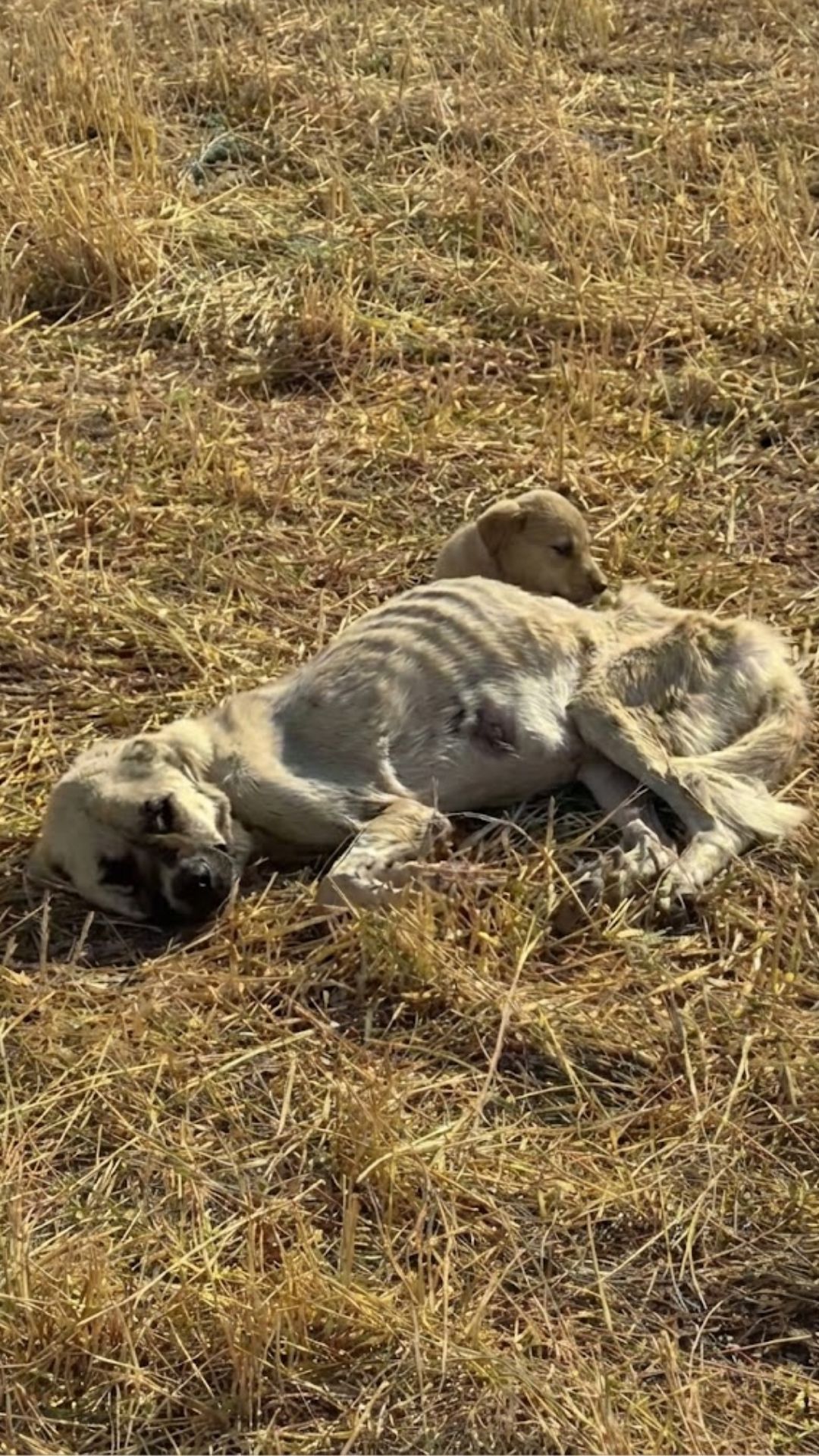
For three days, a tiny puppy remained beside her mother in a garbage dump.
She had no food. No water. No one to protect her.
Yet she stayed in the same place, close to the one familiar presence in a world that had suddenly become frighteningly quiet.
Her name was Jamy.
And although the little puppy could not understand what had happened, her actions told a story of attachment that was difficult to witness.
She pressed herself against her mother's still body. Sometimes she nudged her gently. At other moments, she tried to nurse, seeking the comfort she had always known.
Nothing changed.
Her mother did not respond.
By the time help reached Jamy, the young puppy was no longer simply waiting.
She was struggling to survive.
Three Days Beside the Only Family She Knew
Life had already been difficult for Jamy before tragedy separated her from her mother.
People in the area had previously seen the two dogs searching for scraps among the discarded waste. Their surroundings offered little comfort, but they had each other.
For a puppy as young as Jamy, that bond was everything.
Her mother represented food, warmth, familiarity, and protection. Staying close was a natural instinct, one that had helped keep the little dog alive.
Then everything changed.
According to the account of her rescue, Jamy's mother had been poisoned and died at the dump.
The circumstances surrounding the poisoning were not explained. What was clear was that the puppy had been left alone beside her mother's body.
Jamy did not simply wander away.
She remained nearby, sometimes curling up behind her mother as though the familiar shape could still offer shelter.
The behavior was especially moving because of its simplicity.
She waited.
When there was no response, she tried again.
She nudged her mother and attempted to nurse, repeating the small gestures that had once brought her comfort.
But there would be no familiar movement to answer her.
As one day passed into another, Jamy's situation became increasingly dangerous.
A garbage dump was no place for such a vulnerable puppy to survive alone.
Without proper nourishment or water, her little body gradually weakened. She had no mother to feed her, no protection from her surroundings, and no way to understand why the ordinary routines of her short life had disappeared.
Three days passed this way.
Three days of remaining close to someone who could no longer care for her.
And with every passing hour, Jamy needed help more urgently.
When Help Finally Reached the Garbage Dump
The turning point came after someone contacted rescuers about the puppy.
When they arrived, they encountered a situation more serious than simply finding a young dog without its mother.
Jamy was severely weakened.
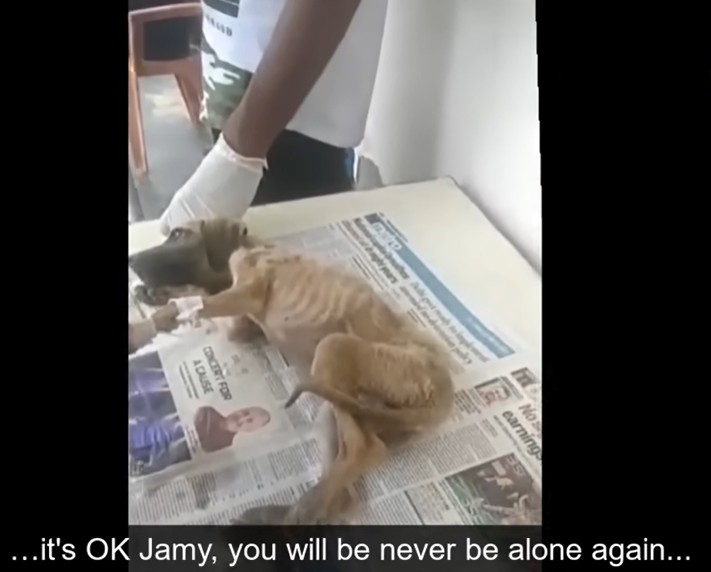
Her small frame had become painfully thin, with her ribs visible beneath her skin. She had gone without the food and water she needed during those three days beside her mother.
One of her eyes was nearly closed because of an infection.
Her coat also carried a heavy burden of parasites.
Fleas had spread through her fur, while ticks were attached around her ears. For an already exhausted puppy, these additional problems made her condition even more concerning.
There was little strength left in her legs.
When the rescuers carefully tried to lift her, she could barely support her own weight.
She did not have the energy to run away.
There was no struggle to escape their hands.
The puppy who had spent three days waiting beside her mother now depended entirely on the people who had come to help.
That moment marked a quiet but profound change.
For the first time since losing her mother, Jamy was no longer facing everything alone.
The rescuers could not undo what had happened at the dump.
They could, however, give her the care she urgently needed.
And that was where the next, uncertain part of her journey began.
VIDEO: Tiny Puppy Stayed Beside Her Lifeless Mother for Three Days — Then Rescuers Found Her Too Weak to Stand
The First Days Were a Fight for Strength
At the veterinary clinic, Jamy's condition required immediate attention.
She was severely dehydrated and physically exhausted. Her body had been pushed far beyond what a young puppy should have to endure.
Veterinary staff began providing intravenous fluids to help stabilize her.
But treatment did not mean an immediate recovery.
Jamy remained extremely weak, and there was genuine uncertainty about whether she would make it through the first night.
Her condition required time, careful attention, and continued medical support.
For the next three days, she could not stand.
The little dog who had once searched for scraps beside her mother now lay almost motionless while her caregivers worked to help her recover.
It was a difficult stage of the rescue.
There was no sudden burst of energy.
No immediate return to normal puppy behavior.
Only a fragile animal receiving the care that her body desperately needed.
The veterinary team addressed the problems that had developed during her time without protection.
Medicated baths helped remove the fleas and ticks that had been causing her discomfort.
Intravenous fluids supported her recovery from dehydration.
And instead of remaining on the ground at the garbage dump, Jamy was now in a place where people could monitor her condition and respond to her needs.
Each part of that care mattered.
Her body had been deprived of basic necessities. Restoring her strength would not happen all at once.
She needed more than a single meal or a moment of kindness.
She needed a real opportunity to heal.
On the Fourth Day, Jamy Did Something Remarkable
Recovery often begins with changes so small that they might seem ordinary in another situation.
For Jamy, the most important early improvement was also one of the simplest.
She stood up.
On the fourth day of her treatment, after spending three days unable to support herself, the puppy finally managed to rise.
It was a powerful milestone.
Only days earlier, her legs had given way when rescuers tried to pick her up.
Now, with treatment beginning to restore her strength, she could stand again.
The difference was not merely physical.
Standing meant that her body was responding to the care she had received.
It meant that the exhaustion and dehydration that had left her almost helpless were gradually becoming less overwhelming.
And it meant that there was reason to hope for more progress.
Of course, one improvement did not erase everything Jamy had experienced.
She was still a young puppy recovering from a difficult ordeal.
Her body needed nourishment. Her infected eye and parasite problems had required attention. Her strength had to return gradually.
But the fourth day gave her caregivers an encouraging sign.
Jamy was moving forward.
The puppy who had once been unable to stand was beginning to regain control of her small body.
And as her physical condition improved, another change slowly became visible.
Her personality began to emerge.
The Little Puppy Who Started Enjoying Life Again
During the first part of her rescue, nearly everything about Jamy's behavior reflected exhaustion.
She had been too weak to stand and too depleted to respond as a healthy puppy normally might.
As treatment progressed, those limitations began to ease.
Her appetite returned.
At first, she ate eagerly, as though she could hardly get enough after her time without proper nourishment.
Gradually, feeding became more comfortable.
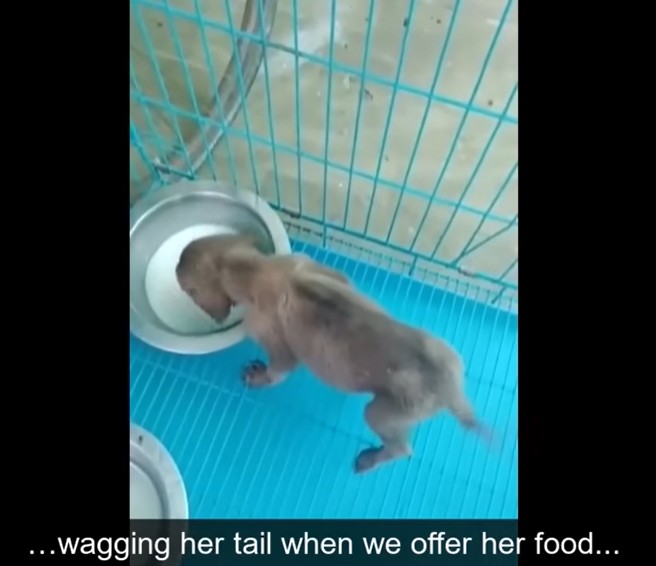
She also began drinking milk from a bowl.
It was a simple detail, but an important one.
At the garbage dump, Jamy had repeatedly tried to nurse from her mother, still searching for a familiar source of nourishment and security.
Now, she could receive what she needed without waiting for a response that would never come.
Food was available.
Care was consistent.
The little puppy no longer had to depend on scraps to survive.
As her strength returned, her behavior began reflecting the improvement.
Then came another small moment that meant a great deal.
Jamy wagged her tail.
The first movement was slight and uncertain.
It was not the enthusiastic greeting of a puppy who had always known safety and comfort.
But it was a beginning.
Over time, that little movement grew into a more expressive, full-body wag.
Her caregivers began seeing a brighter, more responsive Jamy.
The puppy who had spent her earliest days of rescue lying quietly in weakness was now greeting the people caring for her.
Her eyes looked livelier.
Her movements showed greater energy.
The change was gradual, but unmistakable.
Jamy was doing more than recovering physically.
She was beginning to experience the ordinary pleasures that every puppy deserves.
The comfort of being fed.
The relief of receiving care.
And the simple happiness of responding to a familiar, gentle presence.
Eleven Days Later, Her Life Took Another Turn
By the eleventh day, Jamy had made enough progress to leave the veterinary clinic.
That milestone marked a remarkable contrast with the condition in which she had been discovered.
When rescuers first found her, she could hardly stand.
She was dehydrated, underweight, and struggling with an eye infection and a heavy parasite burden.
Her survival had been uncertain.
Now, after days of treatment and recovery, she had regained enough strength to move into the next chapter of her life.
But there was something especially meaningful about where she was going.
Jamy would not be returned to the garbage dump.
She would not be moving into a shelter.
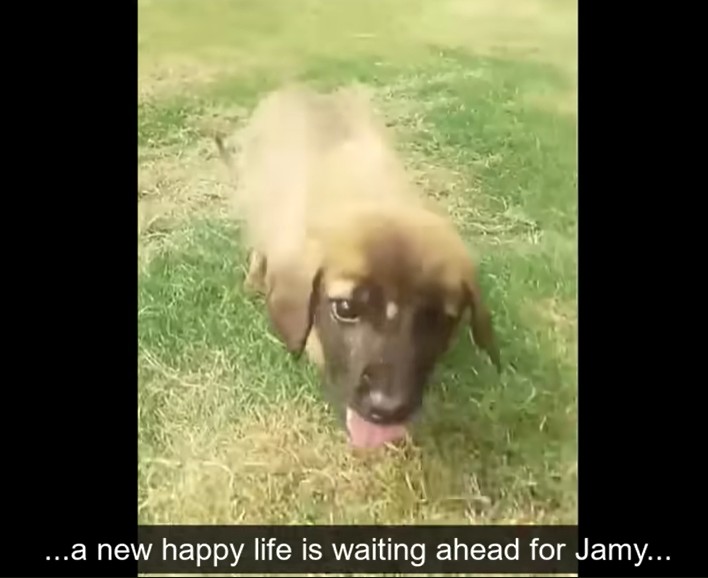
She was going to a home.
For a puppy whose earliest experience had included such a devastating loss, that change represented an entirely different kind of future.
The place where she had once waited helplessly beside her mother would no longer define her daily life.
Instead, Jamy would have people looking after her needs.
She would have regular care, food, and the security of belonging somewhere.
The difference between those two circumstances is difficult to overstate.
At the dump, she had remained beside her mother because that was where she felt connected to the only life she knew.
After her rescue, a new environment offered the possibility of a life built around safety rather than survival.
Her mother's absence could never be changed.
But the direction of Jamy's future had changed completely.
A Second Chance That Began With Someone Noticing
Today, Jamy's recovery is visible in both her appearance and her behavior.
She has gained weight.
Her eyes are clear.
And the weakness that once left her unable to stand has given way to a healthier, stronger little dog.
Her transformation is especially meaningful when compared with how her rescue began.
The same puppy who once lay beside her mother at a garbage dump is now living in a home where she is cared for and loved.
She has not forgotten the past in any way that people can measure or claim to understand.
Animals experience attachment and loss in their own ways, and Jamy's actions beside her mother showed just how strongly she remained connected to that familiar presence.
What matters now is that her story did not end at the dump.
Someone recognized that a vulnerable puppy needed help.
Rescuers responded.
Veterinary caregivers provided treatment during a period when her survival was uncertain.
And a home became the next step after her recovery.
None of those acts could bring back her mother.
Together, however, they gave Jamy something she had almost lost.
A future.
Her journey is a reminder that rescue is often about the smallest changes that make the greatest difference.
A puppy accepting food.
A weak body finally standing.
A tail beginning to wag.
A journey from a veterinary clinic to a loving home.
For Jamy, those moments were not small at all.
They were the steps that carried her away from three days of waiting and toward a life where she no longer had to face the world alone.
Her beginning was filled with loss.
But thanks to the people who chose to help, the rest of her story has room for love, safety, and hope.


