
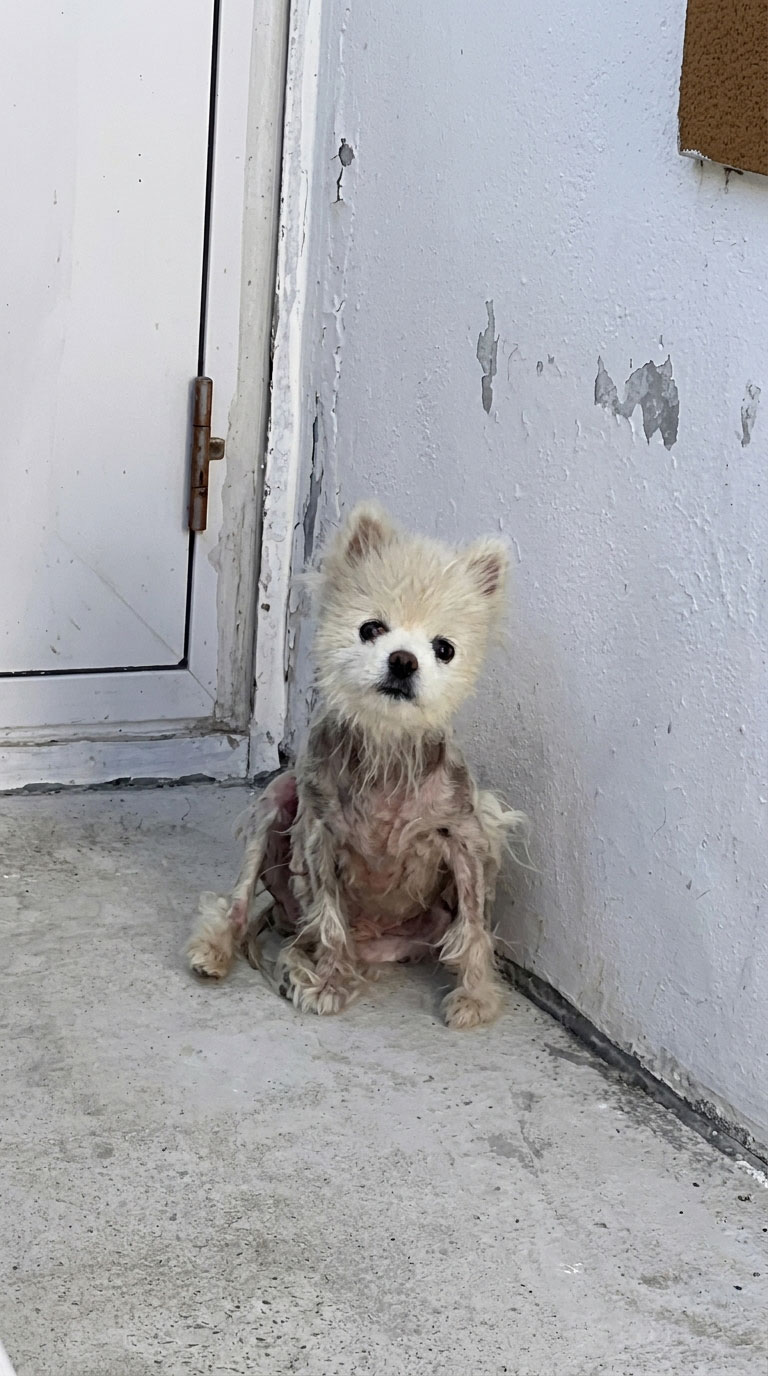
For months, a small dog remained close to one apartment door, watching the hallway as though someone familiar might appear at any moment.
The apartment was empty.
The door stayed closed.
Yet the little dog continued to wait.
Her name would eventually become Yoro, but during those lonely months, she was simply a forgotten pet holding on to the only home she had known.
The people she once lived with had moved away after selling their apartment. They had not taken her with them.
Yoro could not understand why everything familiar had suddenly disappeared.
She remained near the entrance, returning to the same place while the days turned into weeks and the weeks stretched into months.
There was no comfortable bed waiting for her. No regular meals. No familiar voice calling her inside.
She survived on whatever scraps she could find and water collected in dirty puddles near the basement.
And still, she waited.
What makes Yoro's experience so moving is not only how long she remained there.
It is how little she seemed to ask for.
She wanted to be near the place she remembered as home.
The Door That Never Opened Again
Yoro's difficult journey began when her owner sold the apartment and left without her.
For a dog accustomed to living with people, that sudden separation meant losing more than a roof.
It meant losing a daily routine, familiar surroundings, and the human companionship she had depended on.
Yoro remained in the aging apartment building, spending much of her time near the former entrance to her home.
The hallway became her waiting place.
The basement became somewhere she could rest, although its cold, damp floor offered little comfort.
As time passed, the effects of living without proper care became increasingly visible.
Her once-soft fur collected dirt and formed thick tangles. The longer she went without grooming, the more difficult it became to recognize the little companion she had once been.
Her appearance changed so much that some residents began treating her like an unwanted stray.
When she appeared in the hallways, people sometimes chased her away.
For Yoro, even the building that held her last connection to her family was becoming an unwelcoming place.
She had to search for food.
She had to find water wherever she could.
And she had to endure the uncertainty of being alone.
Dogs depend on people for many of their basic needs. When that support disappears, even simple things such as staying clean, eating regularly, and sleeping safely can become difficult.
Yoro's condition gradually reflected those struggles.
But her attachment to the apartment remained.
When Someone Finally Saw More Than a Stray
The turning point came when a woman purchased the vacant apartment.
Unlike people who had grown accustomed to seeing the little dog wandering through the building, the new owner noticed something unusual.
Yoro kept lingering near the same front door.
She was not simply passing through the hallway.
She repeatedly returned to that particular entrance, remaining close to a home that no longer belonged to the people she remembered.
The woman learned about the situation and recognized that Yoro needed help.
Although she could not personally adopt the dog, she was unwilling to ignore her circumstances.
Instead, she contacted a local Kakao rescue community and shared Yoro's situation, hoping someone would be able to give the abandoned little dog a chance.
It was an important decision.
Yoro had spent months living without the care she needed. Her heavily matted coat and declining physical condition suggested that she could not safely continue that way.
She needed more than occasional food.
She needed someone willing to take responsibility for her recovery.
Through the woman's request, rescuers became involved.
When Yoro was finally lifted into caring arms, the contrast between her devotion and her circumstances was difficult to overlook.
She had remained faithful to the place she considered home, even after the people who lived there had gone.
One rescuer expressed sorrow at the thought of someone leaving behind such an affectionate dog.
For the first time in months, Yoro was being carried away from the doorway she had refused to forget.
This time, leaving did not mean being abandoned.
It meant receiving help.
VIDEO: Abandoned Puppy Waited for Months Outside Her Old Home Until Someone Finally Came to Help
Beneath the Tangled Fur Was a Dog Who Needed Care
Once Yoro was rescued, attention turned to her physical condition.
She was taken to a veterinary clinic for an examination.
After months of neglect, there were understandable concerns about what the long period without proper care might have done to her body.
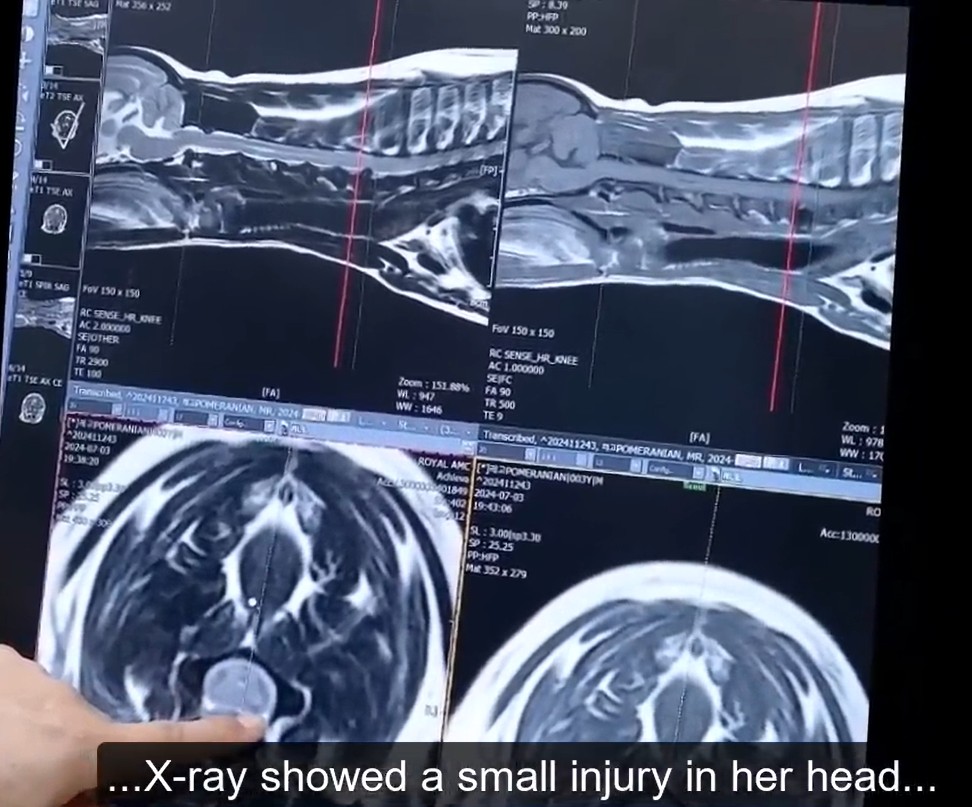
Veterinarians examined her carefully, including taking X-rays to evaluate injuries affecting her head and back.
Fortunately, the results offered some relief.
The injuries identified in those areas were relatively minor and were not considered life-threatening.
That was encouraging news.
But Yoro still faced another significant problem.
Her skin had developed serious infections beneath the thick layers of dirty, tightly matted fur.
The tangled coat that had built up during her months alone was no longer simply a grooming issue.
It was interfering with the care her skin needed.
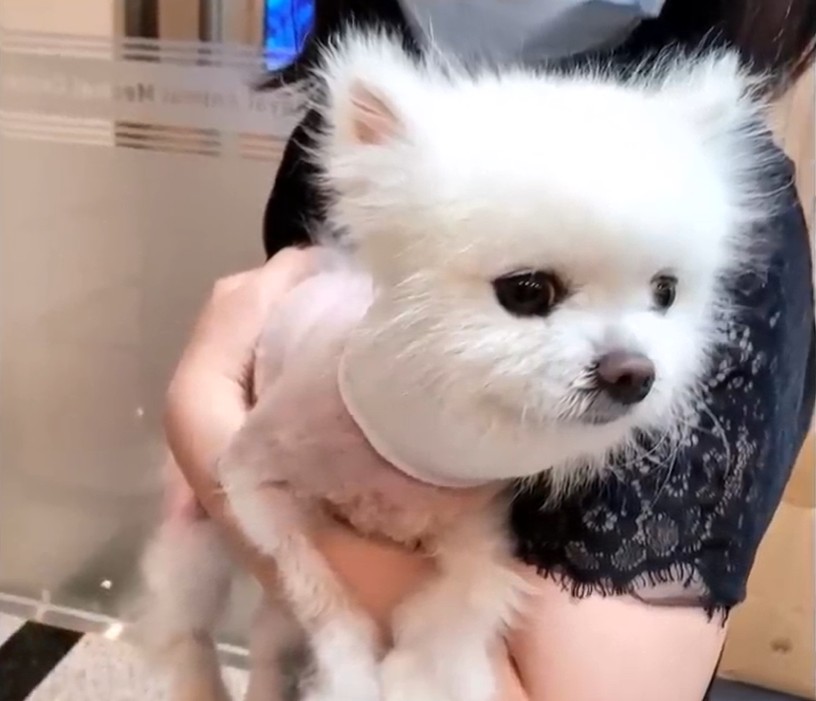
Veterinarians had to remove almost all of her fur so they could properly treat the affected areas.
For a small dog who had already endured so much discomfort, this was another difficult part of the recovery process.
Yet removing the damaged coat was necessary to help her heal.
Without most of her fur, Yoro looked especially delicate.
Her caregivers dressed her in little cotton shirts to help keep her warm and protect her comfort during treatment.
The clothes were simple, but they represented a dramatic change in her everyday life.
She was no longer sleeping on a damp basement floor without anyone watching over her.
Now people were paying attention to her health, warmth, and daily needs.
One encouraging detail stood out from the beginning.
Despite everything she had experienced, Yoro had not lost her appetite.
Whenever fresh food was placed before her, she responded with visible enthusiasm.
Her little tail moved happily as she ate.
For the people caring for her, those moments were reassuring.
She was receiving dependable meals again, and she still showed the affectionate, responsive personality that had survived her time alone.
Medical recovery would require patience.
Her skin needed treatment, and her coat would take time to grow back.
But the first steps had already begun.
Yoro was no longer surviving entirely on her own.
Small Changes That Meant Everything
Healing rarely happens all at once.
For Yoro, progress came through the return of ordinary comforts that had been missing from her life.
Regular meals.
A safe place to rest.
Gentle attention from caregivers.
The chance to sleep without being driven away.
These were not extraordinary luxuries.
They were basic parts of life that every companion animal deserves.
As the weeks passed, Yoro's physical condition steadily improved.
The injuries along her back healed completely, and new fur began growing over the areas that had been shaved.
The skin that once required careful medical attention gradually recovered.
With each improvement, she looked less like the neglected dog found waiting outside the apartment and more like the healthy little companion she had the potential to become.
Her recovery was not only visible in her coat.
It could also be seen in the way she responded to her surroundings.
Yoro was beginning to experience a more predictable life.
Instead of searching for scraps, she could expect food.
Instead of finding whatever place was available to sleep, she had a warm bed.
Instead of being pushed away from the hallway, she was welcomed and cared for.
That kind of consistency matters deeply for an animal who has lived without security.
Yoro's experience showed how much can change when basic needs are finally met.
The First Peaceful Nights After Months of Waiting
One of the most meaningful changes involved Yoro's sleep.
During her months in the apartment building, she had spent countless nights on the cold floor near the basement.
She had also remained alert to the sounds around her, seemingly attached to the possibility of someone returning.
After her rescue, her sleeping environment changed completely.
She was given a soft, warm bed.
At first, she still rested lightly.
Unexpected noises could startle her, and she did not immediately settle into the peaceful routine her caregivers wanted for her.
That reaction was understandable after such a prolonged period of instability.
Although her surroundings had improved, becoming comfortable in them took time.
Her caregivers continued providing the dependable care she needed.
Gradually, Yoro began to relax.
The small dog who once waited anxiously near an empty apartment started sleeping more soundly.
Eventually, she could rest peacefully through the night.
There was something especially touching about that change.
For months, so much of her life had revolved around a door that never opened.
Now, she could finally sleep without needing to remain on watch.
Her progress also appeared in the way she interacted with people.
Yoro participated in behavioral training and quickly demonstrated that she was intelligent, gentle, and eager to cooperate.
The qualities that might have made her a wonderful family companion had never disappeared.
They had simply been overshadowed by circumstances she could not control.
Her caregivers also noticed how affectionate she remained.
After finishing her food, Yoro would sometimes gently kiss a caregiver's hand.
It was a small gesture, but it left a lasting impression on the people looking after her.
They had met a dog whose loyalty had kept her waiting for people who never returned.
Now they were discovering a companion who still responded warmly to human kindness.

Learning to Trust a Different Kind of Home
As Yoro grew healthier, her daily life continued to change.
She was no longer defined by her matted fur or by the doorway where she had spent so much time.
Her personality had room to emerge.
She was affectionate.
She enjoyed attention.
She responded well to training.
And she appeared increasingly comfortable with the people around her.
These changes were important because rescue is not always complete the moment an animal is removed from danger.
Physical care is one part of the process.
Helping a dog become comfortable with a stable routine can be just as meaningful.
Yoro needed the opportunity to experience human relationships differently from the one that had left her alone.
The people caring for her could not change what had happened at the apartment building.
They could, however, give her a different experience of everyday life.
One in which meals arrived reliably.
One in which there was a comfortable place to rest.
One in which gentle contact was welcomed rather than interrupted by someone chasing her away.
And one in which she no longer had to remain beside a locked door to feel connected to people.
With time, her growing confidence became another sign that recovery was moving forward.
The little dog who had endured months of uncertainty was preparing for a future that no longer depended on the past.
The Family She Had Been Waiting For
As spring arrived, Yoro's story reached another important turning point.
In May, she was adopted into a permanent home.
After months spent waiting outside her former apartment, followed by veterinary treatment and recovery, she finally had a family of her own again.
This was the outcome her rescuers and caregivers had hoped for.
Yoro quickly formed a close bond with her new mother.
She greeted her with enthusiastic kisses and showed the affection that had become such a recognizable part of her personality.
The contrast with her earlier circumstances could hardly have been greater.
There had been a time when she waited outside an empty apartment, hoping for familiar people to return.
Now she had someone who welcomed her affection every day.
There had been a time when she survived on scraps and dirty water.
Now she had the security of a family home.
There had been a time when the cold basement floor was where she rested.
Now she could enjoy a soft bed and peaceful sleep.
Her days came to include sunshine, comfortable walks, and the companionship of people who loved her.
The little dog who had once seemed forgotten was no longer living on the edge of someone else's life.
She belonged.
A Different Meaning for the Word Home
Yoro's journey is memorable because her greatest hardship was not caused by a lack of affection on her part.
She had remained devoted to the people and place she knew.
What she lacked was the dependable care that devotion should have been met with.
Her rescue began when a woman noticed the small dog by the apartment entrance and chose to reach out for help.
That decision connected Yoro with people who could provide the medical attention and steady care she needed.
Her treatment addressed the physical effects of neglect.
Her recovery gave her back the comforts of a safe daily routine.
And her adoption offered her something even more lasting: a home where she could live as a cherished companion.
There is a meaningful lesson in the way her story unfolded.
Sometimes helping an animal does not require being able to adopt it personally.
The woman who noticed Yoro could not bring her into her own family, but she still found a way to make a difference.
By reaching out to a rescue community, she helped create the opportunity for Yoro's life to change.
Her actions remind us that noticing an animal in need and connecting it with appropriate help can matter enormously.
Today, Yoro's story is no longer centered on an empty apartment.
It is centered on the new life she found after leaving that hallway behind.
The door she once watched remained closed, but her future did not end there.
Through veterinary care, patient recovery, and adoption, she found the safety she had been missing for so long.
And perhaps the most comforting part of all is this:
Yoro no longer has to spend her days waiting for a family that is gone.
She has a family to come home to.


