
In the darkest corner of an abandoned house, a trembling dog lay curled against the winter cold. She had spent so long escaping from people that even the woman who wanted to save her seemed like another reason to run.
Outside, the bitter St. Louis winter showed little mercy.
Inside, a woman named Donna was carefully approaching a frightened stray who had resisted every previous attempt to help her.
The dog would eventually be known as Lumi.
But at that moment, she was simply a vulnerable animal trying to survive, caught between her fear of people and the freezing temperatures surrounding her.
Donna had spent weeks working toward this encounter.
Now, with Lumi shaking in the corner of a crumbling building, everything depended on whether the frightened dog would finally allow someone close enough to help.
A Winter That Left Little Room for Survival
Before Lumi found safety, her world was defined by cold streets, uncertain shelter, and an overwhelming need to keep her distance from people.
The winter winds swept through St. Louis, making life especially difficult for an animal already struggling to survive outdoors.
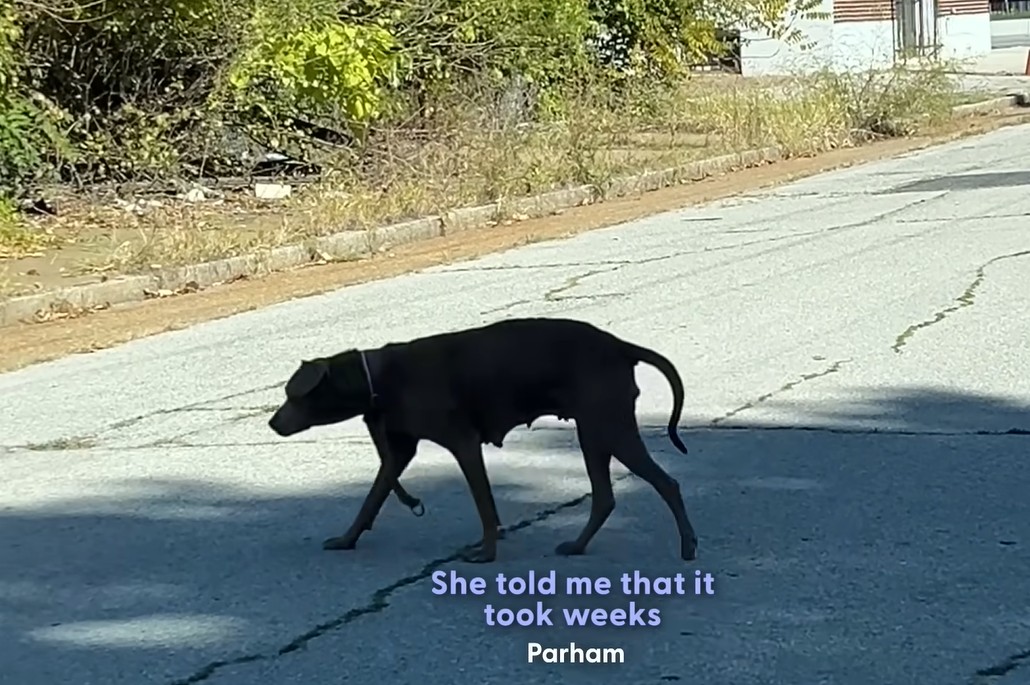
Lumi was thin, constantly alert, and visibly frightened.
Her coat offered limited protection against the cold. Her body trembled, and her behavior suggested that she had learned to regard approaching people as potential threats.
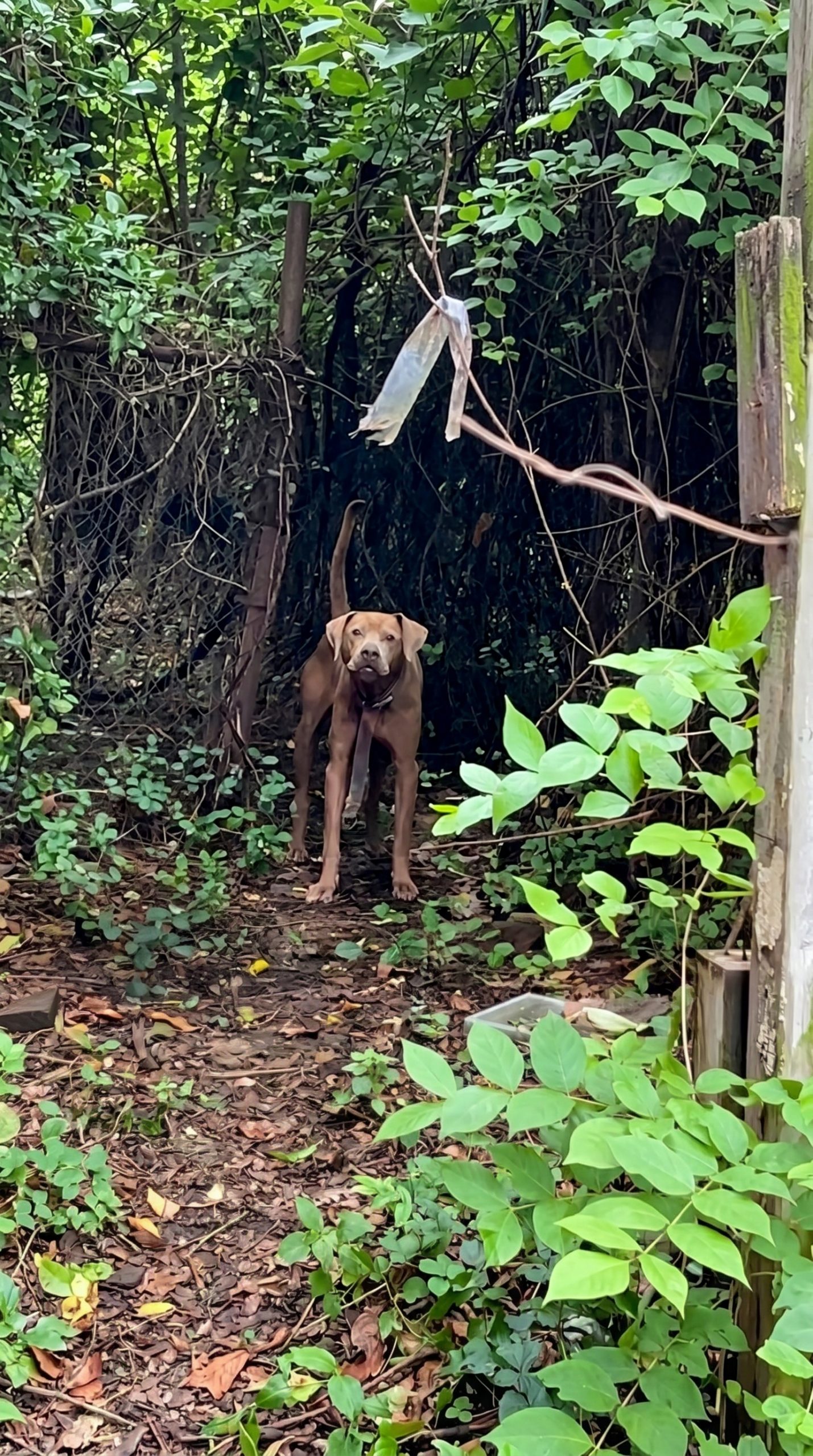
Whenever someone came too close, she disappeared.
She moved through brush and debris, keeping herself beyond reach even when food was available.
For an animal living on the streets, caution can be an important survival instinct. But Lumi's fear had become a serious obstacle to her rescue.
She needed warmth.
She needed regular food.
Most importantly, she needed to reach a place where she would no longer have to spend every moment looking for danger.
Yet accepting those things required her to do something she seemed unable to manage.
She had to trust a human being.
That was the challenge Donna faced when she began trying to help.
The Woman Who Refused to Give Up
Donna understood that rescuing Lumi would require more than simply approaching her with food or a leash.
The frightened dog had already shown how difficult she was to reach.
Attempts involving traps had not succeeded. Food sometimes encouraged Lumi to remain in the area, but it did not persuade her to allow anyone nearby.
A movement in her direction could undo whatever progress seemed possible.
Donna later described how impossible the situation sometimes felt because Lumi would not permit anyone to approach.
Still, she continued returning.
Rather than trying to force an encounter, Donna began building a routine around the dog's need for space.
She drove to the same quiet area each day.
She placed food where Lumi could find it.
Then she remained at a distance, speaking gently without demanding that the dog come closer.
There was no sudden rush toward her.
No attempt to turn every visit into an immediate capture.
Donna's approach was built around a simple understanding: a dog this frightened might need to become familiar with a person's presence long before accepting that person's touch.
The process was slow.
A successful visit did not necessarily mean Lumi would approach. Sometimes the only meaningful achievement was that Donna had appeared, offered food, and allowed the dog to remain undisturbed.
Those small moments mattered.
For Lumi, the presence of a human had repeatedly been a reason to retreat. Donna was trying to make her own presence something predictable instead.
Days passed.
Then weeks.
Throughout that time, the dog remained difficult to approach, but Donna did not abandon the effort.
When the Cold Forced Lumi Into Hiding
The turning point came during a particularly cold morning.
With temperatures becoming increasingly difficult to endure, Lumi sought refuge inside an abandoned house.
The building was deteriorating and filled with debris, but it offered a place to escape some of the exposure outside.
For Donna, the situation brought both concern and opportunity.
Lumi was still terrified, and an unsuccessful approach might send her fleeing again. At the same time, the dog's condition made it clear that continuing to live outdoors was becoming increasingly dangerous.
Donna entered the building carefully.
She knew from their previous encounters that sudden movements could frighten Lumi into retreat.
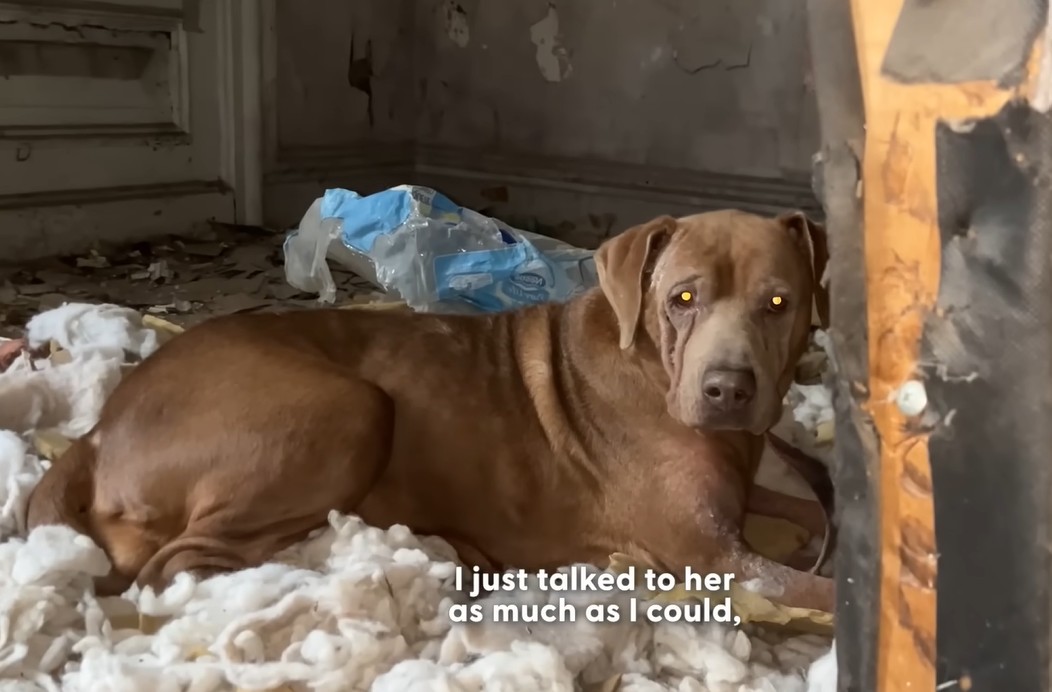
Inside, she found the dog curled tightly in a dark corner.
Lumi was shaking.
Her body was drawn inward, and her fear was still evident despite the need for shelter and warmth.
Donna did not attempt to grab her.
Instead, she lowered herself closer to the dog's level and began speaking softly.
She stayed calm.
She moved carefully.
She allowed the moment to unfold without forcing Lumi to respond before she was ready.
Donna later explained that she could see how cold and terrified Lumi was. Her immediate goal was to keep talking gently while moving close enough to secure her.
The woman who had spent weeks observing this dog's fear was now only a short distance away.
But being physically close was not the same as being trusted.
Donna still needed to make one final movement without sending Lumi into panic.
And this time, she managed it.
She gently slipped a leash over Lumi's neck.
The dog who had repeatedly disappeared whenever help approached was finally within reach.
VIDEO: She Hid Shivering in an Abandoned House — Watch the Gentle Moment Lumi Finally Accepted Help
The Quiet Moment That Ended Weeks of Running
Lumi's rescue did not depend on a dramatic chase or a sudden display of strength.
It happened because Donna recognized that fear could not simply be overcome by moving faster.
For weeks, Lumi had controlled the distance between herself and the person trying to help her.
She had remained beyond reach, disappearing into the surroundings whenever an approach became uncomfortable.
Inside the abandoned house, that pattern finally changed.
Donna was able to place the leash around her without the dog escaping.
It was a small movement with enormous consequences.
The leash meant that Lumi could finally be brought away from the freezing conditions that had threatened her safety.
It also marked the beginning of a completely different relationship with people.
Until then, Donna had been the familiar person who appeared with food and a gentle voice, always remaining at a distance.
Now, she could provide direct protection.
For Lumi, the change would take time to understand.
Fear does not disappear simply because an animal has been rescued.
A dog who has spent weeks avoiding human contact may still be unsure of hands, unfamiliar surroundings, and even ordinary acts of kindness.
Donna's patient approach had made the rescue possible.
What came next would require that same understanding.
The First Steps Toward a Safer Life
Once Lumi entered the rescue vehicle, the conditions of her life began to change.
She was no longer exposed to the St. Louis winter without dependable shelter.
She no longer had to rely on whatever food she could find while wandering outdoors.
And she no longer needed to keep moving simply to stay beyond the reach of people.
At the shelter, Lumi was given the basic comforts that had been missing from her life.
Soft blankets provided warmth.
Regular meals offered dependable nourishment.
People approached her with the patience and gentleness that had helped Donna reach her in the first place.
These changes may seem ordinary for a dog living in a secure home.
For Lumi, they represented a complete departure from the uncertainty of the streets.
A comfortable place to rest was no longer something she had to search for.
Food was no longer a brief opportunity that might disappear.
Human contact could begin to mean care rather than an encounter to escape.
Her physical recovery began under those safer conditions.
But her emotional adjustment was a longer process.
Lumi had been so wary of people that even a familiar rescuer had needed weeks to get close enough to touch her.
It would be unrealistic to expect that deeply established behavior to disappear immediately.
The shelter provided a setting where trust could develop gradually.
There was no longer the same urgency to flee from the cold or find somewhere to hide.
Instead, Lumi had the opportunity to experience a dependable daily routine.
Warmth.
Food.
Rest.
Gentle human attention.
Each of those things contributed to the life she was beginning to discover.
The Frightened Stray Slowly Revealed Her Gentle Side
Over the following months, Lumi changed in ways that went far beyond her physical condition.
Her body recovered, but the most meaningful transformation could be seen in how she responded to people.
The dog who once vanished whenever someone approached began allowing others into her personal space.
The animal who had treated human proximity as a warning gradually became more comfortable with affection.
Eventually, Lumi started leaning toward people rather than pulling away from them.
It was a striking reversal.
During the rescue effort, Donna had struggled to get close enough to secure a leash.
Now, Lumi was beginning to seek the very contact she had once avoided.
These changes were gradual.
There was no single moment when every trace of fear disappeared.
Instead, the dog's behavior softened over time as she experienced consistent care.
That distinction matters.
Lumi had not suddenly become a different animal. The affectionate companion emerging at the shelter was the same dog who had spent weeks hiding from Donna.
What had changed were the conditions surrounding her.
She had warmth instead of exposure.
Predictability instead of uncertainty.
Gentle contact instead of unwanted pursuit.
As her sense of security grew, her behavior began to reflect it.
The dog who had once seemed unreachable was learning that being close to people could bring comfort.
And the more she relaxed, the easier it became to see the gentle personality that fear had kept hidden.
A New Chapter Still Waiting to Begin
By the time Lumi had spent several months recovering, the difference between her former life and her new one was remarkable.
She was no longer the constantly trembling stray Donna had found inside the abandoned house.
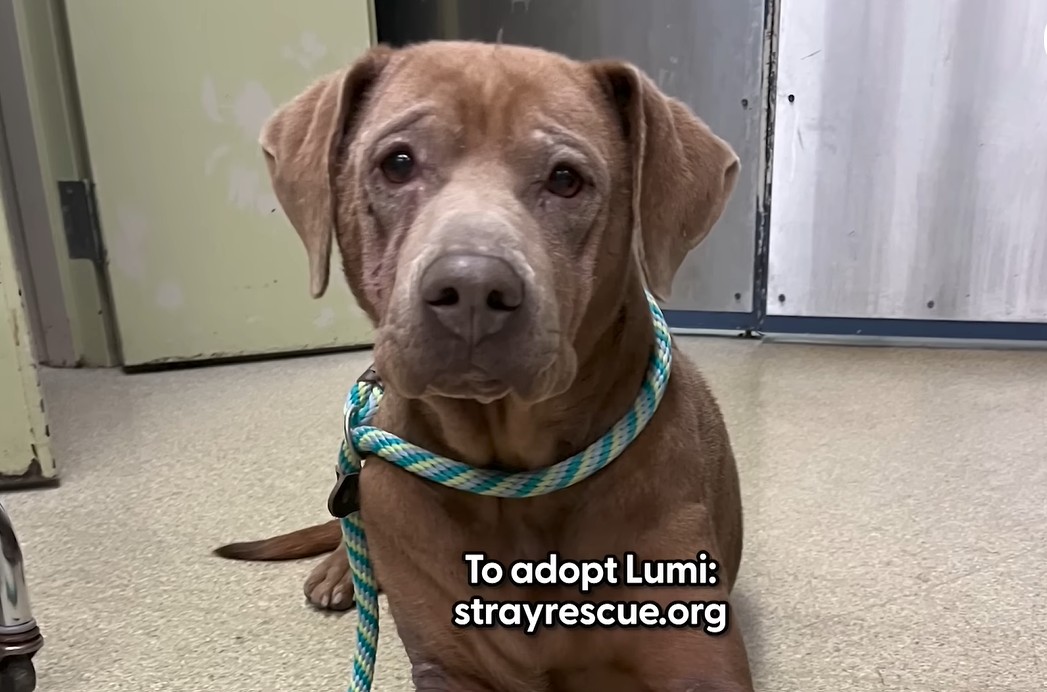
She had become a calm, affectionate dog who could enjoy human companionship.
The shelter had given her an essential second chance.
But one important part of her journey remained unfinished.
Lumi was still waiting for a permanent home.
Her rescue had brought her indoors, and the months that followed had helped her regain both physical strength and confidence around people.
Now she needed someone willing to welcome her into a family.
Donna expressed confidence that whoever adopted Lumi would find it easy to love her.
That hope reflected the dog Lumi had become.
She was no longer defined solely by the fear that had made her so difficult to rescue.
She could be affectionate.
She could seek attention.
She could begin forming the kind of connection that had once seemed impossible.
There was still no confirmed adoption in the account of her recovery.
Her future family remained a hope rather than a completed chapter.
But the most urgent part of her struggle was already behind her.
Lumi was safe, and she had the opportunity to continue building a life around companionship instead of survival.
What Lumi's Rescue Teaches Us About Trust
One of the most meaningful details in Lumi's story is how little changed during Donna's earliest visits.
She appeared with food.
She spoke gently.
She respected the dog's distance.
And she returned the next day, even when the previous visit had ended without an obvious breakthrough.
From the outside, that might have looked like very little progress.
But for an animal who was afraid of every approach, those repeated experiences helped establish the familiarity that made a later rescue possible.
Donna could not erase Lumi's fear by telling her that she was safe.
She had to demonstrate patience until there was an opportunity to help.
Even when that opportunity came, Donna did not abandon the careful behavior that had guided her throughout the rescue.
Inside the abandoned house, she crouched low and spoke softly rather than rushing toward the trembling animal.
That choice helped turn a difficult encounter into the moment Lumi finally reached safety.
The story also shows why rescue is not finished when an animal leaves a dangerous place.
Physical protection is the first essential step.
Afterward comes the slower work of helping a frightened dog feel comfortable enough to accept affection, rest peacefully, and respond to people without immediately expecting danger.
Lumi needed both.
She needed Donna to reach her before the bitter cold caused further harm.
And she needed patient care afterward to become the gentle companion she is today.
The result was not a sudden transformation or an unbelievable miracle.
It was something quieter and more enduring.
A frightened dog was given time.
A rescuer refused to give up.
And an animal who once survived by remaining out of reach gradually discovered that human closeness could be something welcome.
Lumi's permanent family had not yet been found when her story was shared.
But the dog who once hid trembling in a dark, abandoned house was no longer facing the world alone.
She was warm.
She was cared for.
And for the first time in her long struggle to feel safe, she could approach a human being without having to run away.
That is what Donna's patience made possible.
Not simply a successful rescue, but the beginning of a life in which Lumi could finally allow herself to be loved.


