
Sometimes, rescue begins with something as simple as a ringing phone.
Somewhere in India, a dog may be lying injured after a road accident. A kitten may be trapped where no one can reach it. A bird may be struggling after becoming tangled in dangerous kite string.
The person who notices may not know how to solve the problem.
But they can make a call.
Each year, the emergency hotline operated by People for the Ethical Treatment of Animals India receives more than 50,000 reports from people concerned about animals in distress. Behind those calls are countless individual emergencies, each requiring someone to decide that an animal should not be left to suffer unnoticed.
For rescue teams working in Mumbai and Delhi, that responsibility does not follow normal office hours.
They remain available around the clock, seven days a week.
When an Ordinary Day Suddenly Becomes an Emergency
No two rescue calls are exactly alike.
Some involve animals injured on busy streets. Others lead rescuers into confined spaces, vehicles, or situations where reaching the animal safely becomes a challenge of its own.
One particularly difficult operation involved a mother cat and her kitten trapped inside a ventilation shaft nearly 15 meters below ground.
They could not simply be reached by hand.
The rescuers had to carefully lower equipment into the shaft and coordinate the operation from above. Every movement mattered. Eventually, both the mother and her kitten were brought safely back to the surface.
For two small animals hidden deep underground, being discovered was the first turning point.
Being reached was the second.
Elsewhere, another urgent call took rescuers to a gas station in Mumbai, where a dog had been struck by a passing vehicle.
The dog needed more than removal from immediate danger. The team transported the injured animal to a veterinary clinic so treatment could begin as quickly as possible.
It was one emergency among many, but to the animal at the center of it, that response meant everything.
The Rescues That Continue After the Animal Is Found
Bringing an animal out of danger is often only the beginning.
Some arrive needing veterinary attention for conditions that have already made everyday life difficult.
In Delhi, a dog named Buri was suffering from a large benign tumor that seriously affected her quality of life. Veterinary professionals performed surgery to remove it, giving her an opportunity to live with greater comfort afterward.
Other cases involve conditions that are common among animals living on the streets.
Mange, for example, is a painful skin disease that can cause severe irritation and make rest and recovery difficult. PETA India’s teams treat hundreds of affected animals, with nearly 500 such cases handled annually.
Then there are emergencies that seem almost impossible until someone sees them.
Kittens have been discovered trapped inside car engines.
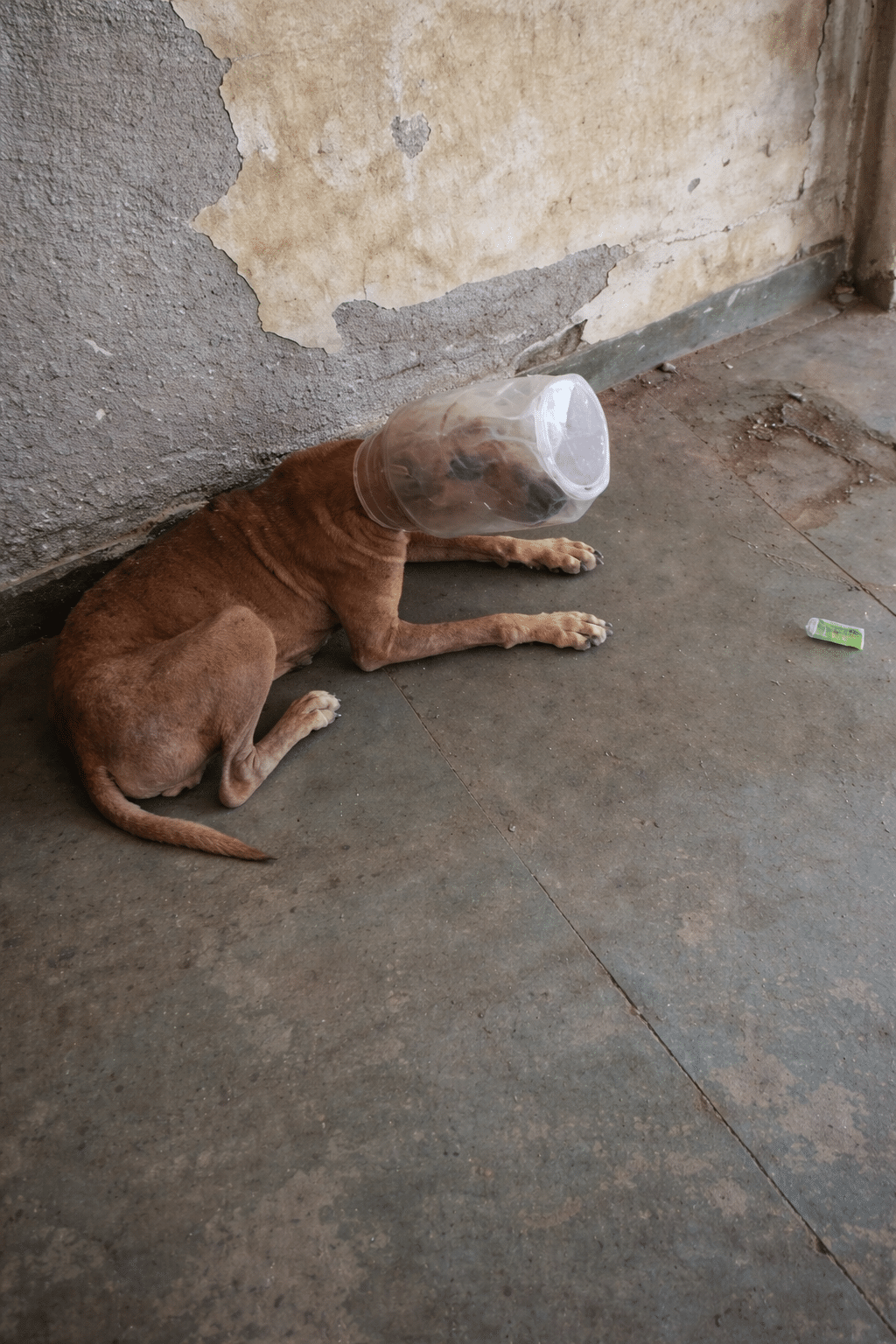
Dogs have been found with plastic containers stuck around their heads, leaving them unable to eat or drink normally. Situations like these can become life-threatening when an animal cannot free itself.
The details change from call to call.
The principle does not.
Someone notices.
Someone asks for help.
And a rescue becomes possible.
VIDEO: From Deep Shafts to Busy Streets — Inside the Rescue Work Giving Animals a Second Chance
Helping More Than Dogs and Cats
Emergency work extends far beyond the animals most commonly seen on city streets.
Wildlife can also end up in situations where intervention is necessary.
PETA India has helped confiscate peacocks being kept illegally and transfer them to rehabilitation facilities. There, the birds can receive appropriate care before potentially returning to suitable habitats.
Another recurring danger comes from sharp kite strings known as “manja.”
During festivals, these strings can injure birds that fly into them. Veterinary teams treat affected birds when such incidents occur, turning what might otherwise become a fatal encounter into a chance for recovery.
These cases reveal another side of animal rescue.
Sometimes the danger comes from a sudden accident.
Sometimes it comes from human activity.
Either way, the animal depends on someone recognizing the problem before it is too late.
Preventing Tomorrow’s Emergencies
Not every solution begins with an ambulance or an urgent rescue call.
Some of the most important animal-welfare work happens long before an emergency develops.
Stray animal populations can grow quickly when sterilization services are unavailable. More animals competing for limited food and safe spaces can create additional hardship on the streets.
In Mumbai, more than 850 stray cats have been sterilized through programs intended to reduce uncontrolled breeding.
It is quieter work than pulling an animal from a shaft or rushing an injured dog to a clinic.
But its impact can reach far into the future.
PETA India also works to find safe homes for animals that cannot simply be returned to the streets. Those animals have included rescued dogs as well as less expected species such as ducks and turtles.
Different animals may require different kinds of care.
What they share is the need for a safe outcome after the immediate crisis has passed.
When Rescue Also Means Seeking Accountability
Compassion alone cannot address every threat animals face.
In cases involving suspected cruelty, legal action can become part of protecting animals as well.
PETA India works with law enforcement authorities so reported acts of animal cruelty can be investigated and, where appropriate, prosecuted.
One case involved a man accused of killing a gray langur. According to the source, he was denied bail multiple times.
Other investigations have involved people accused of seriously mistreating dogs, with legal consequences pursued through the appropriate authorities.
In Mumbai, another significant step came when an official First Information Report was filed over the cosmetic cutting of dogs’ ears.
The procedure offers no medical benefit when performed purely for appearance, yet it can cause unnecessary pain.
The case represented something larger than a single incident.
Rescue protects the animal already in danger.
Enforcement can help establish that harming animals should not simply be overlooked.
Both forms of protection matter.
A Crisis the Lockdown Made Harder to See
The COVID-19 lockdown created an entirely different kind of emergency for animals living on the streets.
Many stray animals had long depended on food connected to normal city life—markets, restaurants, vendors, and people moving through public spaces.
When those routines suddenly stopped, much of that food disappeared with them.
The streets became quieter.
But the animals were still there.
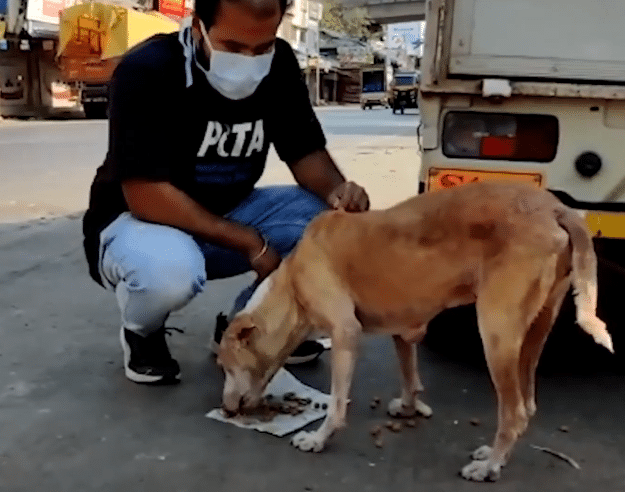
PETA India advocated for official support so people helping those animals could continue their work despite strict lockdown restrictions.
The effort helped persuade the Chief Minister of Maharashtra to classify feeding and assisting animals as an essential service.
That designation allowed volunteers and rescuers to continue providing food and care when ordinary movement was heavily restricted.
There was no dramatic extraction from a dangerous location in these cases.
The rescue was simpler and more fundamental.
Food still had to reach animals that had nowhere else to get it.
More Than 50,000 Reasons to Answer the Phone
Numbers can make rescue work sound enormous.
More than 50,000 hotline calls in a year.
Hundreds of mange cases.
More than 850 sterilized stray cats in Mumbai.
Yet every large number is made up of individual animals.
One mother cat.
One kitten.
One injured dog outside a gas station.
One bird caught by a dangerous string.
One animal whose head became trapped inside a container.
Seen that way, rescue is not an abstract mission.
It is a series of moments when someone decides not to look away.
Some animals require complicated equipment.
Some need veterinary treatment.
Some need rehabilitation, sterilization, food, a safe home, or legal protection.
And sometimes, what they need first is simply for a person to recognize that something is wrong.
That is why the emergency hotline matters.
The caller does not have to perform the rescue alone. Reporting an animal in distress can connect that animal with people equipped to respond.
For the teams working day and night, the next call can arrive at any moment.
For the animal behind that call, it may be the first sign that help is finally on the way.
One phone call cannot solve every problem facing animals.
But for one animal in one dangerous moment, it can open the door to safety.
And sometimes, that is where a second chance begins.


