
Some dogs ask for help with a bark, a cry, or a desperate attempt to follow someone home.
Nina had been surviving much more quietly.
By the time someone noticed the eight-year-old dog living inside an abandoned car in northern Memphis, her body already carried the evidence of how long she had gone without the care she needed.
A late-night message alerted rescuers to her situation. There were few details, but there was enough urgency to make waiting impossible.
Emails went out before midnight. Arrangements began almost immediately.
While much of the city slept, people were already working to move Nina toward Wright-Way Rescue in Illinois.
After years of being overlooked, someone had finally stopped for her.
The Dog Who Arrived Carrying Years of Neglect
When Nina reached safety, the seriousness of her condition became impossible to miss.
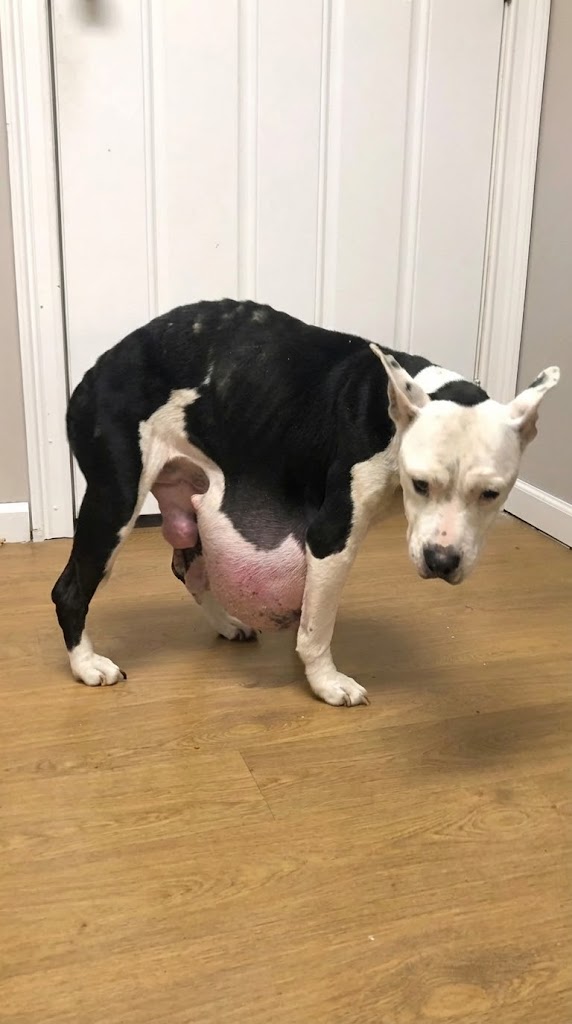
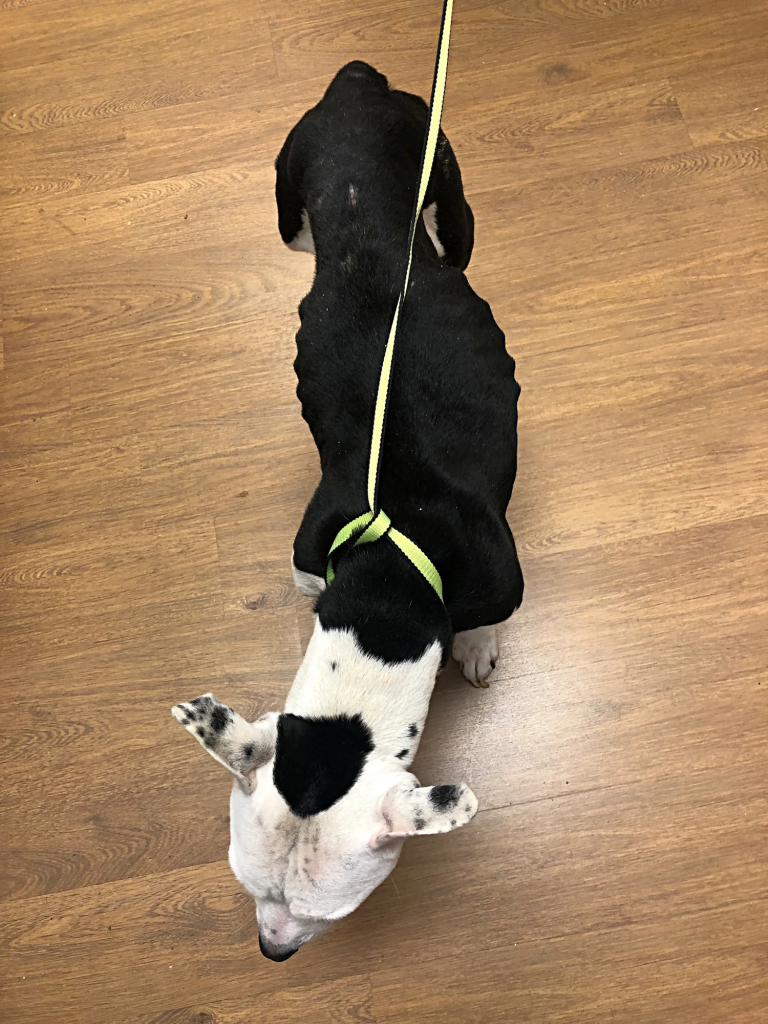
She was extremely thin, with her ribs clearly visible beneath a fragile coat. Two large tumors extended from her abdomen, including one so substantial that it affected the way she moved.
Her hind legs were also swollen and showed signs of a severe untreated infection.
Even simple movement required effort.
Yet the most striking thing about Nina was not only what had happened to her body.
It was how she responded when people came close.
When someone knelt beside her, Nina lifted her head.
She did not turn away from the gentle attention being offered. Despite everything she had experienced, she remained calm and receptive to kindness.
That small response mattered.
No one knew exactly how much pain or loneliness had filled the years behind her. But in that room, Nina was no longer facing it by herself.
Her First Days Had to Move Slowly
Nina's medical situation could not be solved with one immediate procedure.
Because of COVID-related precautions, part of the veterinary team was unavailable when she first arrived. She was initially evaluated at an admissions center before being transferred for more detailed testing.
The examinations included bloodwork, X-rays, ultrasounds, and biopsies.
What veterinarians learned made her case especially delicate.
The tumors were highly vascular. Operating immediately could create serious risks, especially for a dog already weakened by years without proper care.
There would be no rushing Nina into surgery simply because the tumors looked alarming.
Her body first needed support.
She needed food.
She needed rest.
She needed enough stability for veterinarians to determine what could safely come next.
For a dog whose life had apparently offered so little comfort, recovery began not with a dramatic operation, but with the simplest things.
A quiet place.
A soft bed.
Regular meals.
People who stayed.
A Room Where Nothing Was Demanded of Her
At Wright-Way Rescue, Nina was given space to settle.
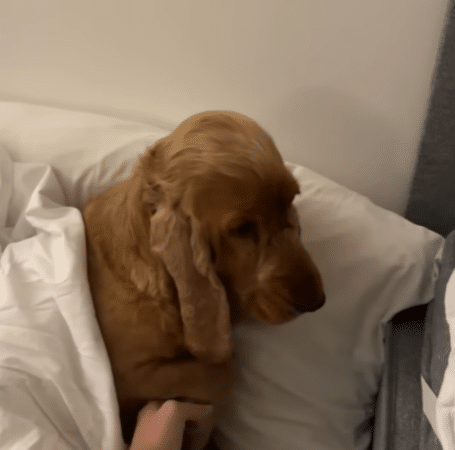
Warm blankets replaced the abandoned car. Gentle light filled the room. Food was offered in small portions so that her weakened body could adjust gradually.
Volunteers visited her and spoke softly.
There was no expectation that she immediately become energetic or affectionate. Her condition required patience, and patience was exactly what she received.
Nina began eating slowly but willingly.
She slept deeply.
When someone offered a gentle touch, she leaned toward it rather than pulling away.
The shelter even planned to include her in its Thanksgiving tradition, with a special turkey meal of her own.
These were ordinary comforts to many dogs.
For Nina, they represented an entirely different kind of life.
Safety did not erase what had already happened.
But it gave her body somewhere to rest while the veterinary team tried to understand how much could still be done.
VIDEO: After Years Inside an Abandoned Car, Nina Finally Reached the People Who Could Help Her
Her Medical Tests Revealed More of the Past
As Nina's examinations continued, veterinarians found evidence that her difficult history extended beyond what could be seen during her first evaluation.
X-rays showed that she had previously been shot in the left shoulder.
Information about her earlier caretakers also suggested that severe addiction had affected the household in which she had lived, offering painful context for the years of neglect and untreated medical problems described in her case.
According to the account surrounding her rescue, Nina had spent eight years living inside the car.
For nearly her entire life, that confined space had been her shelter.
She had lived through illness without consistent treatment and long periods without the comfort every companion animal should know.
Yet when human contact finally arrived in a different form, Nina continued to accept it.
Her past had not made her unreachable.
Small Changes Began to Matter
The progress that followed was cautious rather than dramatic.
Nina's fever came down.
Her appetite improved.
Ultrasound testing found no abscess inside the tumor, and imaging ruled out hernias.
Each result helped the medical team understand her condition more clearly.
There were still serious concerns.
A later blood test showed that Nina's white blood cell count was approximately five times higher than normal, raising concern about possible cancer.
That uncertainty remained part of her story.
No one could promise an easy outcome.
Instead, her care continued one careful step at a time.
Her treatment included medication for pain and inflammation, antibiotics, and IV fluids to support her weakened body.
During Thanksgiving, Nina was transferred to a 24-hour clinic so she could remain under continuous observation.
The setting changed, but the commitment to her did not.
She would not return to facing illness alone.
Six Veterinarians Agreed That Patience Came First
Nina's case was reviewed by six veterinarians.
The conclusion was consistent: immediate surgery was still too dangerous.
The largest tumor alone weighed nearly half as much as Nina's body, making the risks especially significant while she remained physically fragile.
So the medical team waited.
Waiting, in this case, did not mean doing nothing.
It meant giving Nina the support her body needed before asking it to endure anything more.
She continued eating.
Her eyes appeared brighter.
She began taking short walks.
Her tail moved more often when familiar people approached.
Staff members lingered beside her. Volunteers stayed beyond their usual hours simply to keep her company.
There was something quietly meaningful about that change.
For years, Nina had existed in a place where her suffering went largely unseen.
Now people were organizing their time around her.
They watched her meals.
They monitored her health.
They noticed the small movement of her tail.
They celebrated steps that another dog might take without anyone thinking twice.
Nina had not suddenly become healthy.
But she had become surrounded by people who were paying attention.
The Next Decision Would Come From a CT Scan
The following Monday, Nina was scheduled for a CT scan with a surgical specialist.
The scan would provide more detailed information about the tumors and help determine whether surgery might eventually become a realistic option.
Until then, there was no final answer about what the future would hold.
Her medical condition remained serious.
Her treatment was still ongoing.
But her daily life had already changed in ways that mattered.
There were warm meals instead of uncertainty.
Soft bedding instead of the interior of an abandoned car.
Quiet companionship instead of isolation.
When Nina needed rest, she could sleep without having to protect herself.
When she needed medical support, someone was there to provide it.
When she looked up, someone was finally looking back.
Being Seen Was the Beginning of Her Second Chance
Nina's story had not reached a perfect ending at the point documented in her rescue journey.
She still faced major medical questions.
Surgery had not yet been declared safe.
The possibility of cancer remained a concern, and veterinarians were continuing to evaluate what treatment her body could tolerate.
That uncertainty is important.
Rescue does not always mean that every problem disappears the moment an animal reaches safety.
Sometimes rescue simply means that suffering is finally noticed.
It means food arrives regularly.
Medication is given when it is needed.
A veterinarian studies the problem instead of leaving it untreated.
Someone sits beside a tired dog even when there is nothing more to do that evening.
For Nina, those changes came after eight years.
Her body still carried the consequences of that long wait, but she no longer had to carry them alone.
The abandoned car was behind her.
Around her now were blankets, meals, veterinarians, volunteers, and people carefully considering every next step.
Her future remained uncertain.
Her place in the world did not.
Nina had finally been seen.
And whatever came next, she would face it surrounded by care.


