
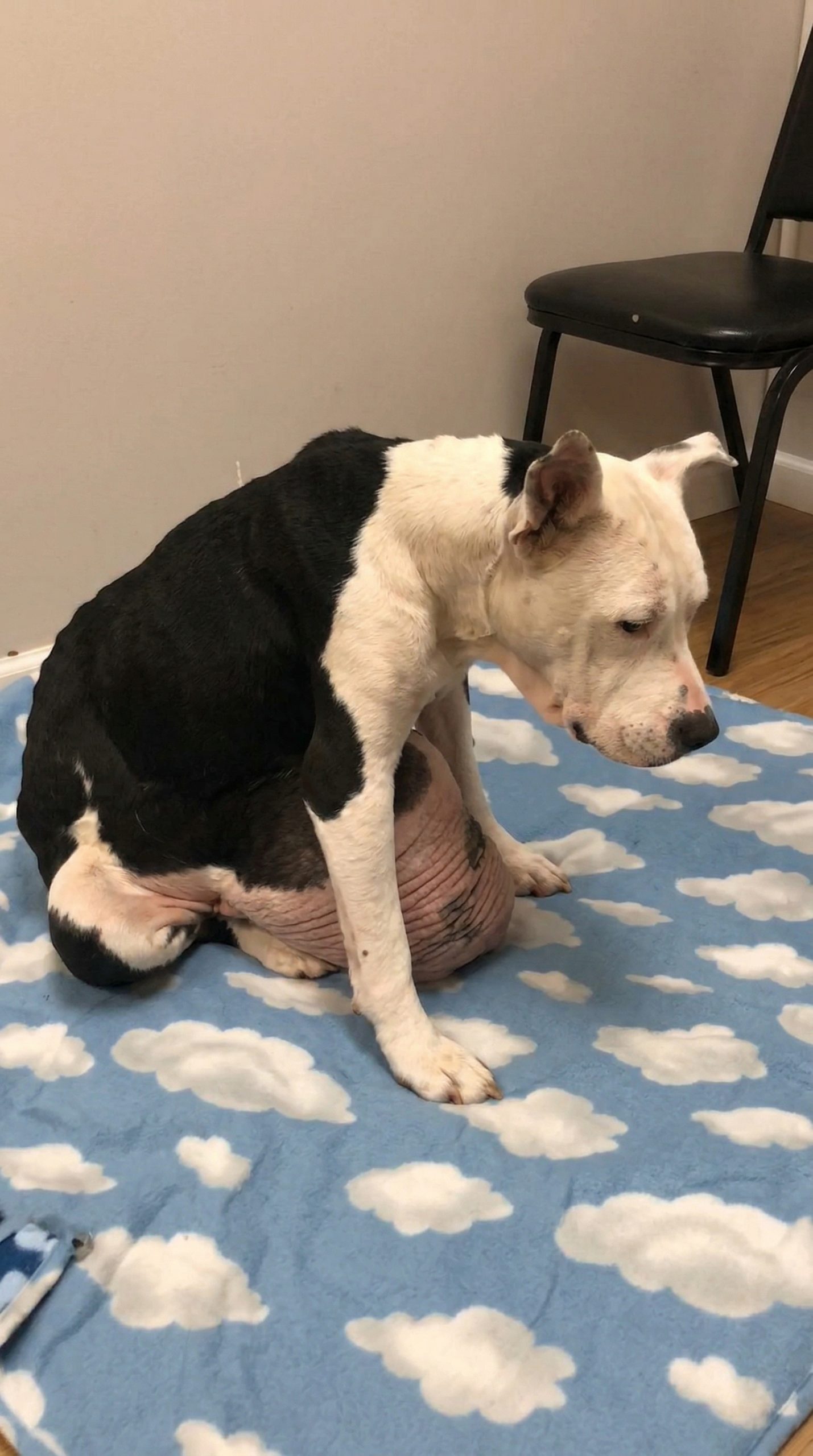
Nina moved as though every step required more strength than her fragile body could comfortably give.
At eight years old, she had already endured a long period of neglect. By the time she was removed from that situation, the hardship was visible in nearly every part of her body.
She was extremely thin. Her hind legs were irritated by a serious infection. Most striking of all, two large growths hung from her abdomen, adding a physical burden to a dog who already seemed exhausted.
Yet when people approached her, Nina did not respond with aggression.
She simply appeared tired.
There was something deeply moving about that quiet response. After everything her body had endured, she seemed less interested in resisting than in finally being allowed to stop struggling.
The Condition Her Body Could No Longer Hide
Nina came into care through a cruelty confiscation case handled by Memphis Animal Services.
Her condition immediately made it clear that ordinary shelter care would not be enough. She needed close medical attention, careful monitoring, and time to regain the strength that prolonged neglect had taken from her.
RightWay Rescue stepped forward to help.
When Nina arrived, the seriousness of her condition became impossible to overlook.
One tumor hanging from her abdomen was extremely large. A second, smaller growth was also present. Both appeared to have gone untreated for a long period.
The rest of her body told the same difficult story.
Nina was painfully underweight, with little reserve left in her frame. Her back legs were inflamed and affected by infection, adding still more discomfort to movements that were already difficult.
For the people caring for her, there was no single problem to solve.
Everything had to be considered together.
Her weight.
Her infection.
Her pain.
The tumors.
And the simple fact that her weakened body might not yet be strong enough to tolerate the treatment she eventually needed.
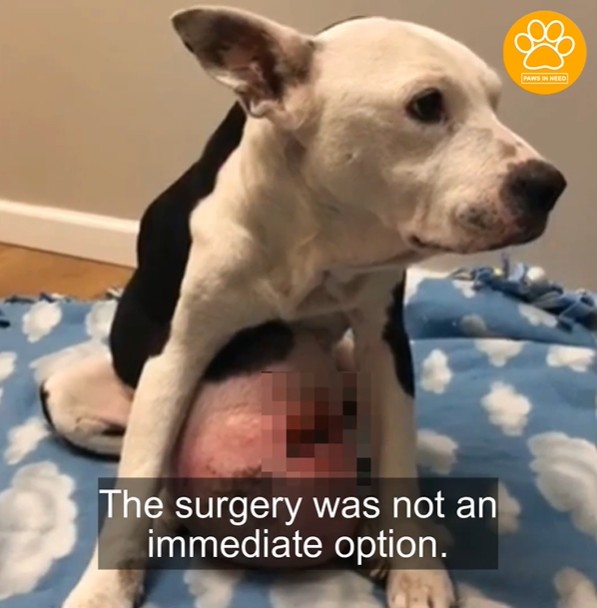
Help Had Arrived, but Healing Needed Patience
The natural instinct was to remove the tumors as quickly as possible.
They were heavy, uncomfortable, and impossible to ignore. Freeing Nina from them seemed like the most direct way to improve her life.
But veterinary care sometimes requires patience rather than speed.
Doctors determined that the growths were highly vascularized. Surgery could involve significant blood loss, and Nina's weakened condition made that risk especially concerning.
Before her body could face an operation, it needed support.
So the first stage of her recovery was not dramatic.
It was careful.
She received pain medication to make her more comfortable. Anti-inflammatory medication and antibiotics became part of her treatment plan. Nutrition was also essential, because her body needed energy and strength before anything more demanding could safely be attempted.
The goal was not to force recovery.
It was to give Nina enough stability to take the next step.
Day by day, food and medical care began providing what her body had been missing.
There was finally no need to keep pushing forward without help.
For perhaps the first time in a very long while, someone else was carrying part of the burden for her.
VIDEO: Nina Had Carried the Weight for Far Too Long — Then Her Rescue Finally Began
A Soft Blanket Became Something Precious
Medical treatment was only one part of Nina's new life.
The people around her also wanted her to experience something simpler: comfort.
She was given a quiet area where she could rest away from unnecessary stress. There was food nearby. Toys were available. Soft blankets covered the place where she could settle.
For a healthy dog, those things might seem ordinary.
For Nina, they mattered enormously.
Because of the tumors, lying down was not easy. Finding a comfortable position could be difficult when so much weight pulled against her abdomen.
Still, Nina was drawn to the blankets.
She pressed her face into them.
Then she returned to them again.
And again.
It was a small behavior, but it said more than a dramatic gesture could have.
There was no need to imagine exactly what Nina was thinking. Her actions were enough.
The softness felt good.
The quiet felt safe.
And she wanted to stay close to both.
Caregivers could offer medication for physical discomfort, but the blankets represented something different. They were part of an environment where nothing was being demanded from her.
She could simply rest.
Gentle voices replaced uncertainty.
Careful hands replaced neglect.
Meals arrived consistently.
Her space remained peaceful.
Recovery was beginning through these ordinary moments, one quiet experience at a time.
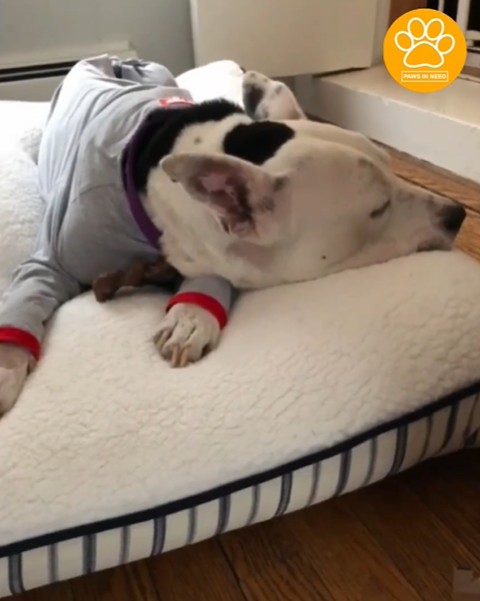
Strength Returned in Small Pieces
There was no sudden transformation.
Nina's body had been depleted for too long for healing to happen overnight.
Instead, improvement came gradually.
Nutrition began supporting her weakened frame. Medication helped address her discomfort and infection. Consistent care gave her body the chance to rebuild rather than merely endure.
Each day of stability mattered because it brought Nina closer to the treatment everyone hoped would eventually be possible.
The people caring for her had already made an important decision: surgery would happen only when Nina was strong enough to face it.
That meant waiting.
Waiting for her body to respond.
Waiting for nourishment to make a difference.
Waiting until the risk of intervention was no longer greater than the risk of postponing it.
For rescuers, waiting can be difficult when the problem is so visible.
But patience was part of saving Nina.
They could not undo years of neglect in a few days.
They could only give her what she needed now and allow her body to set the pace.
Little by little, that approach worked.
Nina gained strength.
The fragile dog who had arrived carrying more weight than her thin body should have been asked to bear was finally approaching the moment that could change everything.
The Operation Everyone Had Been Waiting For
Eventually, Nina became strong enough.
The care team moved forward with surgery.
It was the step they had hoped for from the beginning, but only now was her body prepared for it.
The operation succeeded.
The tumors that had pulled heavily against her body were removed.
When Nina woke afterward, the difference was more than symbolic.
A burden she had physically carried for so long was finally gone.
She still had a recovery ahead of her. Surgery does not erase everything an animal has experienced, and healing after prolonged neglect cannot be measured only by what disappears in an operating room.
But Nina had crossed an enormous threshold.
Before rescue, each step had been made while carrying untreated growths, weakness, infection, and exhaustion.
Now she had been given something entirely different.
Relief.
Medical support.
A safe place.
And people willing to be patient with her.
Rescue Was More Than Removing the Tumors
Nina's story is easy to remember because the physical change was so visible.
Before treatment, the tumors immediately drew attention.
After surgery, their absence represented a powerful turning point.
But her rescue had begun much earlier than the operation.
It began when people looked at her condition and decided she deserved more than temporary relief.
It continued when veterinarians resisted the urge to rush into surgery and instead focused on making her stronger.
It continued through meals, medication, antibiotics, careful observation, and the quiet space where Nina discovered how comforting a soft blanket could be.
Those details matter because rescue is rarely one dramatic moment.
Often, it is a series of patient choices.
Feed her.
Treat the infection.
Control the pain.
Give her somewhere peaceful to sleep.
Wait until she is ready.
Then take the next step.
For a dog whose suffering had been allowed to continue for far too long, consistent care became its own kind of transformation.
A Future That No Longer Looks Like Her Past
Nina is now moving toward a different life.
The physical weight she carried has been removed, but perhaps equally important is everything that surrounds her now.
She has soft places to rest.
She has people watching over her condition.
She has gentle contact instead of indifference.
And she has been given time to recover rather than being expected to endure everything alone.
Her journey is a reminder that serious neglect often leaves more than one problem behind.
The body may need treatment.
Strength may need to be rebuilt.
Trust and comfort may return slowly.
There is no shortcut through that process.
But Nina also shows what can happen when patience is allowed to replace urgency and kindness becomes consistent rather than temporary.
No single blanket could erase what she had lived through.
No meal could immediately restore the weight she had lost.
No surgery could change the years that came before.
Yet together, those acts of care created something that had been missing from her life for far too long.
Safety.
Nina had carried an extraordinary burden in silence.
Then people finally noticed.
They did not ask her to keep carrying it.
They stayed, cared for her, waited until she was strong enough, and helped lift that weight away.
Now the soft blankets she once pressed her face into are no longer brief comforts in an uncertain world.
They are part of the life she should have had all along—a life where she can finally rest without carrying everything by herself.


