
Some rescue stories begin with barking, movement, or a desperate attempt to be noticed.
Maya's began almost in silence.
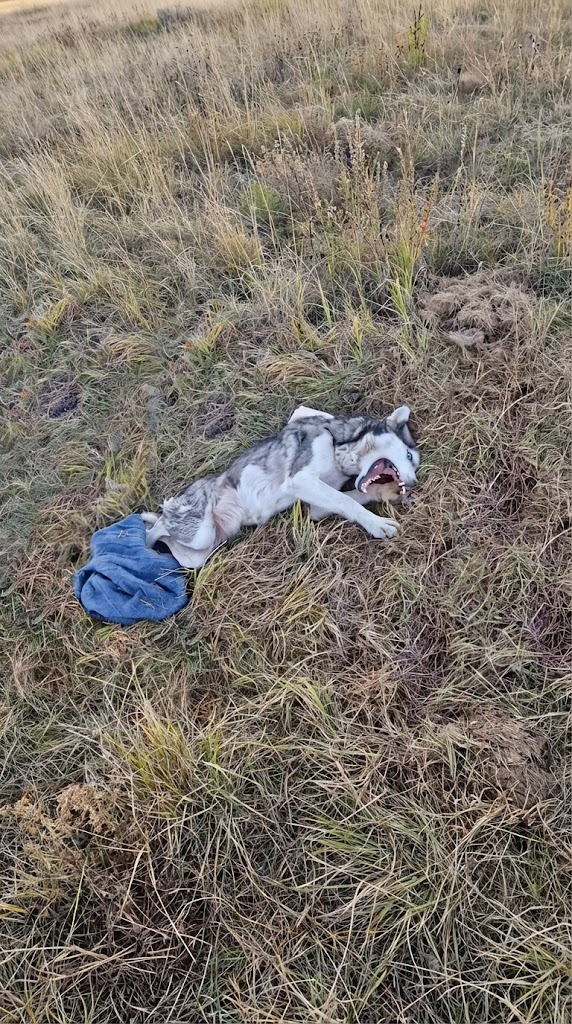
She was found lying on rough gravel beside a stretch of railway tracks, her body so weak that she barely moved. For two days, she remained there with little more than the faint rhythm of her breathing to show that she was still holding on.
There was no dramatic cry for attention.
Just a dog beside the rails, waiting while her strength continued to fade.
A Life That Had Already Been Passed Around
The railway tracks were not the beginning of Maya's hardship.
She had once known what it meant to have a home, but that stability did not last. According to her story, Maya was given away and later passed on again, moving from one place to another without finding the lasting care she needed.
Each change meant beginning over.
Then her health declined.
When Maya became sick, no one remained to care for her through the difficult part. Weak and disoriented, she eventually wandered until she reached the railway line.
There, she stopped.
For roughly 48 hours, the gravel beside the tracks became the place where she waited.
Whether she lacked the strength to continue or simply had nowhere else to go, one fact was clear when help finally reached her: Maya needed immediate care.
The Moment Walking Away Was No Longer an Option
When rescuers found Maya, they discovered a dog in critical condition.
She was dehydrated, injured, and dangerously weak. Her condition also involved complications serious enough that surgery might be necessary.
It was not the kind of rescue that ended the moment a dog was lifted from danger.
Getting Maya away from the railway was only the beginning.
The people who reached her chose to take responsibility for what came next as well.
For a dog who had already been passed from one home to another, that decision mattered.
This time, help did not disappear simply because the situation was difficult.
VIDEO: Maya Waited Beside the Tracks for 48 Hours — Then Her 90-Day Rescue Journey Began
Recovery Could Not Be Rushed
Maya's body needed time.
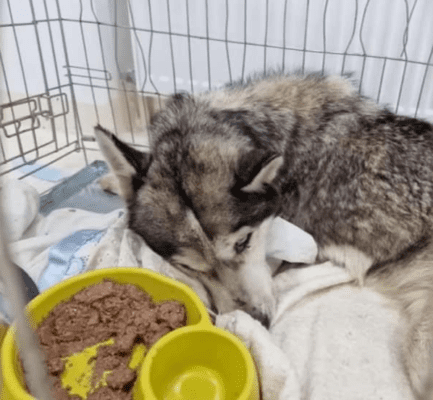
Her recovery stretched across weeks of stabilization, treatment, and gradual rehabilitation. There was no sudden transformation and no single moment that solved everything.
Her back legs could no longer support her, which changed what recovery would look like.
Instead of expecting Maya to move as she once had, her caregivers began helping her adapt to what her body could still do.
A custom wheelchair became part of that process.
So did gentle hydrotherapy.
At first, both experiences were unfamiliar. Maya had to adjust to new ways of moving while continuing to rebuild strength after everything her body had endured.
Progress came in small pieces.
The wheelchair allowed her to move without relying entirely on her back legs. In the water, her body could be supported in a different way, giving her another opportunity to work on mobility.
These were practical steps, but they represented something larger too.
Maya was no longer being asked to survive alone.
Learning That Care Could Continue
For an animal that has experienced repeated instability, recovery is not only about physical strength.
Consistency matters.
Day after day, Maya remained surrounded by people who continued showing up. Veterinarians, caregivers, volunteers, and others became part of the network supporting her recovery.
No one expected her progress to happen on a convenient schedule.
They worked with the dog in front of them.
The one who had been found beside the tracks.
The one whose back legs could no longer carry her.
The one who still had a chance to discover another kind of life.
Over time, movement became more possible.
Her wheelchair opened the door to greater independence, while therapy gave her opportunities to use her body safely.
The changes were gradual, but they were real.
Then Someone Far Away Saw Her Story
Maya's next turning point came from much farther away.
A family in Germany learned about her journey.
They knew she had ongoing physical challenges. They knew her needs were different from those of a dog without mobility limitations.
But those realities did not stop them from choosing her.
Instead of focusing only on what Maya could no longer do, they saw a dog who had survived an extraordinary period of uncertainty and had continued moving forward with the support she had been given.
They decided to make her part of their family.
For Maya, this meant something she had not been able to depend on before: a permanent home.
By around day 90 of her journey, the contrast was remarkable.
The dog who had once lain almost motionless beside cold railway tracks was now safe, cared for, and surrounded by people committed to keeping her.
A Different Kind of Freedom
Maya's life did not return to exactly what it had been before.
Her back legs still could not support her in the usual way.
But recovery did not require her to become the dog she once was.
It allowed her to become comfortable in the life she had now.
With her wheels, Maya could cross the grass.
She could spend time outside beneath the sun.
She could play and explore without being limited to the place where her body had once failed her.
These moments might seem ordinary for many dogs.
For Maya, they represented how far her story had traveled.
From lying beside railway tracks for two days to moving through open grass in a wheelchair.
From being repeatedly passed on to finally being chosen by a family willing to stay.
The greatest change was not that every physical challenge disappeared.
It was that Maya no longer faced those challenges alone.
What Maya's Journey Leaves With Us
There is a quiet lesson in Maya's story.
Rescue is often described as a single act: finding an animal, lifting it from danger, and bringing it somewhere safe.
But Maya's journey shows how much can come afterward.
There was the emergency moment beside the tracks.
Then came treatment.
Then rehabilitation.
Then learning to move differently.
And finally, a family willing to build a home around the dog Maya had become rather than waiting for her to become something else.
Her story was not transformed by one dramatic gesture.
It changed because people continued choosing to help after the first rescue was over.
Today, Maya's happiness can be found in simple things: moving through the grass with the help of her wheels, resting in the warmth of the sun, and living in a place where she no longer has to wonder whether she will be passed on again.
She may never run the way she once did.
But after everything that brought her to those railway tracks, Maya gained something more important.
She gained people who stayed.


