
The door opened onto a space barely large enough for a dog to move freely.
Inside was Erick.
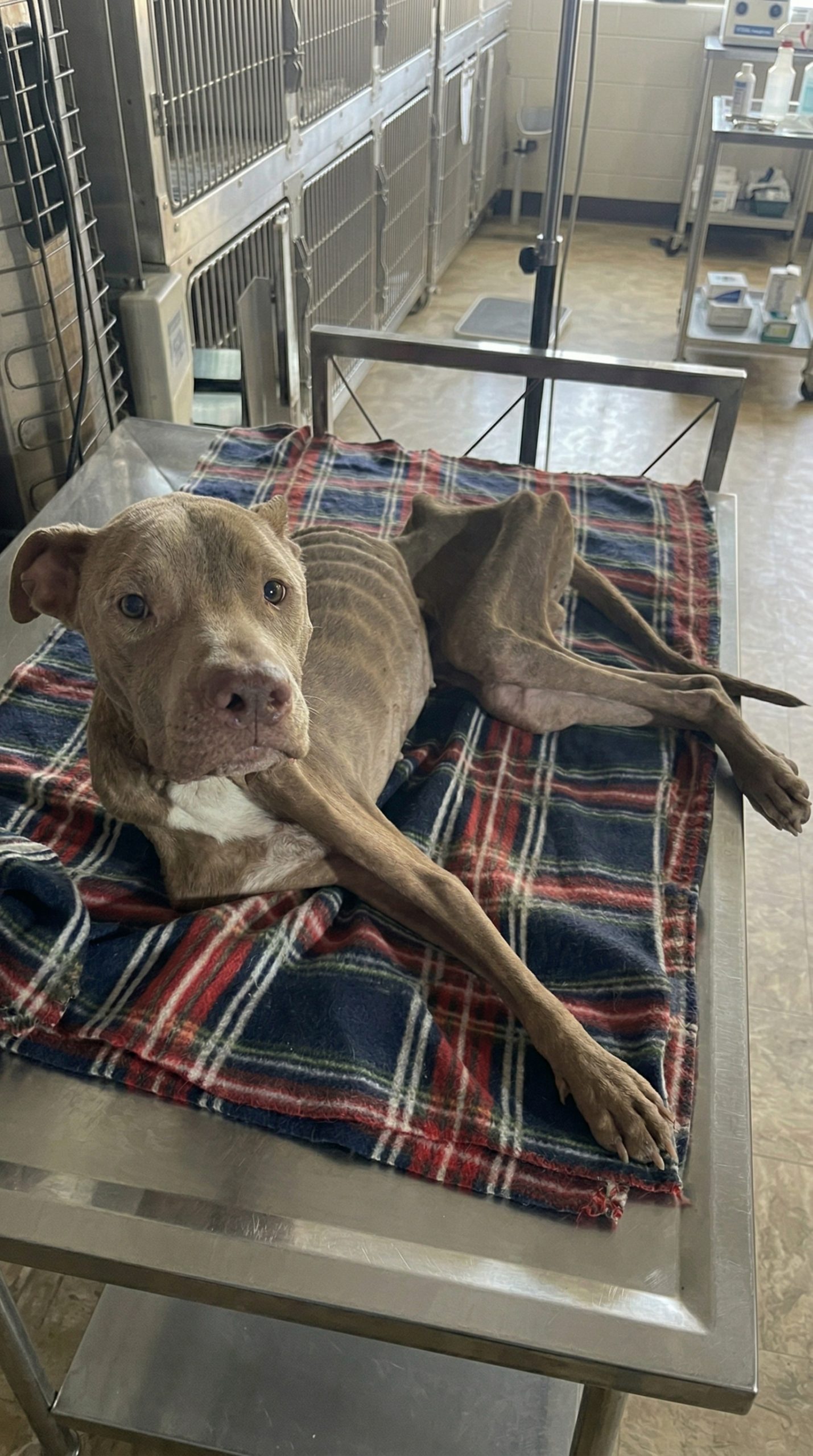
His body was painfully thin, his strength almost gone, and standing required more energy than he seemed to have left. Yet when the people who came to help moved closer, Erick lifted his head.
Then his tail moved.
It was only a small wag, but after everything he had endured, that simple gesture said more than words ever could.
Somewhere beneath the weakness and isolation, Erick had not completely stopped believing that a human hand might still bring kindness.
A Life Reduced to a Tiny Room
According to the story shared by his rescuers, Erick had been kept inside a storage space measuring only about two square meters from the time he was roughly one month old.
As he grew, the room did not.
There was little opportunity to move naturally, explore, feel grass beneath his paws, or experience the ordinary world outside that confined space.
For a young dog, those months should have been filled with movement, curiosity, food, play, and human companionship.
Erick's world became the opposite.
His days passed inside the same cramped area, with almost nothing changing around him.
Even more troubling was how rarely he was fed.
The owner reportedly admitted that Erick received food only once a week.
It was not described as an occasional shortage or an accidental missed meal. This had become the routine of his life.
Over time, the effect became visible in every part of his body.
By the time help reached him, Erick was extremely underweight. His frame had become fragile, his muscles weak, and even remaining upright was difficult.
Yet his response to rescue was not anger.
He wagged his tail.
That small movement would become one of the most memorable moments of his entire journey.
He Had Simply Grown Up
When rescuers asked why Erick had been treated this way, the explanation made his situation even more difficult to understand.
The owner reportedly said that he preferred puppies.
Erick had once been the tiny young dog the owner wanted. But puppies grow.
As Erick became older and larger, the interest in caring for him faded.
His needs increased as his body developed, but his food did not increase with them. Instead, the amount he received became drastically inadequate.
The very thing every healthy puppy is supposed to do—grow into an adult dog—seemed to have made Erick less wanted.
He had done nothing wrong.
He had simply grown up.
By the time rescuers entered his confined world, the consequences of that neglect could no longer be ignored.
Erick needed more than a meal.
He needed careful medical attention and a body that had been deprived for so long to slowly learn how to accept nourishment again.
VIDEO: Starved for Days at a Time, Erick Still Found the Strength to Wag His Tail
Rescue Was Only the First Step
Removing Erick from the storage space ended his isolation, but it did not immediately end the danger.
After prolonged deprivation, giving a severely weakened dog ordinary meals is not always enough to restore strength quickly.
Erick's caregivers soon realized that his recovery would need to happen slowly.
Even after about a week of care, he remained extremely weak. His body struggled to take in the nutrition it desperately needed, and his condition became serious enough that he was taken to a veterinary hospital.
There, the extent of the long-term damage became clearer.
According to the source, prolonged starvation had affected his digestive system so severely that normal feeding was difficult.
His body needed time.
The veterinary team placed him on a liquid protein diet while monitoring him closely.
There were no dramatic shortcuts.
Recovery became a process measured in small changes.
Rest.
Nutrition.
Observation.
Patience.
For Erick, rebuilding his body meant asking an exhausted system to begin functioning normally again after being deprived for far too long.
There were difficult moments when his weakness remained obvious.
But the dog who had wagged his tail when rescuers first approached continued to show something equally important: he remained receptive to the people caring for him.
The First Time He Stood Again
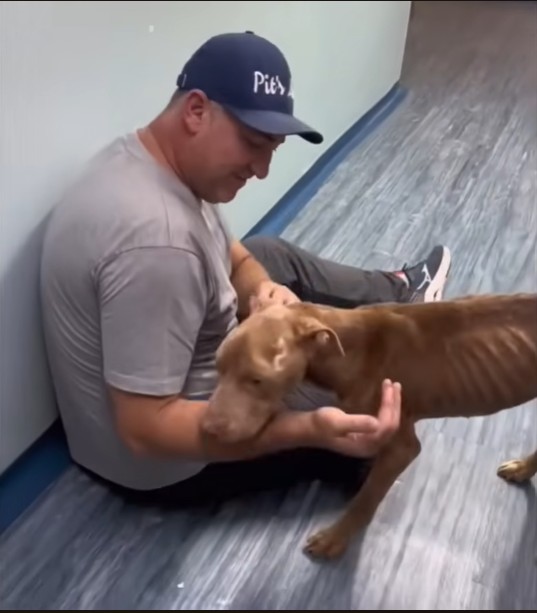
Around Day 11, Erick reached an important milestone.
He stood by himself.
For a healthy dog, standing is so ordinary that nobody gives it a second thought.
For Erick, it was evidence that his body was beginning to respond.
His legs were still weak. His frame was still thin. But he could support himself again.
Soon, he began walking without immediately collapsing.
His appetite also started to return.
The changes were gradual enough that they might have seemed small from one day to the next. But when compared with the fragile dog who had first been removed from confinement, every improvement mattered.
By around Day 15, caregivers could see that his physical recovery was beginning to gain momentum.
Solid food was still difficult for him, but another kind of healing was already taking place.
Erick wanted affection.
He stayed close to the people caring for him.
He accepted gentle touch.
He leaned into attention instead of pulling away.
For a dog who had spent so much of his early life isolated in a tiny room, these moments carried their own quiet significance.
He had every reason to be cautious around people.
Instead, when kindness became consistent, he responded to it.
Learning That Care Would Keep Coming
Recovery from long-term neglect is rarely defined by a single turning point.
It is built through repetition.
A meal arrives, and then another one.
A gentle hand reaches down, and it does not hurt.
A person leaves the room, but someone returns.
Day after day, the frightened uncertainty begins to loosen.
Erick's body was still catching up with that emotional change.
By around Day 20, he could walk farther and stand with greater confidence. His ribs remained visible, but he no longer looked quite as fragile as he had when the rescue began.
Then came Day 22.
Erick ate his first full bowl of solid food.
It was an ordinary bowl of food made extraordinary by everything that had come before it.
For weeks, caregivers had been working within the limits of a digestive system weakened by prolonged starvation.
Now Erick was eating a complete solid meal.
It was one more sign that his body was beginning to trust nourishment again.
There was still healing ahead.
But the direction of his story had changed.
Leaving the Hospital Behind
By Day 27, Erick was strong enough to be discharged.
The dog leaving care looked different from the one who had arrived, but his transformation was not finished.
The following weeks continued to bring change.
His body slowly filled out.
His coat became healthier.
His posture strengthened.
The hollow, exhausted appearance that had once defined him gradually disappeared.
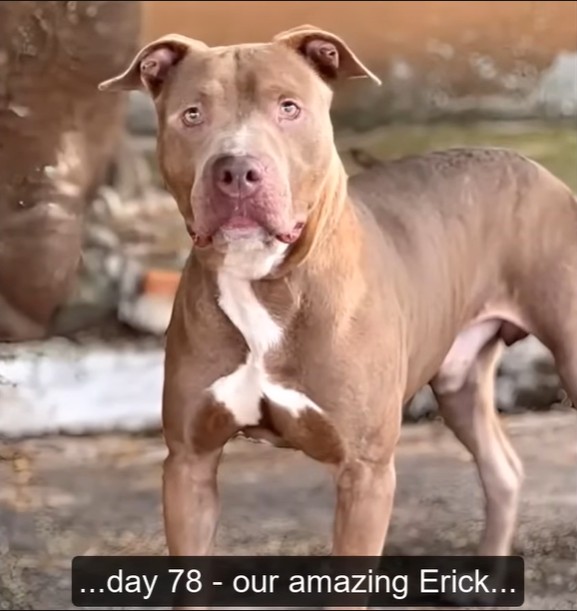
By Day 67, and later around Day 78, the difference was remarkable.
Erick no longer looked like a dog barely holding himself upright.
He looked alive.
Comfortable.
Present.
The smile on his face seemed almost impossible to connect with the fragile dog first discovered inside that tiny storage room.
But it was the same Erick.
The dog who had once survived from one inadequate feeding to the next was now surrounded by consistent care.
The dog who had been confined as he grew was finally able to move through a much larger world.
And the tail that wagged when rescuers first found him still had reasons to wag.
Growing Up Should Never Make a Dog Disposable
Erick's story carries a simple reminder.
A puppy is not a temporary version of a pet.
Puppies grow into adult dogs.
They need more food as they develop. They need exercise, medical care, companionship, patience, and a safe environment throughout their lives.
The commitment does not end when the small puppy stage disappears.
Erick suffered because the care he needed did not grow with him.
But once consistent kindness entered his life, another transformation became possible.
His recovery did not happen overnight.
It took veterinary support.
It took careful feeding.
It took days of uncertainty followed by small milestones.
Standing.
Walking.
Eating.
Seeking affection.
Growing stronger.
Each one represented another piece of his life being returned to him.
Perhaps the most remarkable part of Erick's journey was visible from the very beginning.
Before his body had recovered, before he could eat normally, and before anyone knew how much strength he would regain, Erick looked at the people who had come to help him and wagged his tail.
He had been given very little reason to trust.
Yet when kindness finally appeared, he was still willing to meet it.
Now his days are no longer defined by a tiny room or a nearly empty stomach.
They are defined by safety, food, movement, care, and the affection he had been missing for so long.
Erick grew up.
This time, that is something worth celebrating.


