
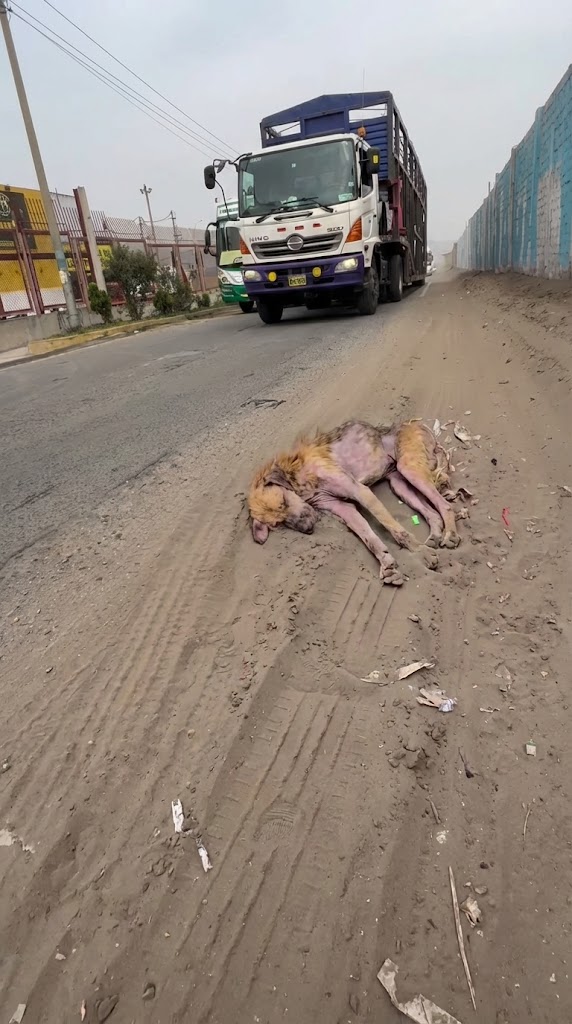
Sometimes the smallest life can be the easiest to overlook.
Lisa was lying flat against the asphalt of a busy road, almost motionless as cars and heavy trucks continued past her. From a distance, her tiny body could easily have blended into the roadside.
But she was alive.
The two-year-old dog was still breathing, even though she seemed to have almost no strength left.
Reaching her meant stepping into a dangerous situation. Leaving her there, however, meant allowing traffic and her worsening condition to decide what happened next.
Someone chose not to walk away.
The Little Dog Everyone Else Had Passed
When Lisa was finally reached, there was almost no response from her.
She did not lift her head.
She did not try to move away.
Even the instinct to react seemed to have been drained from her exhausted body.
The shelter caring for rescued animals was already crowded, and resources were limited. Yet Lisa's condition left little room for hesitation. Whatever difficulties came afterward, the first priority was simply getting her away from the road.
She was carefully lifted from the asphalt and taken for veterinary care.
That moment changed the direction of her story.
Only a short time earlier, traffic had been passing within inches of her. Now she was somewhere people were finally paying attention to whether she survived.
The question was no longer whether anyone would notice her.
It was whether her weakened body could recover.
A Medical Examination Revealed How Much She Was Facing
At the clinic, the seriousness of Lisa's condition became clearer.
Veterinary testing found severe anemia, leaving her with very little physical strength. She also had a high fever and infection.
Further testing identified Ehrlichia and Anaplasma, tick-borne illnesses that required treatment. Her skin was also affected by fungal dermatitis, leaving areas irritated and uncomfortable.
None of these problems could be solved instantly.
Lisa needed time, treatment, and careful monitoring.
An IV line was placed so she could receive the fluids and support her body urgently needed.
For such a small dog, even resting seemed to require effort.
The dog who had been unable to lift her head on the roadside was now surrounded by people watching every small change.
Sometimes rescue begins with something dramatic.
Lisa's began with something much quieter: fluids entering a weakened body while caregivers waited to see whether she would respond.
VIDEO: Found Motionless in the Middle of Traffic, Lisa's Fight for a Second Chance Began
The First Days Were the Most Uncertain
Getting Lisa off the road did not mean the danger had passed.
During the first days of treatment, she remained extremely weak, dehydrated, and barely responsive.
There was also concern about whether the illnesses affecting her body might have caused problems with her internal organs.
An ultrasound was performed.
Waiting for those results brought another moment of uncertainty. Lisa had already endured severe anemia, infection, and prolonged weakness. A serious problem involving her organs could have made recovery much more difficult.
Instead, the examination brought encouraging news.
Her organs appeared stable.
It did not mean Lisa was suddenly well, but it gave her caregivers something they desperately needed: a reason to believe treatment might have time to work.
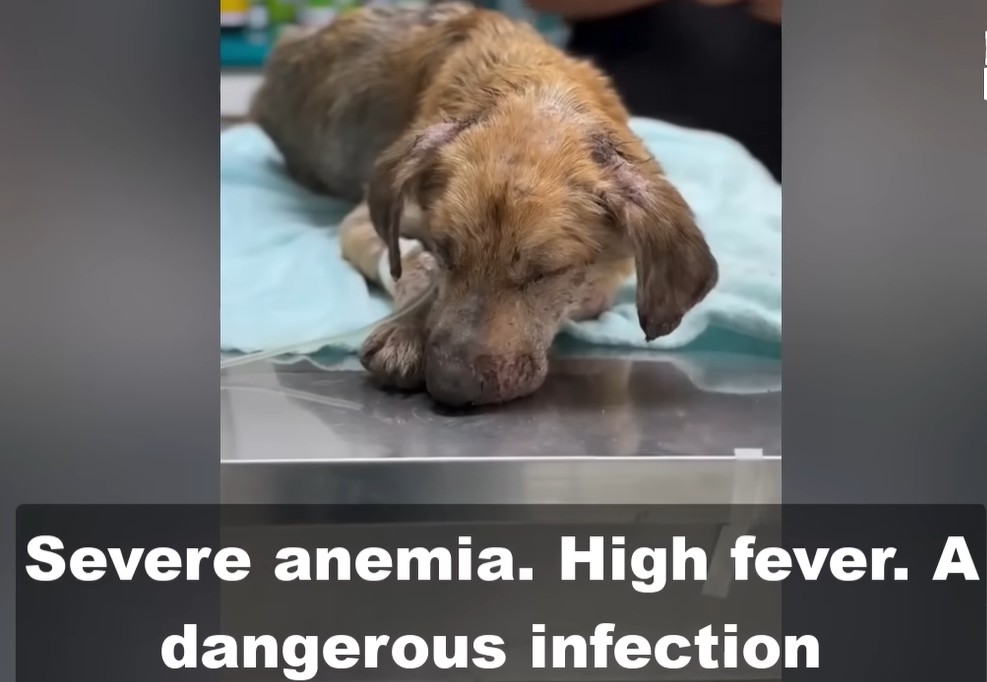
Then, around the third day, the first visible changes began.
Lisa lifted her head.
She ate a small amount of food.
Her fever started to come down.
Individually, these were simple things.
For Lisa, they were important milestones.
A few days earlier, she had been lying helplessly on a road, unable to respond as traffic moved around her. Now she was beginning to interact with the world again.
Recovery had not arrived.
But the first signs of it had.
Healing Returned in Small, Uneven Steps
Lisa's progress was gradual.
There was no single moment when the sick, exhausted dog suddenly became healthy. Instead, change appeared through small details that accumulated from one day to the next.
By around the fifth day, her appearance had begun to improve.
Her eyes seemed more alert.
Her coat looked a little healthier.
Her treatment for fungal dermatitis continued, including medicated baths designed to help her damaged skin recover.
Those sessions were part of a slow process.
Areas where her skin had been badly affected gradually began showing new growth. Soft fur started to return.
Her physical strength also improved.
At first, simply standing was difficult.
Then came uncertain steps across the clinic floor.
They were shaky and far from graceful, but they represented something that would have seemed almost impossible when she was first found.
Lisa was moving on her own.
Her world was expanding beyond a bed, an IV line, and the careful hands treating her.
Day by day, the dog who once seemed almost completely shut down began showing more curiosity about the people around her.
Then Her Tail Began to Move
Some of the most meaningful signs of recovery cannot be measured by a laboratory test.
For Lisa, one of those signs came from her tail.
At first, the movement was tiny.
A slight flick.
Something easy to miss if no one was watching closely.
Then it happened again.
As she grew stronger, Lisa began wagging her tail when people entered the room.
The change was simple, but it carried enormous meaning.
Her body was healing enough for her personality to emerge.
She was no longer only responding to treatment.
She was beginning to greet the people caring for her.
That small wag became a visible reminder of how far she had already traveled.
From lying completely still while traffic passed around her, Lisa had reached a place where the arrival of another person could bring a response that looked unmistakably joyful.
For the people who had watched her through the frightening early days, moments like this mattered.
Recovery was becoming visible not only in medical results or stronger steps, but in behavior.
Lisa was beginning to act like a dog who expected something good from the people approaching her.
The Dog on the Road Slowly Disappeared
As treatment continued, the fragile dog first carried into the clinic became harder to recognize.
Her strength returned.
Her skin improved.
Her fur began filling in.
She became more active and playful.
Lisa was eventually spayed, and according to the original account, her remaining treatments were nearing completion.
Most importantly, she was no longer considered to be in immediate danger.
The transformation was especially striking because of where her story had begun.
She had once been unable to lift her head from the asphalt.
Now she could run.
She could play.
She could move with the energy expected from a young dog rather than the exhaustion of an animal barely holding on.
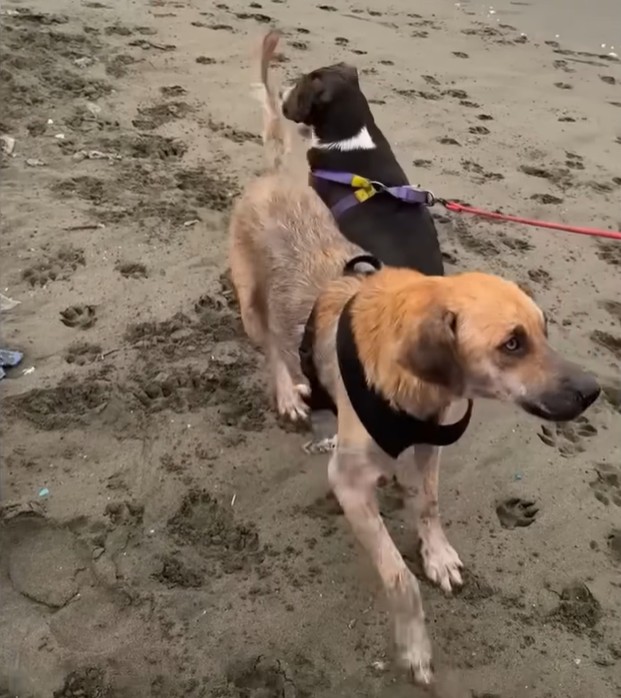
The contrast was difficult to ignore.
Lisa had not been found hidden somewhere far from people.
She had been lying in plain sight on a road where vehicles constantly passed.
Her suffering had been visible.
What changed her future was not that the road suddenly became safer or that her illnesses disappeared on their own.
Someone noticed.
And then someone acted.
What Lisa's Second Chance Leaves Behind
It is difficult to think about Lisa's story without remembering all the vehicles that passed before she was rescued.
Yet her recovery offers another way to look at that same moment.
It shows how much difference one decision can make.
One person stopping can interrupt a tragedy already in motion.
One rescue can turn a motionless dog on the asphalt into a dog running and playing again.
And one act of compassion can give an overlooked animal enough time for treatment to do its work.
Lisa's recovery was not instant.
It required veterinary care, fluids, medication, skin treatment, monitoring, rest, and patience.
There were uncertain days before there were encouraging ones.
There were shaky steps before there was running.
There was a tiny flick of the tail before there were happy greetings.
That is often what recovery looks like.
Not one dramatic transformation, but many small moments moving in the same direction.
Lisa survived the illnesses and weakness that had left her helpless on that road.
Today, according to the source, she is active, playful, and ready for the next part of her life.
What she needs now is something very different from what she needed when she was first found.
Not emergency rescue.
Not an IV line.
Not another frightening night wondering whether her body could keep going.
She needs a home where she can continue living as the dog she finally had the chance to become.
For a long moment on that road, Lisa was simply a small shape that everyone seemed to pass.
Then someone stopped.
And because they did, she was no longer invisible.


