
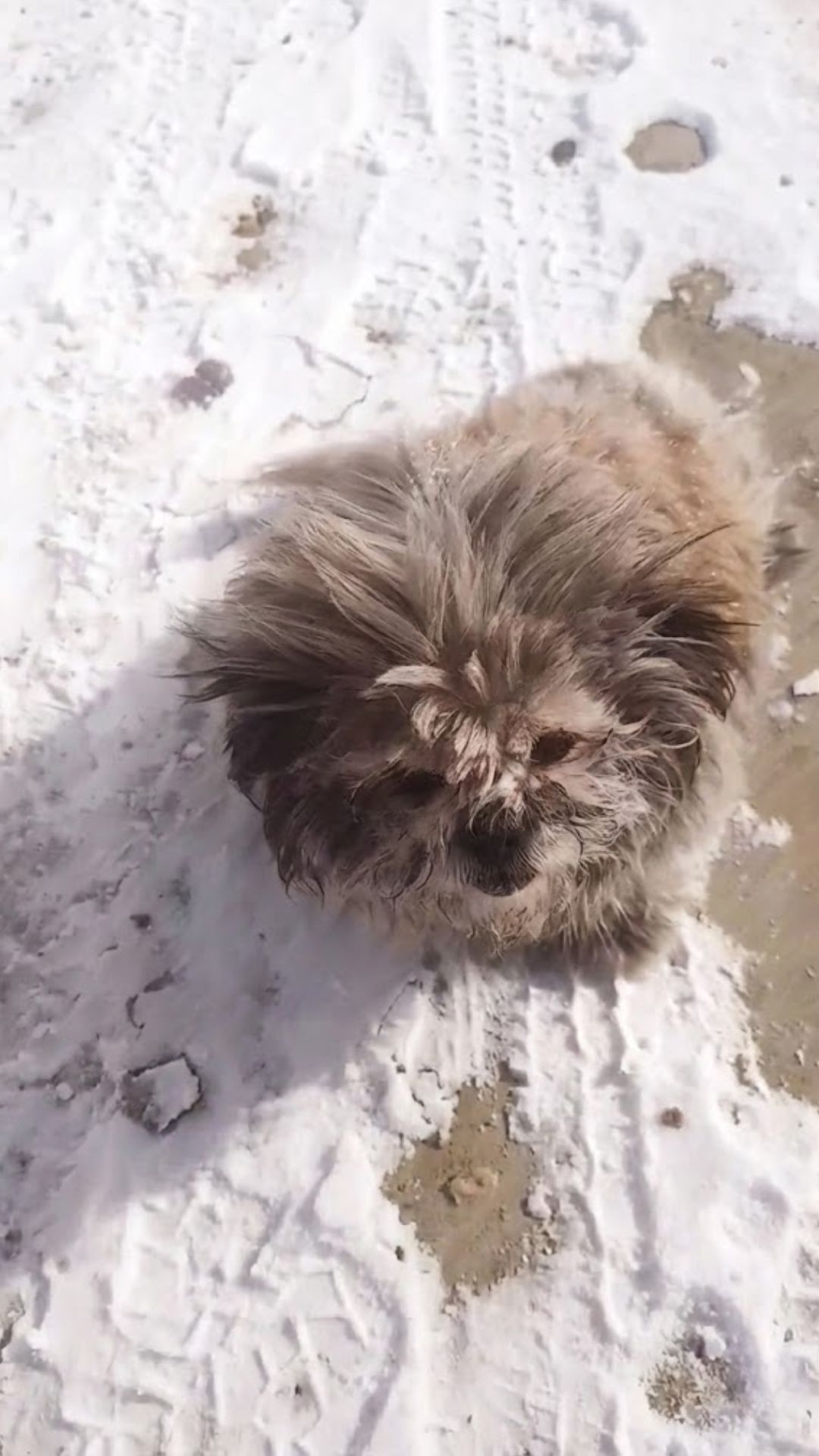
The shape beside the road was easy to mistake for something the snow had swallowed.
Temperatures had fallen to nearly -20°C, and the landscape was buried beneath a thick layer of white. In conditions like these, even a healthy animal could quickly become vulnerable.
For the small dog standing near the roadside, the danger was even greater.
Her coat was tangled into heavy, frozen mats. She was trembling continuously, and each step appeared difficult. Whatever had happened before that moment, she was clearly in no condition to remain outside.
Then a passing driver noticed movement.
That small movement changed everything.
The Moment Someone Finally Stopped
At first, the driver had seen only a dark shape against the snow.
But after slowing down and getting closer, he realized there was a dog standing there.
She was tiny.
Cold had stiffened her neglected coat, and she moved with visible difficulty. Yet when the stranger approached, she did not disappear into the distance or try to hide.
Instead, she slowly came toward him.
Her body shook from the cold, but she continued forward.
It was a quiet moment of trust from an animal who had every reason to be uncertain.
The man lifted her from the snow and brought her into the warmth of his vehicle.
For the first time that day, she was no longer facing the freezing weather alone.
The account of her rescue indicated that she had not simply wandered away from home. She had been deliberately abandoned after becoming seriously ill.
Whatever had happened before she was found, one thing was now certain:
She needed help quickly.
What Her Matted Coat Had Been Hiding
Once the dog reached veterinary care, the extent of her condition became clearer.
Her thick, tangled fur made it difficult to see her body properly. As the veterinary team carefully removed the mats, they noticed that her abdomen was unusually enlarged.
Further examination revealed a serious medical problem.
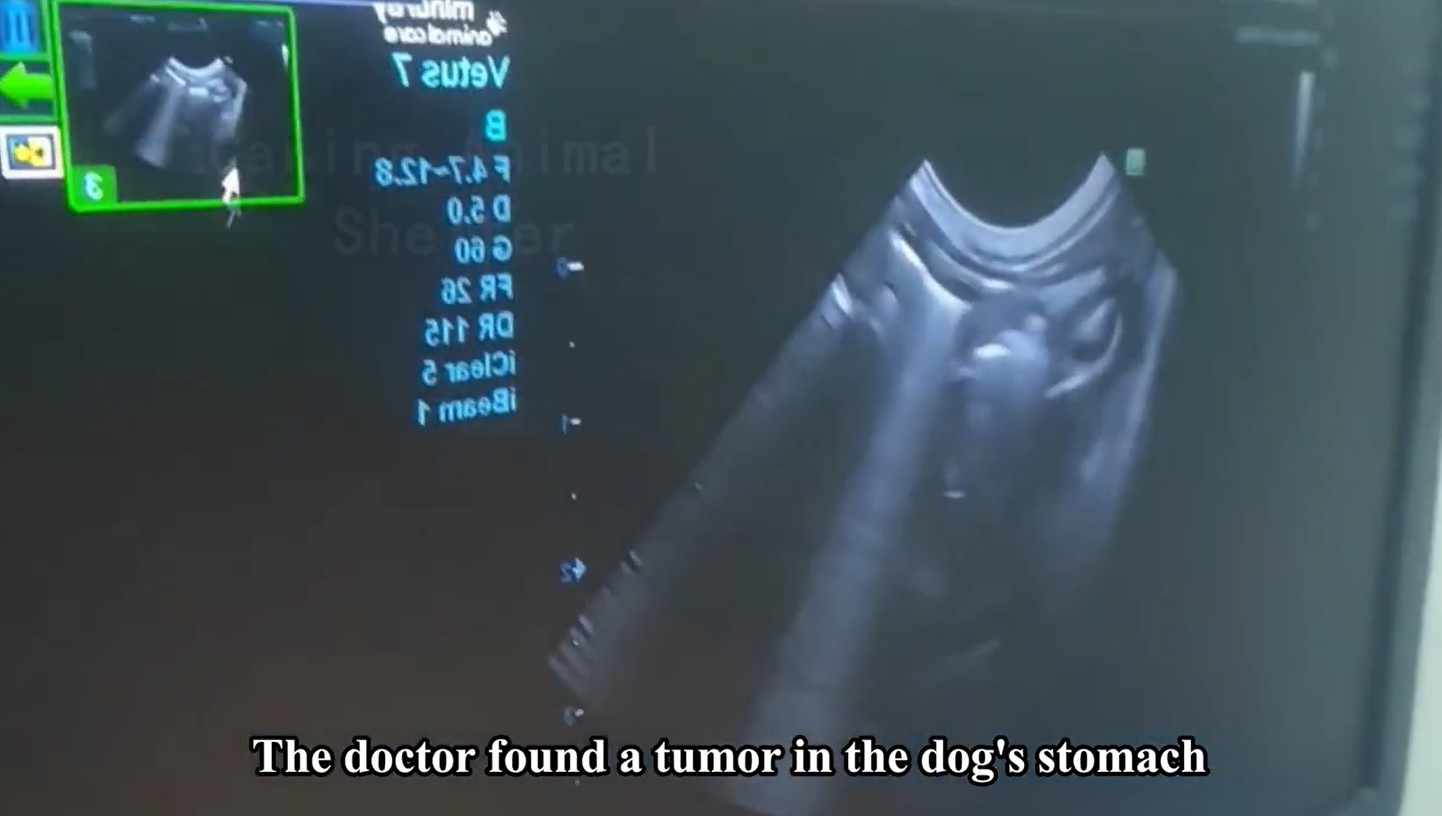
An ultrasound showed a large, severely inflamed tumor in her stomach area, along with a significant buildup of fluid.
The swelling was placing dangerous pressure on her small body.
She was believed to be only three or four years old.
Yet despite her young age, she was already facing a condition serious enough to threaten her life.
The team knew that surgery would likely be necessary.
But there was another problem.
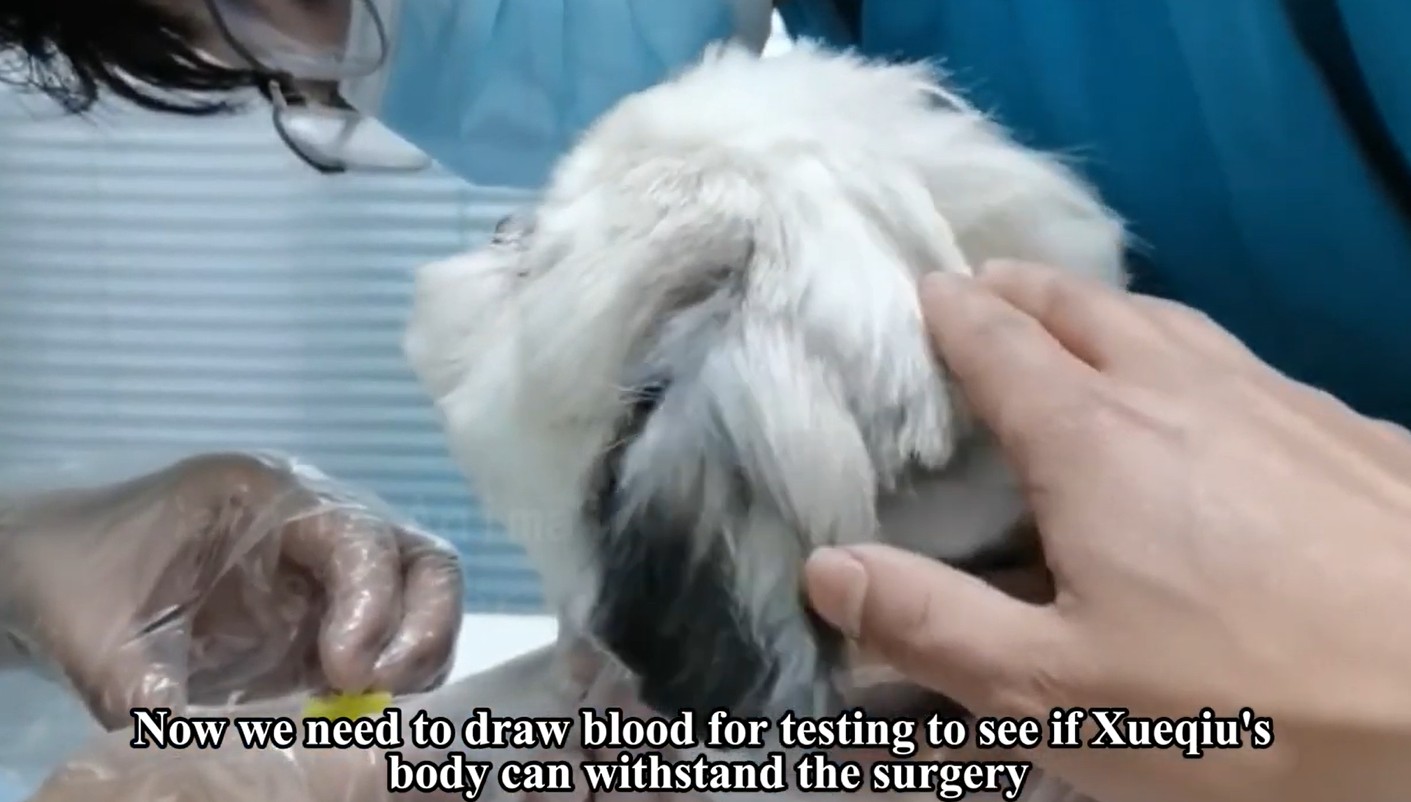
She was too weak to undergo the procedure safely.
Before anything else could happen, she needed warmth, nutrition, fluids, and time.
The caregivers gave her a name.
Snowball.
VIDEO: Found Shivering at -20°C With a Serious Illness — Snowball’s Road Back to Health
Before Surgery, She Had to Become Strong Enough to Fight
Saving Snowball could not happen all at once.
Her body had already been pushed too far.
The veterinary team first focused on stabilizing her condition. She remained under close care, protected from the cold and given the support her weakened body needed.
There was no dramatic overnight recovery.
Instead, progress came quietly.
Warmth replaced the frozen roadside.
Regular nourishment replaced uncertainty.
Veterinary supervision replaced the danger of being alone.
Day by day, Snowball began to stabilize.
Each improvement mattered because the next step carried significant risk.
The tumor still needed to be removed.
Only after the veterinary team believed she had regained enough strength could they prepare her for surgery.
The Procedure That Gave Her Body a Chance to Heal
When the day of Snowball's operation arrived, the stakes were high.
She was still fragile, and the surgery was not a minor procedure.
But without removing the tumor, the dangerous pressure inside her abdomen could continue to worsen.
The operation went ahead.
After hours of careful work, the veterinary team successfully removed the tumor that had been causing so much trouble inside her small body.
Snowball survived the procedure.
Recovery, however, was only beginning.
When she woke afterward, she was extremely weak. For several days, even standing was beyond her strength.
Simple movements required effort.
Her body needed time to recover from both the illness and the operation.
Still, one important burden had finally been removed.
The source of the dangerous abdominal pressure was gone.
Now her body could concentrate on healing.
Small Signs Began to Replace the Fear
Recovery rarely moves in a straight line.
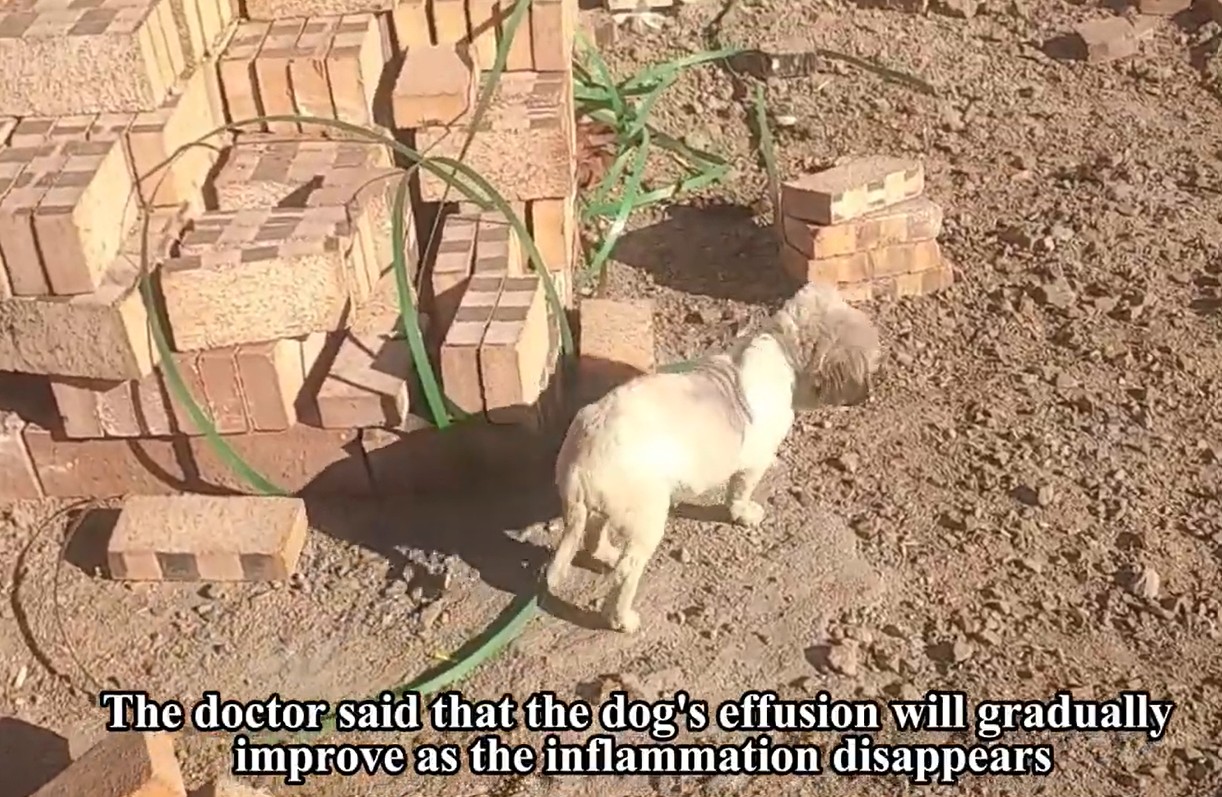
Snowball's abdomen remained somewhat swollen for a period as the remaining inflammation gradually settled.
But as the days passed, another side of her personality began to emerge.
Her appetite became one of the clearest signs that she was feeling stronger.
When food appeared, Snowball paid attention.
A lot of attention.
The little dog who had once been struggling to stand in the snow now approached her meals with remarkable enthusiasm.
Caregivers even noticed an amusing habit.
If someone tried to distract her while she was eating—perhaps hoping for a paw or a little interaction—Snowball often stayed focused on the bowl.
Food came first.
After everything her body had endured, watching her eat eagerly was more than a funny moment.
It was evidence of change.
Strength was returning.
Interest was returning.
Life was beginning to feel normal again.
The Dog Beside the Road Slowly Disappeared
Weeks became months.
Snowball's transformation happened gradually enough that each small improvement could be appreciated.
Her coat began growing back.
What had once been tangled and frozen became soft and healthy again.
Her body gained proper weight.
Her expression changed too.
The exhausted little dog found beside the road was being replaced by a brighter, more curious companion.
There was no single moment when everything suddenly became perfect.
Healing was a collection of ordinary days.
Eating.
Resting.
Growing stronger.
Feeling safe.
Learning what life could look like when she no longer had to fight the cold or carry the physical burden that had once overwhelmed her body.
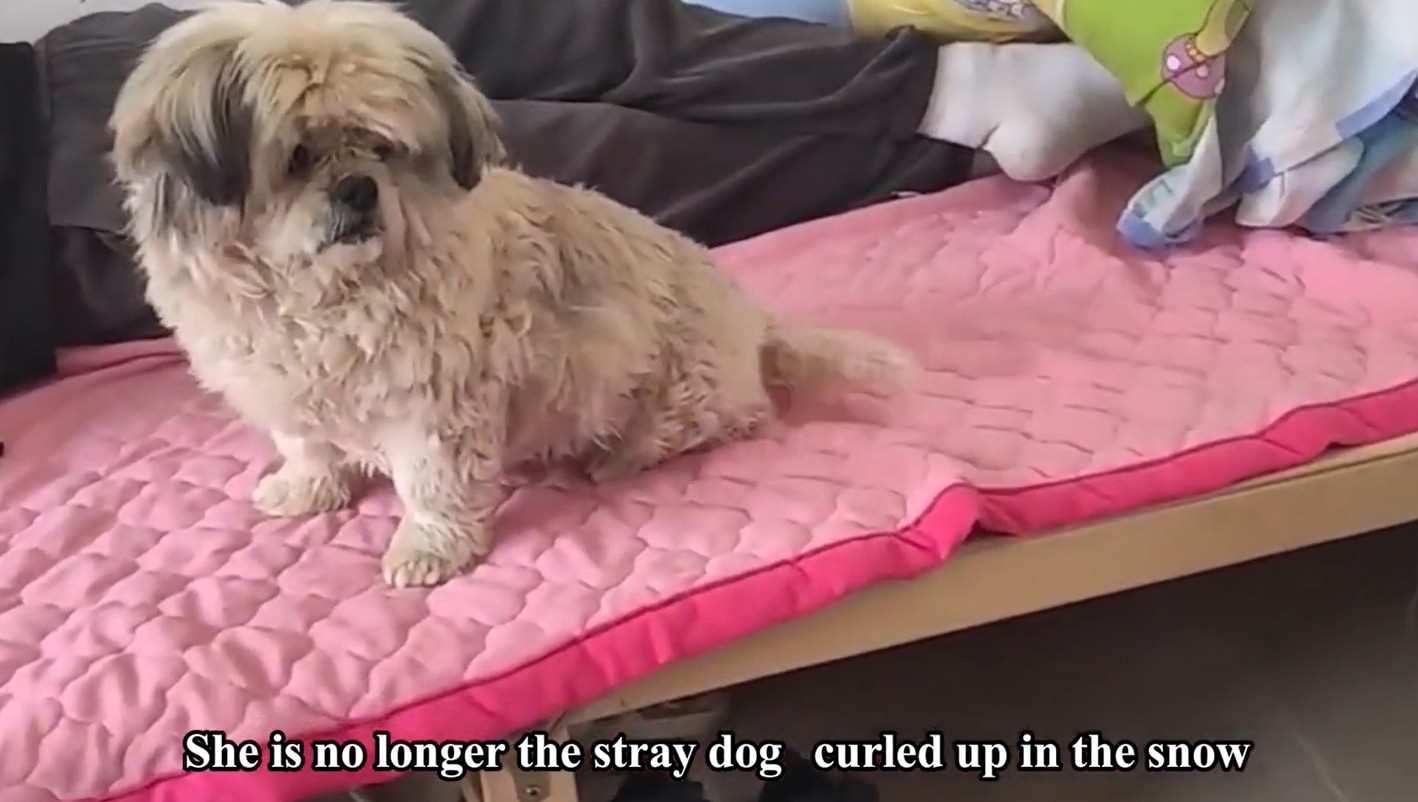
By the time another winter arrived, snow no longer meant exposure and danger.
Snowball could watch it from inside a warm home.
She had a furry companion to play with and soft places to curl up when she wanted to rest.
The difference was enormous.
Months earlier, a passerby had found a trembling little figure beside a frozen road.
Six months later, Snowball was almost unrecognizable.
Her healthy coat had become so fluffy that she resembled a tiny teddy bear.
And beneath all that fur was a dog who had been given the chance to simply enjoy being alive.
From a Frozen Roadside to a Life of Warmth
Snowball's story could easily have ended on that snowy road.
The weather was dangerously cold.
Her body was weak.
A serious illness was progressing beneath a coat so badly matted that the full problem was not immediately visible.
What changed the outcome was not something complicated.
Someone noticed.
Someone stopped.
And someone decided that the small life trembling in the snow was worth helping.
That first decision led to warmth.
Warmth led to veterinary care.
Care made surgery possible.
And surgery opened the door to recovery.
Snowball's journey also shows why rescue is often more than a single dramatic moment.
Being lifted from danger was only the beginning.
She still needed medical attention.
She needed time to regain strength before surgery.
She needed patience afterward while her body recovered.
Then came the quieter work of becoming healthy again.
Meals.
Rest.
A safe home.
Ordinary routines.
For a dog who had once been facing freezing temperatures while seriously ill, those ordinary things became something extraordinary.
Today, the image that remains is not only the frightened little dog standing in the snow.
It is also Snowball months later—healthy, fluffy, comfortable, and surrounded by warmth.
Her past could not be changed.
But her future could.
And it changed because, on one brutally cold day, a stranger saw movement beside the road and chose not to keep driving.
Sometimes compassion begins with something that simple.
Someone notices.
Someone stops.
And a life that seemed almost forgotten finally gets another chance.


