
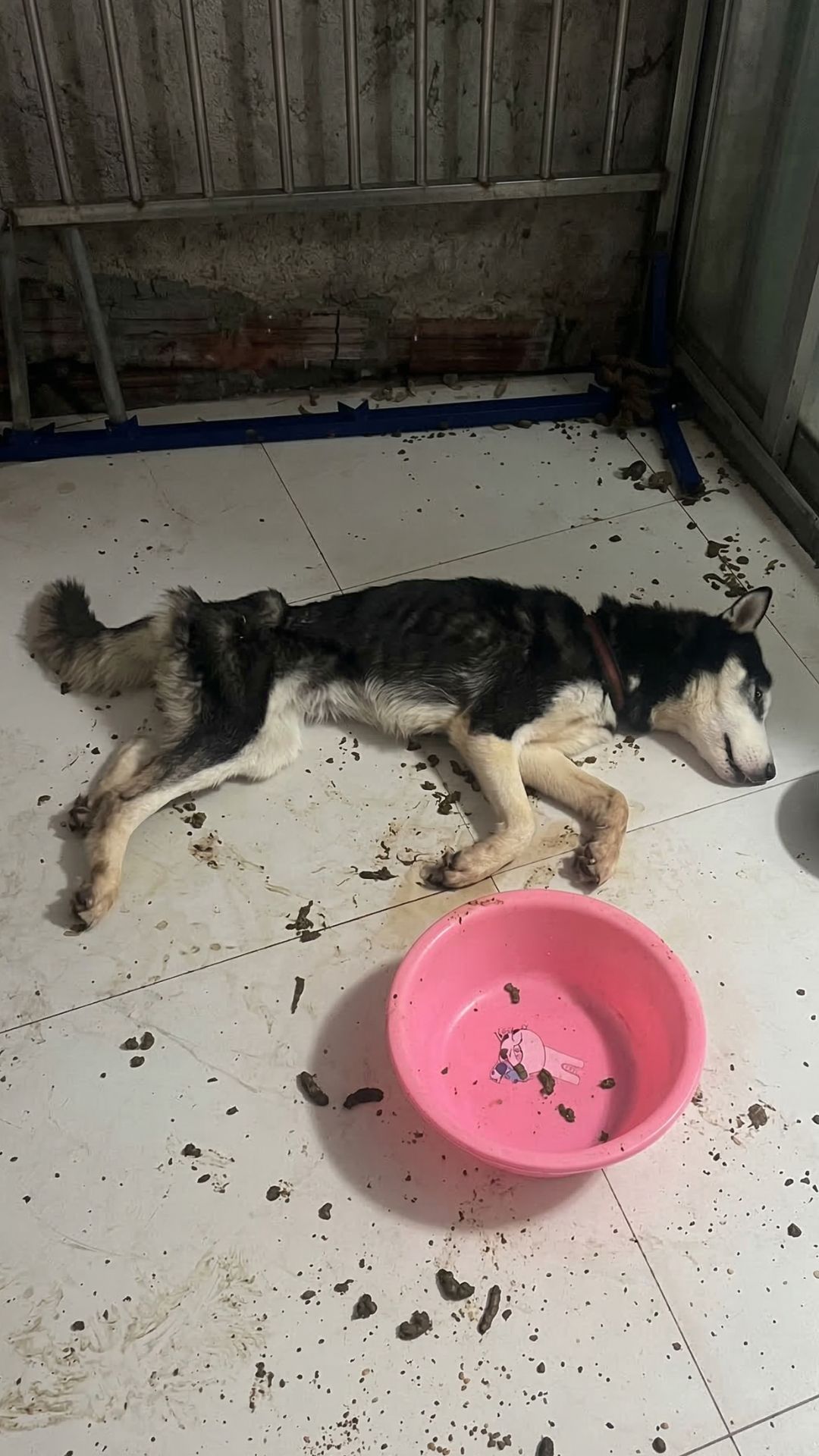
For nearly three weeks, a dog remained inside a rental home where no one came to feed her, offer water, or release the short rope holding her in place.
Twenty days passed.
Outside, ordinary life continued. But behind that closed door, a vulnerable animal was growing weaker with every passing day.
By the time help finally arrived, she could no longer stand.
Her body had endured prolonged hunger and isolation. Even the simplest movement had become difficult.
Yet when rescuers entered the property, they discovered that she was still alive.
What followed was not an instant transformation. It was a gradual journey from severe weakness to recovery, built around careful feeding, gentle encouragement, and the patience of someone willing to help her heal.
Two months later, the difference would be extraordinary.
But first, someone had to realize she was there.
The Unanswered Calls That Led to a Discovery
The first warning sign had nothing to do with an animal.
Rent had gone unpaid at a property, and the landlord was unable to contact the tenant.
Calls received no response.
The tenant appeared to have disappeared, leaving the landlord increasingly concerned about what might have happened inside the home.
As the situation continued without an explanation, the landlord contacted authorities and a rescue team.
There was reason to investigate.
What nobody yet understood was that a dog had been left behind.
When those responding finally forced open the door, the condition of the interior suggested that the property had been unattended for some time.
An unpleasant, heavy smell filled the enclosed space.
But the most troubling discovery was waiting in a smaller area of the home.
There, restrained by a short rope, was a dog whose physical condition showed how much she had endured.
She had very little room to move.
She had been without food and water for an estimated twenty days.
And she was now too weak to stand.
The unanswered calls had led to something far more urgent than a problem with an abandoned rental property.
They had led rescuers to an animal in desperate need of help.
A Small Space, a Short Rope, and Almost No Strength Left
The dog's condition made the seriousness of her situation immediately clear.
Her body was extremely thin. Her bones were prominent beneath her skin, and her muscles had weakened after the prolonged period without proper nourishment.
She could not simply get up and walk away.
Even after people finally reached her, her physical limitations remained.
The rope had confined her to the same small area, preventing her from moving freely around the room.
There was another disturbing detail.
Rescuers noticed that very little waste remained on the floor despite the length of time she appeared to have been trapped there.
The account of her rescue suggested that she may have resorted to consuming her own waste while trying to survive.
It was a painful indication of how desperate her circumstances had become.
Yet there was no need for dramatic gestures to understand her suffering.
Her thin frame told part of the story.
Her inability to stand told another.
And her expression seemed to carry a quiet uncertainty as unfamiliar people approached.
There was no way to know exactly what she understood about the disappearance of the person who had previously lived there.
What was clear was that she had been left without the care every dependent animal needs.
For nearly three weeks, her world had been reduced to an enclosed space and the short distance allowed by a rope.
The arrival of rescuers finally brought that period of isolation to an end.
But reaching her was only the beginning.
The Door Opened, but Recovery Was Still Far Away
Finding the dog alive was an important first step.
It did not mean she was immediately out of danger.
After such prolonged deprivation, she needed careful attention and time to regain the strength she had lost.
Her rescuers moved her away from the property and into a safe home where she could receive ongoing care.
The contrast was significant.
She was no longer confined to the same small spot.
There was a soft blanket beneath her.
Food was available.
Most importantly, someone was there to notice what she needed and respond.
Still, the first days were difficult.
She had been weakened so severely that even approaching her food bowl was beyond her ability.
Instead of expecting her to eat independently, her caregiver brought the food directly to her.
Small spoonfuls were offered gently.
There was no rushing her recovery.
No expectation that a dog who had spent so long struggling could suddenly behave like a healthy animal.
Her caregiver remained close, speaking softly and providing reassurance while helping her eat.
The process required patience.
Each small portion of food mattered because she was not yet strong enough to manage ordinary meals on her own.
It would have been easy to focus only on how much strength she had lost.
But the person caring for her also had reason to notice what remained.
She was alive.
She could accept help.
And she had finally reached a place where her needs would no longer be ignored.
VIDEO: Left Behind for 20 Days — Watch the Moment a Severely Weakened Dog Was Finally Rescued
The First Time She Lifted Her Head
Early recovery can be measured in very small changes.
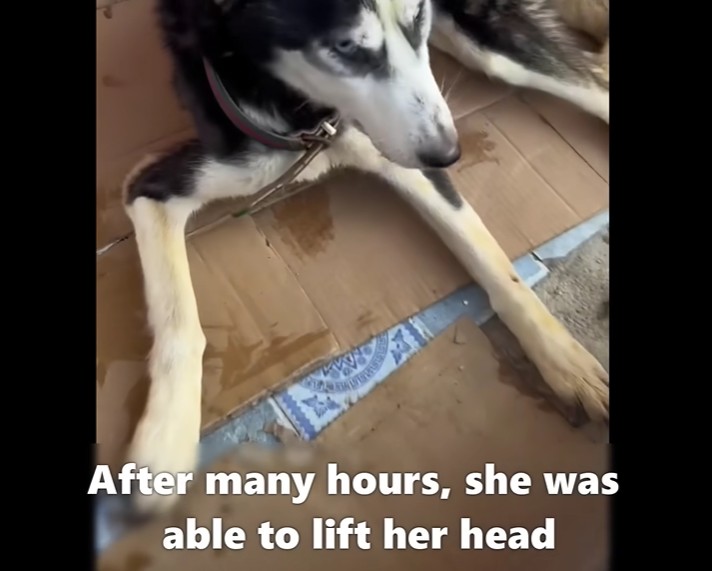
For this dog, one of the first meaningful moments came when she managed to lift her head.
It was a simple movement.
For a healthy dog, it would hardly be noticed.
For an animal who had recently been unable to stand or approach a bowl of food, it represented something much more important.
A little strength was returning.
Her caregiver continued offering food and comfort while allowing her time to rest.
Gradually, the dog became more responsive to the care surrounding her.
By the fifth day, the improvement was visible.
She was able to stand again.
Her legs were still unsteady, and her body remained fragile, but she was no longer completely dependent on someone to keep her upright.
Then she began taking steps.
They were not long or confident walks.
They were the careful movements of a dog learning to use weakened muscles again.
But each step represented progress that had seemed far away when rescuers first entered the rental home.
Her appetite also began to return.
The dog who initially needed to be fed by hand was now eager for the meals placed before her.
That change was especially encouraging.
Food was no longer something her caregiver had to bring to her one spoonful at a time.
She was beginning to participate in her own recovery.
And as her physical condition improved, her expression seemed to change as well.
The distant, exhausted look seen during the rescue gradually softened.
There was more awareness in her eyes.
More interest in what was happening around her.
She was still recovering from a serious ordeal, but her days were no longer defined entirely by weakness.
The smallest ordinary activities were becoming possible again.
Standing.
Walking a little.
Eating with an appetite.
These were not dramatic achievements from the outside.
For her, they marked the beginning of a different life.

A Clever Personality Began to Emerge
As the dog grew stronger, her caregiver began seeing more of her individual personality.
Until then, nearly everything about her had been overshadowed by exhaustion and the immediate need for nourishment.
Now there was room for other behaviors to appear.
Her meals were prepared with her recovery in mind.
Freshly boiled chicken was among the foods provided as her strength returned.
She enjoyed eating, and her appetite continued to improve.
But one particular feeding moment revealed that she was paying close attention to what went into her bowl.
When her caregiver mixed medication into her food, the dog noticed something was different.
She approached the meal.
Sniffed it.
Paused.
Then moved around the bowl without eating.
Her tail wagged, but she remained unwilling to take the medicated food.
Instead, she chose to drink water.
It was a small but memorable incident.
For a dog who had once been too weak to stand, showing that kind of awareness was another indication of how much her condition had changed.
Her caregiver was no longer seeing only a fragile animal who needed help with everything.
There was a curious, observant dog beginning to reveal herself.
And her recovery involved much more than providing meals.
She also needed to rebuild the physical abilities that prolonged confinement and hunger had taken away.
Twelve Days After Rescue, She Was Learning to Move Again
By the twelfth day, the dog had made meaningful progress.
The tenant who had disappeared from the rental property was still being sought by authorities, according to the rescue account.
Meanwhile, her daily life had taken an entirely different direction.
She was spending time rebuilding her strength.
Her caregiver introduced toys to help keep her engaged.
Physical rehabilitation also became part of her routine.
Walking exercises were kept short, allowing her to practice movement without expecting too much from her weakened body.
She also began carefully climbing stairs.
That activity required her to use muscles that had suffered during the extended period of inactivity and insufficient nourishment.
It was not always easy.
Sometimes she became tired and needed to stop.
But after resting, she tried again.
The progress was gradual rather than effortless.
One important change was that she no longer needed assistance simply to stand.
That independence would have been difficult to imagine when she was first discovered.
At the rental home, the short rope had limited where she could go.
Now her caregiver was helping her recover the ability to move freely.
The difference was not only in the distance she could travel.
It was in what those movements represented.
A few careful steps became a short walking session.
Standing without assistance made it possible to practice climbing.
And each successful attempt gave her another opportunity to use her recovering body.
Her rehabilitation showed why rescue cannot always be measured by the moment an animal is removed from danger.
Being found and brought somewhere safe is essential.
But for an animal left severely weakened by neglect, the days afterward may require just as much dedication.
Food alone could not immediately restore everything she had lost.
Rest alone could not rebuild her strength.
Her caregiver had to support both needs while allowing progress to happen at a manageable pace.
By day twelve, that effort was producing visible results.
The dog who once lay helpless in an enclosed room was now standing, walking, exploring toys, and practicing stairs.
Her world had become larger again.
Two Months Later, the Difference Was Remarkable
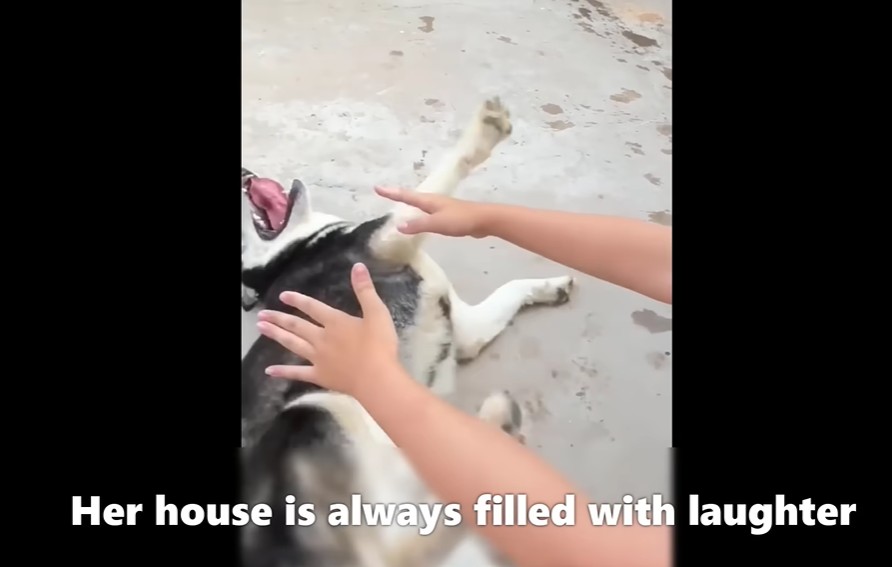
The dog seen two months after her rescue looked very different from the one first discovered inside the rental home.
Her body had regained strength.
Her coat appeared fuller and healthier, with a glossy appearance that contrasted sharply with her earlier condition.
She could move with confidence.
The unsteady steps of her first days in care had given way to far more comfortable movement.
And the home around her was no longer simply a place where she received food and rest.
It had become an environment filled with activity, warmth, and companionship.
She had energy again.
Her personality was no longer hidden behind severe physical weakness.
Instead of spending her days confined to a small area, she could enjoy moving around her surroundings.
The transformation had taken time.
It began with the decision to investigate an unanswered rental property.
It continued when rescuers discovered a helpless dog and brought her to safety.
And it depended on everything that came afterward.
The patient spoon-feeding.
The soft blanket.
The carefully prepared meals.
The first attempts to stand.
The short walking exercises and gradual return of physical independence.
None of those moments was insignificant.
Together, they helped turn an emergency rescue into a confirmed recovery.
There was no indication in the account that the missing tenant had been located by the end of the dog's rehabilitation.
Nor did the story establish every detail of what happened before the landlord became concerned.
Those unanswered questions remain separate from what can be seen in the dog's progress.
She survived an extended period without the care she needed.
She received help.
And over the following two months, she regained much of the strength and confidence that had been lost.
A Second Chance Built on Everyday Kindness
Perhaps the most meaningful part of this rescue is how ordinary the actions of recovery eventually became.
A person helping a dog eat.
A comfortable place to rest.
A bowl of nourishing food.
A few steps across the room.
These are simple things that many animals experience every day without difficulty.
For this dog, they had to be restored one at a time.
Her experience also shows how much can depend on someone noticing that something is wrong.
The landlord initially had questions about an absent tenant and unpaid rent.
Those concerns led to authorities and rescuers entering the property.
Without that intervention, the dog might have remained unseen for even longer.
Instead, she was given the opportunity to recover.
There is something especially moving about the distance between the two stages of her life described in this account.
At the beginning, she could barely move.
By the fifth day, she was standing and eating with renewed interest.
By the twelfth, she was practicing walking and climbing stairs.
Two months later, she was active, healthier, and living in a caring environment.
Her progress was not the result of one extraordinary gesture.
It came from consistent attention to her needs, repeated over days and weeks.
That is what makes her journey worth remembering.
Rescue opened the door.
Patience helped her heal.
And the everyday kindness that followed allowed her to experience the comfort and freedom she had been missing.
The dog who once lay weak and alone inside a locked rental home no longer has to spend her days in that confined space.
She can stand.
She can walk.
She can eat.
She can enjoy the warmth of a home where someone is looking after her.
After twenty days of abandonment and two months of recovery, those ordinary freedoms are the clearest signs of how profoundly her life has changed.
She was not forgotten forever.
Someone finally found her.
And that was enough to give her a second chance.


