
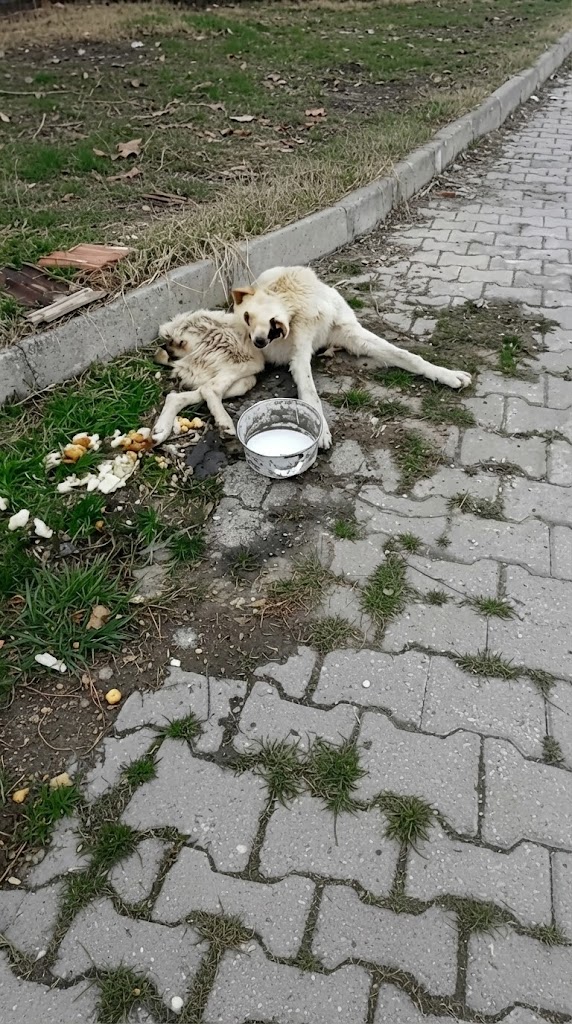
A desperate cry was what first made Hope impossible to ignore.
When rescuers finally reached him, he was lying helpless on the ground, unable to lift his head or move his legs. His body barely responded except for faint tremors, and his strength appeared to be disappearing with the fading daylight.
He had already been there for hours, perhaps longer.
People had passed the place where he lay.
Then someone finally stopped.
That decision became the dividing line between the life Hope had endured and the life he was about to begin fighting for.
When Someone Finally Stopped
There was little time for hesitation once rescuers saw his condition.
Hope was almost motionless. He could not support himself, and even the smallest movements seemed beyond him. According to the source, rescuers believed the injuries they saw were consistent with violence rather than an ordinary accident.
Whatever had happened before they arrived, one fact was painfully clear: he needed urgent help.
They lifted him from the ground and rushed him toward an emergency clinic, not knowing whether he would remain strong enough to survive the journey.
For a dog whose body could no longer carry him, everything now depended on the people carrying him instead.
At the clinic, the seriousness of his condition quickly became apparent. Hope had a high fever, severe seizures, and internal injuries. His body was struggling, and the medical team had very little room for delay.
It was during this fragile period that he received the name Hope.
The name did not mean anyone knew how the story would end.
It simply represented what they were refusing to abandon.
A Tiny Sign That He Was Still Fighting
Treatment began immediately.
There were no dramatic promises and no certainty that Hope would recover. At that moment, the goal was much smaller: stabilize him and help his exhausted body make it through the crisis.
Then something happened that would have seemed insignificant on any ordinary day.
Hope ate a little food.
For a healthy dog, taking a few bites would hardly be worth mentioning. For Hope, whose body had been pushed so close to its limits, it was a meaningful sign.
He still had enough strength to respond.
He was still there.
The team continued working through the night, providing medication and trying to stabilize him while watching for every small indication that his condition might improve.
Recovery had not begun in any dramatic way.
It began with a few bites of food and another hour survived.
VIDEO: Hope Could Barely Move When Help Found Him — Then the First Signs of Life Began to Appear
Surviving Was Only the Beginning
Making it through the initial emergency did not suddenly return Hope to the dog he had once been.
By the second week, he had survived the most critical stage, but his body remained extremely weak. His legs could barely support him, and attempts to stand repeatedly ended with him collapsing again.
The distance between surviving and truly living could now be measured in something as simple as standing upright.
Again and again, Hope tried.
Again and again, his body failed to cooperate.
Yet his rescuers continued working with him.
There was no single moment when everything changed. Rehabilitation was a collection of small efforts, uncertain movements, and patient repetition.
The progress was slow enough that it might have been easy to overlook from one day to the next.
But over time, those tiny changes began to add up.
By Day 20, Hope was introduced to a wheelchair to help him move while his legs remained too weak to carry him normally.
At first, the unfamiliar device was difficult for him.
He had to learn a completely different way of moving. What should have been instinctive now required adjustment and patience.
Gradually, he began to understand.
The wheelchair offered something Hope had been missing since the day he was found: the ability to move forward under his own effort.
It was not yet walking.
But it was movement.
And movement meant possibility.
The Few Steps That Changed Everything
Seven days after Hope began using the wheelchair, another milestone arrived.
On Day 27, he moved forward without assistance.
The steps were unsteady.
There were only a few of them.
But Hope was standing on his own legs and carrying his own body forward.
For those who had seen him unable even to lift his head, the meaning of those shaky steps went far beyond the distance he covered.
They represented everything that had happened since the moment someone stopped beside him.
Emergency care.
Medication.
Food.
Support.
Rehabilitation.
Repeated attempts to stand.
The wheelchair.
And now, finally, a few independent steps.
Hope was not suddenly fully recovered. His body still needed time, and the work of rehabilitation continued.
But something important had changed.
Instead of measuring progress only by whether he could survive another day, his caregivers could now watch him begin to reclaim ordinary movements.
Standing.
Stepping.
Moving toward something rather than remaining helpless on the ground.
These were simple actions, but Hope had fought a long way to reach them.
Seven Weeks After He Could Not Move
The following weeks continued to bring gradual improvement.
Therapy remained part of Hope's routine, and his progress continued at its own pace. There was no shortcut between the dog who could barely move and the dog his caregivers hoped he might become.
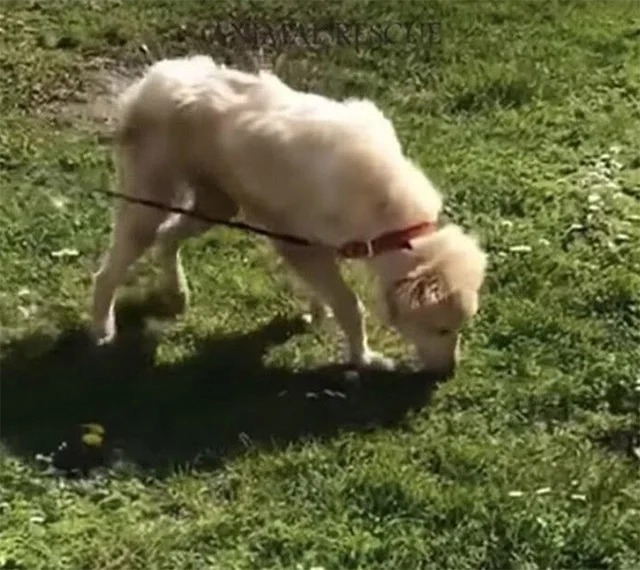
Then, around seven weeks after his rescue, Hope reached a moment that once would have seemed almost impossible.
He ran.
Not one hesitant step.
Not a brief attempt before falling.
Hope moved freely across the grass, his body carrying him forward with an energy that stood in extraordinary contrast to the condition in which he had been found.
His ears bounced as he ran.
His movements showed the strength he had slowly rebuilt through weeks of care and rehabilitation.
The dog who had once been unable to lift his head was now crossing the grass under his own power.
The transformation was not meaningful because it happened quickly.
It was meaningful because it did not.
Hope's recovery had required time.
There had been the emergency clinic, the fever and seizures, the first small meal, the long period when his legs still would not support him, the wheelchair, and the uncertain steps of Day 27.
Each stage had been incomplete on its own.
Together, they brought him here.
A Life Reclaimed One Step at a Time
Two months into his new life, Hope continued to become stronger.
His story did not erase what happened before his rescue, and recovery could not change the hours he spent helpless on the ground while people passed by.
But what came afterward showed how much one decision could alter the direction of a life.
Someone noticed.
Someone stopped.
And once Hope reached safety, others continued showing up for him through the difficult days that followed.
That care did not produce an instant transformation.
It gave him the opportunity to heal.
For Hope, recovery was built from moments that would normally seem very small: eating a little food, surviving a difficult night, learning how to move with support, standing for a few seconds, and taking several shaky steps.
Eventually, those moments became a run across the grass.
There is something quietly powerful in that progression.
Hope did not move directly from suffering to freedom.
He moved forward one uncertain step at a time.
And when his own legs were not yet strong enough, people found another way to help him keep moving.
That may be the most lasting part of his story.
Rescue began when someone refused to keep walking past a dog in distress. Recovery continued because that compassion did not end once Hope reached the clinic.
It remained through the slow days.
Through the failed attempts to stand.
Through rehabilitation.
Through every small improvement that suggested another one might still be possible.
By the time Hope finally ran freely across the grass, the moment carried the weight of everything that came before it.
Once, he could not lift his head.
Then he ate.
Then he survived.
Then he moved with help.
Then he stood.
Then he stepped forward.
And eventually, he ran.
Sometimes a second chance does not arrive all at once.
Sometimes it begins simply because one person stops long enough to notice a life that still needs help.


