
The crying came from somewhere beyond a locked gate.
It wasn't the kind of sound people usually associate with a dog protecting its home. There was no confident barking, no excited greeting, and no ordinary request for attention.
Instead, a distressed, almost sorrowful sound kept coming from inside a property that appeared to have been left empty.
For days, people living nearby had heard it.
The house remained quiet. Its windows were closed, there were no vehicles outside, and the entrance was secured. Nothing suggested that anyone was coming or going.
Yet the crying continued.
Somewhere behind those barriers, a dog was still alive.
And by the time one concerned person decided to investigate, that dog was in a condition that made every passing day matter.
His name would eventually be Zeus.
But when his rescuer first encountered him, he was simply a terribly thin dog who needed someone to notice that he was there.
The Cry That Could No Longer Be Ignored
There is something unsettling about hearing an animal in distress without being able to see where the sound is coming from.
The person who eventually rescued Zeus arrived at the property after learning about the persistent cries.
The first attempt to reach anyone inside was straightforward.
There was knocking.
There were calls for someone to answer.
But nobody responded.
The only answer was the same miserable sound that had drawn attention to the property in the first place.
The locked entrance created a difficult situation. Whoever was inside could not simply be reached by walking through the gate.
For a moment, the wall stood between the rescuer and an animal whose condition remained unknown.
Leaving would have been the easier choice.
There was no certainty about what waited on the other side, and entering a secured property presented an obvious complication.
But the crying made walking away difficult.
Eventually, the rescuer made the decision to climb over the wall.
It was a choice driven by concern for an animal that might not have the strength to keep calling for help.
What waited inside would explain why the sound had been so desperate.
A Dog Whose Body Had Almost No Strength Left
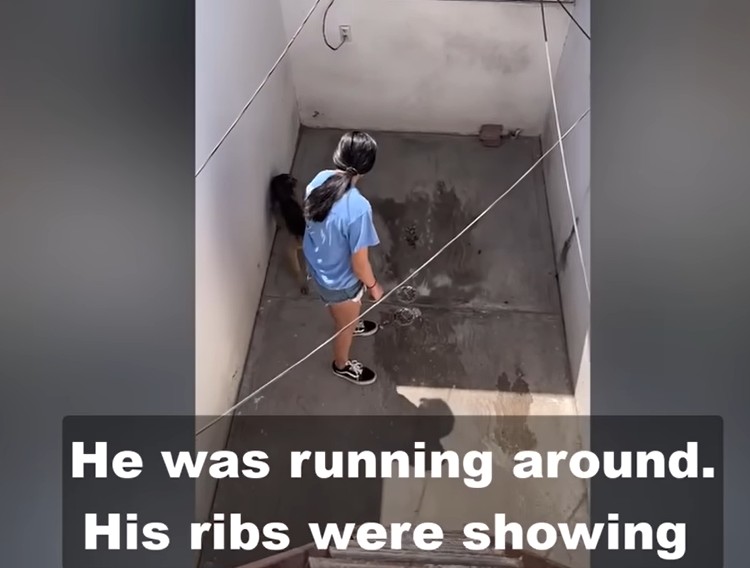
After entering the yard, the rescuer finally saw the animal behind the cries.
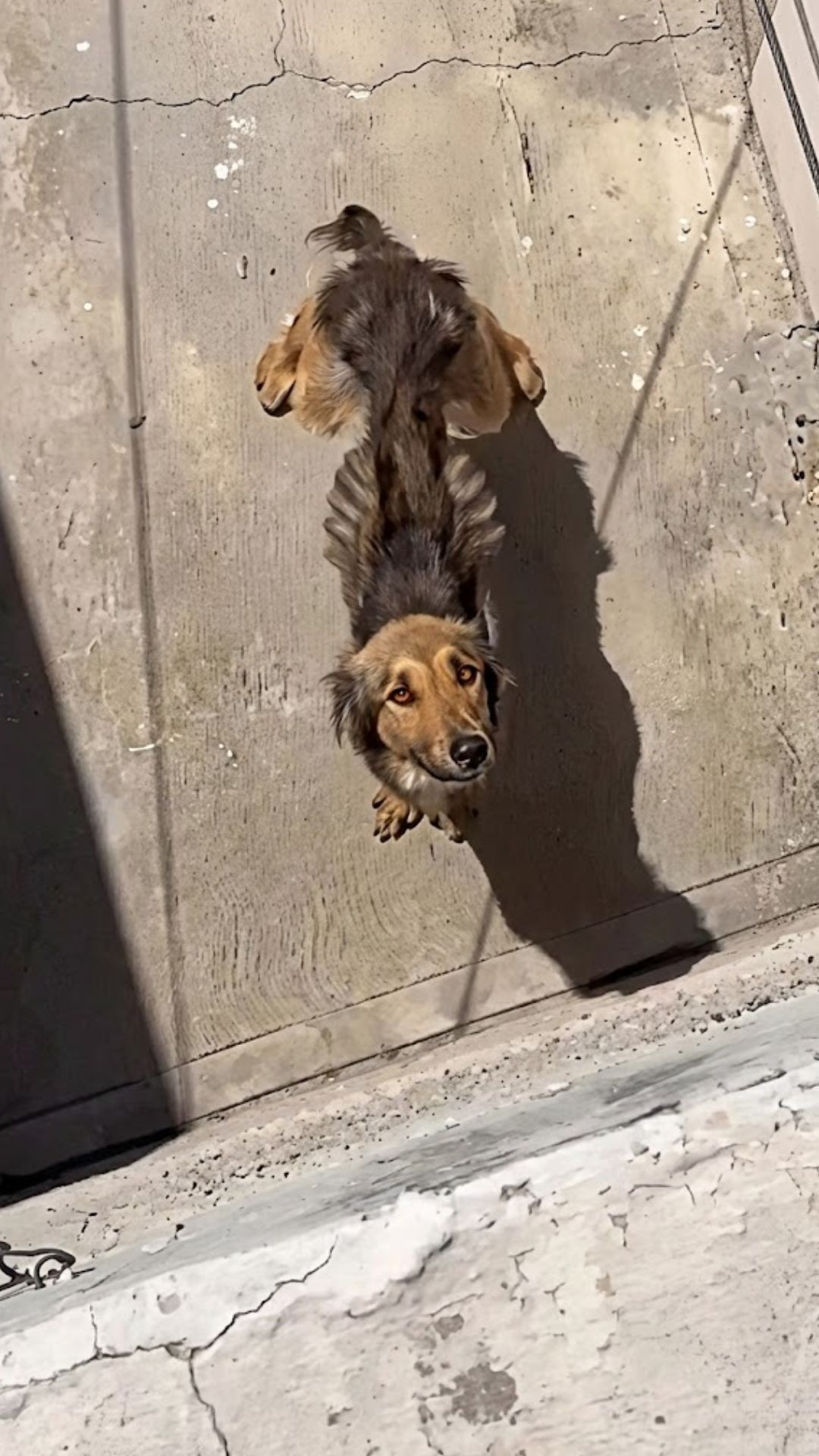
Zeus was severely underweight.
His coat was tangled and dull, and his ribs were clearly visible beneath his thin frame. He looked exhausted, with little energy to respond to the unfamiliar person approaching him.
He did not rush forward.
He did not greet the visitor with excited barking.
He barely moved.
The condition of his body suggested that his struggle had not begun that day. Whatever had happened before the rescue, he had reached a point where even ordinary movement appeared difficult.
The sight was deeply troubling.
Dogs are naturally expressive animals. They explore, respond to sounds, approach familiar people, and communicate through their bodies.
But Zeus seemed to have very little energy left for any of those things.
He stood in the yard with the quiet exhaustion of an animal that had gone without adequate nourishment.
The rescuer approached carefully.
There was no way to know how Zeus might respond. An animal in such poor condition could be frightened, defensive, or too weak to interact normally.
Food was placed in front of him.
And then something important happened.
Zeus began eating.
He was clearly hungry, but he did not become aggressive toward the person who had brought him food.
Despite his desperate condition, his response remained gentle.
The rescuer spoke softly, trying to reassure him.
For the first time during that encounter, Zeus offered a small response that was different from the heartbreaking cries.
The tip of his tail moved.
Only a little.
It was not an enthusiastic wag or a sudden burst of energy. His body was still weak, and his recovery had not even begun.
But that tiny movement mattered.
It suggested that Zeus was willing to accept the kindness being offered.
And it gave his rescuer another reason to keep going.
Getting Zeus Beyond the Wall
Finding Zeus was only the first part of the problem.
The property was still enclosed, the entrance remained locked, and the dog was too weak for the situation to be treated casually.
The rescuer now had to work out how to bring him to safety.
Zeus needed to be handled carefully. His body was fragile, and he had very little strength to spare.
When the rescuer lifted him, the extent of his weight loss became even more apparent.
He felt alarmingly light.
His thin frame was a painful reminder of how much his body had endured.
Yet he did not struggle against the person holding him.
Instead, he leaned into the contact.
Perhaps he was simply exhausted. Perhaps the calm handling helped him feel less threatened.
Whatever the reason, he allowed himself to be carried.
The rescuer managed to get Zeus out of the enclosed property.
For the first time since the cries had been heard behind the gate, the dog was no longer trapped inside that yard.
They waited together beside the road for further help.
It was a quiet pause after an uncertain rescue.
Zeus had been reached, fed, and removed from the place where he had been suffering.
But there was still a long way to go.
His condition required more than one meal and a safe place to rest.
He needed medical attention, nourishment, and time.
As they waited, the rescuer began thinking about what to call him.
The name chosen was Zeus.
It was a strong name for a dog whose body was anything but strong at that moment.
When the rescuer said it, Zeus slowly raised his head and licked the person's hand.
It was a simple gesture.
Yet after everything that had happened, it carried a quiet sense of connection.
The dog who had been crying behind a locked gate now had someone sitting beside him.
Someone who intended to help him recover.

VIDEO: He Was Starving Behind a Locked Gate — Then Zeus Discovered a Life Filled With Love and Dancing
The Medical Visit That Offered Hope
Once Zeus was taken to a veterinary clinic, the seriousness of his condition became clearer.
He was suffering from severe malnutrition.
Veterinary examination also identified parasites, adding another challenge to a body already struggling with a lack of nourishment.
These findings helped explain why Zeus had appeared so weak when he was discovered.
His body needed care.
And recovery would not happen immediately.
The veterinary assessment, however, offered something his rescuer desperately wanted to hear.
Zeus still had a chance.
The veterinarian believed he could recover with enough time and proper care.
That reassurance did not erase the difficulties ahead, but it changed the outlook.
Instead of wondering whether Zeus could be reached in time, the focus could now turn toward helping him regain his health.
His rescuer brought him home.
For a dog who had been found behind locked gates, the change was significant.
There was now a place where he could rest without the same uncertainty that had surrounded his discovery.
There was someone paying attention to his needs.
And there was an opportunity for his body to recover at its own pace.
During the early period at home, Zeus spent much of his time sleeping.
He often curled into himself and remained quiet for long stretches.
He was not suddenly energetic simply because his surroundings had changed.
His physical condition still reflected the hardship he had experienced.
The recovery process called for patience.
It was not about expecting Zeus to behave like a healthy, playful dog right away.
It was about giving him the care and consistency he needed while his strength gradually returned.
That kind of progress can be easy to overlook.
There may be no dramatic moment when everything changes at once.
Sometimes the meaningful difference is simply that a dog can rest comfortably, eat regularly, and begin responding to the people around him.
For Zeus, those ordinary parts of life would become the foundation of something much happier.
Small Changes That Slowly Brought Him Back
As time passed, Zeus began to look different.
The physical changes were gradual but unmistakable.
His coat improved.
His body started filling out.
The extreme thinness that had been so noticeable during the rescue slowly gave way to a healthier appearance.
But his rescuer also noticed changes that went beyond the way Zeus looked.
The dog who had once barely moved began showing interest in life around him.
His eyes appeared brighter.
His behavior became more responsive.
And eventually, he began to play.
At first, that playfulness was cautious.
He was still discovering what his recovering body could do and becoming accustomed to a life where food, rest, and companionship were available.
There was no need to rush him.
Each small sign of confidence was meaningful precisely because of where he had started.
A playful movement might seem ordinary in a healthy dog.
For Zeus, it was evidence of how much had changed.
He had gone from standing weakly in an enclosed yard to enjoying the freedom of a home where he was cared for.
His rescuer could see the difference.
The dog who had once appeared withdrawn was becoming increasingly comfortable expressing himself.
He no longer spent all his time resting.
He was beginning to participate in the life happening around him.
The gradual transformation was about more than gaining weight.
It was also about seeing Zeus become an affectionate, lively companion.
And although his progress had already brought plenty of happiness, the most memorable moment was still ahead.
It happened in the kitchen.
The Evening Zeus Started Dancing
One evening, Zeus's rescuer was preparing food in the kitchen.
Music was playing softly.
The person was humming along while going about the ordinary task of cooking.
It was a peaceful moment at home, the kind that might have passed without becoming a special memory.
Then Zeus appeared nearby.
At first, there was nothing particularly unusual about his presence.
Dogs often wander into kitchens when their people are preparing food.
But Zeus was not simply waiting for something to eat.
He began moving.
His body swayed gently.
He lifted his paws.
His tail moved along with the music.
The rescuer watched in surprise before breaking into laughter.
Zeus appeared to be dancing.
It was an unexpectedly joyful sight.
Not long before, he had been too weak to move much at all.
Now he was standing in the kitchen, responding to the music with playful movements of his own.
Nothing about the moment was complicated.
There were no special tricks involved.
No elaborate activity.
Just a dog, a familiar person, and a song playing in the background.
Yet it became one of the clearest reminders of how far Zeus had come.
The same animal who had once cried behind locked gates now had the energy to lift his paws and enjoy himself.
For his rescuer, that contrast was difficult to forget.
Zeus was no longer defined only by the condition in which he had been discovered.
He was showing his personality.
And apparently, part of that personality included a love of music.
When a Temporary Stay Became a Forever Home
The kitchen dance did not remain a one-time surprise.
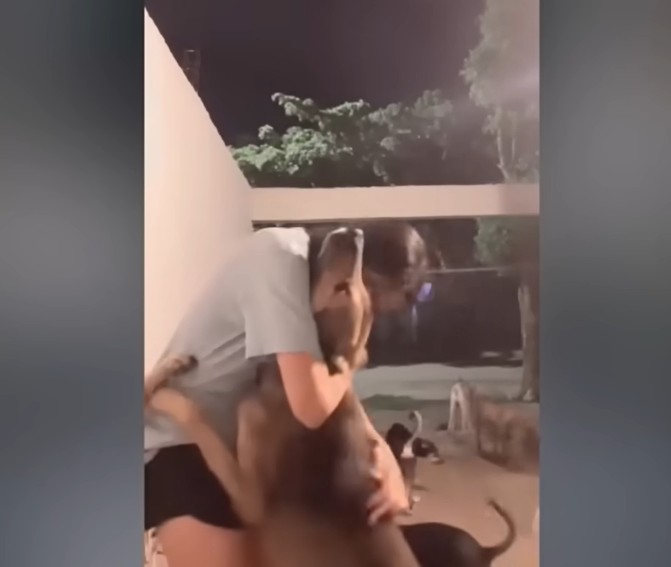
According to his rescuer, it became part of their shared routine.
When music played, Zeus would dance.
His movements became a source of laughter and happiness in the home.
It was a remarkable change from the early days, when even a slight movement of his tail had seemed significant.
But Zeus's recovery also brought another important decision.
Originally, his rescuer had planned to foster him.
The idea was to provide the care he needed, help him regain his health, and eventually find a suitable permanent home.
That was the plan.
As Zeus recovered, however, the relationship between them grew.
The rescuer was no longer simply looking after a dog until someone else could take over.
Zeus had become part of everyday life.
He was there during ordinary household moments.
He played.
He rested.
He responded to music with those now-familiar dancing movements.
And he offered the companionship that often develops when an animal begins to feel comfortable with a person who cares for him.
Watching Zeus dance in the kitchen helped his rescuer recognize something that had been growing throughout his recovery.
There was no longer a need to search for another home.
Zeus had already found one.
The decision to keep him turned what began as a temporary rescue arrangement into a lasting bond.
He would not have to adjust to another household or leave the person who had cared for him during his recovery.
He could stay.
For Zeus, that meant the continuation of the safe, comfortable life he had gradually come to know.
For his rescuer, it meant keeping a companion whose transformation had brought unexpected happiness.
From Desperate Cries to a Life Filled With Music
Today, Zeus's life looks very different from the one his rescuer encountered behind the locked gate.
He eats well.
He sleeps comfortably.
He has recovered enough to enjoy playing and dancing at home.
His body no longer has the severely underweight appearance that made his discovery so distressing.
And the quiet, exhausted dog who once barely responded to another person's presence has become a much more expressive companion.
His favorite moments are not necessarily extraordinary ones.
Sometimes they happen while music plays in the kitchen.
Sometimes they are simply the comfort of having a familiar person nearby.
The rescuer still occasionally bends down and softly tells Zeus that he is safe.
It is a small reassurance, but one that carries special meaning after everything they experienced together.
There is also something deeply moving about the contrast between the beginning of Zeus's story and the life he has now.
At first, the only sign of his presence was a cry coming from a property nobody seemed to be visiting.
Someone had to listen closely enough to notice.
Someone had to decide that the sound deserved attention.
And when the dog was finally found, helping him required more than a moment of sympathy.
It took action, medical care, patience, and continued commitment.
Zeus's story does not provide every answer about what happened before his rescue. His earlier circumstances remain unclear.
What it does show is the difference that timely help and consistent care can make.
A severely malnourished dog was discovered in an enclosed yard.
He was carried to safety.
He received veterinary attention.
He was given a place to recover.
And eventually, that place became his permanent home.
There is no need to imagine a more dramatic ending.
The real outcome is meaningful enough.
Zeus, once too weak to do much more than stand quietly and accept food, now has the strength and confidence to dance whenever the music begins.
A dog who once cried because he needed help now shares ordinary, happy moments with the person who came to his rescue.
And perhaps that is the most beautiful part of his transformation.
He did not simply survive the difficult condition in which he was found.
He was given the chance to enjoy being a dog again.
A comfortable place to sleep.
Regular meals.
Someone who cares whether he is happy.
And, whenever the right song comes on, a kitchen floor where he can dance.


