
Some rescue stories begin with barking, movement, or a desperate attempt to get someone's attention.
This one began with silence.
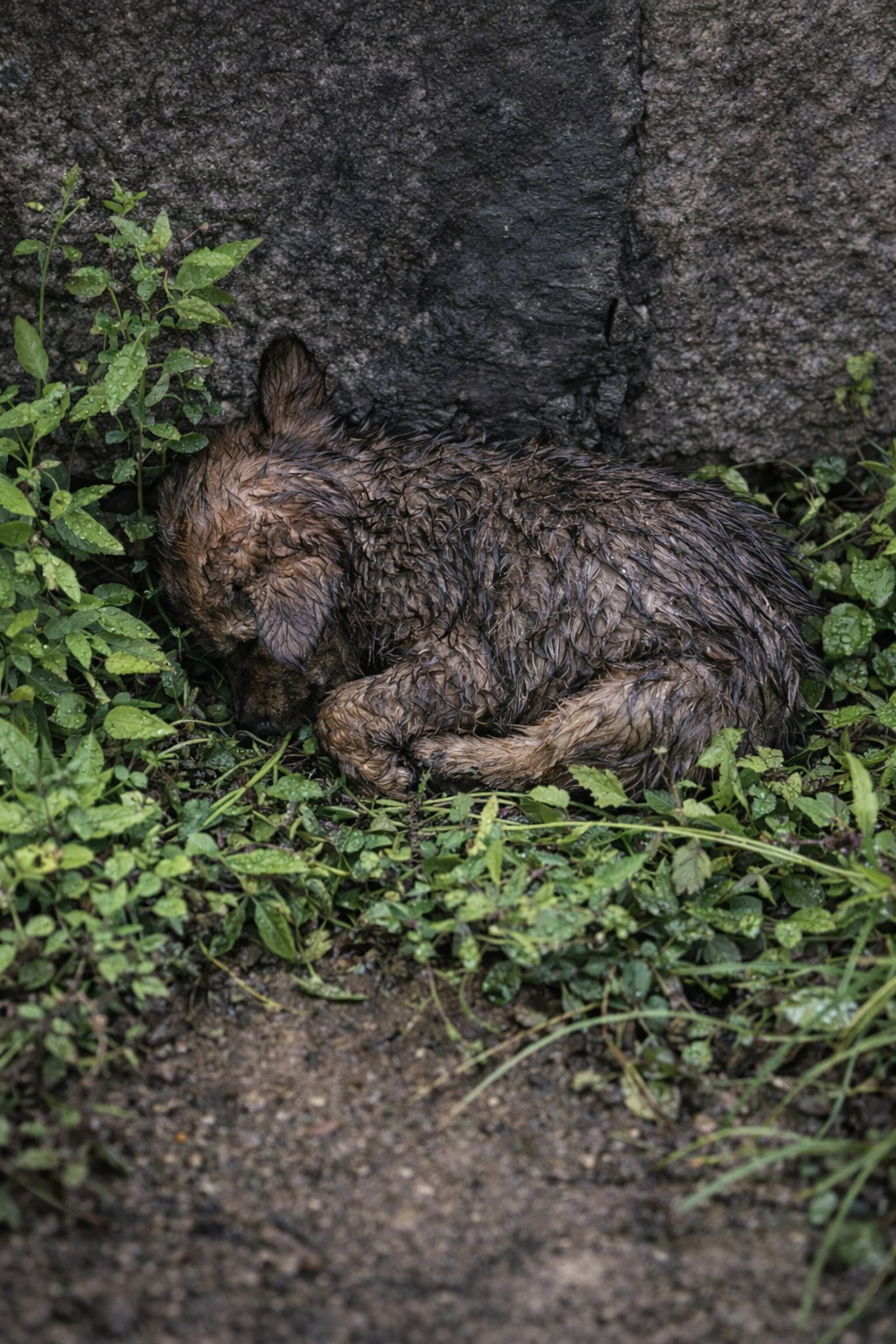
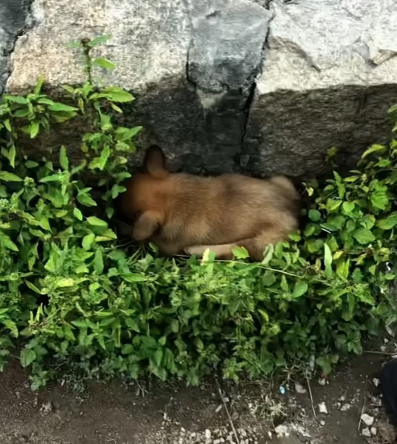
Near the end of an ordinary workday, a rescue team stepped outside and noticed something small lying in the grass beside the road. At first, the puppy barely moved.
He did not cry out or try to escape.
He simply watched the approaching people carefully, as though he had no idea what their presence would mean.
The Small Puppy Who Could Not Get Up
As the rescuers came closer, the puppy became frightened. He tried to make himself smaller, reacting cautiously to unfamiliar footsteps and voices.
Then the reason for his stillness became clear.
Both of his hind legs were seriously injured.
He could not stand properly, much less walk away in search of food or safety. His body had also been weakened by hunger and exhaustion, leaving him with very little strength.
Yet he was awake.
He was watching.
And that was enough for the rescuers to know they needed to act.
They did not know everything that had happened before they found him. What they could see was a young dog who was unable to move normally and needed immediate help.
Sometimes rescue begins with something very simple: someone notices what others may have passed without seeing.
For this puppy, that moment had finally arrived.
Careful Hands Replaced Fear With Warmth
The team understood that rushing toward him would only increase his fear.
They spoke quietly and approached slowly, allowing the puppy time to process what was happening around him. When they finally lifted him, they handled his injured body with great care.
A cardboard box became his first safe place.
The rescuers lined it with warm clothing and gently settled him inside.
There was no dramatic struggle.
The puppy stayed quiet.
After lying outdoors with injuries that prevented him from walking, even the simple feeling of warmth around his body represented a major change.
His muscles gradually appeared to relax.
For the moment, nobody was asking him to walk.
Nobody was forcing him to move.
He could simply rest.
The rescue itself had taken only a short time, but the harder part was still ahead.
His damaged legs needed professional evaluation, and the following morning he was taken to a veterinary clinic.
VIDEO: Found Unable to Stand Beside the Road, He Began the Long Journey Back to His Feet
The X-Rays Revealed How Serious His Injuries Were
At the clinic, X-rays provided a clearer picture of the puppy's condition.
Both hind legs had suffered severe injuries.
The veterinary assessment confirmed that surgery was urgently needed. This was not an injury that could be solved with rest alone.
The operation would only be the beginning.
Afterward, the puppy would still need time, pain management, rehabilitation, and consistent care before anyone could know how much mobility he might regain.
There was no instant transformation.
Recovery had to happen gradually.
Three days after the operation, his condition had stabilized.
By the twelfth day, the source reported that close to seventy percent of the damage had already healed.
Those were encouraging signs, but healing bones was only part of the challenge.
After being unable to use his back legs normally, the puppy also needed to rebuild strength, movement, balance, and confidence.
That required another kind of patience.
Learning to Use His Body Again
The rescue team combined regular rehabilitation exercises with gentle traditional forms of care described in the source.
Warm herbal therapy was used to help relax tight muscles, while medicinal leaf baths provided another soothing part of his routine.
Most importantly, he practiced moving every day.
These exercises were not about forcing fast results.
They were about giving his recovering body repeated opportunities to become stronger.
Some sessions even took place while the household cats watched nearby, turning rehabilitation into an ordinary part of daily life rather than a frightening medical event.
For a puppy who had once been unable to stand, every controlled movement mattered.
Progress could be measured in small changes.
A little more stability.
A little more strength.
A little less hesitation.
Healing rarely follows a straight line, especially after serious injuries. The body needs time to rebuild what was lost, and confidence often returns just as slowly.
The rescue family continued the routine.
Day after day, the puppy was given the support he needed without being rushed beyond what his body could manage.
Four Months of Small Steps Added Up
The weeks passed.
Gradually, the frightened puppy found beside the road began to look different.
His movements became more controlled.
His body grew stronger.
The uncertainty in his eyes slowly faded as life around him became familiar and safe.
For a time, he needed a wheelchair to help him move.
Then, after approximately four months of consistent care and rehabilitation, another major milestone arrived.
He no longer needed it.
The puppy who had once lain motionless in roadside grass could support himself again.
Soon, walking became running.
Recovery began to look less like medical treatment and more like ordinary puppy life.
He played.
He explored the home.
He moved from one corner to another with the curiosity and energy that had been impossible when he was first found.
His coat became healthier and glossier, and his posture reflected the strength he had slowly regained.
The change was not the result of a single dramatic moment.
It came from many ordinary days of care placed one after another.
The Life Waiting Beyond Recovery
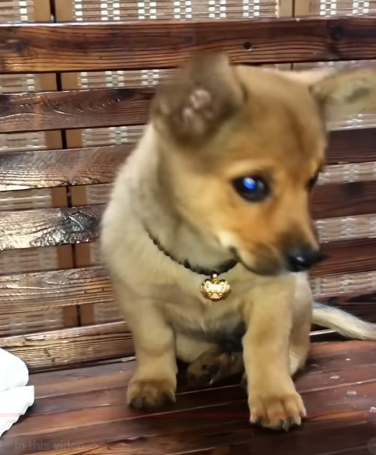
Today, according to the source, the puppy remains with the rescue family who cared for him through his recovery.
His world is very different from the roadside where they first noticed him.
He can run freely.
He can play.
He can move without the wheelchair that once helped support his healing body.
The puppy who once watched approaching strangers with fear now lives in a place where human hands are associated with food, warmth, rehabilitation, and safety.
His journey is powerful precisely because it was not quick.
Surgery mattered.
Veterinary treatment mattered.
Rehabilitation mattered.
But so did every quiet day between those milestones.
Someone had to continue helping when the dramatic part of the rescue was already over.
Someone had to repeat the exercises.
Someone had to provide the baths, the warmth, the safe place to sleep, and the patience required for a frightened young dog to become stronger.
That consistency turned rescue into recovery.
Sometimes Hope Looks Like Staying
When the team first saw the puppy beside the road, there was no guarantee of what his future would look like.
They only knew what was in front of them.
A tiny dog.
Two badly injured back legs.
A body weakened by hunger and exhaustion.
And a life that needed help.
They chose not to walk past him.
Everything that followed—the clinic visit, surgery, rehabilitation, wheelchair, exercises, and eventual return to running—was built on that first decision.
His story is a reminder that helping an injured animal is rarely about one heroic moment.
Often, it is about staying long enough for healing to have a chance.
It is about doing the same gentle things again tomorrow.
And the next day.
And the day after that.
Four months later, the puppy who could not stand had reclaimed the simple freedom of movement.
He could explore.
He could play.
He could run.
Sometimes that is what a second chance looks like—not a sudden miracle, but patient care repeated until a frightened, injured animal finally has the strength to live like himself again.


