
Some rescue stories begin with a frightened animal hiding from the world.
Hero's began in plain sight.
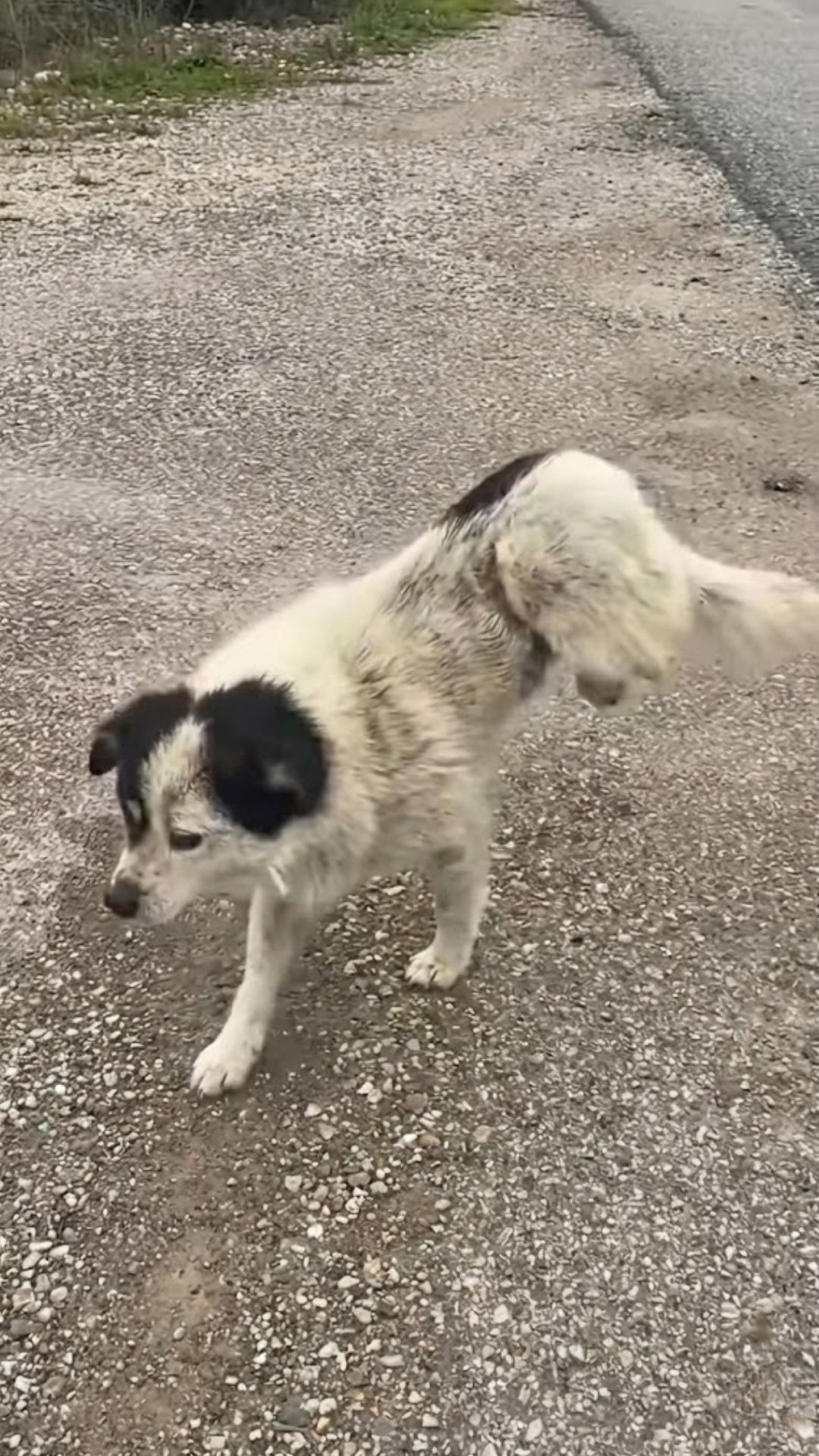
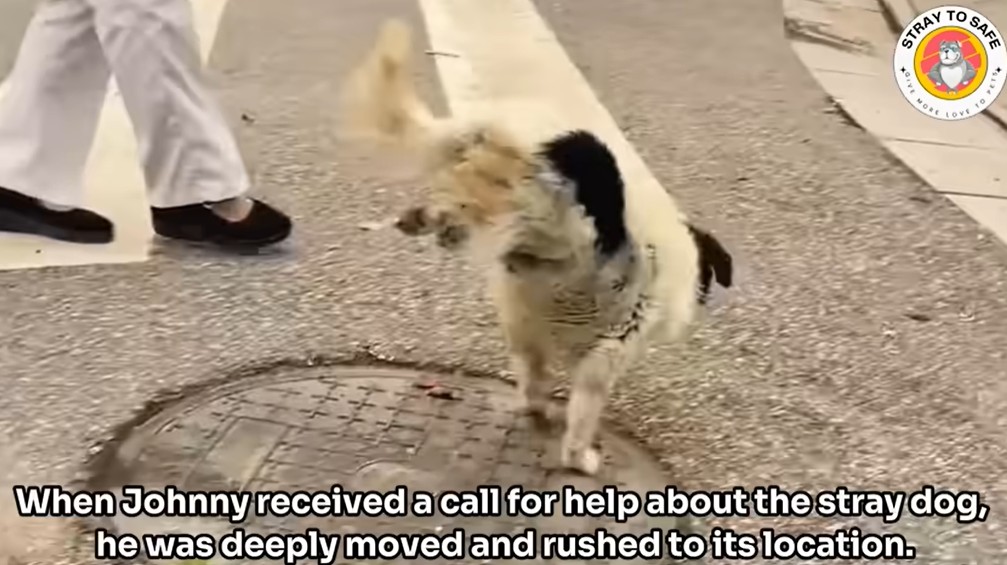
Day after day, people moved through the city while a stray dog pulled himself across the pavement using only his front legs. His hind legs could no longer support him, so they remained stretched behind his body as he struggled forward.
He could not move like the other dogs around him.
Yet he continued moving.
There was no dramatic cry for attention. Hero simply adapted to what his body allowed, pulling himself from one place to another in search of food, water, and another day of survival.
People noticed him.
Some paused. Some offered small pieces of food. Others continued walking, leaving the injured dog to disappear again into the movement of the city.
Even then, Hero remained remarkably gentle.
When strangers came near, he could still respond with the small gesture that dogs seem to offer even when life has given them very little in return.
He wagged his tail.
A Dog the City Had Learned to Walk Past
Life around Hero continued at full speed.
People hurried along sidewalks while he traveled inches at a time. Healthy dogs passed beside their owners, walking easily on four legs as Hero relied entirely on the strength of his front half.
At one point, he lowered himself beside the road to drink from a muddy puddle.
Nearby, another dog passed on a leash with its owner.
Hero watched for a moment.
Then he pulled himself forward again.
No one knew exactly what had happened to him at that point. What was obvious was that his condition was serious and had not developed overnight.
His hind legs were extremely weak and painful, and his body had been compensating for a long time.
For Hero, survival had become a repetitive routine: move forward, find something to eat, search for water, rest, and somehow continue.
Stopping was not an option his circumstances seemed to allow.
And then someone received a call about him.
The Moment Johnny Finally Reached Him
Johnny had helped injured animals before, but when he arrived and saw Hero for himself, the seriousness of the situation became clear immediately.
Hero did not bark at him.
He did not try to attack.
He trembled.
Johnny approached carefully, aware that an injured animal could become frightened by even a gentle touch. When he tried to examine Hero's hindquarters, the dog reacted sharply to the discomfort.
His back legs were extremely sensitive.
Still, Hero looked toward Johnny without aggression.
He seemed exhausted more than anything else.
This was a dog who had spent an unknown number of days navigating the streets with a body that could no longer function normally. Whatever trust he once had in people had been tested by a long period of surviving largely on his own.
Johnny knew that leaving him there was not an option.
He carefully lifted Hero and carried him away from the streets.
For the first time in a long while, Hero no longer had to drag himself toward whatever came next.
Someone else was carrying him.
VIDEO: For Months He Survived on Two Front Legs — Then One Rescue Changed Everything
The Examination Revealed How Long He Had Suffered
At the veterinary clinic, Hero's condition was evaluated more closely.
The findings were severe.
His hindquarters showed advanced damage and infection that required immediate medical attention. Even gentle examination caused significant discomfort.
Yet one small moment captured something extraordinary about him.
After reacting to the pain, Hero still wagged his tail.
He was hurting, but the instinct to respond warmly to the people trying to help him was still there.
Further examination, including X-rays, revealed extensive damage to the bones in both hind legs. According to the veterinarian, the condition appeared to have developed over a long period rather than from a recent injury.
The source indicates that an old vehicle accident was considered the likely cause.
Based on the condition of his bones and the severity of the infection, the veterinarian estimated that Hero may have been living this way for at least six months.
Six months was difficult to imagine.
For roughly half a year, he had apparently relied almost entirely on his front legs while moving through the streets.
His body had found a way to continue long after his hind legs had stopped helping him.
There was now another problem.
The damaged limbs were not simply preventing Hero from walking normally. Their condition had become dangerous to his overall health.
The veterinary team had to consider what would give him the best chance of surviving.
The answer was painful but clear.
The Decision That Could Give Hero a Future
Hero's hind legs had suffered such extensive damage that saving them was no longer considered possible.
According to the source, the infection created a serious risk of spreading further through his body. Amputation became necessary to protect his life.
It was not an easy decision emotionally.
Johnny had already seen how determined Hero was. Even with two unusable legs behind him, he had taught himself how to move, balance, and continue searching for what he needed.
Removing the legs would permanently change his body.
But Hero had already been living without meaningful use of them.
The difference was that after surgery, he would no longer have to carry the damaged weight that had caused him so much discomfort.
Johnny stayed close before the procedure, watching Hero move with the front-leg strength that had kept him alive for so long.
The dog had already answered one important question through his actions.
He wanted to keep going.
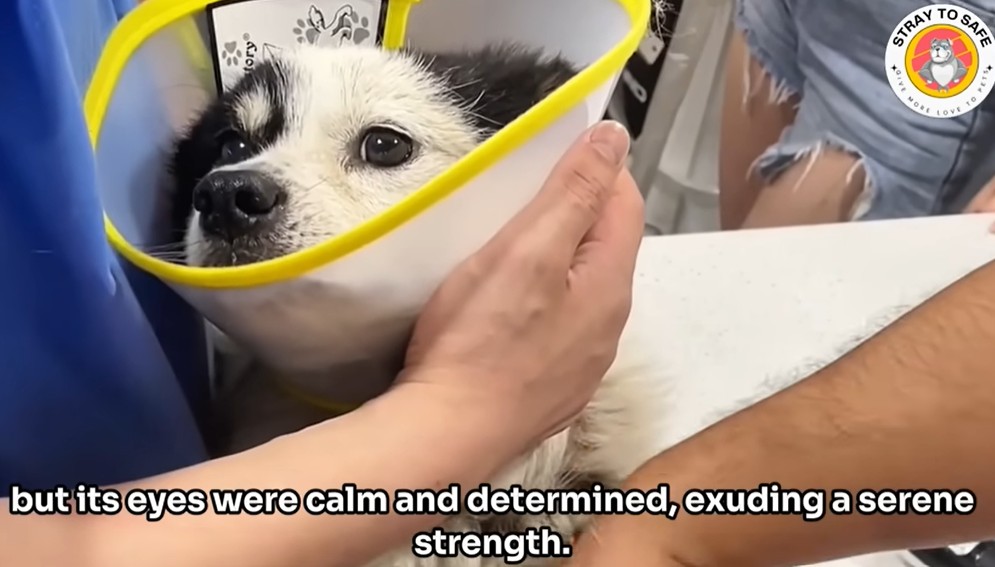
The operation lasted nearly two hours.
When Hero eventually woke from anesthesia, he was understandably disoriented. His body felt different, and he had to adjust to a major physical change.
But the source of the dangerous infection had been removed.
Hero had lost both hind legs.
He had also gained something he had not possessed while dragging himself through the streets:
a real chance to recover.
Freedom From the Weight He Had Been Carrying
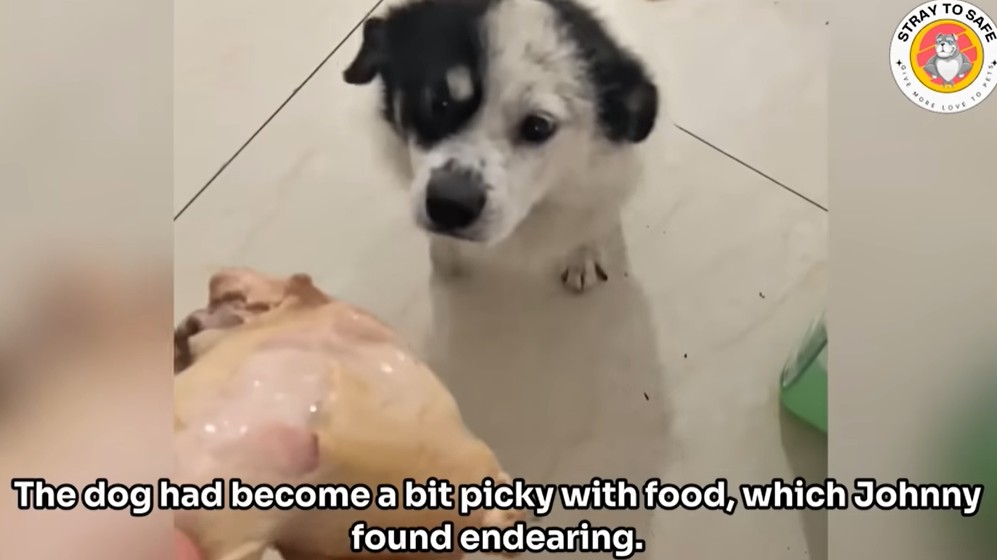
Hero's early recovery surprised those caring for him.
By the third day, according to the source, he was eating eagerly and moving around using his front legs.
This was already familiar territory for him.
For months, his front legs had carried nearly all of his weight. Now, without the damaged hind limbs trailing behind, he could move with noticeably greater freedom.
His balance improved.
His movements became easier.
And occasionally, his expression seemed almost joyful.
There were moments when Hero appeared to smile, bringing an entirely different feeling into the room from the frightened, trembling dog Johnny had first approached on the street.
Physically, progress was visible.
Emotionally, healing was more complicated.
Hero became strongly attached to Johnny.
When Johnny sat nearby, Hero could settle beside him and rest calmly. That closeness seemed to give him a sense of security he had been missing.
But whenever Johnny prepared to leave, Hero's behavior changed.
He would become anxious and try to follow.
At times, he moved between Johnny and other nearby people, appearing uncertain about where safety would come from once Johnny disappeared from view.
His body was adapting quickly.
Trust would need more time.
Learning That Help Was Not Temporary
The fear Hero displayed when Johnny left suggested that surviving on the streets had affected more than his legs.
An animal can receive treatment for a physical injury, but reassurance cannot be completed in a single procedure.
It grows through repetition.
Food arriving again.
A familiar person returning again.
A safe place still being there the next morning.
For Hero, those ordinary moments mattered.
He had spent months depending almost entirely on himself. Now he was learning what it meant to depend on another person without immediately losing that security.
About fifteen days after the rescue, there was another worrying moment when Hero suddenly became weak.
Johnny brought him back for veterinary attention.
Fortunately, the source reports that the problem was manageable. He was found to have mild anemia and a small infection, and treatment was available.
After everything Hero had already survived, even a temporary setback carried emotional weight.
But this time he did not face it alone.
There was someone watching closely enough to notice when something changed.
Someone willing to take him back for care.
Someone waiting for him afterward.
Two Legs, a Wheelchair, and a Very Different Life
Today, Hero's world looks nothing like the one he once struggled through.
He still has only his two front legs, but he is no longer the injured stray pulling himself across pavement while crowds move around him.
With the help of a small wheelchair, he can explore his surroundings with greater mobility.
Most importantly, he has safety and companionship.
The dog who once survived by accepting occasional food from strangers now has someone consistently looking after him.
His story is powerful not because hardship disappeared overnight.
It is powerful because Hero kept responding to life even when his circumstances were painfully limited.
For months, he found ways to move without working hind legs.
He continued searching for food and water.
He continued interacting gently with people.
He even continued wagging his tail.
Then Johnny did the one thing Hero could not do for himself.
He stopped.
He looked closely.
And he chose to help.
Hero lost the legs that could no longer be saved, but the surgery freed him from a dangerous condition and opened the door to a safer future.
His recovery also became a reminder that rescue is rarely just one dramatic moment.
Sometimes it begins when an animal is lifted from the street.
Then it continues through surgery, meals, medical checkups, quiet companionship, and the slow rebuilding of trust.
For Hero, that process turned survival into something more.
He no longer has to drag himself forward simply because stopping could mean the end.
Now, when he moves forward, he does so knowing there is someone moving with him.


