
The small figure on the screen was difficult to understand at first.
A dog was moving along a rough stretch of road, but he was not walking. His front legs were doing all the work while his hind legs remained behind him, leaving him to pull his body forward little by little.
Even through a brief, low-quality recording, one thing was clear.
He needed help.
For the people who saw the clip, waiting was not an option. They got into a car and began searching for the place where the dog had last been seen, knowing that every additional distance he traveled this way would make his already difficult situation even harder.
Four Hours of Searching for One Small Dog
Finding him was far more difficult than simply reaching the road.
For approximately four hours, the rescuers searched the area. They drove along the same stretches repeatedly, checked the roadside, stepped into areas of tall grass, and called out while looking for any sign of movement.
As the search continued, the fear of arriving too late became difficult to ignore.
The dog had already been struggling to move with only his front legs. There was no way to know how far he had gone or whether he still had the strength to keep moving.
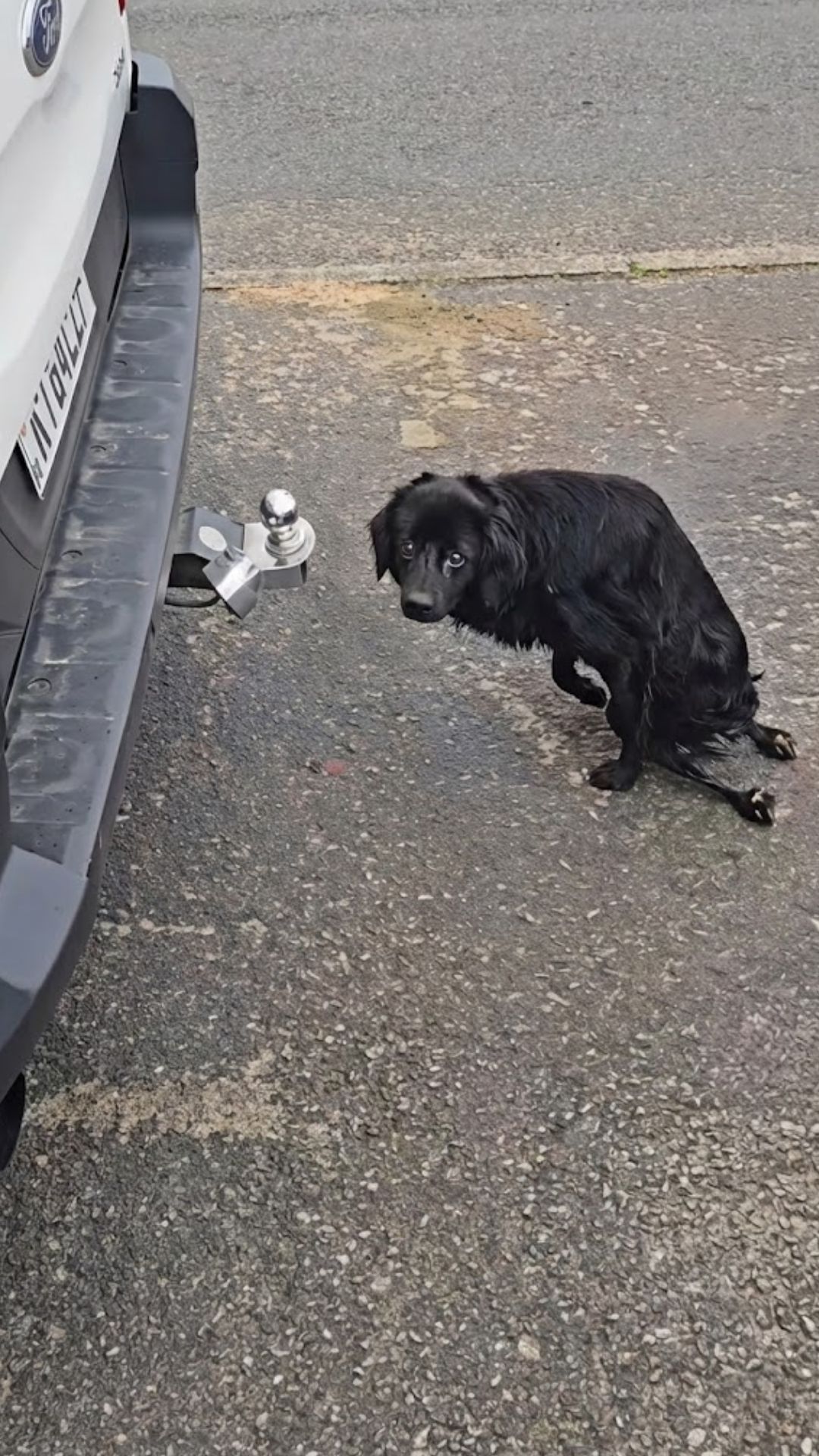
Then, finally, they saw him.
He was curled near the side of the road, almost motionless.
When he lifted his head and looked toward the people approaching him, he did not try to escape. He did not react aggressively.
He simply stayed where he was.
After what appeared to have been a long period of surviving on his own, he seemed to have reached the point where he could no longer continue dragging himself forward.
This time, however, someone had come for him.
VIDEO: He Had Been Dragging Himself Along the Road — Then Rescuers Finally Found Him
The First Moments of Safety
Handling him required extraordinary care.
The dog was extremely thin and exhausted, and the condition of his hindquarters showed what repeated contact with rough ground had done over time.
For perhaps the first time in weeks, he no longer had to pull himself across gravel and pavement.
He was placed carefully inside the vehicle, where a soft surface replaced the road beneath him.
That simple change meant something important.
The journey was no longer his responsibility.
Someone else was carrying him now.
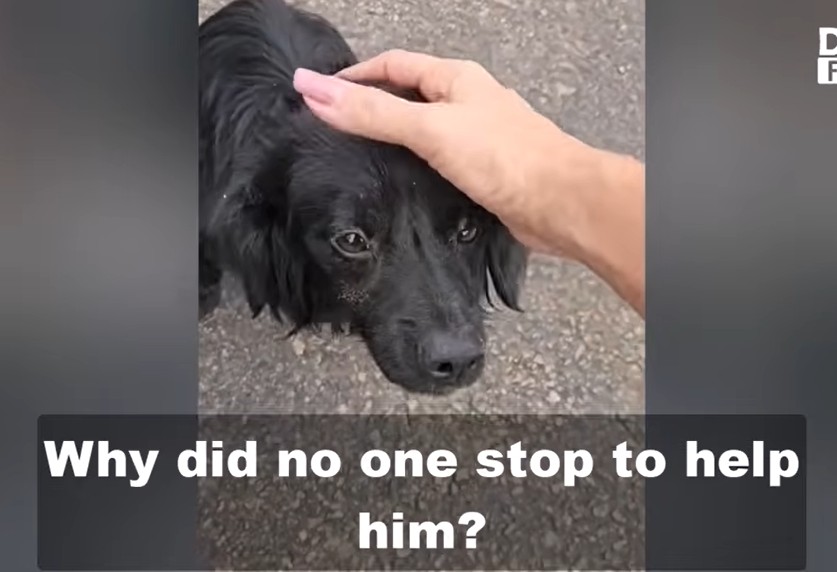
At the veterinary clinic, the team began assessing his condition and caring for the injuries caused by his limited mobility. The areas around his hind legs had been badly irritated after repeatedly rubbing against the ground and required careful cleaning and treatment.
The condition did not appear to have developed overnight.
Everything suggested that he had been coping with his disability for a considerable amount of time.
Yet he had somehow continued moving forward.
Another sign of what he had endured appeared when food was placed in front of him.
He ate immediately and rapidly, as though he had no certainty about when another meal might come.
When the bowl was empty, he looked toward the people around him.
For the first time since the search began, the urgency of the roadside had been replaced by something quieter.
He was indoors.
He had eaten.
And he was no longer alone.
The X-Ray Revealed an Older Injury
There was still hope that his inability to use his hind legs might be connected to an injury that could be repaired.
The X-ray provided a much clearer answer.
According to the veterinary assessment described in the source, the dog had severe spinal damage. More importantly, the injury was not recent.
His spine had apparently been broken long before the rescue and had healed incorrectly without treatment.
The veterinarian explained that surgery would not restore his ability to walk.
His paralysis was permanent.
For the rescuers, it was difficult news to hear. They had found him after watching him struggle across the road, and naturally there had been hope that medical care might eventually allow him to stand and walk normally again.
That future was no longer realistic.
But the diagnosis did not mean that his life was over.
It simply meant that his life would need to look different.
Once he was clean, fed, warm, and resting, the frantic effort that had defined his days outside was no longer necessary.
He could finally stop fighting the road.
What He Needed Most Was Not a Perfect Body
The dog had apparently been living with his spinal injury long before anyone found him.
His body had already adapted, in the only way available to him, to moving without the use of his hind legs.
He pulled himself forward because that was how he survived.
The rescuers could not undo the old injury. They could not return his spine to the way it had been before.
What they could change was everything surrounding that injury.
Instead of rough ground, he could have soft bedding.
Instead of searching for food, he could receive regular meals.
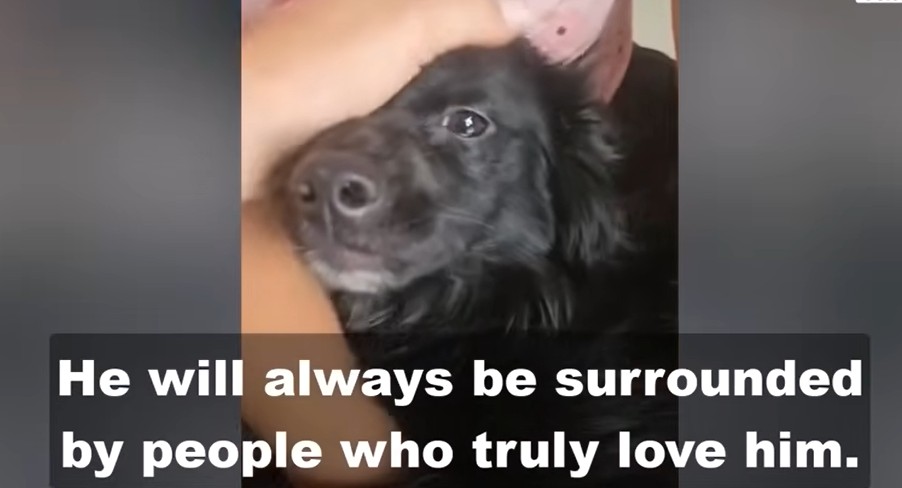
Instead of facing each day by himself, he could have people watching over him.
Those changes may sound small compared with restoring the ability to walk, but for a dog who had been surviving alone, they represented an entirely different life.
His disability remained.
His isolation did not.
Learning How to Live With Paralysis
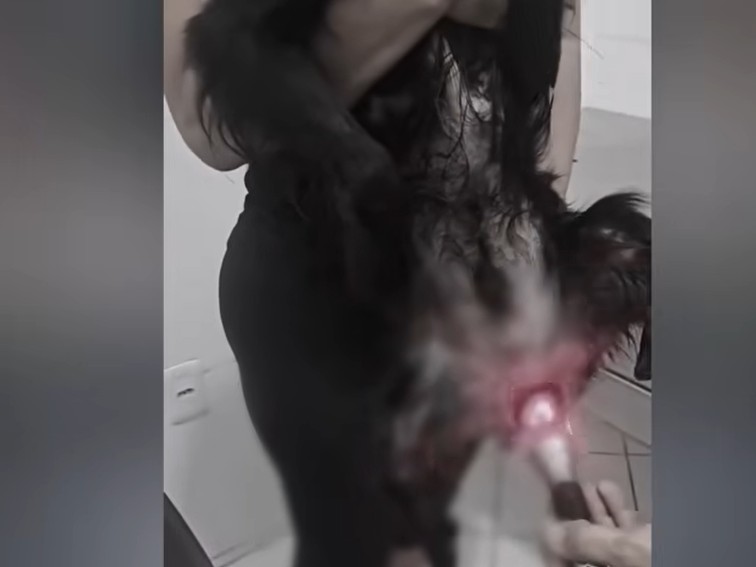
Caring for a paraplegic dog requires ongoing attention.
According to the source, his care included laser therapy intended to help with spinal stiffness, regular cleaning and bandage changes for the affected areas, diapers to help keep him dry, pain management, and close monitoring.
None of those tasks offered an instant transformation.
They were part of the quieter side of rescue—the daily routines that continue long after an animal has been lifted from danger.
And the dog responded to those routines in his own way.
When caregivers approached, his tail would move against the bedding.
When people spoke to him, he sometimes answered with a soft bark.
Those small reactions became reminders that his ability to enjoy attention and connection had survived even though his hind legs could no longer support him.
There was no dramatic moment in which everything became normal again.
His spine remained permanently damaged.
He still required specialized care.
But normal was no longer the goal.
Comfort was.
Safety was.
A life in which he no longer had to drag himself down an empty road simply to keep going was enough reason to continue.
The Past May Never Be Fully Known
The exact cause of his spinal injury was not known.
It is possible that he had been struck by a vehicle, injured in another way, or left without treatment after the damage occurred. The source does not confirm how it happened or who, if anyone, had cared for him before he appeared on that road.
Those unanswered questions remain part of his story.
But they do not need to define what came next.
The clearest facts begin with the moment someone saw a struggling dog in a short video and decided to search for him.
Four hours later, that decision brought them to the roadside where he had finally stopped moving.
From there, his life changed direction.
Not because his legs suddenly worked again.
Not because medicine erased the past.
But because survival no longer depended entirely on him.
He No Longer Has to Crawl Forward Alone
There are rescue stories in which recovery means watching a dog run again.
This is not one of them.
His spinal injury is permanent, and his future may include mobility assistance such as wheels if appropriate for his condition.
But walking is only one measure of a life.
The dog who once used every bit of strength in his front legs to pull himself forward now has something he did not have on that road: consistent care.
His meals no longer depend on what he can find.
His comfort no longer depends on reaching the next safe patch of ground.
His injuries can be monitored instead of ignored.
And when he needs help moving, there are people there to help him.
For weeks, he appears to have kept going because stopping may not have felt like an option.
In the end, the moment he finally rested beside the road became the moment others were able to reach him.
He may never run on four legs.
He may always need additional care.
But he no longer has to face that reality by himself.
Sometimes rescue cannot repair everything that happened before.
Sometimes its greatest gift is simpler than that.
It makes sure an animal never has to survive alone again.


