
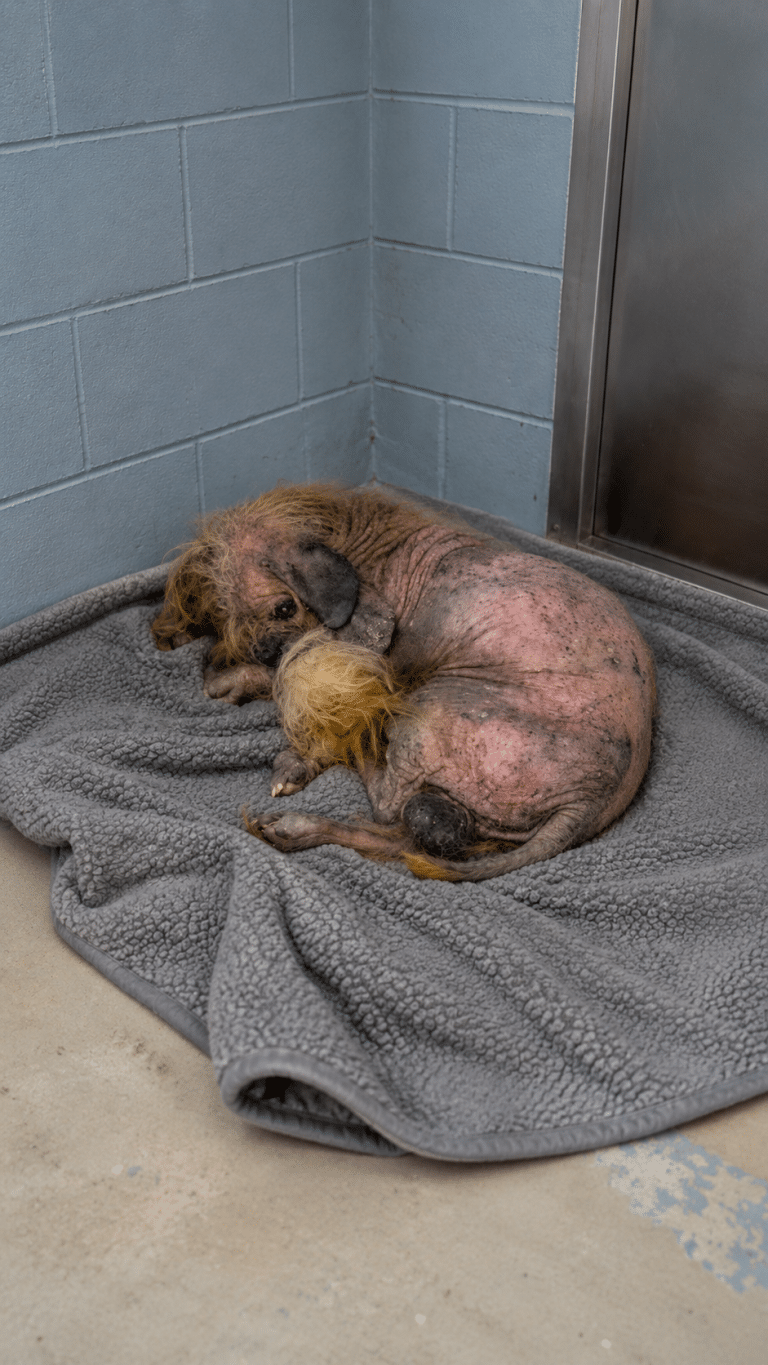
When Freddy first came into rescuers' care, even standing on his own seemed to demand more strength than his little body could comfortably give.
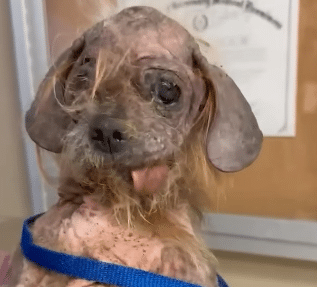
Most of his fur was gone. His exposed skin appeared painfully irritated, and one of his eyes had already suffered a serious injury. His teeth, too, showed signs of prolonged neglect.
He was a small dog carrying the visible effects of enormous hardship.
But what made Freddy's story so moving was not simply how fragile he looked.
It was what happened when someone finally had the opportunity to care for him.
A foster mother named Caitie welcomed Freddy into her home, knowing that his recovery would require time, patience, and careful attention.
There was no reason to expect an easy transformation.
Freddy could barely move without discomfort.
Yet he continued trying.
And those small efforts would eventually lead to a life that looked almost impossible when his journey began.
A Little Dog Whose Body Had Been Through Too Much
Freddy's appearance revealed only part of his struggle.
His nearly hairless body and irritated skin were immediately noticeable. His damaged eye and weakened teeth made his condition even more concerning.
But the difficulty he experienced while walking suggested that something else was wrong.
Caitie noticed how tense his body remained.
His movements were stiff and cautious. Even a short attempt to walk could leave him unable to remain upright.
Sometimes, he would manage only a few steps before collapsing.
For a dog, walking is such an ordinary part of life. It is how they explore, approach familiar people, and move toward the things that interest them.
Freddy was struggling with something most dogs do without thinking.
The distance between wanting to move and being physically able to move had become painfully apparent.
His condition required more than a comfortable place to rest.
He needed medical attention and a caregiver willing to support him through an uncertain recovery.
That was the responsibility Caitie accepted when she became his foster mother.
She could not erase what had already happened to him.
But she could help determine what came next.
The Medical Answer Behind His Painful Steps
Veterinary examinations eventually identified a serious reason for Freddy's difficulty moving.
He was suffering from severe spinal disc compression.
The condition caused significant discomfort and made ordinary movement extremely challenging.
Suddenly, his stiff posture, slow steps, and repeated falls had an explanation.
What might have looked like simple weakness was connected to a medical problem affecting his ability to move comfortably.
Freddy's path forward would not be a matter of simply feeding him well and waiting for his fur to return.
His spine required attention.
His overall health needed support.
And his body would need help rebuilding strength after a period of severe physical decline.
For Caitie, the challenge was not only to provide the necessary care.
It was also to remain patient when progress seemed almost invisible.
There would be days when Freddy managed a little more.
There would also be days when the same movements remained difficult.
Recovery was never guaranteed to follow a smooth path.
Still, he had someone beside him who was willing to keep trying.
A Foster Mother's Patience Became Part of His Recovery
Freddy's treatment involved several forms of care.
He received medications, injections, antibiotics, and physical therapy intended to support his healing and gradually improve his strength.
Each part of that process mattered.
Medical treatment addressed his health needs, while physical therapy helped him work toward greater mobility.
But knowing what needed to be done did not make the experience easy.
Some mornings, standing upright was a challenge.
At other times, Freddy would attempt to walk, only to lose his balance repeatedly.
For anyone watching, those moments could have been discouraging.
A few steps might seem like very little progress.
For Freddy, they represented genuine effort.
Caitie continued supporting him throughout those difficult stages. She encouraged him and treated small improvements as meaningful achievements.
There was no dramatic overnight change.
No single moment when every problem disappeared.
Instead, Freddy's recovery was built through the slow accumulation of care, treatment, persistence, and time.
VIDEO: Freddy Could Barely Walk After His Rescue — Watch His Remarkable Transformation Into a Happy, Playful Dog
The difference between Freddy's earliest struggles and his later energy is what makes his transformation so powerful.
Watching a dog regain abilities that once seemed beyond his reach offers a reminder of why long-term rescue care matters.
Finding an animal in need may be the beginning of a rescue story.
Helping that animal recover can be the much longer chapter.
And Freddy was still working his way through it.
The First Signs That His Little Body Was Healing
One of the most visible changes came through Freddy's coat.
When he was rescued, most of his fur had disappeared, leaving his irritated skin exposed.
As his condition improved, small patches of fur began growing back.
The changes appeared gradually.
First, there was new growth along his back.
Then his tail began showing signs of recovery.
Over time, soft fur spread across more of his body.
These changes mattered because they offered something Caitie could actually see.
While his spinal difficulties required ongoing attention, his returning coat provided another sign that his health was improving.
The little dog who had once looked so vulnerable was beginning to look different.
But his physical appearance was only one part of the transformation.
As Freddy became stronger, his behavior changed as well.
The dog who had struggled through short walks started showing more curiosity about the world around him.
He became more playful.
More energetic.
More interested in moving simply because he could.
The change did not make his earlier suffering any less serious.
It showed how much of his personality had been difficult to see while his body was in pain.
Underneath that fragile appearance was a lively little dog who had not yet had the chance to fully express himself.
And gradually, that personality was coming forward.
From Unsteady Steps to Running With Joy
For much of Freddy's early recovery, walking was a challenge measured in individual steps.
He had to contend with stiffness, discomfort, and the possibility of losing his balance.
Even standing could be difficult.
That is what made his later progress so extraordinary.
Freddy began running again.
Not merely taking cautious steps across a room, but moving with the excitement and energy of a playful dog.
The change was especially noticeable during his enthusiastic bursts of activity around the house.
His body, once so tense and limited, had become capable of movements that previously seemed out of reach.
There was something deeply meaningful about seeing him move freely.
Running was not an extraordinary behavior for a healthy dog.
But for Freddy, the ability to run represented the distance he had traveled through recovery.
Every improvement had contributed to this moment.
The treatments.
The physical therapy.
The repeated attempts to walk.
And Caitie's steady support through the difficult days.
Freddy was not simply looking healthier.
He was participating in life differently.
He could play, explore, and approach the people around him with newfound enthusiasm.
The Dog Who Emerged Was Almost Unrecognizable
Months after his rescue, Freddy's appearance had changed so dramatically that it was difficult to reconcile with his earliest condition.
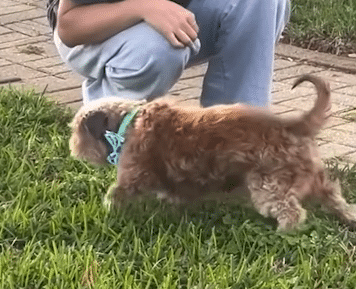
His nearly bare skin was now covered by scruffy brown-and-gray fur.
The little dog whose movement had been limited by pain was running excitedly around the house.
Instead of spending his days struggling to remain upright, he could enjoy the everyday activities that make a dog's life fulfilling.
Playing.
Moving.
Seeking affection.
Those are ordinary pleasures, but Freddy's story gives them a different meaning.
He had reached a point where his personality was no longer hidden behind constant physical difficulty.
His playful energy had become one of his most recognizable qualities.
That transformation was especially significant because his original medical challenges were serious.
Severe spinal disc compression had made movement extremely difficult, while his skin, eye, and teeth reflected the broader toll of neglect.
His recovery therefore involved far more than a cosmetic change.
It was a gradual improvement in his ability to enjoy everyday life.
And throughout that process, Caitie had remained an important part of his journey.
She had seen Freddy when walking was difficult.
She had supported him through medical treatment and physical therapy.
She had watched his coat grow back and his enthusiasm return.
By the time his recovery had progressed, the little dog had become a very different presence in the home.
But another important change was still ahead.
Freddy was about to find a family of his own.
A Neighbor Saw More Than a Rescue Story
As Freddy became healthier and more active, his personality was increasingly impossible to overlook.
He was affectionate, curious, and full of energy.
One of Caitie's neighbors grew especially fond of him.
The connection became strong enough that the neighbor decided to adopt Freddy permanently.
After months of healing in foster care, Freddy was moving into a forever home.
It was the kind of outcome everyone hopes for when a vulnerable dog enters rescue.
He had received the medical care he needed.
He had regained much of the strength and mobility that had once been missing.
And now someone wanted to make him a permanent part of their life.
For a dog who had arrived in such a fragile condition, that was a remarkable change in circumstances.
His future was no longer defined by the difficulties visible when he was first rescued.
He had a home where he was wanted.
There was also a particularly comforting detail about his adoption.
Because Freddy's adopter was Caitie's neighbor, she could continue seeing him regularly.
The person who had helped him through so many challenging stages of recovery did not have to lose contact with him when his foster journey ended.
Freddy gained a permanent home while maintaining a connection to someone who had played such an important role in his healing.
The Life Freddy Finally Had the Chance to Live
Freddy's story is memorable because the contrast between his beginning and his outcome is so clear.
At first, he could barely walk comfortably.
His body showed serious signs of neglect, and his spinal condition made even modest movements difficult.
His recovery required medical treatment, physical therapy, and many days of patient support.
There were setbacks.
There were repeated falls.
And there were times when progress came through changes so small that someone else might barely have noticed them.
But those changes added up.
His fur returned.
His movements improved.
His playful personality emerged.
Eventually, the dog who had struggled to stand was running around the house and enjoying affection from the people near him.
And when the time came for adoption, Freddy found a permanent home with someone who loved him.
His story also offers a thoughtful reminder about foster care.
Not every dog arrives ready to play, explore, or accept the ordinary routines of a home.
Some need extensive treatment.
Some require rehabilitation.
And some need caregivers who can recognize progress even when it happens slowly.
Caitie gave Freddy that opportunity.
She stayed involved when his recovery was difficult and celebrated the improvements that followed.
The result was not just a healthier-looking dog.
It was a dog with renewed mobility, a lively personality, and a secure place to belong.
Freddy's earlier hardships are part of his history, but they no longer tell the whole story.
Today, what stands out is the life he has been able to build after receiving care.
A life with room to run.
People to love.
And a permanent home where he is welcomed.
Sometimes, a second chance does not arrive as one enormous, life-changing moment.
Sometimes it arrives through repeated acts of care, one difficult step after another.
For Freddy, those steps eventually became joyful runs.
And that may be the most beautiful part of his transformation.


