
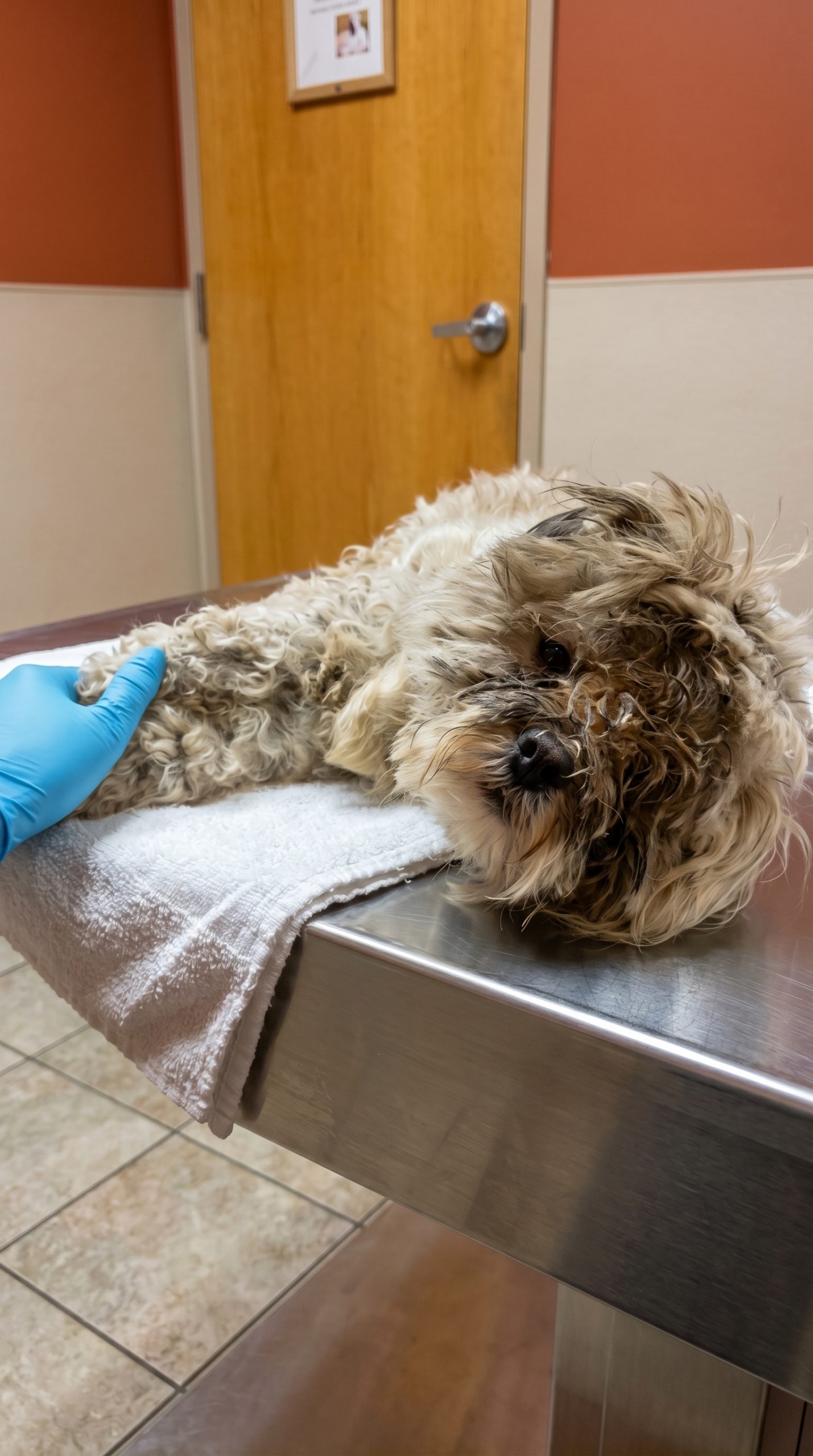
Behind a grimy dumpster on Chicago’s South Side, a small dog lay almost completely still.
She was only about a year old.
At an age when most dogs are discovering the world through play, curiosity, and companionship, this little dog was struggling simply to survive.
Her body was dangerously ill. Her fur was severely matted, and painful infections had left her in a critical condition.
There was no familiar home around her.
No comfortable place to rest.
Only the hidden space behind a dumpster in a busy city, where her suffering might easily have gone unnoticed.
The dog would eventually be given the name Antonia.
But before she could begin a new life, she had to survive the one she had been found living.
And what followed would become a remarkable journey of medical recovery, emotional healing, and the slow rebuilding of trust.
A Small Life Hidden Behind the Dumpster
Chicago is a city of movement.
People hurry through their routines, cars travel along crowded streets, and daily life continues around countless places most residents never think to examine.
Behind one dumpster on the city's South Side, however, was a living creature whose condition demanded immediate attention.
Antonia was barely moving when she was discovered.
She was suffering from a dangerous fever, with serious infections affecting her already weakened body.
Her long, tangled fur concealed another distressing problem. A severe infestation had affected the areas around her face, ears, and neck.
The extent of her condition suggested she had been suffering for some time.
For a dog so young, the physical burden was enormous.
Even the most ordinary things that should have been part of her life—resting comfortably, moving without pain, and feeling safe around people—had become difficult.
Her history before that discovery was not explained.
There was no clear account of how long she had been behind the dumpster or what circumstances had brought her there.
What was certain was that she needed urgent help.
This was not a situation that could be resolved with a bath, a meal, and a few days of rest.
Antonia needed intensive veterinary treatment.
And fortunately, her discovery marked the beginning of that care.
A Rescue That Became a Fight for Survival
After being found, Antonia was brought into the care of Trio Animal Foundation, also known as TAF.
The organization would become central to every stage of her recovery.
From the beginning, the veterinary team faced a difficult challenge.
Antonia was dealing with multiple serious health problems at once. The infections needed to be controlled, while her damaged and sensitive skin required exceptionally careful handling.
Her ears were an especially painful area.
The infestation had also left her in need of extensive, delicate treatment.
Removing the immediate source of discomfort was essential, but doing so was only one part of the work.
Her body had already endured significant stress.
There was no simple treatment that could erase all of it at once.
For Antonia, recovery would have to happen gradually.
The veterinary team began addressing her urgent medical needs, giving her the kind of close attention that an animal in such a vulnerable condition required.
The difference between her life behind the dumpster and her new surroundings could hardly have been greater.
She was no longer an unseen dog struggling alone.
Her condition was being monitored.
Her pain was being taken seriously.
And for the first time in the part of her story that is known, people were working to give her a chance at recovery.
VIDEO: Found Behind a Chicago Dumpster, Antonia's Journey From Severe Neglect to a Second Chance
Healing a Body That Had Endured So Much
At Trio Animal Foundation, Antonia's medical care required both urgency and patience.
Veterinarians administered strong intravenous antibiotics to address the serious infections affecting her body.
Particular attention was given to her ears, where the infection and discomfort had been especially severe.
The affected areas of skin also required careful treatment.
Because of the damage and sensitivity caused by the infestation, her skin had to be approached much like a burn injury.
This meant that even necessary care had to be performed with exceptional caution.
The veterinary team worked to remove the infestation completely while protecting the vulnerable areas of her body.
It was painstaking work.
But the physical treatments were only the beginning of her recovery.
An animal can receive the medical attention it urgently needs and still struggle with the effects of everything that came before.
That was the challenge Antonia continued to face.
The immediate medical problems could be treated.
Her sense of safety would take longer to restore.
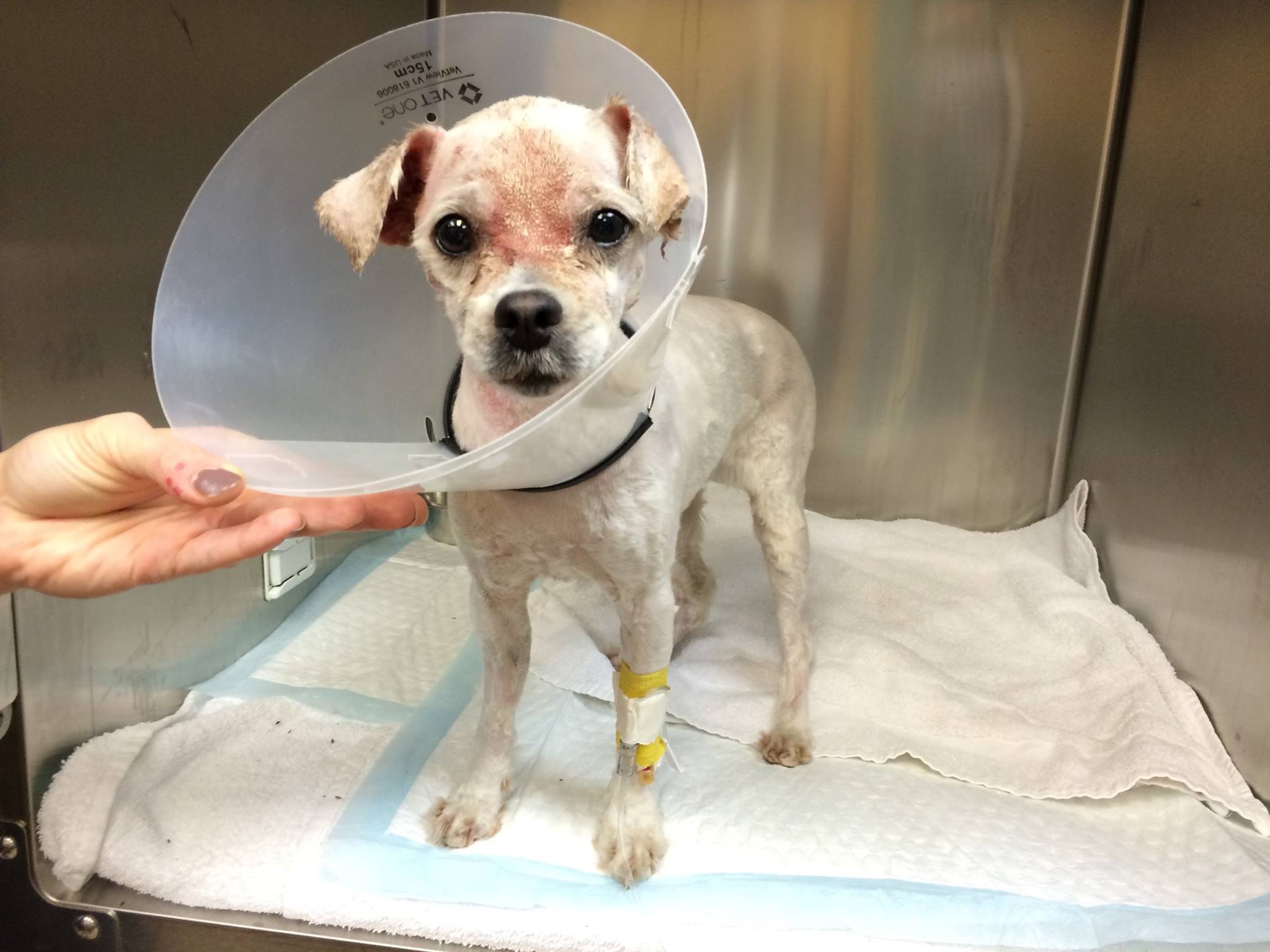
Even after the infestation had been removed, Antonia continued pawing at her own body.
She behaved as though she were still trying to get rid of something that was no longer there.
It was a particularly difficult behavior for her caregivers to witness.
Her skin was receiving treatment, yet the distress associated with her earlier condition appeared to remain.
This was a reminder that healing is not always measured by visible improvement alone.
For some rescued animals, the absence of a physical threat does not immediately bring an end to fearful or distressed behavior.
Antonia had been through an experience that affected much more than her appearance.
Her caregivers recognized that helping her recover would require attention to both her physical condition and her emotional well-being.
Antonia needed more than medicine.
She needed time, consistency, and experiences that could help her become comfortable with the world around her.
Three Gentle Companions Helped Her Learn to Trust
As Antonia's physical strength slowly returned, another important part of her rehabilitation began.
The team at Trio Animal Foundation introduced her to three experienced therapy dogs.
These were calm, confident animals accustomed to helping other dogs feel more comfortable.
Their role was different from that of the veterinary team.
They could not administer medication or treat an infection.
But they could offer Antonia something equally meaningful during the emotional stage of her recovery: companionship and a reassuring example of how to interact with others.
For a dog whose recent experiences had been dominated by discomfort and fear, ordinary social contact was an important step forward.
The therapy dogs helped demonstrate that being near others did not always have to be frightening.
Antonia could observe their calm behavior.
She could begin participating in interactions at a pace that suited her.
There was no need for her transformation to happen all at once.
Trust rarely returns simply because a difficult situation has ended.
It develops through repeated experiences that feel safe.
For Antonia, the presence of these experienced canine companions became an important part of that process.
The changes came gradually.
The small dog who had once appeared overwhelmed by her circumstances began showing a greater willingness to engage with the world.
She started learning how to interact.
How to become comfortable around other dogs.
And eventually, how to feel more secure around people.
The therapy dogs did not erase what she had endured.
But they helped make new experiences possible.
With their support and the continued care of the TAF staff, Antonia's emotional recovery began to take shape.
The Slow Transformation That Made Everything Worthwhile
Recovery did not happen overnight.
Months passed as Antonia received ongoing care and patient support.
During that time, the improvements in her physical condition were accompanied by important changes in her behavior.
She was no longer simply the severely ill dog who had been discovered behind a dumpster.
She was becoming a dog who could participate in ordinary moments of companionship.
That distinction mattered.
Surviving a medical emergency had given Antonia another chance at life.
Learning to trust allowed her to begin enjoying that chance.
Her caregivers had seen her at one of the most vulnerable moments imaginable.
They had also witnessed how much patience was required after the most urgent veterinary work had been completed.
Antonia's progress illustrated why animal rehabilitation cannot always be reduced to a single procedure or a short recovery period.
Physical health is essential.
But a frightened dog may also need help becoming comfortable with affection, routine, and social interaction.
For Antonia, those improvements were particularly meaningful because of the distressing behavior she had displayed after her initial treatment.
The repeated pawing, the fear, and the difficulty settling into safety had all shown that her recovery was not yet complete.
Now, with time and support, her growing confidence offered a different picture.
Her life was no longer defined entirely by the condition in which she had been found.
New possibilities were opening.
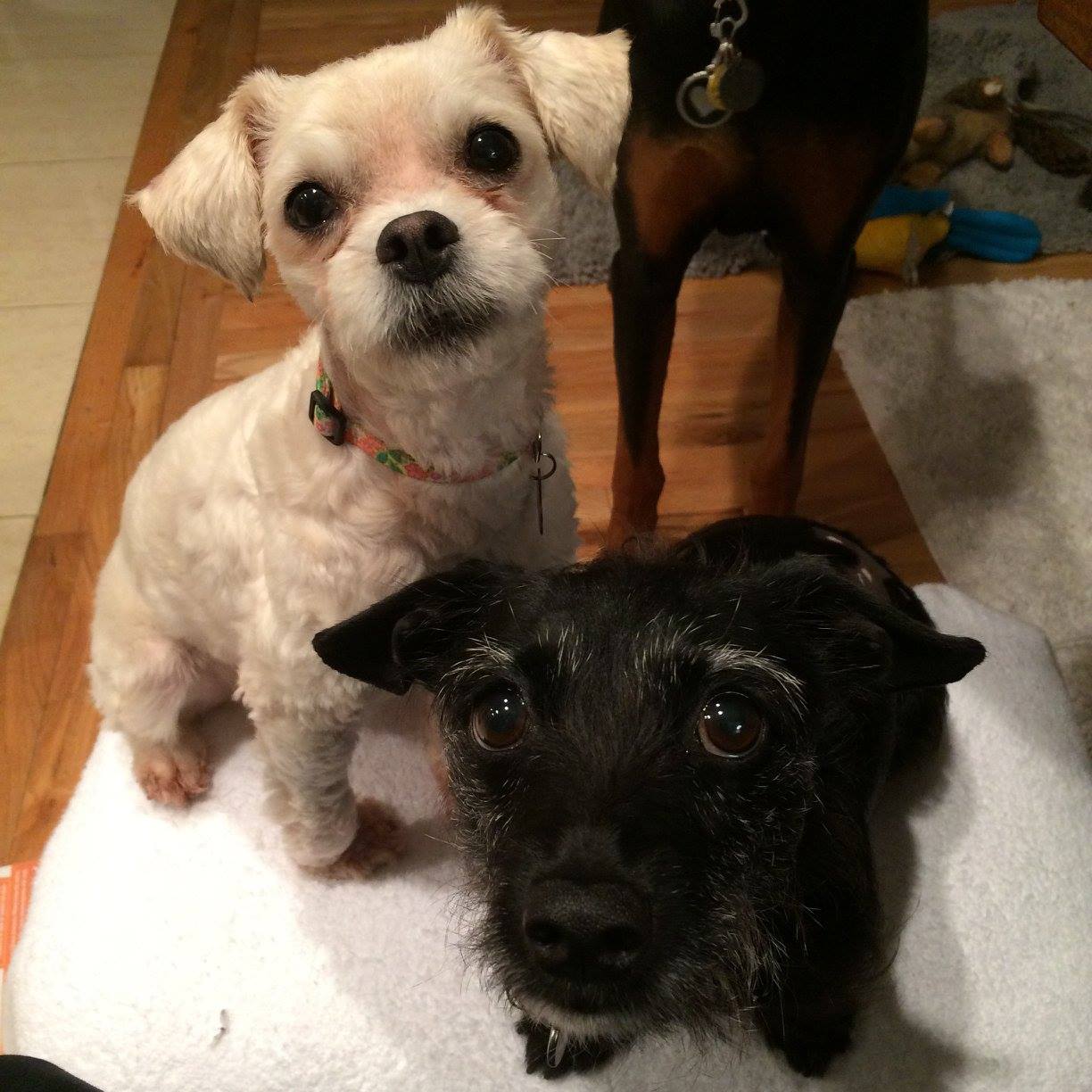
The staff at TAF had remained committed through the difficult stages.
The veterinary treatment had addressed her physical needs.
The therapy dogs had helped her adjust emotionally.
And months of consistent attention had made it possible for Antonia to move toward something that once seemed very far away.
A permanent family.
For many rescued dogs, that is the hope at the heart of rehabilitation.
Not simply to leave an emergency behind, but to reach a point where everyday life can become comfortable and secure.
Antonia was approaching that milestone.
And the next stage of her story would show just how far she had come.
The Meeting That Revealed Her New Confidence
Eventually, the day arrived for Antonia to meet a couple who might become her family.
It was an important moment.
The dog who had once struggled with fear and distress was now being given the opportunity to form a new connection.
What happened during that meeting was encouraging.
According to the account of her recovery, Antonia responded to the couple almost immediately.
She engaged with them.
She played.
She showed a level of openness and trust that stood in striking contrast to her earlier behavior.
For the people who had supported her rehabilitation, the meeting represented much more than a successful introduction.
It was evidence of the progress she had made.
This was the same dog who had once continued pawing at herself after the source of her physical discomfort had been removed.
The same dog whose emotional recovery had required help from experienced therapy animals.
And now she was comfortable enough to interact warmly with people who were new to her.
There is something deeply moving about that kind of change.
Not because one meeting can explain every part of a dog's experience, but because it can reveal what patient care has made possible.
Antonia had been given time to recover.
She had been allowed to build confidence gradually.
And when the opportunity for a family came, she was ready to connect.
The meeting became a memorable milestone in her journey.
It also marked the beginning of the final chapter of her transition from rescue care into a permanent home.
From a Chicago Dumpster to a Home Where She Belongs
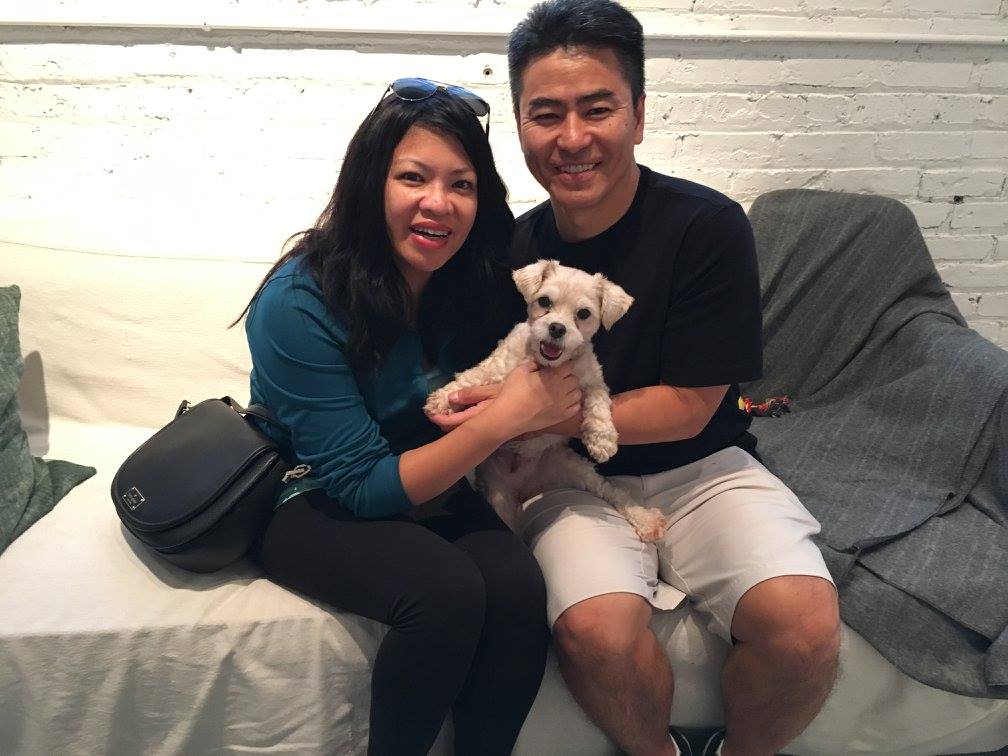
Today, Antonia's life looks very different from the circumstances in which she was discovered.
She now lives with a loving family in a quiet Chicago suburb.
The little dog who once lay almost motionless behind a dumpster has a permanent place in a household where she is cherished and protected.
Her story has moved far beyond emergency medical treatment.
She has experienced the security of a stable home.
The companionship of people who want her in their lives.
And the comfort of knowing that her daily needs will be met.
The contrast is extraordinary.
At the beginning of her rescue story, Antonia had serious infections, a dangerous fever, and a physical condition that required intensive intervention.
During recovery, she needed help overcoming the lasting distress associated with her ordeal.
Those challenges did not disappear through one act of kindness.
They were addressed through medical treatment, ongoing attention, and patient emotional rehabilitation.
Three therapy dogs played a special role in helping her regain confidence.
The caregivers at Trio Animal Foundation continued supporting her through months of progress.
And eventually, a family welcomed her into a different kind of life.
Antonia's journey is a reminder that rescue is often much more than the moment an animal is brought out of danger.
Sometimes, it means providing difficult medical care.
Sometimes, it means recognizing that physical recovery is only part of the process.
And sometimes, it means giving a frightened animal enough time to discover that companionship can be safe.
No one can know exactly how Antonia experienced every stage of her recovery.
But the changes in her condition, her behavior, and her circumstances tell a powerful story.
She survived a serious medical crisis.
She gradually learned to interact with greater confidence.
And she found a family who could offer her a permanent home.
A young dog once hidden behind a dumpster is now surrounded by the care she needed all along.
That is the lasting meaning of Antonia's second chance.
Not simply that she survived.
But that she was given the opportunity to live differently.
To play, to connect, and to be loved.
And this time, she has a place where she belongs.


