
Some acts of courage are almost impossible to see until the danger has already passed.
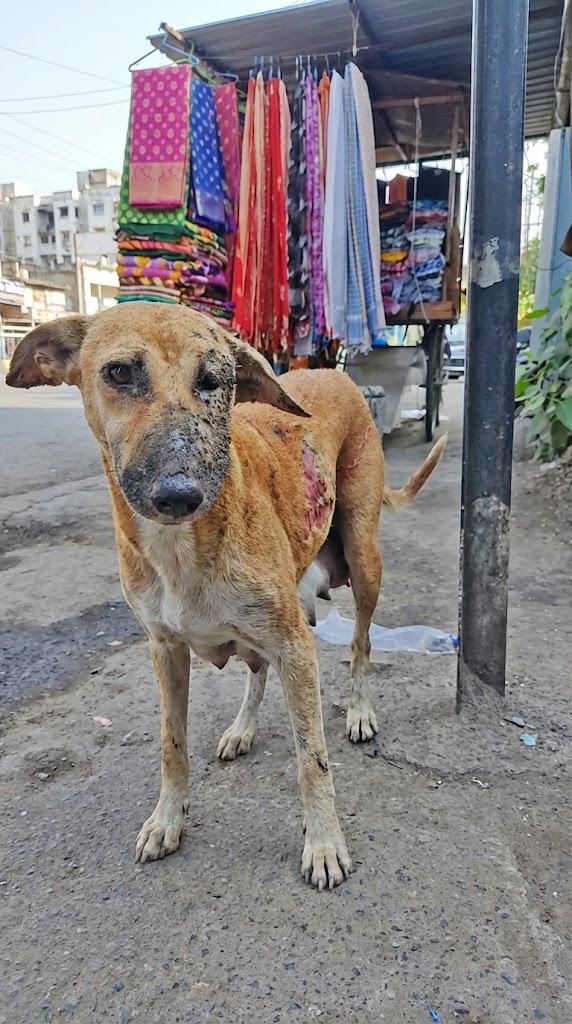
When rescuers found Edith near the place where a fire had broken out, the mother dog was still wandering nearby. Parts of her fur had been burned away, her face was swollen, and her skin showed the painful effects of the flames.
Yet she had not gone far.
She remained close to the place where her puppies had been caught in the fire.
No one knew exactly how the blaze had started. But based on Edith's injuries, rescuers believed she had rushed toward the flames in an attempt to reach her litter.
She did not try to chase people away.
She did not run when help approached.
Instead, Edith appeared exhausted and overwhelmed, standing there with the physical evidence of what she had endured written across her body.
For the people who found her, one thing quickly became clear.
Saving Edith would require more than getting her away from the fire.
A Mother Who Stayed Close After Everything Changed
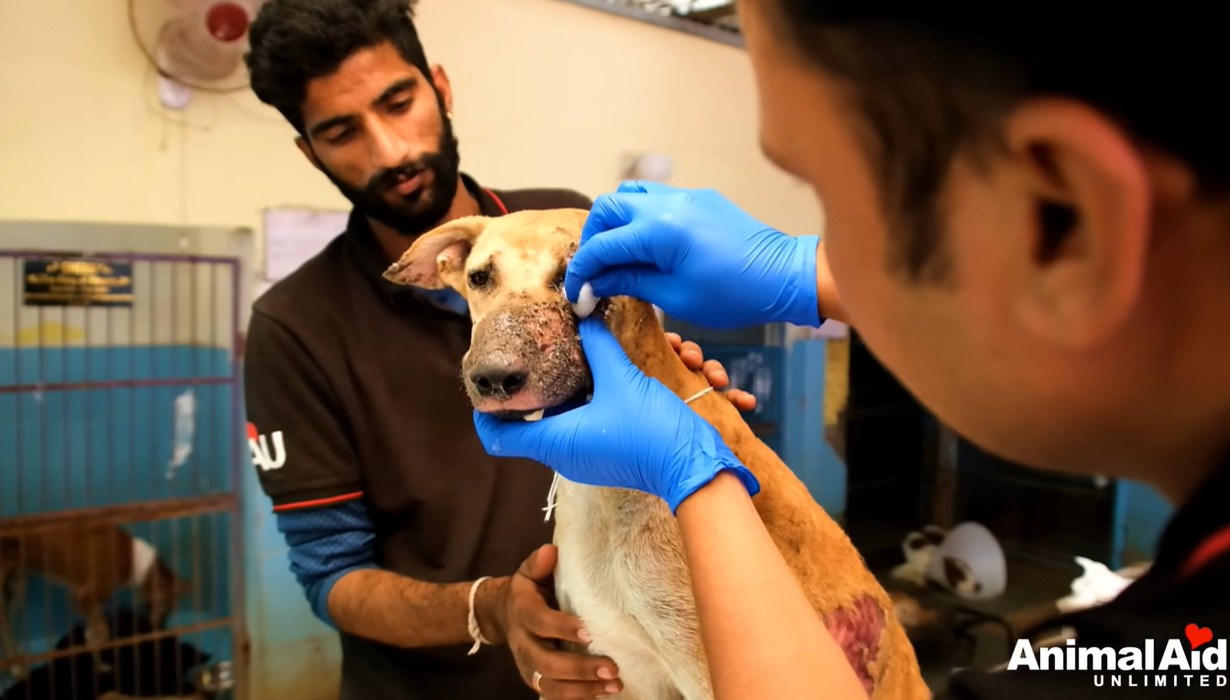
Edith was taken for veterinary care, where attention immediately turned to her burns.
The team carefully cleaned the affected areas, treated her damaged skin, and worked to make her as comfortable as possible while her body began the difficult process of healing.
But there was another part of Edith's story that medicine could not repair.
Her puppies did not survive.
The loss changed the atmosphere around her recovery.
Edith had already endured the fire itself. Now she was facing the absence of the puppies she had apparently tried so desperately to protect.
Those caring for her noticed how withdrawn she seemed.
Her trembling could not simply be understood as a response to physical discomfort. Her behavior also appeared to reflect the enormous emotional strain of what had happened.
A rescue can remove an animal from immediate danger.
It cannot erase what came before.
For Edith, safety was only the beginning.
VIDEO: Edith Survived the Fire — But Her Hardest Journey Began After the Flames Were Gone
Healing Could Not Be Rushed
Edith's care became a steady routine.
Her damaged skin needed regular attention. Medication was applied to the burns on her face, and protective dressings helped shield other affected areas while healing continued.
There was no single dramatic moment that could make everything better.
Recovery happened quietly.
One treatment at a time.
One careful touch at a time.
One day at a time.
The physical wounds were visible, which meant caregivers could monitor them closely as the swelling eased and the damaged areas began to improve.
The emotional wounds were harder to measure.
Edith often kept her tail tucked beneath her. Her movements were slow and cautious. She seemed unsure of the people around her, even when every hand reaching toward her was trying to help.
So the rescuers did something simple.
They stayed.
They sat beside her.
They spoke gently.
They allowed her to rest without demanding anything from her.
There was no pressure for Edith to behave like a happy dog simply because she was now safe.
She had been through too much for that.
Sometimes compassion means understanding that recovery has its own pace.
The Smallest Movement Became a Turning Point
As time passed, Edith's physical condition began to improve.
The blisters became less pronounced. The damaged skin started healing. New fur slowly appeared over areas that had been burned.
Each change was encouraging.
But the people caring for Edith were waiting for another kind of sign.
They wanted to know whether she was beginning to feel safe again.
Then, one day, something small happened.
Edith lifted her head.
And her tail moved.
It was only a gentle wag.
For another dog, it might have seemed completely ordinary.
For Edith, it meant far more.
That tiny movement suggested that the frightened, grieving mother was beginning to respond to the kindness surrounding her.
The people beside her had not forced the moment.
They had simply remained present long enough for Edith to reach it herself.
Trust Returned in Quiet Pieces
After that first small sign, Edith began to change gradually.
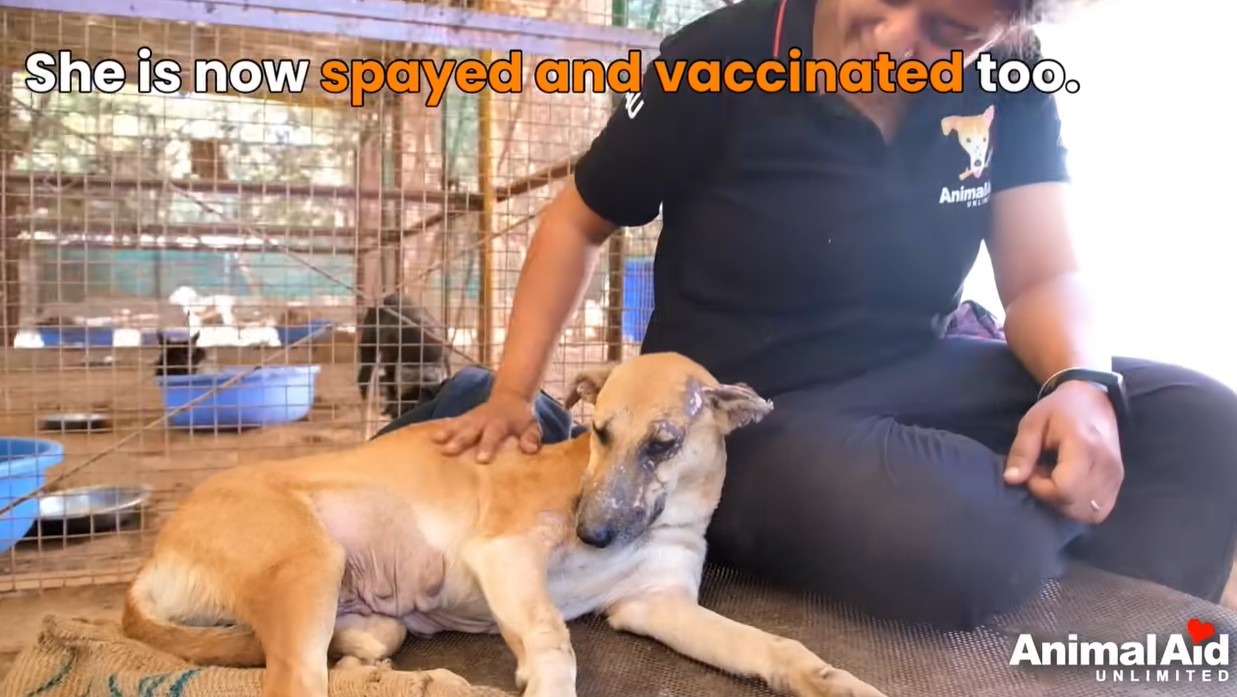
She became more comfortable when people touched her.
Instead of reacting to every gentle hand with uncertainty, she started leaning closer.
The change did not erase what she had lost.
Nothing could do that.
But it showed that grief and hope could exist together.
Edith could carry the memory of her puppies while still allowing herself to experience safety.
She could live with scars and still accept affection.
She could have endured something terrible without letting that moment define every day that followed.
This was the quieter side of rescue.
Veterinary treatment helped Edith's body recover.
Consistent kindness helped create a place where she could begin trusting again.
Her Scars Became Part of a Different Story
Edith's recovery offers a reminder that survival is rarely one dramatic event.
Sometimes survival is the decision to stand up again.
Sometimes it is allowing someone to come closer.
Sometimes it is the first tail wag after days of fear and sadness.
The marks left by the fire did not disappear immediately, and the loss of her puppies could not be undone.
But Edith was no longer alone with either of those things.
She had people around her who continued providing care while her body healed and her behavior slowly softened.
That support mattered.
Because rescue is not finished at the moment an animal is removed from danger.
Often, that is when the deeper work begins.
What Edith's Journey Leaves Behind
Edith entered care carrying visible injuries and an invisible loss.
Her story began in fire, but it did not have to end there.
Over time, the fear in her behavior began giving way to calm. The dog who had once seemed emotionally distant started responding to affection and showing signs that she could enjoy gentle human contact again.
Her journey is a powerful reminder of several simple truths.
Courage does not always look dramatic.
Healing does not always happen quickly.
And compassion does not need to erase the past to change the future.
Edith could not bring back what she had lost.
But with patient treatment, quiet companionship, and people willing to stay beside her, she found a path forward.
The scars remained part of her story.
They were no longer the whole story.


