
For many of the dogs inside the aging building, the world had always been painfully small.
Metal bars surrounded them.
Narrow cages limited where they could move.
Beyond those enclosures was a world they had never been free to explore.
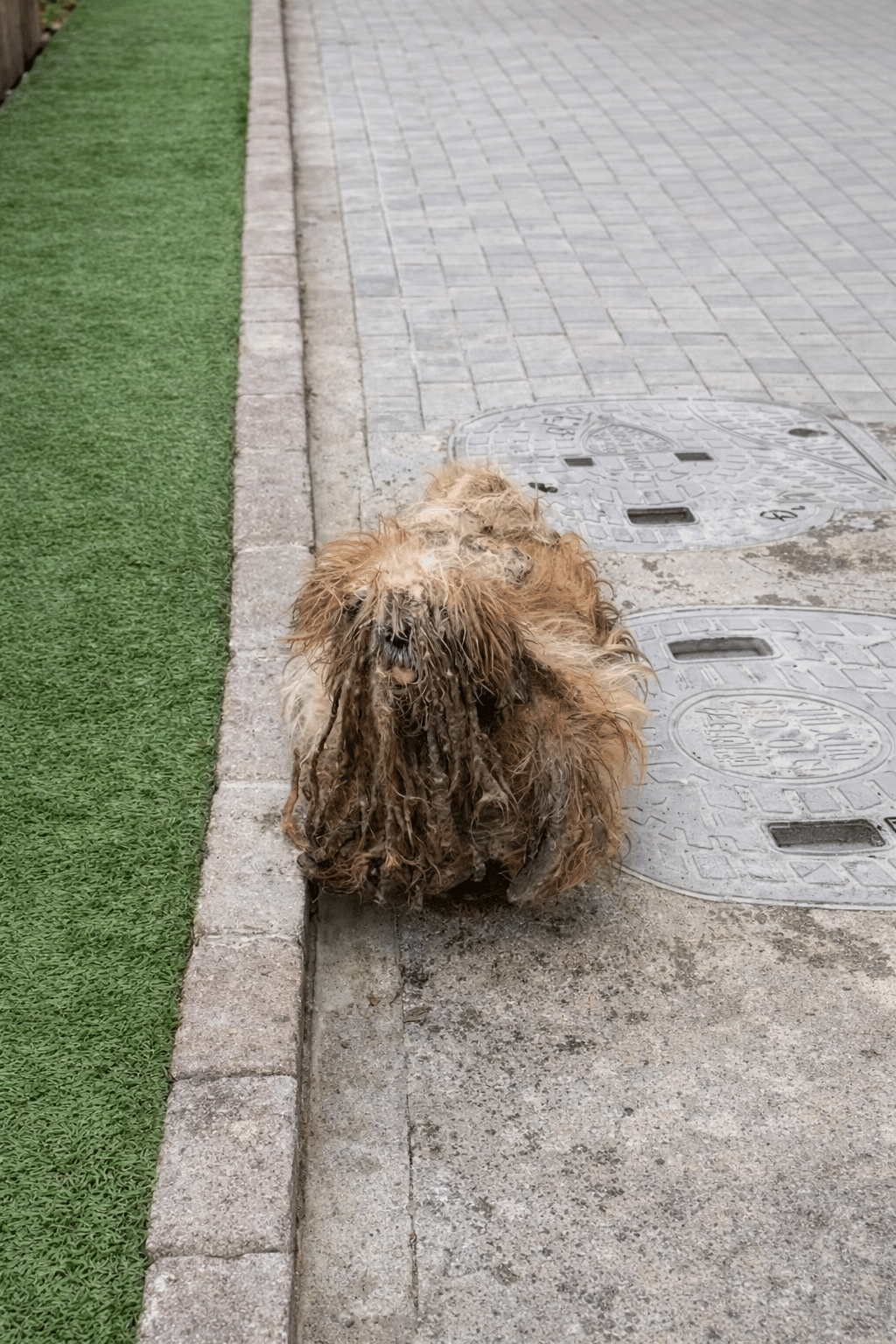
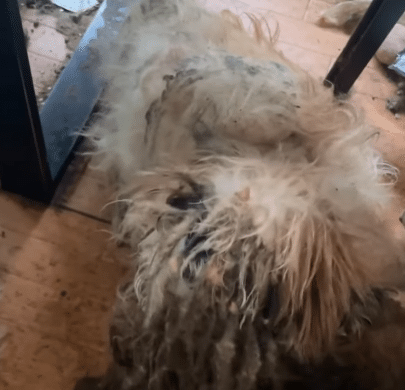
Golden Retrievers, Pomeranians, Dachshunds, and other dogs had spent their lives in conditions that offered little comfort or freedom. Their coats had become heavily tangled, forming thick mats that pulled against their skin and hid what they truly looked like underneath.
Yet the condition of their fur was only part of what years of confinement had left behind.
Many of the dogs appeared frightened and uncertain around people. Some seemed to have learned that the safest response was simply to remain still.
Then, one day, unfamiliar voices entered the building.
For the first time, the doors around them were beginning to open.
A World That Ended at the Cage Door
The building itself reflected how long the dogs had been living without proper care.
It was old and deteriorating, with debris and waste throughout the space. The air carried the accumulated odor of a place that had not been adequately cleaned or maintained.
This was where the dogs had been kept out of sight.
Day after day, their surroundings remained almost unchanged.
The same bars.
The same rooms.
The same limited space.
For dogs naturally driven to walk, sniff, play, and interact with the world around them, life inside a cage offered almost none of those experiences.
Their coats provided visible evidence of how long basic care had been missing. Fur had grown into dense tangles, in some cases resembling ropes rather than a normal coat.
Removing those mats would eventually become an important part of their recovery.
But before any healing could begin, someone first had to reach them.
The Investigation That Changed Everything
Reports of a suspected illegal breeding operation eventually brought the situation to the attention of a rescue organization and local authorities.
They went to investigate.
Inside, they found the dogs still waiting.
The owner was no longer there.
What remained was a building filled with animals who depended entirely on the people who had just walked through the doors.
Rescuers moved carefully from room to room.
There was no reason to rush frightened animals that had little experience with gentle human contact.
Volunteers approached the cages slowly, speaking softly and lifting the dogs one at a time.
Some trembled when they were carried.
Others remained unusually quiet, seemingly unsure what these unfamiliar hands meant.
The rescuers could not immediately erase everything the dogs had experienced.
But they could do one crucial thing.
They could take them out.
VIDEO: Dozens of Forgotten Dogs Were Carried From Their Cages as Their Rescue Finally Began
Freedom Was Only the First Step
Leaving the building did not instantly undo the effects of prolonged neglect.
Once the dogs arrived at the rescue facility, caregivers faced a careful process of helping them become comfortable and healthy again.
One of the first major tasks was dealing with their severely matted coats.
The tangled fur had built up over a long period, and removing it required patience. Cutting too quickly or pulling at the mats could cause additional discomfort because the fur was so close to sensitive skin.
For some dogs, grooming took hours.
Little by little, layers of tangled hair were trimmed away.
What had once hidden their bodies began to disappear.
Then came another simple experience that carried unusual meaning for dogs whose lives had offered so little basic care.
Warm baths.
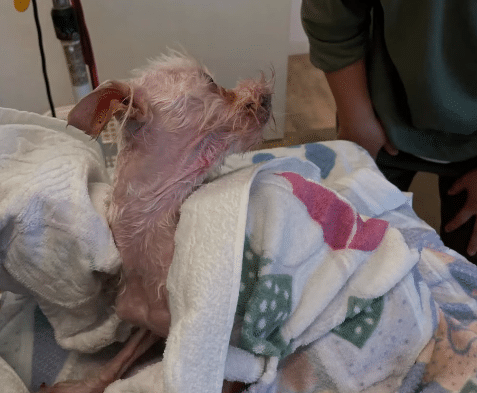
Caregivers washed them gently and dried them carefully. As the dirt and damaged coats disappeared, the dogs underneath became easier to see.
They were not defined by the condition in which they had been found.
They were simply dogs who had gone far too long without the care they needed.
The Smallest Changes Meant the Most
Physical care was visible.
Emotional recovery was quieter.
At first, many of the dogs remained withdrawn.
Some stayed in corners.
Some froze when a person approached.
Others seemed uncertain about what was expected of them.
There was no single dramatic moment when fear disappeared.
Instead, trust began showing itself through small changes.
A tail moved.
Ears lifted at a familiar sound.
A nose reached forward to investigate something new.
One dog became curious about a toy.
Another began watching caregivers instead of turning away.
These moments might appear ordinary in a typical home.
For dogs who had spent their lives confined, they represented an entirely different way of living.
No one was forcing them to interact.
They were beginning to choose it.
Discovering What It Means to Be a Dog
As the dogs became more comfortable, their personalities started appearing more clearly.
Animals that had once remained silent began barking with excitement.
Dogs that initially avoided contact slowly started seeking attention.
They explored their surroundings with growing curiosity and began playing with one another.
Some discovered toys for what appeared to be the first time.
The change was not simply about cleaner fur or healthier bodies.
It was about opportunity.
For perhaps the first time, they had room to move beyond the boundaries of a cage.
They could approach people.
They could step away.
They could investigate.
They could rest.
They could play.
The ability to make even these simple choices marked a major difference from the lives they had previously known.
Looking Forward Instead of Through Metal Bars
The dogs described after their recovery looked dramatically different from the animals first discovered inside the breeding facility.
Their coats became clean and soft.
Their bodies grew healthier and stronger.
Their expressions changed as well.
The fear and uncertainty that had been so noticeable at the beginning gradually gave way to curiosity and enthusiasm.
The next hope for them was a permanent home.
Families could eventually give these dogs something that cages never could provide: companionship, freedom, affection, and a place where they belonged.
For animals that had spent so much of their lives separated from ordinary experiences, even simple routines could now become part of an entirely new chapter.
Walking through a home.
Resting beside someone.
Exploring outside.
Playing with a toy.
Receiving gentle attention without fear.
None of those things should be extraordinary for a companion animal.
For these dogs, they represented possibilities that had once seemed unreachable.
When Someone Chooses Not to Look Away
Their rescue began long before the first cage was opened.
It began when people became aware that something was wrong.
Someone reported the situation.
Authorities and rescuers investigated.
Volunteers entered the building.
Caregivers spent hours removing painful mats, bathing frightened dogs, and helping them adjust to a safer environment.
Each step depended on someone deciding that the animals mattered.
That is what makes stories like this worth remembering.
Rescue is rarely one dramatic act.
More often, it is a chain of smaller decisions.
Someone notices.
Someone speaks up.
Someone enters the room.
Someone opens the cage.
Someone stays long enough for fear to begin turning into trust.
The dogs who once knew little beyond cold bars now have the possibility of something very different.
Not merely survival.
A life with space to move, people to trust, and homes where they can finally be treated as companions.
For dozens of dogs who had spent so long hidden away, that possibility is where hope begins.


