
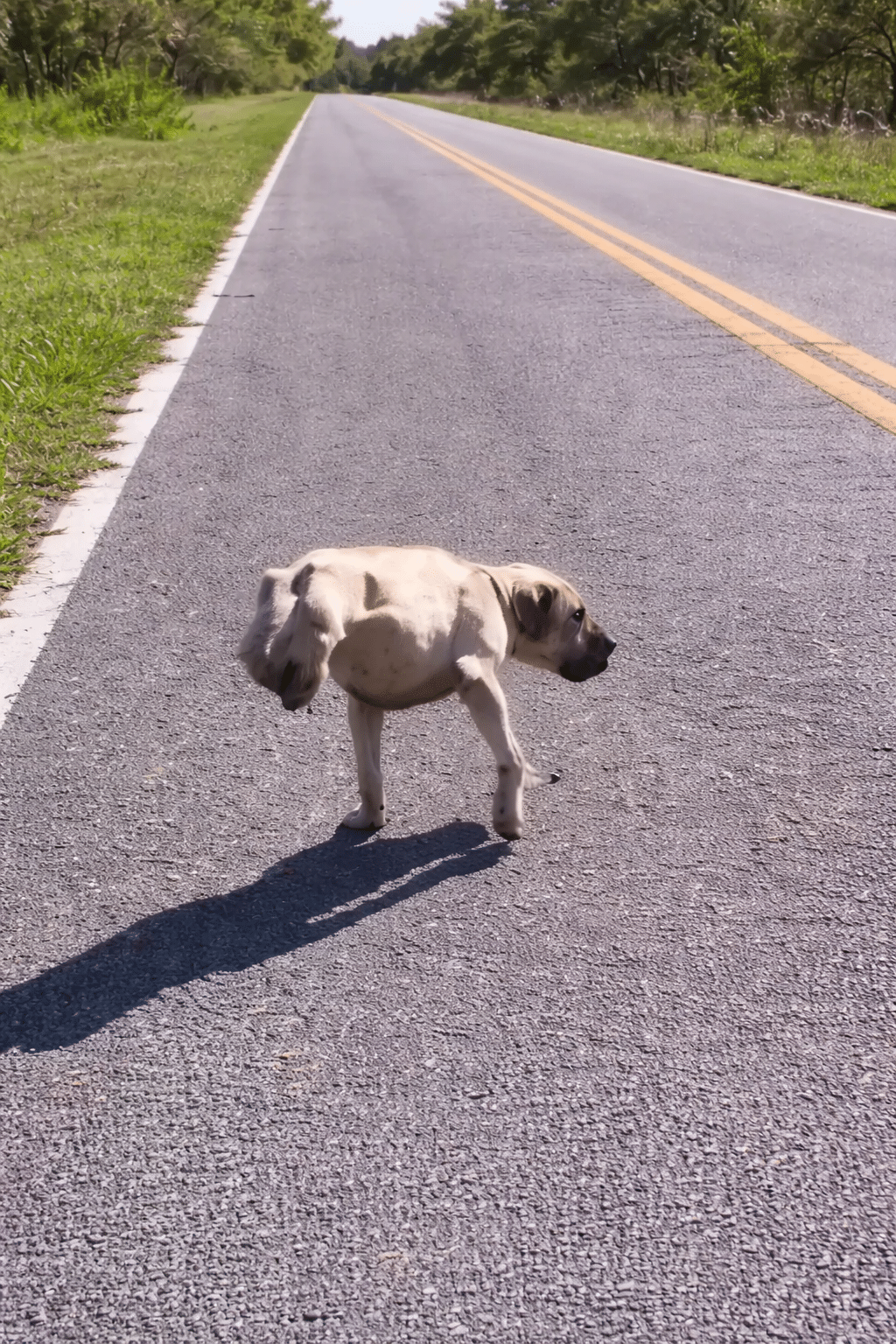
At first, there is almost nothing unusual about the way Dixie races down the quiet road.
His ears bounce with every stride. His eyes stay focused on the open space ahead. He moves quickly, confidently, with the unmistakable excitement of a dog enjoying the simple freedom of running.
Then you notice what makes every step extraordinary.
Dixie has no back legs.
Yet watching him move, the strongest feeling is not sadness.
It is joy.
A Difficult Beginning He Could Not Choose
Dixie was born with both hind legs completely paralyzed.
They could not support his weight or function normally, leaving him with physical challenges from the very beginning of his life.
As time passed, keeping the nonfunctioning legs created increasing medical concerns. According to the source, there were risks involving injury, infection, and continued discomfort.
The decision facing his veterinary team was not an easy one.
Both back legs would need to be amputated to protect Dixie from further suffering.
For many people, the thought of a dog losing two legs might immediately raise questions about what kind of life could remain afterward.
Would he still be able to move freely?
Would he still play?
Would he still experience the excitement other dogs find in running?
Dixie eventually provided his own answer.
Two Legs Were Enough to Keep Moving
After losing his hind legs, Dixie adapted to a completely different way of getting around.
He began relying entirely on his front legs.
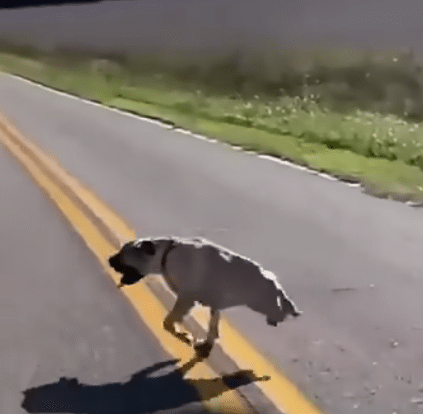
In footage of him running, his body rises and falls in a steady rhythm as those two legs carry him forward. There is no visible pause to reconsider what he cannot do.
He simply moves.
And when he has an open road in front of him, he moves fast.
His confidence changes the meaning of the scene. Instead of appearing like a dog defined by physical loss, Dixie looks absorbed in the experience itself—the road, the movement, and the freedom to keep going.
That is what makes the footage so memorable.
The surgery changed his body.
It did not take away his enthusiasm for life.
VIDEO: They Removed Dixie’s Back Legs to Protect His Life — Now Watch How He Runs
The Message Behind Every Run
One message shown with Dixie's footage captures the heart of his story: his legs were removed to save his life.
Those words could easily sound tragic when separated from everything that came afterward.
But then Dixie starts running.
Suddenly, the meaning changes.
The amputation was not presented as the end of his story. It was a difficult medical decision intended to free him from the risks and discomfort connected to legs that had never functioned properly.
Now, when Dixie races forward on his front legs, the focus is no longer only on what was removed.
It is on what remained.
Energy.
Movement.
Curiosity.
And an obvious desire to keep exploring whatever lies ahead.
Dixie does not need to move like every other dog for his life to have value.
He has simply found his own way.
A Body Can Change Without Ending a Life
Animals often demonstrate an extraordinary ability to adjust when their physical circumstances change.
Dixie's adaptation is especially striking because he does not have one hind leg to help with balance or movement. Both are gone.
His front legs carry the work.
His body has learned a new rhythm.
And the result is a dog who can still experience the excitement of moving through open space.
None of this means the decision that brought him here was simple.
Veterinarians had to consider the medical risks associated with his paralyzed legs and choose what offered Dixie the better chance of living without the same ongoing problems.
Removing both legs was a major change.
But it also gave him the opportunity to move forward without carrying limbs that could no longer serve him safely.
The people caring for Dixie also saw something important beyond his disability.
They saw a dog whose life was still worth protecting.
That compassion mattered.
Medical intervention protected his health. Continued care gave him the chance to adjust. And Dixie did the rest in the only way he could—one determined stride at a time.
He Does Not Run Like a Dog Asking for Pity
Perhaps the most powerful part of Dixie's story is the contrast between what viewers expect to feel and what they actually see.
A dog without his back legs might initially inspire sympathy.
But Dixie does not spend much time allowing that feeling to settle.
He is too busy running.
His expression is alert and engaged. His movement is energetic. Each stride carries him farther down the road.
The scene does not erase the seriousness of what happened to him.
Instead, it shows that a difficult physical condition does not automatically erase happiness, independence, or personality.
Dixie is still Dixie.
The way he moves has changed.
His enthusiasm has not.
What Remains Can Be More Important Than What Was Lost
There is a quiet lesson in the way Dixie approaches the road in front of him.
He was born with legs that never worked as they should.
Eventually, those legs had to be removed.
Neither part of his story was something he chose.
What he could do was adapt to the body he had afterward.
And that is exactly what he did.
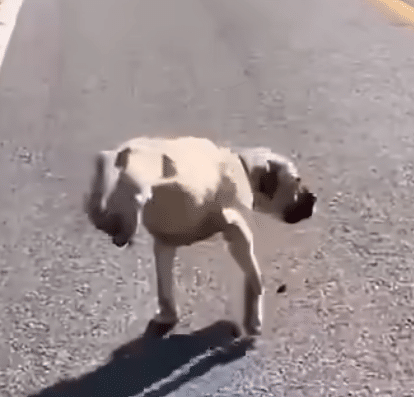
Dixie now moves through the world using two strong front legs, determination, and the support that made his second chance possible.
There is no need to pretend his disability does not exist.
It does.
But it is only one part of him.
He still has the ability to move.
He still has people willing to care for him.
And, judging by the way he races forward, he still has an enormous appetite for life.
Watching Dixie run turns what could have been a story centered entirely on loss into something much warmer.
It becomes a story about adaptation.
About difficult decisions made with compassion.
And about a dog who was given the chance to discover that life could still contain freedom after everything changed.
Every stride carries the same simple message.
Dixie is still here.
And he is still moving forward.


