
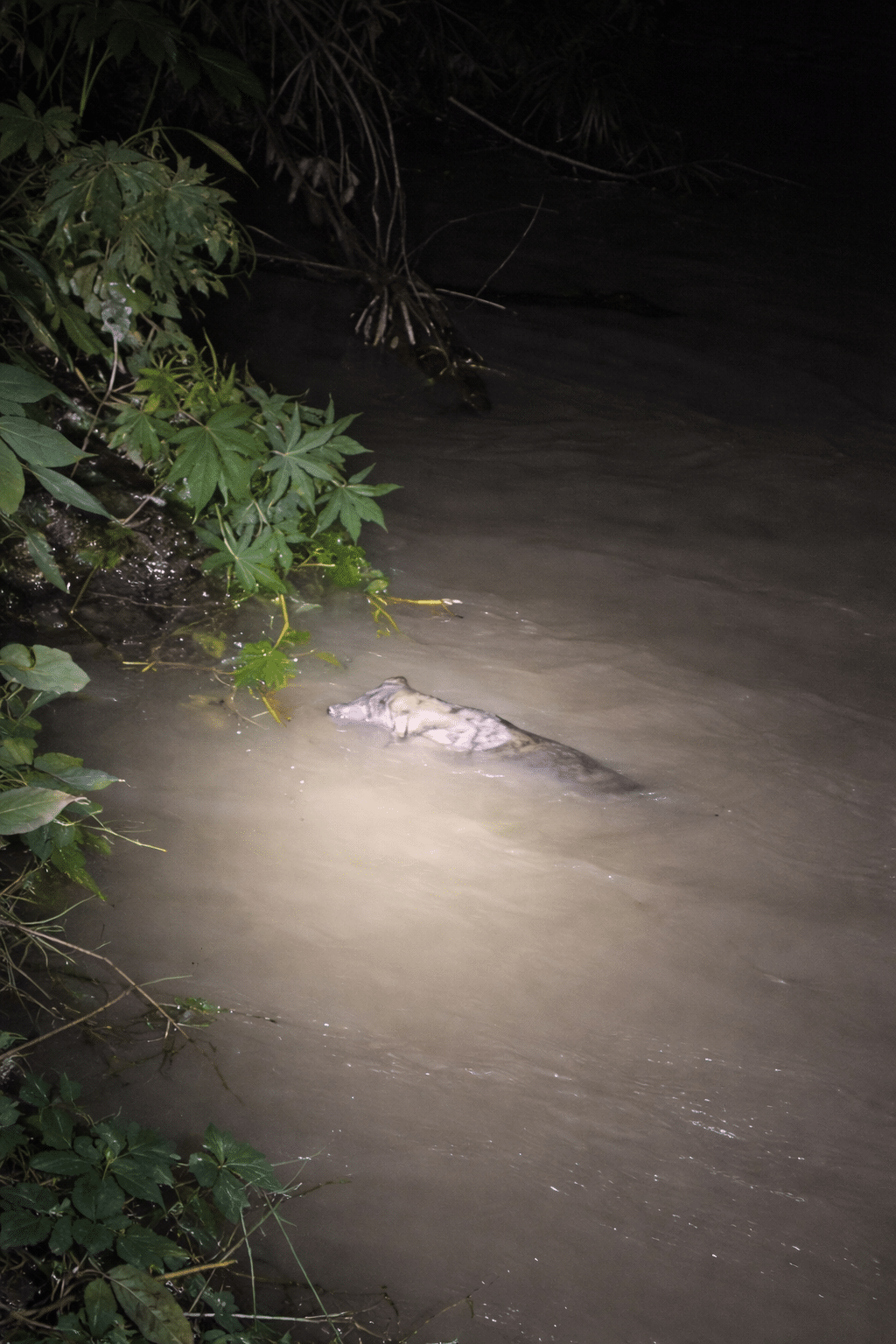
In the darkness beside the Musi River, a tiny dog held on to a fragile cluster of branches while muddy floodwater rushed past with frightening force.
The current carried debris downstream, pushing against the riverbank and everything caught near it. For the little dog, the tangled vegetation was more than a place to rest.
It was the only barrier between him and the powerful river.
His fur was soaked. His body shook from the cold and strain. Each moment spent gripping the branches demanded more strength from an animal that already appeared exhausted.
There was nowhere for him to go.
Letting go meant entering the current.
Holding on meant waiting and hoping that help would arrive before his strength disappeared.
A Small Life Surrounded by Powerful Water
Floodwater can transform a familiar riverbank into a dangerous place within a short time.
In this case, the water of the Musi River was moving fast enough to carry branches, trash, and other debris downstream. Near the edge, bushes and tangled grass bent beneath the force of the flow.
Among them was the small dog.
His size made the scene especially fragile. The branches supporting him looked insignificant compared with the volume and speed of the water around them.
Still, he held on.
His trembling body remained pressed close to the vegetation as the current continued moving below and around him.
There was no safe path back to dry ground that he could take by himself. Any attempt to jump or swim could have placed him directly into the strongest part of the flow.
So he stayed where he was.
Sometimes survival is not dramatic movement.
Sometimes it is simply finding enough strength to hold on for another minute.
The Rescue Could Not Be Rushed
When rescuers reached the riverbank, the difficulty of the situation became clear.
Reaching the dog required more than stepping into shallow water and lifting him out. The current was strong, the footing uncertain, and the animal was trapped close to branches and thick vegetation.
A careless approach could put both the dog and a rescuer at risk.
The team prepared ropes, life jackets, and a rescue net.
One rescuer was secured with a safety rope around his waist while the others remained on higher ground. Their position allowed them to control the rope and support him as he moved toward the water.
Everything depended on coordination.
The rescuer entering the flood needed enough freedom to reach the dog, but the team above also had to remain ready to pull him back if the current became too strong.
Slowly, they lowered him toward the river.
The water pushed hard against his body as he began moving through it.
Each step had to be deliberate.
The dog was close now, but the most delicate part of the rescue had only begun.
Reaching the Dog Without Frightening Him
As the rescuer moved nearer, the current rose around his waist.
Even while secured by the rope, advancing through the water required care. The river continued pressing downstream, while branches near the bank complicated the route toward the stranded animal.
The dog remained where he had been found.
He had already spent an unknown amount of energy gripping the vegetation, and his body was visibly shaking.
The rescuer approached gently.
A frightened animal can react unpredictably, especially when trapped in a place with no obvious escape. Sudden movement could have caused the dog to panic or slip away from the branches.
Instead, the rescuer closed the distance carefully.
There was no need to force the moment.
The little dog barely resisted.
Exhausted and soaked, he allowed himself to be lifted away from the branches that had kept him from being swept farther into the river.
For the first time since the rescue began, he was no longer holding himself above the flood alone.
VIDEO: A Tiny Dog Clung to Branches in the Flood Until a Rescuer Reached Him
The Net Became His Path Back to Safety
Getting hold of the dog was only part of the rescue.
The team still had to bring him back to solid ground without allowing him to slip into the water during the return.
The rescuer carefully placed the little dog inside the specialized rescue net.
It provided a more secure way to move him through the difficult final stage. Above them, the rescuers holding the rope prepared to pull both their teammate and the dog away from the current.
The situation required steady movement rather than speed.
A sudden pull could cause the net to swing. Moving too slowly meant spending more time exposed to the force of the flood.
So the team worked together, controlling the rope while the rescuer maintained his position in the water.
Little by little, they moved toward the bank.
The branches that had once been the dog's only protection were now behind him.
Ahead was higher ground.
Solid Ground Changed Everything
The final distance may have been short, but it mattered more than anything that came before it.
The rope tightened.
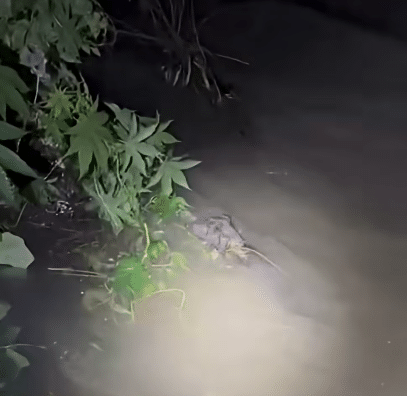
The rescuer and the net carrying the dog gradually rose away from the strongest part of the water. Team members on the bank continued pulling with controlled, coordinated movements.
Then the rescuer reached solid ground.
The dog was finally out of the river.
Only minutes earlier, his entire safety had depended on a few branches and tangled grass. Now several people surrounded him, ready to provide the simple things his soaked body needed most.
Warmth.
Dryness.
A quiet place away from the water.
The danger of being swept downstream had passed.
But the dog was still shivering.
His fur remained saturated with muddy river water, and the experience had clearly taken a great deal out of him.
The rescuers did not treat leaving the riverbank as the end of their responsibility.
They immediately began caring for the small survivor they had just pulled from the flood.
Warm Towels After the Cold River
Volunteers wrapped the dog in towels and gently began drying his wet fur.
After the noise and pressure of the rushing river, the change in surroundings was profound.
There was no longer water forcing against his body.
No branches to grip.
No current threatening to pull him away.
Instead, there were hands supporting him and towels surrounding him with warmth.
The dog continued to shiver at first.
That response was understandable after being soaked in floodwater and spending so much energy simply trying to remain in place.
The rescuers stayed close.
They handled him gently and spoke softly while working to help him warm up.
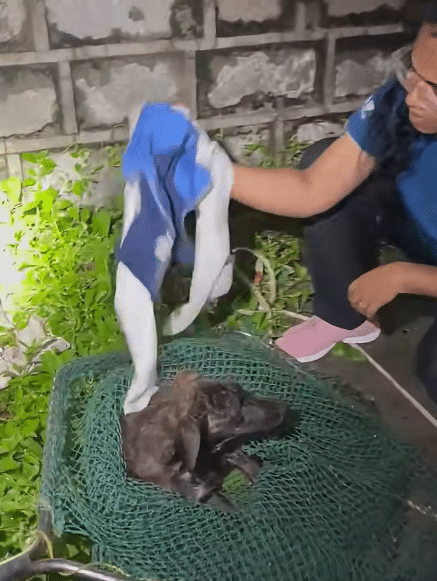
Gradually, his body appeared to settle.
The trembling began to ease as he remained wrapped in the towels.
For an animal that had just endured a terrifying struggle beside a raging river, this quiet period mattered.
Rescue is sometimes remembered for the dramatic moment when someone enters danger.
But what happens immediately afterward can be just as important.
Safety has to become something the rescued animal can actually feel.
For this little dog, that process began with warmth and careful handling.
From the Riverbank to Continued Care
Once the dog was stable enough to be moved, rescuers wrapped him securely in protective blankets and prepared to transport him in a rescue vehicle.
His immediate danger had ended, but the experience had taken a physical toll.
The next step was continued care and a veterinary examination so his condition could be properly assessed after the long exposure to cold floodwater.
The source does not describe a final long-term outcome, so his story should not be extended beyond what is known.
What is confirmed is already meaningful.
He was found trapped beside a powerful river.
He had only branches and vegetation between himself and the current.
A rescue team recognized that reaching him would be dangerous and prepared carefully.
One rescuer entered the flood while secured by a rope.
The dog was lifted from the branches, placed safely into a rescue net, and brought back to dry ground.
Then he was warmed, protected, and placed into a vehicle for further care.
That is where the known rescue journey leaves him: no longer alone beside the river, and no longer responsible for keeping himself alive with whatever strength remained in his small body.
Sometimes a second chance begins quietly.
It begins when a rope is secured.
When someone enters water that would be easier to avoid.
When several people refuse to leave a frightened animal where they found him.
And for this small dog, it began the moment the branches were no longer the only thing standing between him and the flood.


