
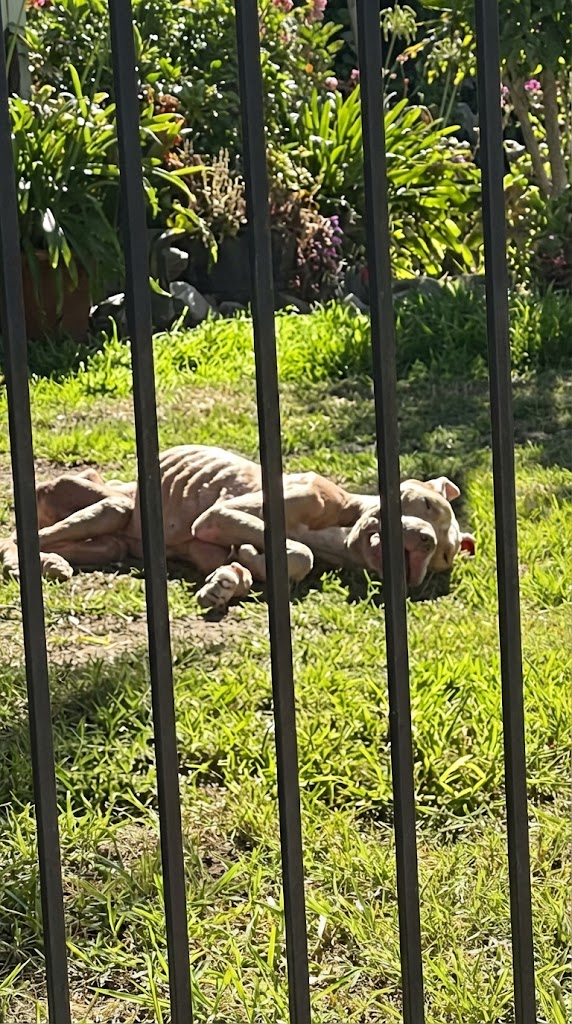
Gator was lying on the dirt, his body so thin that there was little left to hide how badly he needed help.
A chain kept him in a backyard in Highland, California. Beyond that small patch of ground, ordinary life continued. People went about their days while the Pit Bull grew weaker.
His suffering was not hidden behind walls or far from human activity.
It was happening in a place where someone could have noticed.
And by the time rescuers reached him, Gator had become so exhausted that he could no longer stand.
For a dog whose owner had described him as aggressive, his actual condition told a very different story.
He wasn't threatening anyone.
He was struggling to survive.
The Backyard Where Gator Was Slowly Fading Away
Gator's world had become painfully small.
He was kept on a chain in a yard where his physical condition deteriorated over time. His body lost the weight and strength a healthy dog needs for even the simplest movements.
The contrast was difficult to ignore.
A Pit Bull is often associated with strength and energy. Yet Gator had been reduced to a fragile figure resting against the ground, with little ability to change his circumstances.
His owner maintained that he was receiving food and suggested that an unidentified illness might explain his appearance.
The owner also characterized Gator as aggressive.
But those explanations did not resolve the urgent concern visible in the dog's condition.
Whatever had happened before rescuers became involved, Gator needed medical attention and a safe environment.
The photographs of his condition eventually attracted attention online. People who had never met him could see that something was seriously wrong.
Yet there is an important difference between seeing a photograph of a suffering animal and understanding what that animal is experiencing.
For Gator, there were no online comments or discussions.
There was only the yard, the chain, and a body that was becoming increasingly difficult to move.
His situation had reached a point where waiting longer could mean allowing his health to deteriorate further.
Someone needed to intervene.
When Rescuers Arrived, They Found a Different Dog
The warnings about Gator might have led rescuers to expect a difficult encounter.
They had been told he was aggressive.
Instead, they found a dog in a condition that left him barely able to respond.
Gator was too weak to stand and too exhausted to resist.
There was no threatening behavior of the kind his owner had described.
There was simply an animal in urgent need of help.
That difference mattered.
An aggressive label can influence how people approach a dog, sometimes making them hesitant to offer assistance. But Gator's behavior at the time of rescue did not support the frightening picture that had been presented.
His physical condition required attention far more urgently than his supposed temperament.
The owner initially hesitated and continued to refer to a possible medical problem. But the rescuers recognized that the dog could not remain in those circumstances while questions about his health went unanswered.
Gator was finally removed from the backyard.
It was a significant turning point, though not the end of his difficulties.
Leaving the yard meant he could receive the care that his condition demanded. It did not mean the effects of prolonged neglect would disappear immediately.
His body was still severely weakened.
His paws and ears needed attention.
And the process of helping him recover would require far more than a single meal or a comfortable place to rest.
But one essential thing had changed.
Gator was no longer trapped in the environment where his health had declined so drastically.
He had been given an opportunity to recover.
VIDEO: Meet Gator After His Rescue — The Gentle Pit Bull Finally Receiving a Second Chance
The Medical Examination That Revealed How Much He Had Endured
Once Gator reached veterinary care, the seriousness of his condition became clearer.
Veterinary professionals evaluated his body condition using a nine-point scale designed to assess whether an animal is underweight, at an appropriate weight, or overweight.
Gator received a score of just 1 out of 9.
It was the lowest possible rating on the scale, indicating extreme emaciation.
That single number conveyed the severity of his nutritional condition more clearly than any dramatic description could.
He needed careful medical management, proper nutrition, and continued observation.
But malnutrition was only one part of the problem.
His paws showed significant inflammation and damage. His ears were also affected by serious infections.
These issues added discomfort to a body that was already struggling.
For the people caring for him, the challenge was not simply to help Gator gain weight.
They needed to address multiple health problems while giving his weakened body time to respond.
And there was another part of his condition that could not be measured on a medical chart.
His response to human kindness.
Gator was given blankets, gentle bathing, and the reassuring presence of people who wanted to help him.
Such ordinary acts of care should be familiar to any dog living in a secure home.
For Gator, they appeared unfamiliar.
He trembled when handled gently, seeming unsure of what the attention meant.
The contrast was striking.
The dog who had been described as dangerous was not attempting to drive people away. He seemed uncertain about the kindness being offered to him.
His caregivers could not instantly erase that uncertainty.
They could only continue showing him, through consistent care, that human contact did not have to be frightening.
Recovery Was More Complicated Than Gaining Weight
During the following days and weeks, Gator began showing signs of improvement.
His body gradually responded to treatment.
His expression softened.
He appeared more comfortable in the presence of the people caring for him.
These were encouraging changes, especially considering how weak he had been when first rescued.
But improvement did not follow a perfectly smooth path.
Even after two weeks, his medical problems were not fully resolved.
The inflammation affecting his paws remained particularly troublesome. Despite treatment, the condition continued to cause concern.
Further testing revealed that Gator had a chronic skin condition requiring specialized attention.
This finding helped explain why some of his physical problems were proving difficult to resolve.
The damage associated with his previous circumstances was not something that could be corrected overnight.
His recovery demanded persistence.
Veterinary care needed to continue even as his general condition improved. His caregivers had to consider both his immediate needs and the longer-term management of his skin problems.
For Gator, progress was measured in smaller changes than a dramatic before-and-after photograph could capture.
Being more comfortable mattered.
Responding to gentle handling mattered.
Gradually developing a healthier body mattered.
None of those improvements made his remaining medical issues unimportant.
They simply showed that recovery was possible, even when it required patience.
And as his physical condition slowly changed, another transformation became increasingly noticeable.
The Dog They Called Aggressive Began Seeking Affection
Gator's behavior in care challenged the description that had followed him out of the backyard.
Instead of consistently avoiding people or showing aggression, he began seeking comfort from them.
He leaned toward gentle touch.
He accepted affection.
And over time, he appeared more willing to trust the people around him.
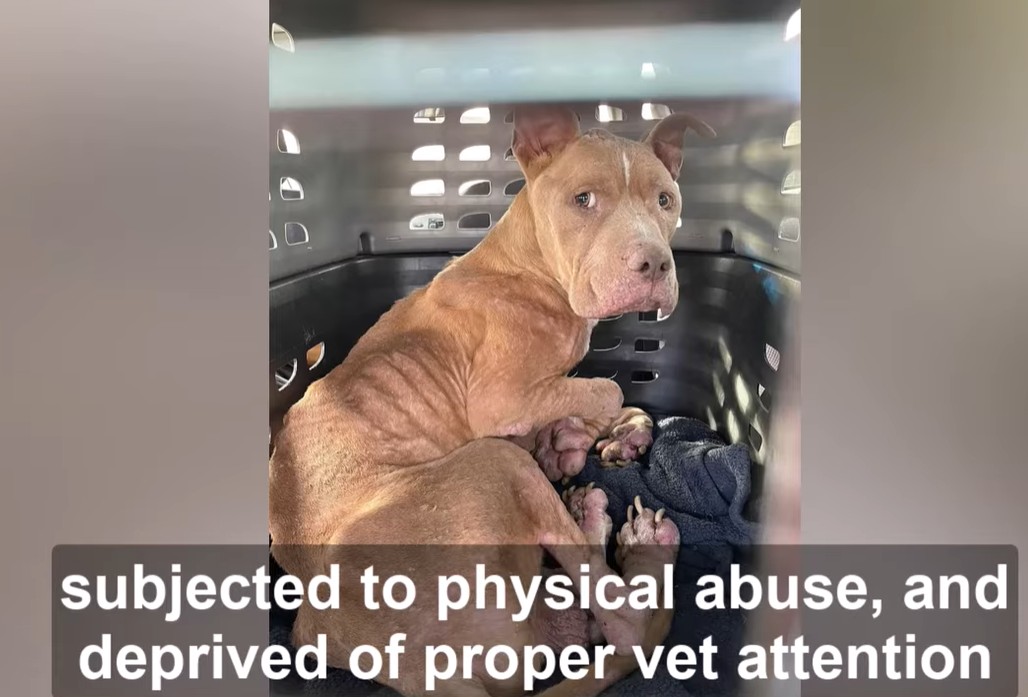
These moments revealed a softer side of his personality.
They also raised an important question about how animals are judged when they are living in distressing circumstances.
A dog's behavior can be influenced by pain, fear, poor health, and the conditions in which it lives.
A label does not tell the whole story.
In Gator's case, the behavior observed during his recovery was very different from what rescuers had been led to expect.
That does not establish everything about his past behavior. The full circumstances behind the owner's description were not known.
What the rescuers could see, however, was that Gator was capable of accepting and seeking human affection.
He was not simply a medical patient who needed to gain weight.
He was a dog learning to feel more comfortable around people.
And that part of healing could not be hurried.
Physical treatment could address his infections, nutritional needs, and skin condition. Building a sense of security required repeated experiences of gentle, dependable care.
For a dog who had spent so much time confined to a chain, the opportunity to respond freely to affection represented a meaningful change.
He could approach kindness rather than merely endure human contact.
He could find comfort in the people responsible for his care.
The trust did not appear all at once.
But it was growing.
Sixty Days Later, A Different Future Became Possible
Two months after Gator's rescue, his situation had changed considerably.
The dog who had arrived in an extremely fragile condition had received intensive medical treatment and sustained support.
His progress had been significant enough that the veterinary team considered him ready to leave the clinic.
After sixty days, Gator was cleared to move into foster care.
It was the news everyone involved in his recovery had been working toward.
The decision did not mean that every difficulty in his life had disappeared.
His healing would continue.
But he no longer needed to remain at the clinic for the same level of medical care he had required earlier.
That distinction was important.
Gator had reached a stage where a home environment could become part of his next chapter.
He was welcomed into a foster home, away from the backyard where he had once been chained.
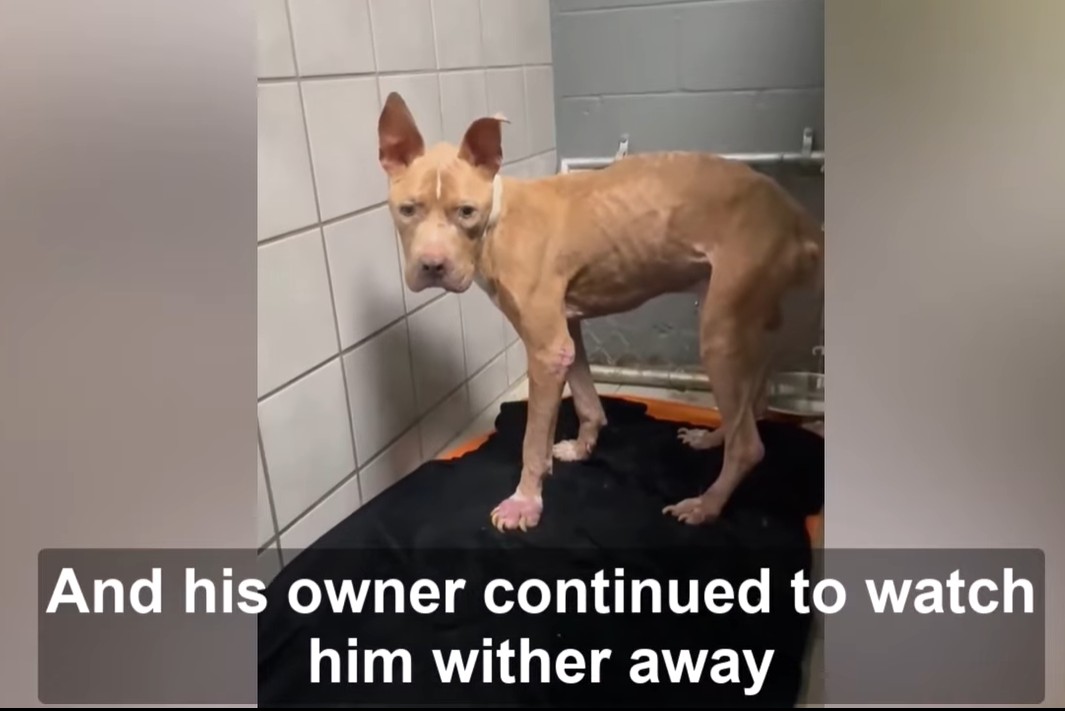
The change was about much more than location.
A foster home offered him the opportunity to continue recovering in surroundings built around safety and care.
Instead of being confined to a neglected patch of ground, he could experience a different kind of daily life.
Regular meals.
A comfortable place to rest.
People who were attentive to his needs.
And the chance to grow more confident without the same conditions that had defined his earlier existence.
For a dog whose body had once been too weak to stand, reaching this stage was an achievement worth recognizing.
But his progress also reflected the patience of those who continued caring for him when his recovery became complicated.
The first act of rescue had removed him from danger.
The weeks that followed gave that rescue lasting meaning.
A Second Chance That Still Requires Time
Gator's story did not end with a dramatic declaration that every problem had been solved.
His confirmed progress was quieter and more meaningful than that.
He was stable.
He was eating and resting.
He had begun accepting affection and learning what safety could feel like.
And he had moved into foster care, where his recovery could continue.
There were still reasons to be attentive to his health, particularly given the complications that had emerged during treatment.
His emotional adjustment also deserved time.
But the difference between the dog found in that Highland backyard and the dog who entered foster care was unmistakable.
At first, Gator had been severely underweight, physically exhausted, and unable to stand.
He had been presented to others as aggressive.
Weeks later, he was receiving continuing care and showing a growing desire for human closeness.
His journey is a reminder that an animal's condition should never be dismissed because of a label.
Dogs cannot explain prolonged hunger or discomfort in words.
They depend on people noticing changes in their health, recognizing when something is wrong, and taking appropriate action.
Gator's visible condition had made his need for help clear.
The crucial turning point came when that need was finally addressed.
And his recovery showed how much dedicated veterinary treatment and compassionate daily care could accomplish together.
It would be easy to describe his story as a complete transformation and leave it there.
But doing so would overlook the reality of his experience.
Healing from severe neglect takes time.
Some medical conditions require continuing management.
And learning to trust after prolonged hardship may involve small, gradual changes rather than a single remarkable moment.
Gator's second chance was not built in one day.
It grew through sixty days of treatment and through the gentle interactions that helped him become more comfortable around people.
He still had a journey ahead of him.
Yet that journey was no longer confined to the dirt beneath a chain.
It now included safety, human affection, and the opportunity to continue recovering.
For Gator, that was a future worth fighting for.
And for anyone who encounters an animal in similar distress, his experience offers a lasting reminder:
Sometimes, helping a life begin again starts with refusing to look away.


