
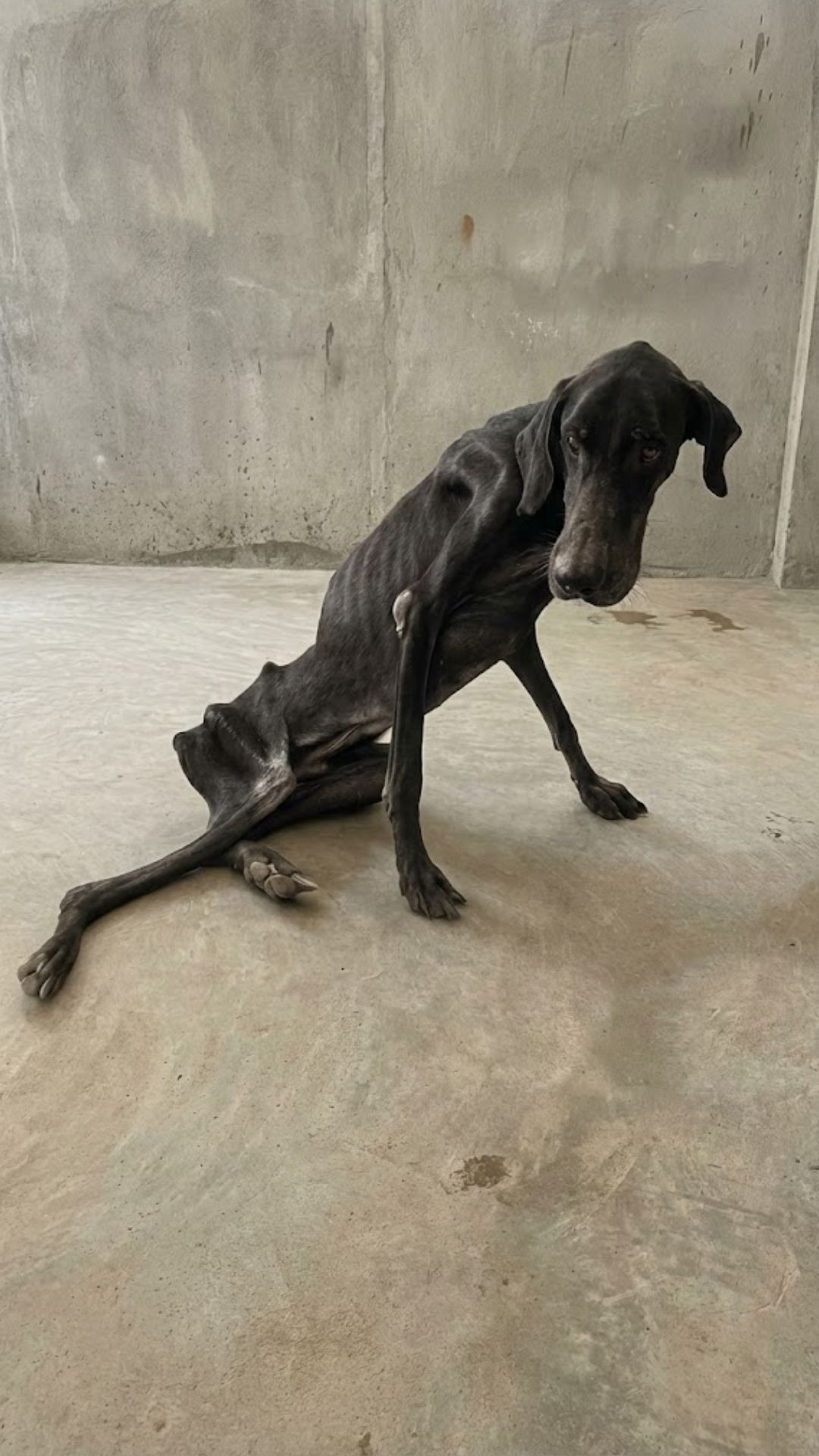
For seven long days, Cesar could not get himself to safety.
The dog had suffered severe injuries inside the home of the person he trusted most. His jaw was fractured, his lower spine had been damaged, and both hind legs were broken. He could not simply stand up and walk toward food or water.
What made his situation even harder was that help did not come the next morning.
According to the account later given to authorities, Cesar's owner had been drinking when the incident occurred. Once sober, he understood that the dog was badly hurt and reportedly expressed regret.
But Cesar still was not taken for immediate care.
Fear of the consequences kept the man silent while the injured dog remained inside the house.
Hours became days.
And Cesar waited.
Seven Days When Cesar Could Not Help Himself
Before that Sunday, life with his owner had apparently been unpredictable.
There were ordinary moments when Cesar was fed, comforted, and treated affectionately. But alcohol could change the atmosphere in the home. The person Cesar depended on could become angry and difficult to recognize.
On that particular day, a small incident escalated into violence.
When it ended, Cesar was left with injuries serious enough to make normal movement almost impossible.
His fractured jaw made eating extremely difficult. The damage to his back and hind legs prevented him from reaching water on his own.
For a healthy dog, seven days can pass quickly.
For Cesar, each one meant more weakness.
He became increasingly thin and dehydrated while remaining almost completely dependent on someone else choosing to help him.
Yet the person inside the home stayed silent.
Cesar's chance would eventually come from beyond those walls.
A Child Heard What Others Could Not See
Cesar could no longer bark normally, but he could still make faint sounds.
Those quiet whimpers traveled far enough for a young girl living next door to hear them.
She recognized that something was wrong.
Rather than dismissing the sounds as ordinary barking, the girl told her mother. Her concern led her mother to contact the police.
That simple decision changed the direction of Cesar's story.
When people finally entered the home, they found a dog whose condition reflected the days he had spent unable to care for himself.
He had become extremely thin.
His injuries were severe.
And after so many days without meaningful help, he appeared exhausted and withdrawn.
The rescue did not erase what had happened.
But for the first time since his injuries, Cesar was no longer waiting alone.
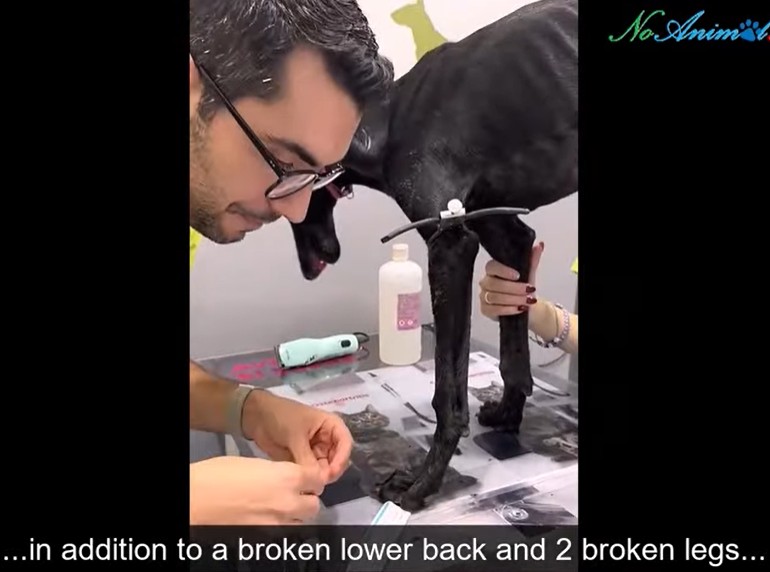
VIDEO: Cesar Spent Seven Days Unable to Stand — Then His Long Road Back Began
The Difficult Work of Putting Cesar Back Together
Medical examination revealed just how serious Cesar's condition was.
His jaw required treatment. Both hind legs had been badly injured. Most concerning was the trauma to his lower spine, which created uncertainty about whether he would ever regain normal movement.
The veterinary team could not promise that Cesar would walk again.
That possibility hung over the early days of his recovery.
The operation was difficult, and what followed was not a dramatic overnight transformation. Cesar needed rest, careful handling, and time.
For roughly two weeks, much of his world became quiet.
He slept.
He ate softened food that was easier for his injured jaw to manage.
His bedding was changed carefully.
The people around him approached gently.
Those details mattered because Cesar was recovering from more than damaged bones. He also had to become comfortable around human hands again.
The same species capable of frightening him was now responsible for feeding him, lifting him, cleaning his space, and helping him heal.
Nothing needed to be rushed.
Safety could be introduced one calm moment at a time.
On Day 21, Cesar Did Something No One Could Promise
Then came the twenty-first day.
A volunteer entered Cesar's kennel and saw something completely different from the dog who had arrived unable to move normally.
Cesar was standing.
His body was still weak. His legs trembled under the effort, and his posture showed how much healing remained ahead.
But he was upright.
Then he moved forward.
One unsteady step came first.
Another followed.
For the people who had cared for him, those movements carried enormous meaning. Earlier, the spinal injury had made his future uncertain. Now Cesar was showing that some function had returned.
His tail even moved slightly as he looked toward the people nearby.
It was not the end of recovery.
It was the beginning of a different chapter.
From that moment, progress became easier to see.
As his jaw healed, his appetite improved. With regular food and care, his weight gradually returned. His coat became healthier, and the fragile dog who had first arrived began to look stronger.
But perhaps the most striking part of Cesar's recovery was something that could not be measured on an X-ray.
He continued to seek companionship.
A New Friend Helped Bring Back the Playful Dog
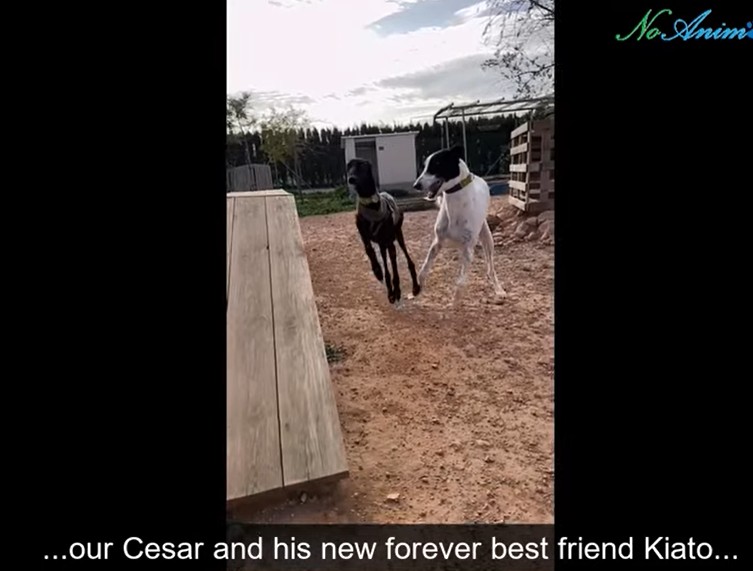
At the shelter, Cesar formed a close bond with another dog named Kiato.
The two became companions.
They played together, wrestled, and chased toys, creating scenes that were difficult to reconcile with Cesar's condition only weeks earlier.
There had been a time when he could not stand.
Now he could move around with another dog.
There had been a time when his world had narrowed to pain, thirst, and waiting.
Now there were toys, interaction, and ordinary canine moments again.
Kiato did not know Cesar's history in the way people did.
To another dog, Cesar did not need to be defined by the injuries he had survived.
He could simply be a friend.
That normality became another meaningful part of his recovery.
The Dog Who Once Waited for Help Finally Walked Toward Home
Cesar's story eventually moved beyond the shelter.
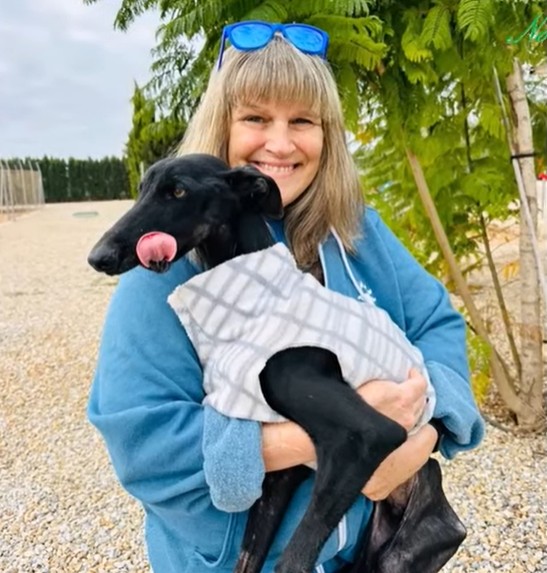
A new family welcomed him into their lives knowing what he had been through.
He was not completely untouched by the past. His walk still carried a slight sway, and his body continued rebuilding strength.
But those remaining signs did not define him.
He had a bed of his own.
He had toys.
He had outdoor space to explore.
Most importantly, the people around him now understood that care is not something an animal should have to earn.
Cesar's experience also leaves behind an uncomfortable lesson.
Regret alone could not help him during those seven days.
Knowing that an animal is suffering is not the same as taking action.
The action came from a child who heard a faint sound through the wall and refused to ignore it. It continued through her mother, the authorities, medical professionals, volunteers, and eventually a family willing to give Cesar a safe future.
No single moment erased his past.
His recovery happened through many smaller ones.
A softened meal.
A clean place to rest.
Gentle hands.
The first attempt to stand.
One trembling step.
Then another.
Cesar had once spent 168 hours unable to rescue himself.
By day 21 of his recovery, he was standing again.
And when the time came for him to leave the shelter, he was no longer the motionless dog waiting for someone to notice.
He was walking forward.
This time, there were people waiting to walk with him.


