
Some rescue stories begin with a dog wandering beside a road or waiting behind the bars of a shelter.
Bona's began beneath the ground.
She had been kept inside a cramped underground cavity where daylight barely reached her. The space was damp and narrow, with little ventilation and almost no room for her to move freely.
By the time rescuers found her, the effects of that confinement were visible in nearly every movement she made.
A Life Reduced to a Small Underground Space
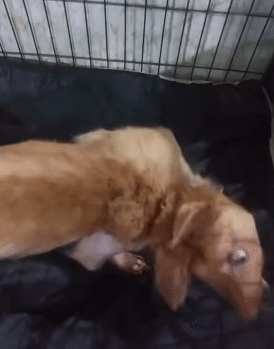
Bona had spent so much time with limited movement that her muscles had wasted away. Her body was extremely thin, and even standing demanded strength she struggled to find.
She could barely turn around inside the space where she had been kept.
There was no yard to explore.
No sunlight to lie beneath.
No ordinary freedom to walk from one place to another.
Her world had become that small space underground.
Getting her out, however, was not as simple as discovering where she was.
According to the source, Bona's owner initially resisted giving her up. He still considered her valuable because she could produce puppies, even while her physical condition showed how urgently she needed care.
The rescuers continued negotiating.
Eventually, they were allowed to take her.
Even then, Bona could not simply climb out.
She did not have the strength.
The people helping her had to lift her carefully from the cavity that had confined her for so long. For perhaps the first time in a long while, open daylight surrounded her.
Her body was not ready for it.
Once outside, Bona collapsed, unable to support herself.
The rescue had succeeded in removing her from the underground space.
Saving her health would take much longer.
The Examination Revealed How Much Care She Needed
The veterinary hospital was more than an hour away.
When Bona finally arrived and could be examined properly, the medical team began to understand the scale of the work ahead.
Her ears were missing, and her tail had previously been shortened. Her former owner reportedly explained that these changes had been made because they were considered more convenient for cleaning.
But the more urgent problems were inside her weakened body.
Veterinary tests identified a urinary tract infection and severe muscle atrophy associated with the long period in which she had barely been able to move.
Doctors also discovered a large tumor in her abdomen.
Bona was repeatedly vomiting yellow bile, while her thin frame reflected the effects of prolonged poor nourishment and stress.
Yet during those first examinations, she did not respond with aggression.
She appeared exhausted.
Everything now had to be done carefully.
Her body needed nourishment, but recovery could not be rushed. Medication had to be managed. Handling needed to remain gentle. After such prolonged confinement, even ordinary care had to be introduced with patience.
VIDEO: From an Underground Cavity to Daylight — The Rescue That Changed Bona's Life
Fourteen Days That Began to Change Everything
The first two weeks became an important period in Bona's recovery.
Her caregivers focused on controlled feeding, medication, observation, and gentle interaction.
Little by little, her body began responding.
Within approximately fourteen days, Bona had gained nearly two kilograms.
For a dog who had arrived with so little physical strength, that change mattered.
But weight was not the only sign of progress.
The dog who had initially known so little comfort gradually became less startled by touch. Repeated gentle handling seemed to teach her something entirely new: a human hand did not always mean discomfort or confinement.
Trust did not appear suddenly.
It grew through repetition.
Food arrived.
Care continued.
Hands approached gently.
Nothing demanded that she understand immediately.
That quiet consistency became part of her healing.
Then came another major challenge.
The abdominal tumor needed to be addressed surgically, but preparations for the operation revealed an additional medical complication.
Bona had hemophilia, a clotting disorder that made surgery significantly more dangerous because bleeding could become difficult to control.
The veterinary team could not proceed as though this were a routine operation.
Bona required three units of blood transfusion before the procedure could safely continue.
After everything her body had already endured, surgery represented another demanding step.
She made it through.
Then everyone had to wait for the biopsy result.
The news finally brought a measure of relief.
The tumor was benign.
For a dog whose rescue had begun in such fragile condition, it was the hopeful result everyone caring for her needed.
Recovery Happened in Small, Quiet Steps
Surgery did not suddenly transform Bona into a healthy dog.
Recovery rarely works that way.
Her body had spent too long weakened by confinement and inadequate care. Muscle needed time to return. Healthy weight needed to build gradually. Her coat and overall condition could not be restored in a few days.
So the work continued.
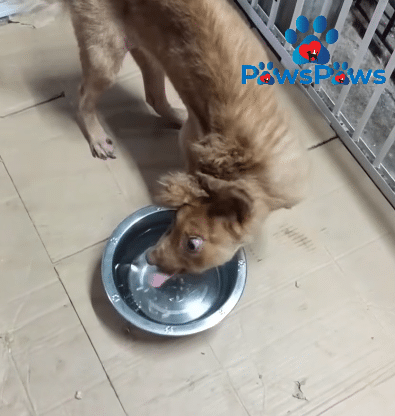
Day after day, nourishment replaced deprivation.
Movement slowly replaced immobility.
Gentle contact replaced the uncertainty she had once associated with people.
The changes were not dramatic individually.
Together, they began creating a completely different life.
Bona became more comfortable with the people around her. Instead of reacting nervously to every touch, she increasingly accepted gentle attention.
Her posture slowly changed as well.
The dog who had once struggled simply to remain upright started carrying herself with greater confidence.
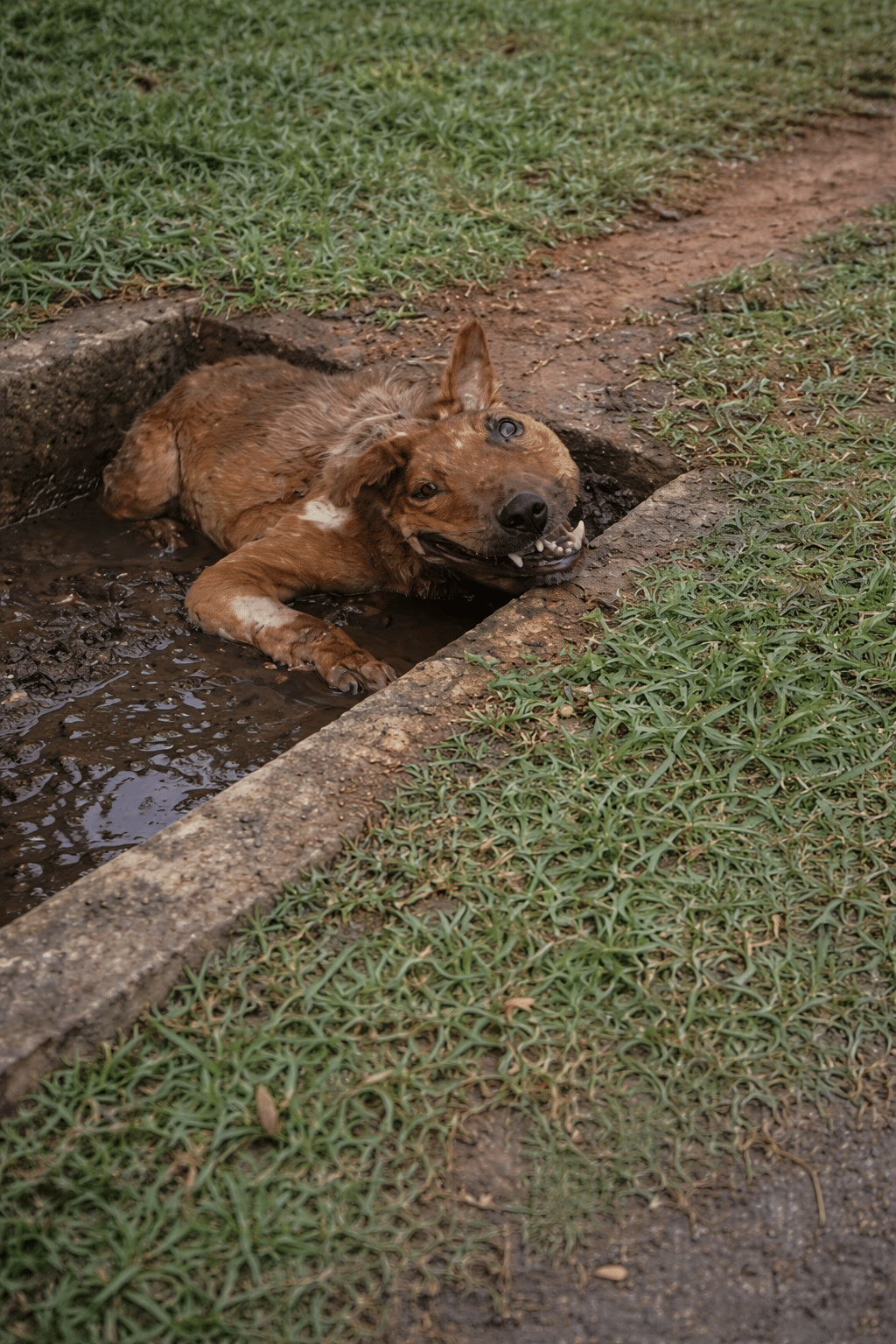
There was something especially meaningful about seeing Bona in open spaces.
For so long, her physical world had been defined by a cavity beneath the ground where she could barely move.
Now there was room around her.
Room to stand.
Room to explore.
Room simply to rest without walls pressing closely against her body.
Those ordinary freedoms had once been unavailable to her.
Three Months Later, Bona Looked Like a Different Dog
By the three-month point, the transformation was difficult to miss.
Her extremely thin outline had softened as she regained healthy weight.
Her coat was returning in patches.
The weakness that had defined her first days after rescue was giving way to greater stability.
But some of the most meaningful changes could be seen in how she behaved.
Bona explored rather than immediately shrinking away.
She could rest in open areas without the same guarded posture.
She leaned into gentle hands.
Safety, once unfamiliar, was becoming part of her daily life.
There was no single moment when everything suddenly became normal.
Instead, recovery was built from hundreds of quiet moments.
A meal.
A medical check.
A careful touch.
Another day without confinement.
Another chance to move freely.
Another experience that showed her the world outside that underground space could be different.
A Second Chance Built Through Patience
As Bona's health continued to improve, legal action was initiated against the person responsible for her neglect.
That process formed one part of what followed her rescue.
But Bona's story ultimately became about something larger than punishment.
It became a story about what patient care can restore.
When rescuers first reached her, she could not climb out of the place where she had been confined. She was severely weakened, her muscles had wasted away, and significant medical problems still waited to be discovered.
Simply carrying her into daylight was only the beginning.
She still needed veterinary treatment.
She needed nourishment.
She needed a dangerous surgery performed with additional precautions because of her clotting disorder.
And after those immediate medical challenges came the slower work of rebuilding strength and trust.
None of it happened instantly.
That may be the most important part of Bona's transformation.
Rescue is sometimes imagined as one dramatic moment—the moment a door opens, a dog is lifted into someone's arms, or an animal finally leaves a place of neglect.
For Bona, that moment mattered enormously.
But everything that followed mattered too.
The careful meals.
The examinations.
The transfusions before surgery.
The operation itself.
The weeks of physical recovery.
The gentle human contact that slowly became something she no longer feared.
Three months after being lifted from beneath the ground, Bona was no longer the nearly motionless dog rescuers had first encountered.
She had gained strength.
She had gained weight.
She had begun exploring the space around her.
And she had learned to relax beside people who treated her with care.
Her resilience did not need to be dramatic to be remarkable.
It appeared quietly, one day at a time.
Bona could not change what had happened before rescuers found her.
But once someone finally reached into that dark underground space and brought her out, the direction of her life changed.
What began with a dog too weak to climb toward the light became a long, patient journey back to health.
And sometimes, that is what a second chance really looks like—not one extraordinary moment, but many ordinary acts of care repeated until a frightened, exhausted animal finally has the strength to live differently.


