
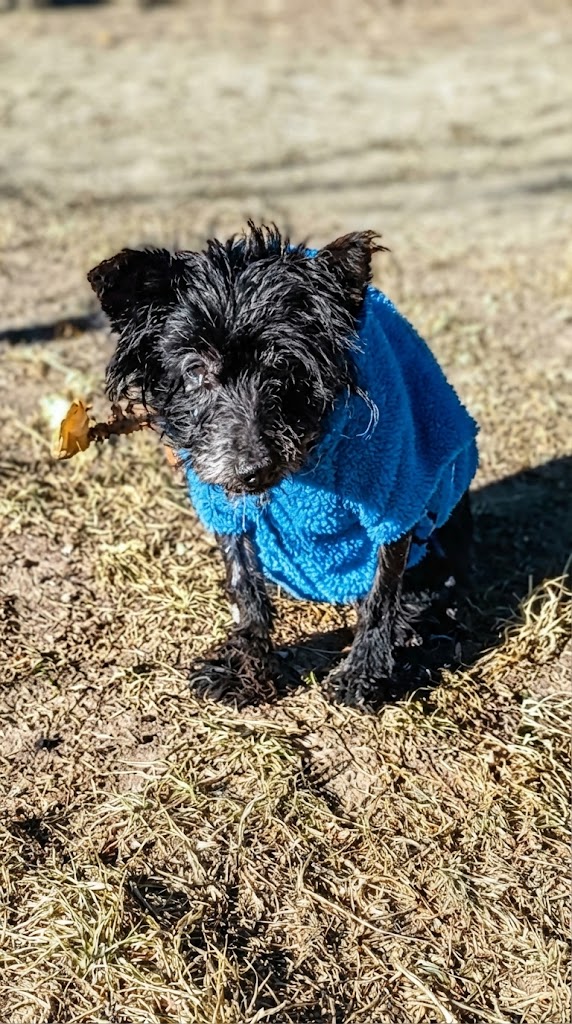
Some dogs arrive asking for attention.
Kuzya did the opposite.
When he was first discovered among the plants in a garden, the small elderly dog tried to get away. His coat was tangled into dense mats, his body looked exhausted, and even from a distance it was clear that he was struggling.
No one there knew who he was or how he had entered the property.
But the sound of his difficult breathing made one thing impossible to ignore: this was not simply a healthy dog who had wandered away from home.
He needed help.
A Frightened Stranger Among the Plants
Food was placed near him, but trust did not come easily.
Kuzya's fur was so overgrown and matted that his eyes were difficult to see clearly. Fleas and ticks were hidden throughout his coat, and his condition suggested that basic care had been missing for some time.
He did not greet the people who found him.
He ran.
That reaction said almost as much as his physical condition. Whatever had happened before he appeared in the garden remained unknown, but he did not seem comfortable around unfamiliar people.
There was no way to learn his full history simply by looking at him.
The priority was getting him somewhere he could be examined and cared for.
VIDEO: Nearly 17 Years Old and Left at a Gate — The Footage Revealed How Kuzya Arrived
The Examination Revealed Just How Fragile He Was
At the veterinary clinic, the scale of Kuzya's condition became clearer.
The veterinarian estimated that he was nearly 17 years old.
That number changed the way everything else was understood.
Kuzya was not just tired from a difficult day outside. He was an elderly dog whose body was dealing with several serious health problems at once.
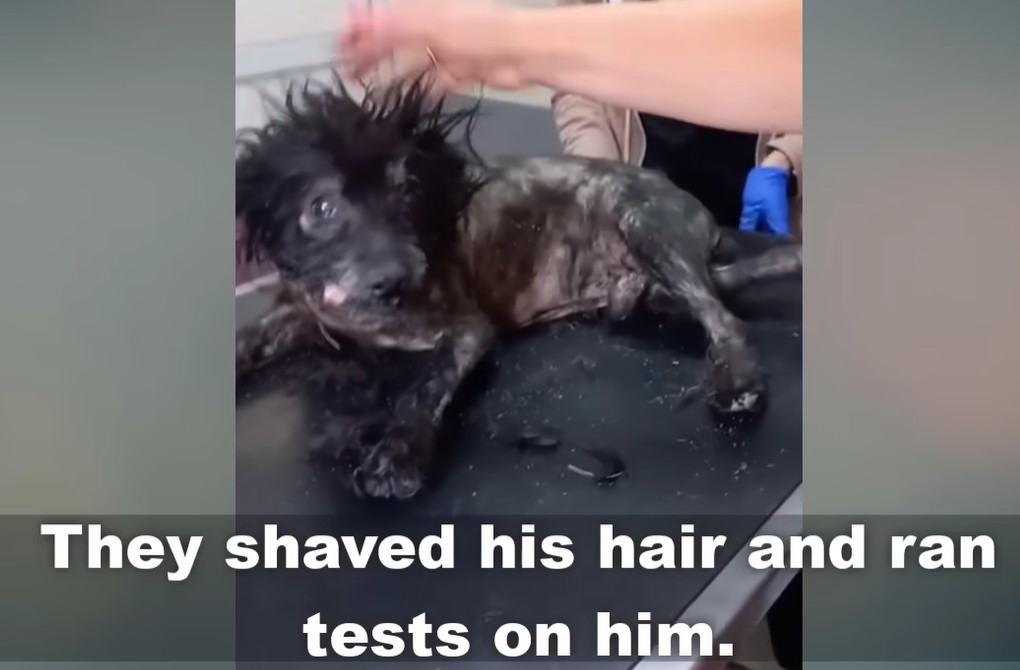
As the matted fur was carefully clipped away, his thin frame became visible.
His teeth were mostly gone.
His ears had chronic infections.
His heart was weak and unstable.
Tests also found tumors on his liver, while his lungs were having difficulty functioning normally.
For a dog of his age, every one of those problems mattered. Together, they painted the picture of an animal who needed patience and careful attention rather than another disruption.
The years could not simply be erased.
But his remaining days could still be made safer and more comfortable.
Then the Security Cameras Answered One Question
There was still something no one understood.
How had Kuzya entered the garden?
Security-camera footage provided an answer.
A woman wearing a mask and hat appeared near the gate. According to the footage described in the source, she did not knock, call for anyone, or leave a note explaining the situation.
She left the elderly dog there.
Kuzya stood near the gate before eventually finding his way through an opening and into the garden.
The video could show how he arrived.
It could not explain why.
There was no message describing his medical history. No explanation of how long he had been ill. No information about the life he had lived before that morning.
For a dog believed to be nearly 17 years old, that absence of answers was especially difficult to understand.
Someone must have known him before.
Someone had presumably seen him grow old.
Yet the people now caring for him were left to piece together his condition without the history that might have helped explain it.
Care Began With Something Simple
The first days did not bring a dramatic transformation.
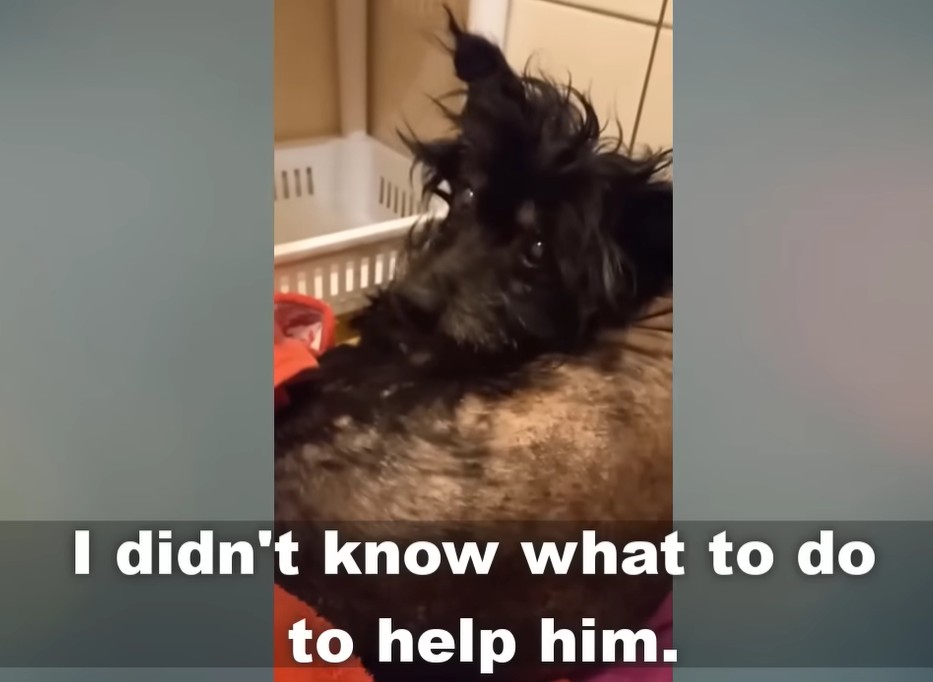
Kuzya remained quiet.
He spent long periods sitting by himself and showed little interest in food or activity. At night, he sometimes barked or moved in his sleep before waking disoriented.
Instead of expecting immediate affection from him, his caregivers focused on giving him time.
One of the first important steps was simply getting him clean.
They bathed him with warm water and handled his fragile body gently.
Years of dirt could not reveal everything Kuzya had experienced, but washing his coat helped remove some of the physical discomfort he had been carrying.
Slowly, his body began to relax.
He stopped trembling.
Then came a deep sigh.
It was a small moment, but with an elderly dog who had spent his first days keeping his distance, small moments mattered.
Nothing needed to be rushed.
He did not need to perform gratitude.
He did not need to become playful overnight.
He only needed enough quiet and consistency to discover that the people around him were not going to force him away.
On the Fourth Day, Kuzya Made the Choice Himself
Trust often appears in ways that are easy to miss.
For Kuzya, it happened on the fourth day.
Instead of retreating when someone came near, he slowly approached.
Then he rested his head against a hand.
And stayed.
There was no dramatic gesture.
Just an old dog allowing contact he had previously avoided.
For his caregivers, that was enough.
Kuzya's medical problems had not disappeared. His age had not changed. His heart was still fragile, and the tumors discovered during his examination were still part of his reality.
But something about his relationship with the people around him had begun to shift.
He was learning the rhythm of the house.
He began following the other dogs.
He became more comfortable with the surroundings that had once been completely unfamiliar.
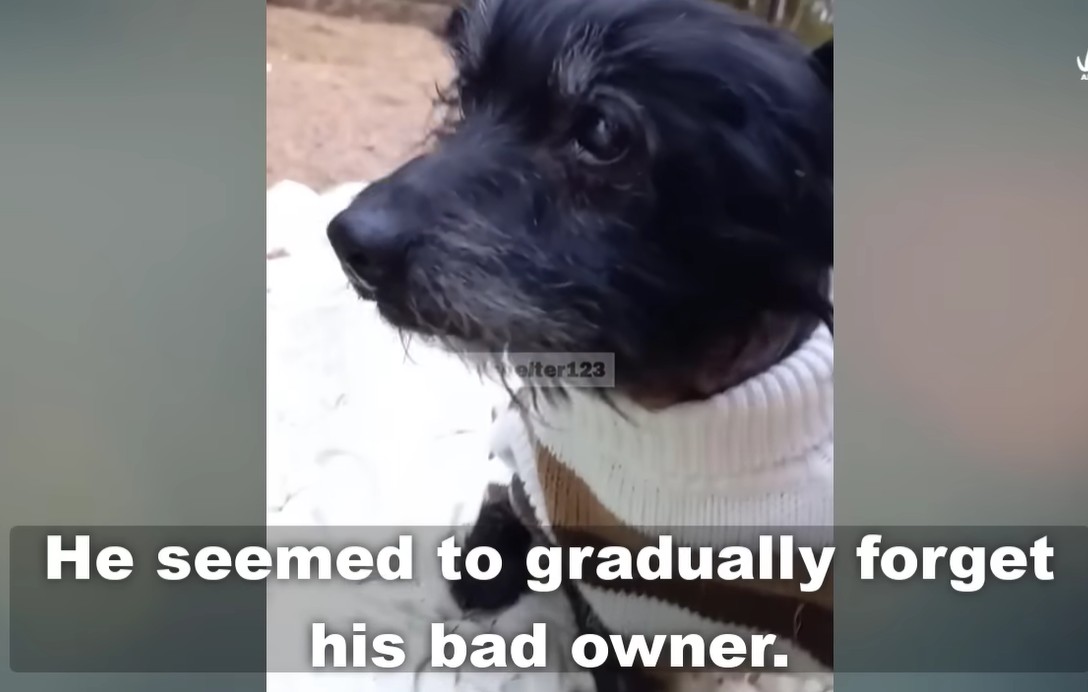
Day by day, the frightened stranger found in the garden started behaving less like a temporary visitor.
He was settling in.
They Decided He Would Not Have to Start Over Again
At first, finding Kuzya another family seemed possible.
Then his caregivers watched what was happening.
He was already elderly and medically fragile. He had only recently begun trusting the people around him. Another move would mean another unfamiliar home, another adjustment, and another group of strangers to understand.
After everything that had happened, they decided not to ask that of him.
Kuzya would stay.
The place where he had unexpectedly appeared became his home.
His caregivers reported that his liver tumors had not grown, though his heart remained fragile. His health therefore still required attention, and no one could change the reality of his age.
But his daily life had changed in a way that mattered just as much.
He had other dogs around him.
He had people who knew his condition.
He had a familiar place to sleep.
Most importantly, he would not be passed from one home to another during this final stage of his life.
Old Age Should Never Make a Dog Disposable
Kuzya's story is difficult because there are questions it cannot answer.
The security footage showed how he reached the gate, but not the many years that came before it.
We do not know exactly what his earlier life was like.
We do know what condition he was in when he was found.
Nearly 17 years old.
Severely matted.
Thin.
Living with chronic ear problems, a weak heart, liver tumors, and difficulty breathing.
And still capable of trusting someone again.
That may be the most meaningful part of his story.
The change did not come through a single extraordinary event.
It came through ordinary acts repeated consistently: food placed nearby, medical attention, warm water, gentle handling, a quiet home, and enough patience to let an old dog approach when he was ready.
Kuzya cannot get his younger years back.
His caregivers cannot erase the morning he was left outside their gate.
What they can give him is dignity now.
Today, he knows the people around him.
He follows the other dogs.
He rests in a home where his age is not treated as an inconvenience.
For a dog nearing the end of a very long life, perhaps that is the second chance that matters most.
Not becoming young again.
Not becoming perfectly healthy.
Simply waking up somewhere familiar and knowing that this time, he is staying.
Kuzya arrived at the garden as an unwanted stranger.
He remained as family.


