
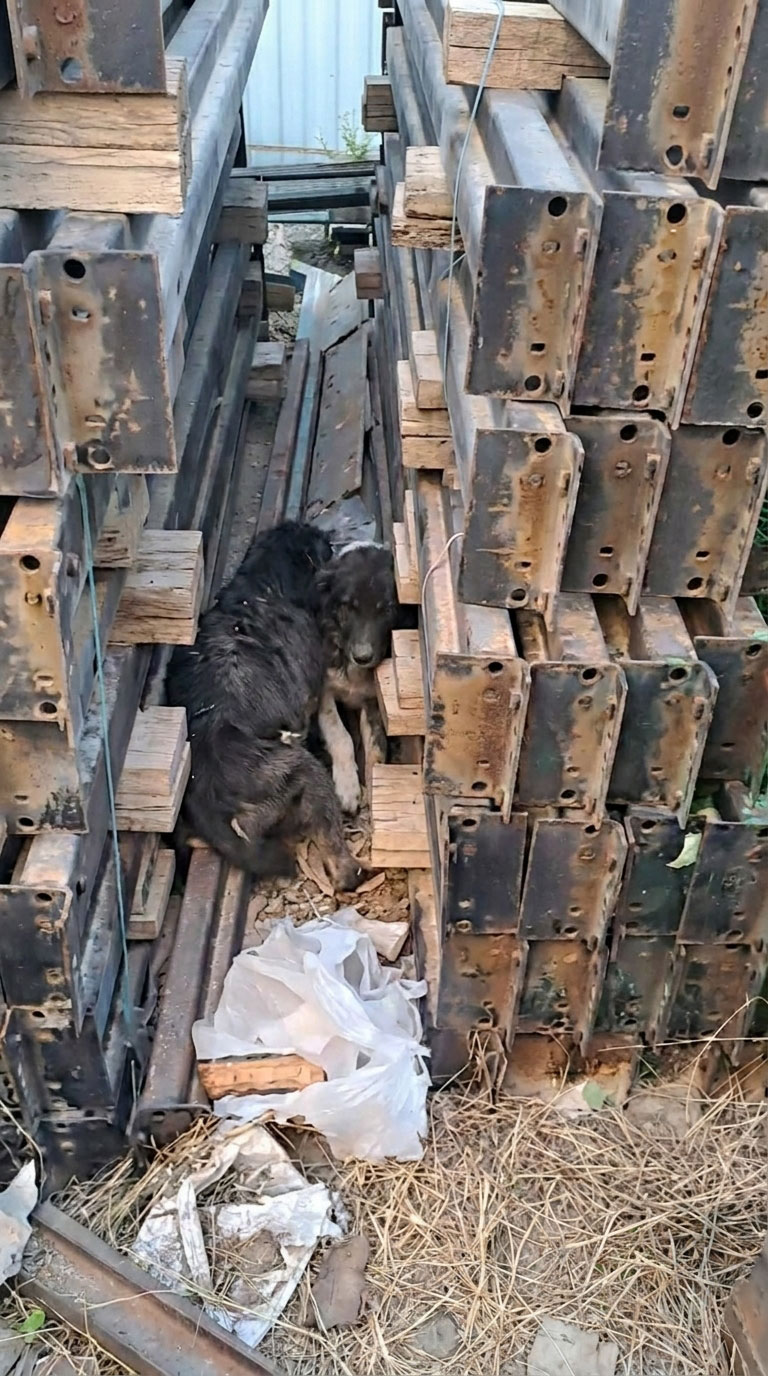
The collar was still around Anakin's neck, but the elderly Pit Bull had become so thin that it hung loosely against his body.
He was standing among discarded machinery and rusting metal in a Nevada junkyard, far from the comfortable home everyone had hoped he would enjoy.
His legs were weak. His movements were slow. The healthy senior dog who had once weighed approximately 65 pounds had dwindled to just 33.
And yet, somehow, he was still alive.
When rescuers finally reached Anakin, the condition of his body revealed how urgently he needed help. What they would later discover inside his stomach made his ordeal even more difficult to comprehend.
He had been swallowing rocks.
For a dog who had once been given the opportunity to join a family, it was a painful contrast to the life he had been promised.
But Anakin's story did not end among the abandoned machinery.
Someone had finally come looking for him.
A Second Chance That Was Supposed to Mean Safety
Before the junkyard, Anakin had been a senior shelter dog with a hopeful future.
He had entered The Animal Foundation weighing approximately 65 pounds. Although he was already an older Pit Bull, he was healthy enough to begin a new chapter.
Like many senior dogs waiting in shelters, Anakin needed something simple.
A place where he could rest.
Regular meals.
People who would care for him as he grew older.
The possibility seemed to become real when Anakin entered a foster-to-adopt arrangement.
Such placements offer a dog the opportunity to live with a potential adoptive family while everyone determines whether the arrangement will become permanent.
For Anakin, it appeared to be the beginning of the peaceful retirement he deserved.
The people who had cared about his future had reason to feel optimistic.
An older dog had been chosen.
A home was within reach.
And perhaps the uncertainty of shelter life would finally be behind him.
But the story took a troubling turn.
After Anakin was placed, communication stopped.
The updates that might have reassured those following his progress never arrived. Attempts to maintain contact brought no meaningful information about his condition.
Eventually, there was no clear sign of where the dog had gone or how he was doing.
The hopeful beginning had given way to unanswered questions.
For a senior dog, those questions carried particular weight. Older animals often depend heavily on consistent care, predictable routines, and people willing to recognize their changing needs.
Anakin had been given the chance to leave shelter life behind.
What happened afterward left him fighting simply to survive.
The Dog They Found Was Almost Unrecognizable
The next confirmed sighting of Anakin came under circumstances no one had anticipated.
Volunteers with the Vegas Pet Rescue Project received an urgent report about a severely underweight dog wandering through a junkyard in Nevada.
The location was filled with discarded materials and old machinery.
Somewhere among those surroundings was an animal in desperate need of assistance.
When volunteers arrived, they found an elderly Pit Bull in profoundly poor condition.
It was Anakin.
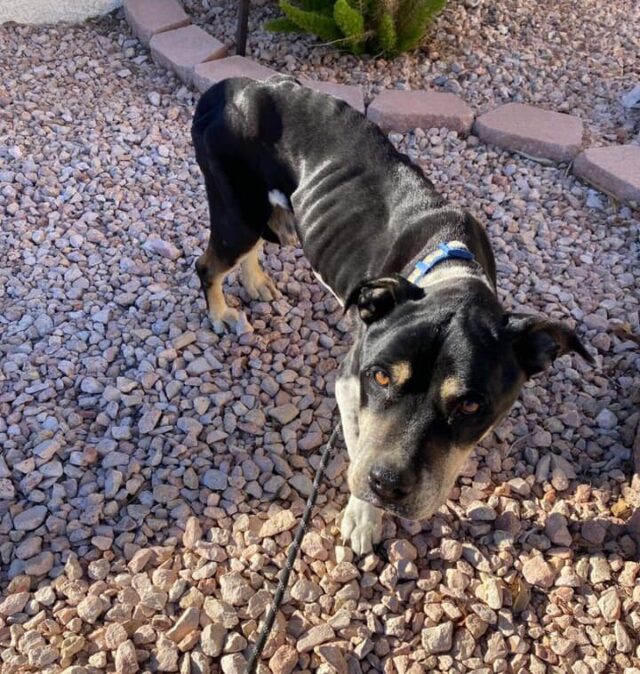
The difference between the dog who had entered the foster-to-adopt program and the one standing before them was staggering.
He had once weighed approximately 65 pounds.
Now he weighed only 33.
That meant he had lost nearly half his previous body weight.
His frame was painfully thin, and even the effort of walking appeared to drain what little energy he had left.
The collar still hanging around his neck made the discovery especially difficult to accept.
It suggested a connection to the life he had once known, even as his present condition showed how far he had fallen from safety.
The volunteers could see that Anakin needed immediate medical attention.
He was not simply an older dog who had become a little thin.
He was severely malnourished, physically exhausted, and in a condition that raised urgent concerns about his survival.
For Tina Hayes, one of the volunteers involved, the sight was deeply upsetting.
She expressed disbelief that a senior animal could have been allowed to deteriorate so severely.
Age alone should never mean that a dog becomes less deserving of attention.
If anything, Anakin's senior years made reliable care even more important.
He had already spent much of his life reaching this stage.
Those years should have brought gentleness and stability, not another struggle for survival.
Yet the important thing at that moment was not what anyone had expected his life to become.
It was that Anakin had finally been found.
People could now see how urgently he needed help.
And for the first time since his disappearance from contact, there was a chance to give him the care he had been missing.
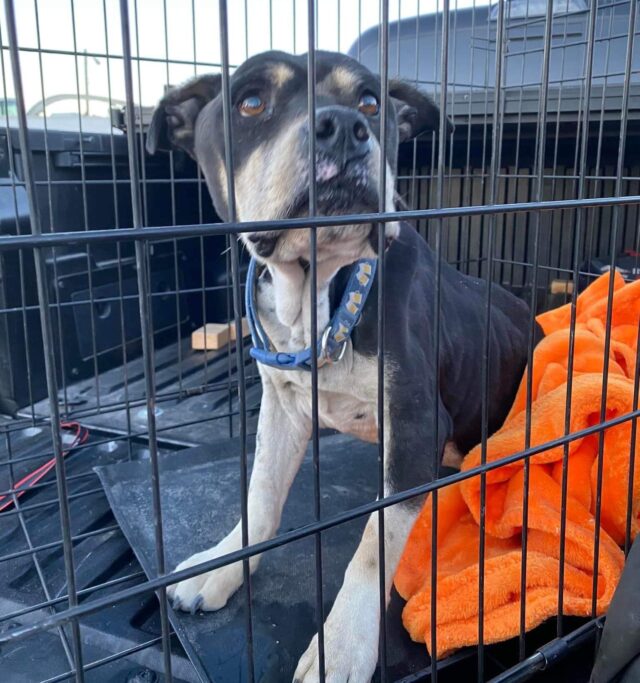
VIDEO: Senior Pit Bull Found Starving in a Nevada Junkyard After His Chance at a New Home Disappeared
An X-Ray Revealed How Desperately He Had Been Surviving
Anakin was taken to Spencer Springs Animal Hospital, where veterinary professionals began assessing his condition.
His severely reduced weight was already alarming.
But the examination revealed another concern.
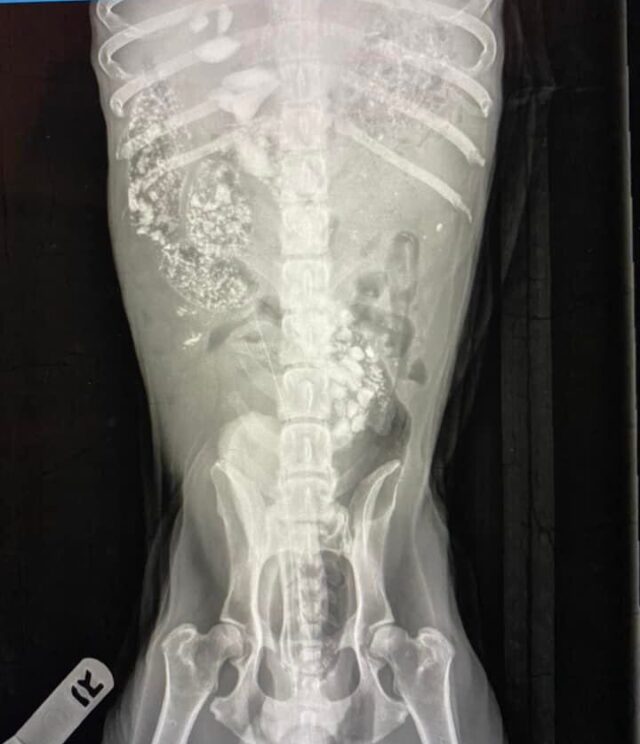
Inside Anakin's stomach were rocks and other debris.
The discovery helped explain just how desperate his search for something to eat had become.
According to the rescue account, Anakin had swallowed stones while trying to cope with extreme hunger.
The objects could not provide the nourishment his body needed.
They were not food.
Yet they had entered the stomach of a dog who had endured an extended period without adequate nutrition.
The finding created an additional medical concern.
Veterinarians needed to determine whether the foreign material could move safely through his digestive system without creating a dangerous blockage.
Anakin was already extremely weak. His recovery would require care that accounted for both his starvation and the material he had swallowed.
There was another painful discovery.
His teeth were heavily worn, with many damaged nearly to the gums.
The rescue account attributed this damage to prolonged chewing on rocks.
It was evidence of suffering that had extended beyond the immediate moment when volunteers found him.
His body carried signs of a much longer struggle.
During the veterinary examination, Anakin remained remarkably still.
He did not resist the people checking his fragile body.
He allowed the medical team to examine him without fighting their touch.
For some animals, quiet behavior can be a sign of comfort. For others, especially those facing severe physical exhaustion, it may reflect how little energy remains.
The rescuers saw Anakin's stillness as particularly heartbreaking.
Tina believed his subdued demeanor suggested a dog who had become deeply discouraged by everything he had experienced.
Of course, no one could know exactly what Anakin understood about his situation.
What was visible was the contrast between his condition and the care he should have received.
This senior dog had once been healthy enough to enter a new home.
Now veterinary professionals were working to help him recover from severe starvation.
The First Meals Had to Be Small
For Anakin, rescue was only the first step.
Being found meant he was no longer alone in the junkyard, but his body was not ready to return immediately to normal eating.
After an extended period of serious malnutrition, feeding had to be approached carefully.
The veterinary team began introducing measured portions of nutrient-rich food.
Rather than offering large meals, caregivers provided smaller amounts throughout the day and night.
The approach allowed Anakin to receive nourishment while his weakened body adjusted.
It was a gradual process.
Every portion mattered.
Every opportunity to eat was another step away from the hunger that had dominated his recent experience.
Meanwhile, veterinarians continued paying close attention to the rocks and debris inside his digestive system.
They needed to make sure the material could pass naturally without creating further complications.
These were not the dramatic moments people often imagine when they think about animal rescue.
There was no instant transformation.
No single meal could replace everything Anakin had lost.
His recovery depended on repeated acts of care and careful observation.
Food had to be provided.
His condition had to be monitored.
And his body needed time to respond.
For someone looking at Anakin's fragile appearance, the process might have seemed painfully slow.
But steady, cautious care was precisely what he needed.
For a dog who had been trying to survive on rocks and debris, receiving regular, appropriate meals represented an enormous change.
He no longer had to search through discarded material in an attempt to ease his hunger.
There were people responsible for making sure he was fed.
And they continued showing up.
Learning That Human Hands Could Be Gentle Again
Physical recovery was only part of Anakin's journey.
The rescue volunteers also noticed changes in his behavior as he spent time receiving consistent care.
At first, the elderly Pit Bull appeared withdrawn.
His condition had left him weak, and he showed little of the energy people might associate with a comfortable, confident dog.
But something gradually began to change.
The people caring for him approached with gentle voices and patient movements.
They brought food.
They provided soft blankets.
They offered affection without demanding an immediate response.
These simple gestures became part of Anakin's new routine.
For an animal who had spent an unknown period struggling without adequate care, regularity was important.
The same basic needs were met again and again.
He did not have to find his own food.
He did not have to wander through the junkyard.
He could rest while others looked after him.
Over time, his reactions began to soften.
According to the rescue account, Anakin stopped flinching whenever someone approached his kennel.
Instead, he began waiting for the familiar footsteps of the people who cared for him.
It was a small change, but a meaningful one.
An approaching person no longer prompted the same visible uncertainty.
A familiar presence had become associated with food, comfort, and gentle attention.
That kind of progress is difficult to measure with numbers.
A scale can show whether a dog is gaining weight.
A medical examination can track physical health.
But the moment an animal begins responding differently to kindness is often visible only through small gestures.
For Anakin, those gestures began accumulating.
He appeared more comfortable with the caregivers around him.
He accepted their attention.
And slowly, the exhausted dog who had arrived at the hospital began showing signs of renewed engagement with the world.
The Small Tail Wag That Meant So Much
Within days of receiving care, Anakin began gaining weight.
It was an encouraging development for a dog who had arrived in such a fragile state.
His strength also started returning.
The change did not erase the difficulties he had experienced, nor did it mean all his medical concerns had disappeared.
But it showed that his body was responding to the support he was receiving.
Then came another sign of progress.
Anakin wagged his tail.
Only faintly.
It was not a dramatic display of excitement.
There was no need for one.
For the people who had seen him standing weakly in the junkyard, even that small movement carried enormous meaning.
Here was a dog who had arrived so underweight that his collar hung loosely around his neck.
A dog whose stomach had contained stones instead of proper food.
A dog who had barely reacted as veterinarians examined him.
Now he was beginning to show a little more energy and interest in the people around him.
The change was quiet.
But it was real.
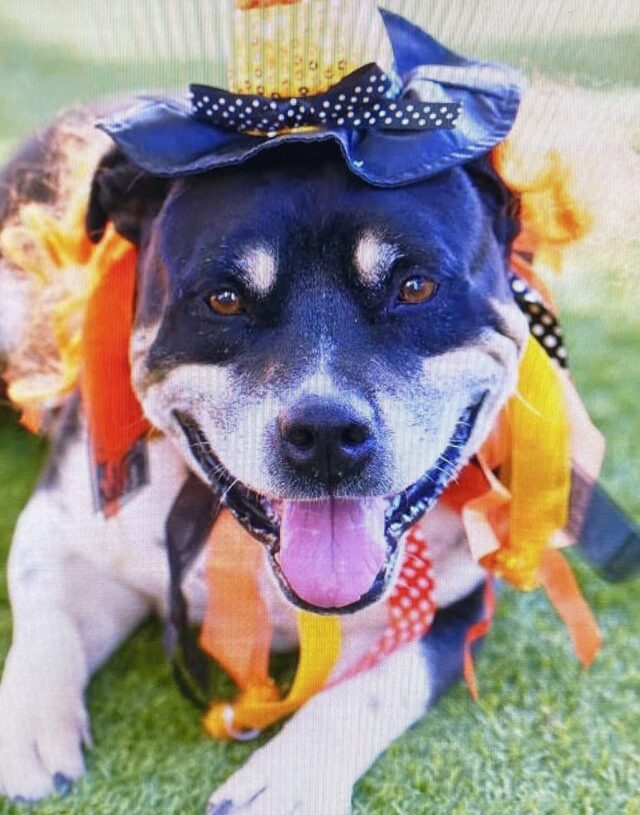
Recovery for an elderly dog is not simply about reaching a number on a scale.
Weight gain matters, especially after severe malnutrition, but comfort and quality of life matter too.
The ability to rest peacefully matters.
So does receiving regular meals without uncertainty about when the next one will arrive.
And so does becoming comfortable enough to welcome a gentle hand.
For Anakin, these ordinary experiences had taken on extraordinary importance.
The care he was receiving was helping him move away from the physical and emotional consequences of his ordeal.
He was no longer simply enduring each day.
He was beginning to recover.
A Peaceful Future Is What Anakin Deserves
Following Anakin's rescue, The Animal Foundation ended its connections with the people associated with his previous placement.
For those now involved in his care, however, the priority was his well-being.
There was no way to undo the time he had spent struggling.
His worn teeth could not be ignored.
Neither could the amount of weight he had lost or the dangerous objects discovered inside his stomach.
Those facts remained part of his history.
But they no longer had to define every moment of his life.
The latest account of Anakin's recovery described encouraging progress, including weight gain, returning strength, and a growing willingness to accept affection.
It did not establish that he had been adopted into a permanent new home.
His longer-term future was therefore still a story in progress.
What had changed was his immediate situation.
He had been rescued from the Nevada junkyard.
He had received veterinary treatment.
And people were now making sure his needs were met.
For a senior dog, that stability can mean everything.
Anakin did not need grand gestures to begin improving.
He needed patient medical care, regular nourishment, and people willing to recognize his vulnerability.
He needed gentleness at a time when his body had very little strength left.
And when that care arrived, he began responding.
His story is a reminder that finding a dog is not the same as completing a rescue.
The work continues through every careful meal, every examination, and every quiet moment spent helping an animal feel secure.
Anakin's road to recovery still deserves patience.
But his first steps have already shown something important.
A dog who had once been found wandering among junkyard debris, desperately underweight and surviving on things no animal should have to eat, was beginning to regain strength.
And the faint movement of his tail offered a glimpse of the life he might still enjoy.
Not a life of uncertainty.
Not a life spent searching for food among discarded objects.
Just the ordinary comforts that every senior dog deserves.
A full bowl.
A soft place to rest.
And someone who stays.


