
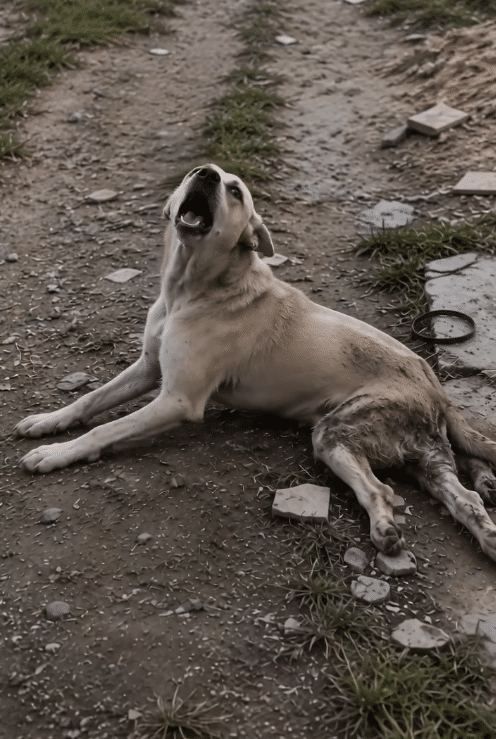
Hana's tiny legs began to shake as she tried to hold herself upright on the snowy ground.
For a moment, the little puppy managed to stand.
Then her balance slipped, and she sank back down.
It would have been easy to stop trying. Even the simplest movement demanded more strength than her recovering body could comfortably give.
But Hana wasn't finished.
She gathered herself and made another attempt.
To someone unfamiliar with her journey, those uncertain movements might have seemed like an ordinary puppy learning to use her legs.
For the people who had cared for her, they represented something much greater.
Only weeks earlier, Hana had been found in a cardboard box, barely able to move after suffering serious injuries.
Whether she would ever walk normally again had been an unanswered question.
Now, watching her struggle to stand was a reminder of just how far she had already come.
And none of it would have been possible without the people who refused to leave her behind.
The Small Puppy Nobody Could Find
Hana's rescue began with an urgent message shared through social media.
A local resident had reported a young stray puppy who appeared to have been attacked by another dog.
The message reached Dublin Shelter, prompting rescuers to search for the injured animal.
They knew the puppy might need immediate help.
But finding her proved more difficult than expected.
When the rescuers reached the location mentioned in the report, Hana was nowhere to be seen.
They checked the surrounding streets and searched nearby areas where she might have taken shelter.
Eventually, their search led them toward a garbage dump.
There, inside an old cardboard box, they discovered the little puppy.
Hana was curled into herself.
She was extremely weak, and her movements were almost nonexistent.
The cardboard offered little protection against the freezing conditions around her. According to the account, she appeared to have spent the night exposed to the cold while already suffering from her injuries.
Her breathing was difficult, and the faint sounds she made suggested considerable discomfort.
She was conscious, but there was little she could do to help herself.
A puppy that should have been exploring the world was struggling just to remain stable.
The rescuers had no way of knowing how much longer she could endure those conditions.
They wrapped Hana in warm blankets and carefully carried her away from the garbage dump.
There was no attempt to make her stand.
No expectation that she should respond immediately.
At that moment, the priority was simple.
Get her somewhere safe.
Get her medical attention.
Give her a chance.
The Injuries That Put Her Future in Doubt
Hana was brought to a veterinary hospital, where her condition demanded urgent attention.
The examinations revealed serious injuries to her head.
Veterinarians identified significant trauma and swelling affecting the tissues surrounding her brain. She also had several bite injuries around her head.
Although her jaw had not been broken, the neurological effects of the trauma raised concerns about her future recovery.
One particular uncertainty involved whether one of her eyes would regain normal function.
Hana was still aware of her surroundings, but her responses were severely limited.
Her body was also experiencing shock.
The veterinary team first worked to stabilize her condition before performing surgery to address the damage to her skull.
It was an important intervention.
But successful surgery did not mean the difficult part was over.
The team still could not know how much neurological function Hana might regain.
Would she be able to hold her head up?
Would she regain her coordination?
Could she eventually walk without assistance?
For such a young puppy, these were enormous uncertainties.
There was no immediate answer.
Only careful treatment, constant observation, and the possibility that her body might gradually begin to recover.
What made Hana's situation especially moving was the contrast between her age and the challenges ahead.
She was at a stage of life when walking, playing, and exploring should have been natural activities.
Instead, she faced the difficult task of recovering abilities that most healthy puppies never have to think about.
The hospital staff could provide treatment.
But recovery would also require time.
And Hana needed a great deal of it.
VIDEO: Found Helpless After a Serious Attack, Hana Begins Her Remarkable Fight to Walk Again
The Quiet Hours When Every Small Response Mattered
Following surgery, Hana remained under close veterinary supervision.
The first two days were especially uncertain.
Her caregivers monitored her breathing, temperature, and neurological responses, paying attention to changes that might indicate whether her condition was improving or worsening.
For Hana, recovery did not begin with a sudden burst of energy.
It began quietly.
Sometimes, she opened her eyes.
Sometimes, she rested beneath her blankets, showing very little movement.
When someone gently touched her head, she occasionally appeared to relax.
These were small responses.
Yet after such serious trauma, even subtle changes mattered.
A moment of awareness offered encouragement.
A calm period without deterioration brought relief.
An ordinary blink could feel meaningful when her ability to respond had been so limited.
Throughout the following days, Hana continued receiving medical treatment and supportive care.
She needed medication, fluids, close observation, and sufficient rest.
Her caregivers had to balance the urgency of her condition with the patience required for healing.
There was no shortcut.
Her brain and body had experienced significant trauma, and no one could simply demand that they recover faster.
That uncertainty made the early days particularly difficult.
A puppy can look peaceful beneath a blanket while still facing complicated medical challenges.
And when neurological injuries are involved, progress may be gradual and unpredictable.
Hana's caregivers had to appreciate the improvements they could observe without assuming that every difficulty had been resolved.
For the moment, keeping her stable was an achievement in itself.
Then, slowly, more encouraging changes appeared.
A Little Strength Returned, One Day at a Time
As treatment continued, Hana began showing greater awareness.
She was more responsive to the people around her.
Her body also started benefiting from the food and medical support she received.
Eating was not easy at first.
Because she remained weak, her caregivers helped her take small amounts of nourishment.
Every feeding required attention and patience.
There was no need to rush her.
The important thing was that Hana could gradually receive the energy her recovering body needed.
In time, another change became noticeable.
She could hold her head up for longer periods.
That movement might seem insignificant for a healthy dog.
For Hana, it was a meaningful step forward.
Her eyes also began following the familiar people moving around her.
The puppy who had initially been almost motionless was becoming more engaged with her surroundings.
She appeared increasingly responsive to the voices of those caring for her.
These improvements did not happen all at once.
There was no single morning when every difficulty disappeared.
Instead, her progress emerged through small, observable changes.
A slightly stronger response.
A little more interest in food.
A head held upright for longer than before.
More awareness of the people nearby.
Together, these signs suggested that Hana was moving in the right direction.
And after the uncertainty of her first days in the hospital, that was deeply encouraging.
Still, medical improvement was only one part of the journey.
Hana needed an environment where she could continue recovering without unnecessary stress.
Ten days after reaching the clinic, she was finally ready to leave intensive care.
A quieter chapter of her life was about to begin.
A Warm Home, Gentle Hands, and a Different Kind of Healing
Hana was moved from the hospital into a peaceful home where her recovery could continue.
Instead of spending her days surrounded by medical equipment, she now had soft places to rest and warm blankets to keep her comfortable.
The people caring for her understood that she was not yet a healthy, energetic puppy.
She still required patience.
Her strength had not fully returned.
And although the immediate medical crisis had eased enough for her to leave intensive care, there was still considerable recovery ahead.
But the change in her surroundings mattered.
Hana could rest in a calmer environment.
She could become familiar with the voices and gentle movements of her caregivers.
And she could begin experiencing ordinary moments of safety.
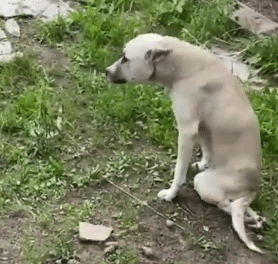
Over time, her curiosity returned.
She watched the people around her more closely.
When familiar hands approached, she sometimes leaned toward them.
These small gestures suggested that Hana was becoming increasingly comfortable with the care she received.
Her experience had begun with fear, pain, and helplessness.
Now, she was learning what consistent kindness felt like.
A gentle touch no longer had to be associated with discomfort.
A nearby person could mean warmth, food, and reassurance.
The people around her did not need to demand affection or immediate trust.
They could simply continue caring for her.
For an injured puppy, that dependable routine was an important part of creating a supportive recovery environment.
But even as Hana became more comfortable, one major challenge remained.
Her body was still struggling with movement.
And learning to walk again would require more than rest.
Learning to Stand Became Her Greatest Challenge
After leaving intensive care, Hana began rehabilitation to help improve her strength, coordination, and balance.
The goal was not to make her move quickly.
It was to help her regain control over movements that had become difficult after her injuries.
In the beginning, even standing was exhausting.
When Hana tried to support herself, her legs trembled.
Her balance could disappear within seconds.
Sometimes, she could not remain upright long enough to make meaningful progress.
Her therapists responded with careful support.
They helped position her body and guided her paws so she could practice standing in a safer, more controlled way.
Then they encouraged her to try again.
Each exercise required attention to what Hana could manage.
There was little value in pushing her beyond her strength.
Instead, rehabilitation became a process of repeated, manageable attempts.
For Hana, the challenge involved several things happening together.
Her legs needed to become stronger.
Her coordination needed to improve.
Her body needed to relearn how to maintain balance while shifting weight from one paw to another.
Something that appears effortless in a healthy dog had become a complex series of movements for her.
Progress was measured in small victories.
A few extra seconds standing.
A steadier posture.
A movement completed with a little less support.
None of these moments would look especially dramatic from the outside.
But they were helping build the foundation for something Hana had not been able to do since her ordeal.
Walking.
And despite the difficulty, she continued trying.
Day after day, her rehabilitation carried on.
Sometimes, the improvement was small.
Sometimes, her body still struggled.
But the effort was beginning to make a visible difference.
The puppy who once could barely move was gradually becoming capable of supporting herself again.
The next milestone would be one her caregivers had hoped for from the beginning.
The First Steps That Changed Everything
About a month after the attack, Hana reached a remarkable point in her recovery.
She was able to stand.
It was not the effortless movement of a completely healthy puppy.
She positioned herself cautiously near a wall, using it for additional support.
Her legs were still unsteady.
She had to pause and find her balance.
For a moment, remaining upright was an accomplishment all by itself.
Then Hana began to move.
One paw advanced.
Her body shifted.
Another paw followed.
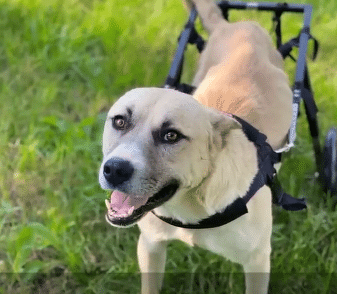
Slowly, she took several steps.
They were careful and uneven, and she still had difficulty maintaining her balance.
But those movements represented something extraordinary.
Hana was walking under her own strength.
The importance of that moment was difficult to separate from everything that had come before it.
The cardboard box near the garbage dump.
The urgent journey to the veterinary hospital.
The serious head injuries and surgery.
The uncertain days when even her smallest responses were watched closely.
The careful feeding.
The gradual return of awareness.
The rehabilitation exercises that asked her to attempt the same difficult movements again and again.
All of those experiences had led to this moment.
Hana had not suddenly become completely recovered.
She still needed time to grow stronger and steadier.
But an ability once surrounded by uncertainty was returning.
For the people who had followed her recovery, those steps offered a visible sign of how much she had overcome.
And for Hana, they opened the possibility of a more active life.
It is easy to overlook the importance of ordinary movement until it becomes difficult.
Standing beside a wall.
Shifting weight between paws.
Taking a few steps across the ground.
For most dogs, these actions happen without any special effort.
For Hana, each one had become a milestone worth recognizing.
A Future Built From Small Acts of Kindness
Hana's journey did not end the moment she began walking.
Her recovery was still ongoing, and she had more progress to make.
She remained a young dog who had experienced a serious medical emergency and needed continued patience as her strength and coordination improved.
But her circumstances had changed in ways that mattered deeply.
She was no longer lying helplessly in a cold cardboard box.
She was receiving care in a warm environment.
She was growing more responsive and curious.
And she had begun moving forward on her own paws.
The story also reflects how many different acts of kindness can contribute to an animal's recovery.
A local resident noticed that an injured puppy needed help and shared the information.
Dublin Shelter responded and searched until Hana was found.
Rescuers protected her from the cold and brought her to veterinary care.
Medical professionals treated her injuries and monitored her through the uncertain early period.
Caregivers provided food, comfort, and reassurance.
Rehabilitation helped her slowly regain the ability to stand and walk.
No single moment accomplished everything.
It took a series of decisions, treatments, and patient efforts to give Hana the chance she needed.
That is one of the most meaningful parts of her experience.
Rescue is not always completed when an animal reaches a hospital or shelter.
Sometimes, the most important work continues quietly afterward.
It happens during careful feeding.
During long periods of rest.
During exercises that seem to produce only the smallest improvements.
During the gentle care that helps a frightened animal become comfortable again.
Hana's story reminds us that recovery does not have to be fast to be meaningful.
A puppy who can hold her head up today may have been unable to do so yesterday.
A few seconds of standing may represent days of effort.
And a handful of uncertain steps can mark the beginning of a completely different future.
There is no need to pretend that Hana's road was easy or that every challenge had disappeared.
Her progress is remarkable precisely because the difficulties were real.
She endured a serious injury, received urgent treatment, and gradually regained abilities that had once seemed uncertain.
Now, with continued care, she has the opportunity to keep improving.
The image that stays with us is not only the little puppy struggling in the snow.
It is the same puppy trying once more after losing her balance.
Not walking perfectly.
Not moving quickly.
Just finding enough strength to take another step.
Sometimes, hope is not a sudden transformation.
Sometimes, it is a tiny dog standing on trembling legs, moving one paw forward, and discovering that she can still go a little farther.


