
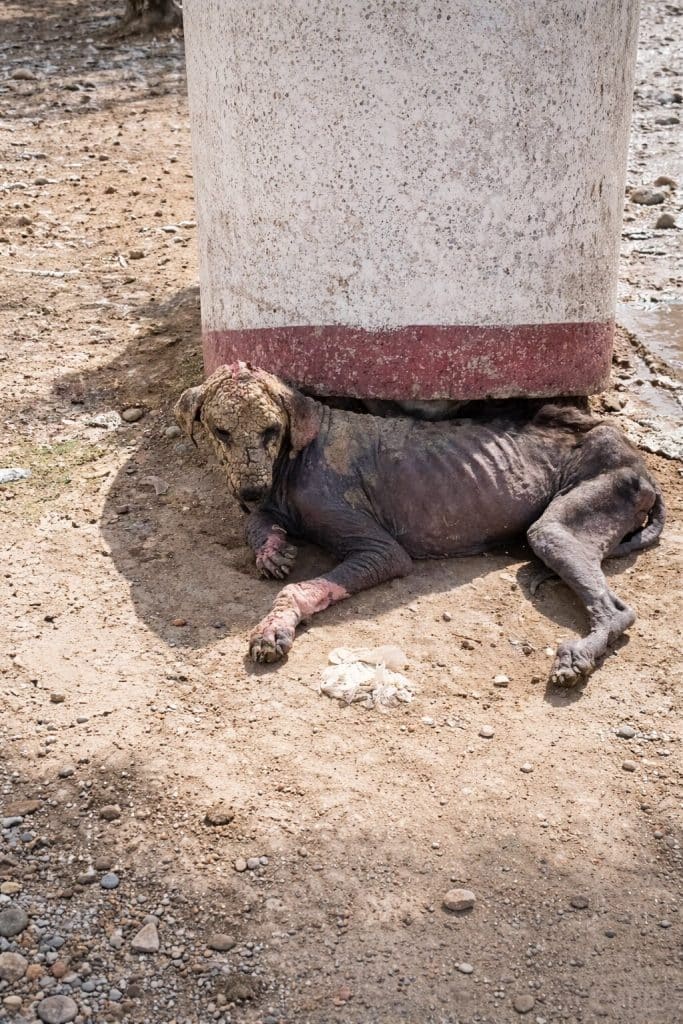
Cars came and went at the gas station. People stopped to refuel, walked past the building, and continued with their day.
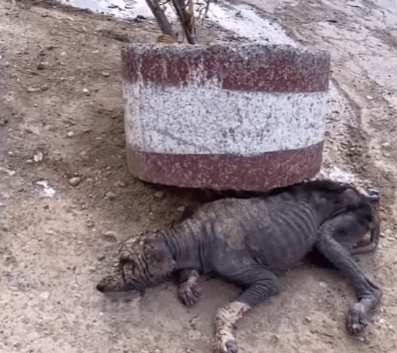
Beside all that ordinary activity lay a dog who could barely help herself.
Her body was painfully thin. A long-neglected skin condition had changed her appearance so severely that strangers hesitated to approach. She was visible to everyone, yet somehow remained alone.
The dog would later be named Nejat.
For a long time, she stayed near the station as life moved around her. There was no quiet hiding place separating her from the people who passed. Her suffering was right there, where anyone could see it.
But noticing an animal in distress and deciding to help are very different things.
Nejat needed someone willing to look beyond her condition.
Eventually, someone did.
The Dog Everyone Saw but Few Would Approach
Nejat's situation was especially painful because she wasn't difficult to find.
Drivers arrived at the roadside gas station throughout the day. Customers came and went. Employees knew she was there.
Still, the weak dog remained without the help she needed.
Her skin had been affected by an illness that had gone untreated for months. Much of her body showed visible damage, and her thin frame suggested that she had struggled for a considerable time.
For people unfamiliar with her condition, her appearance was unsettling.
Some were afraid to come close. Others may have hoped that someone with more experience would eventually intervene.
Concern alone, however, could not change Nejat's circumstances.
Even efforts to find assistance did not immediately produce a solution. Her condition was serious, and caring for her would require far more than simply moving her somewhere else.
She needed treatment.
She needed a safe place to recover.
Above all, she needed people prepared to remain beside her through an uncertain and demanding process.
As time passed, Nejat grew increasingly weak. She was no longer an animal who could easily move away in search of a better place.
Her body had very little strength left.
Yet she was still alive.
And while people continued their routines around the gas station, her opportunity for a different future had not completely disappeared.
The Moment Someone Finally Came Close
When rescuers reached the gas station, Nejat's condition made the urgency of the situation clear.
She did not rush toward them.
She did not bark or attempt to escape.
Instead, she remained remarkably still.
Her exhaustion seemed to have taken away the energy normally needed for even a fearful reaction.
The rescuers approached carefully and lifted her away from the place where she had spent so much time alone.
It was a quiet moment.
There was no dramatic struggle or sudden display of happiness. Nejat was simply too weak for that.
But the meaning of the moment was enormous.
For the first time in a long while, someone was doing more than looking at her.
Someone was taking responsibility for her safety.
Even the first efforts to give her water required care. Her rescuers offered small amounts patiently, allowing her weakened body to respond without being rushed.
Small sips.
Gentle movements.
Time to rest.
At that stage, no one could expect an immediate transformation. Getting Nejat away from the gas station was only the beginning.
The next challenge was helping her recover from the condition that had left her so vulnerable.
And that would demand patience long after the excitement of the initial rescue had passed.
A Safe Home Became the Beginning of Her Recovery
Nejat needed ongoing medical attention, but arranging a suitable place for her extended recovery was not straightforward.
Because of her condition, a long stay at a veterinary clinic was not considered the best arrangement.
Her rescuers made an important decision.
They brought her into their home.
There, Nejat could receive the daily attention she needed while recovering in a more stable environment.
The work was repetitive and careful.
Her damaged skin needed regular cleaning. Medication had to be applied consistently. Nutritious food and fresh water became essential parts of her care.
Rest and warmth mattered too.
These were not dramatic treatments that could produce visible changes overnight. Her body had endured months of neglect, and the effects could not simply disappear because she was finally somewhere safe.
During the earliest period, progress was difficult to see.
The same routines continued.
The same careful attention was necessary.
For Nejat, however, those ordinary acts of care represented an entirely new experience.
The people around her did not disappear after the first day.
They came back to help her again.
And again.
The rescue had given Nejat a chance to survive. Their continued commitment would give her a chance to heal.
VIDEO: Nejat Was Too Weak to Leave the Gas Station — Watch the Rescue That Gave Her a Second Chance
Healing Began With the Smallest Changes
Recovery did not arrive in a single remarkable moment.
It emerged gradually through the daily work of people who refused to give up on Nejat.
Her rescuers continued cleaning and treating her damaged skin. They ensured she received nourishment, rest, and attention.
At first, the improvements were subtle.
She appeared more comfortable while resting.
Her exhausted expression slowly began to change.
Her body showed signs of regaining some of the strength that illness and prolonged neglect had taken away.
Each of these developments was encouraging, but the process still required patience.
Skin affected by serious, long-standing disease does not return to health immediately.
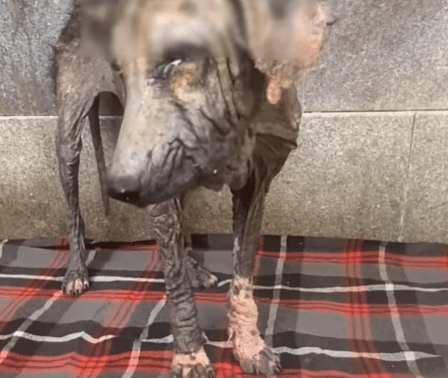
For Nejat, the damaged layers gradually began to loosen. Beneath them, healthier skin became visible.
It was an important sign that the care she was receiving was making a difference.
Still, recovery was not only about how her skin looked.
Her rescuers needed to see whether Nejat could become stronger, move comfortably, and begin participating in ordinary life again.
Around the third week, they witnessed a particularly meaningful improvement.
Nejat managed to stand.
Then she began walking.
Her first steps were careful and limited. She was not suddenly full of energy, and she still needed continued care.
But she was moving on her own.
For an animal who had once been so weak that she barely responded when rescuers approached, that change was significant.
It showed that her strength was returning.
The daily treatments, regular meals, and consistent care were no longer producing only subtle changes.
Nejat could now demonstrate her progress through movement.
And with each improvement, the future that once seemed uncertain became a little more hopeful.
The Quiet Work of Rebuilding Trust
There was another part of Nejat's recovery that could not be measured by the condition of her skin or the distance she could walk.
She had to become comfortable around people.
At the gas station, human activity had surrounded her without providing the help she desperately needed.
After her rescue, that experience began to change.
Her caregivers did not demand affection from her.
They concentrated on meeting her needs and allowing her to become familiar with their presence.
Food arrived regularly.
Treatment continued.
Their voices became part of her daily surroundings.
Hands that approached her now brought care rather than another moment of uncertainty.
Nejat did not become an openly trusting dog all at once.
Her changing behavior was gradual.
She began appearing calmer during treatment. Her expression softened, and she showed more interest in the people nearby.
Instead of watching every approach with uncertainty, she slowly became more accepting of gentle contact.
These changes were easy to overlook compared with the visible improvement in her skin.
But they mattered just as much.
A dog can receive medicine and food while still feeling uncomfortable around people. Physical safety does not always lead immediately to emotional security.
For Nejat, trust appeared to grow from consistency.
Her caregivers offered attention without forcing a response.
They allowed her to rest peacefully.
They continued helping her even when progress seemed slow.
Over time, she became more relaxed in their company.
A comfortable nap, a calmer expression, or an accepting glance might seem unremarkable in a healthy family dog.
For Nejat, these were meaningful signs of how much her circumstances had changed.
She was learning through experience that people could provide comfort.
And as her strength returned, she had more opportunities to express that growing confidence.
Two Months Later, the Change Was Remarkable
By approximately two months after her rescue, Nejat looked very different from the dog who had lain beside the gas station.
Her body was stronger.
Her skin had improved considerably.
New fur was growing in areas that had previously been affected by disease.
The change was visible, but it also showed how much patient work had taken place behind the scenes.
There had been no instant solution.
Her recovery was the result of consistent treatment and care repeated over many weeks.
The same dog who had once been too exhausted to move freely now showed more confidence in her surroundings.
Her movements became easier.
Her eyes appeared brighter.
She seemed increasingly comfortable with the people who had helped her.
Perhaps the most striking difference was how her appearance had changed.
At the gas station, her condition had caused strangers to keep their distance. Now, as healthy fur returned, the physical signs that had made people hesitant were gradually disappearing.
But Nejat's worth had never depended on the condition of her coat.
She deserved kindness when she was weak and visibly ill just as much as she did once she began to recover.
That was what her rescuers had recognized from the beginning.
They had cared for her before there was any guarantee of a happy outcome.
The healthier, more confident dog emerging from those difficult months was a reflection of their commitment.
Months of Care Left Only a Small Reminder
Five to six months after the rescue, Nejat's transformation was close to complete.
The dog who once struggled to move had regained her mobility and confidence.
Her coat had grown thick and healthy.
The serious skin problems that had defined her appearance at the gas station were no longer the first thing anyone would notice.
Only a small mark remained as a reminder of what she had endured.
It was a quiet detail in an otherwise remarkable recovery.
For her rescuers, those months represented much more than a before-and-after change in appearance.
They represented countless ordinary acts of responsibility.
Cleaning her skin even when progress was slow.
Applying medication again and again.
Making sure she received enough nourishment.
Giving her the time and space needed to recover.
There had been no shortcut through those months.
Nejat's improvement required both appropriate treatment and the willingness to keep providing it.
By this stage, she was no longer simply a weakened dog receiving emergency help.
She had become a healthy companion capable of enjoying a safer and more comfortable life.
Still, one important question remained.
Where would she belong in the years ahead?
The Family Who Gave Nejat a Place to Belong
The final chapter of Nejat's rescue brought another welcome change.
A family chose to adopt her.
After months of treatment and recovery, she was ready to move into a permanent home.
It was a moment that gave her journey a particularly meaningful ending.
Nejat had once been surrounded by people without truly being cared for.
Now, people were choosing to make her part of their lives.
The final images of her story showed her traveling in a car.
It was not her first journey by vehicle since the rescue.
The earlier trip had taken her away from the gas station and toward the care she urgently needed.
This journey was different.
She was now traveling toward a home where she would be welcomed as a family companion.
There was no longer a need to measure every day by the difficulty of her condition or the next small sign of improvement.
She could begin an ordinary life.
One with familiar people, a secure place to rest, and the companionship that every dog deserves.
Her adoption was not simply an additional happy event after recovery.
It completed the long process of moving from danger and neglect toward stability and belonging.
The rescuers had helped Nejat regain her health.
Her new family offered her somewhere to build a future.
And the dog who had once remained unnoticed beside a gas station finally had people who wanted her close.
Why Nejat's Journey Matters
There is something especially memorable about a rescue that begins in a busy, familiar place.
Nejat was not hidden far away from human activity.
She was beside a gas station where people passed regularly.
Her condition was visible, and her need for help was serious.
Yet assistance was difficult to secure.
Her story shows how easily an animal's appearance can become a barrier to receiving compassion.
A sick dog may look frightening or difficult to approach. Its condition may demand resources and patience that not everyone can provide.
But those challenges do not make its life less valuable.
In Nejat's case, the turning point came when rescuers were prepared to do more than recognize the problem.
They acted.
Then they continued acting, long after Nejat had been removed from danger.
Their care was not defined by one emotional rescue moment.
It was demonstrated through the daily routines that followed.
Through the first cautious attempts to give her water.
Through weeks of skin treatment.
Through the moment she could walk independently.
Through the gradual return of her coat and confidence.
And finally, through the opportunity to join a family.
Nejat's recovery could not have happened without that sustained effort.
Her journey also offers a reminder for anyone who encounters an animal in visible distress: help does not always require approaching an unfamiliar or seriously ill dog alone. Contacting experienced rescuers or appropriate animal welfare services can be an important first step.
What matters is recognizing that an animal in need deserves a responsible response.
Nejat went from being a dog many people avoided to a companion welcomed into a home.
Her skin healed.
Her strength returned.
Her trust grew.
And her future changed.
The same dog who once lay helpless beside the gas station eventually traveled away in a car, not as an unwanted stray, but as a beloved new member of a family.
All of that became possible because someone finally chose to help.
And because, after making that choice, they stayed.


