
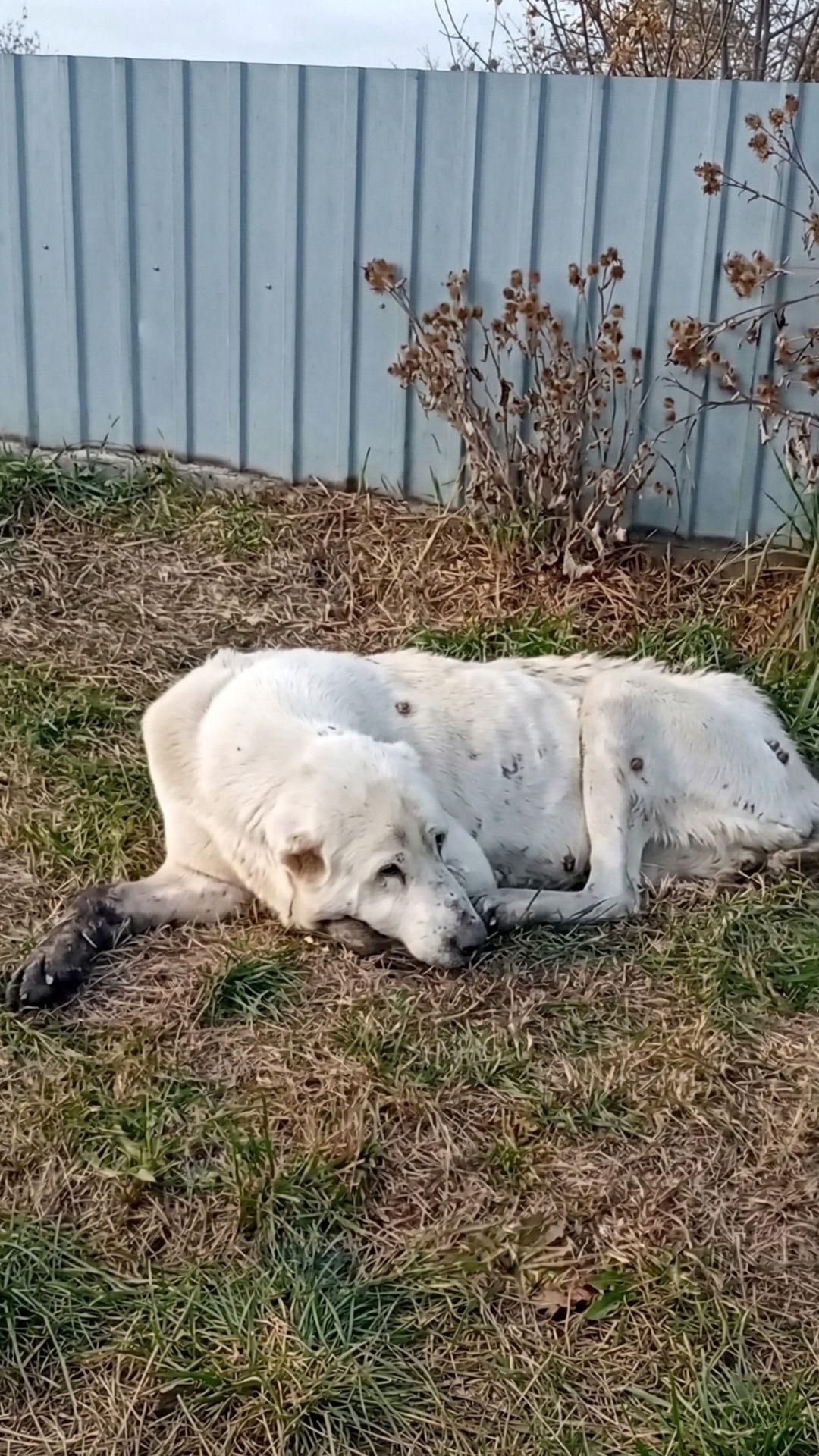
Snow barely reacted when the rescuers approached her.
She was lying on the ground, painfully thin and almost completely motionless. Her eyes remained partly open, but there was little response to the people who had finally come to help.
No barking.
No attempt to get away.
Not even the nervous movements rescuers often see when approaching a frightened animal.
The dog who would come to be known as Snow seemed to have almost nothing left to give.
Her body was severely weakened, and the people who found her could see that she needed help urgently. What they could not yet know was that her condition was far more serious than her appearance suggested.
Within a short time, Snow would be facing a dangerous medical crisis.
And the first reason for hope would come from something almost invisible.
A small change in a blood test.
The Dog Who No Longer Tried to Run
Many rescued dogs respond to unfamiliar people with fear.
Some pull away from approaching hands. Others tremble, bark, or try to protect themselves because they have no reason to believe that a stranger means well.
Snow's reaction was different.
She barely moved.
Her thin body remained against the ground as the rescuers prepared to take her somewhere safe. Even the careful placement of a protective muzzle brought no visible struggle.
She simply allowed the process to happen.
That stillness was deeply concerning.
It would have been comforting to interpret her calm behavior as immediate trust. But Snow was in no condition to offer much resistance. Her weakness was obvious, and her lack of response suggested that she had very little energy available.
Whatever circumstances had brought her to this point, she needed more than food and a place to rest.
She needed medical attention.
When the rescuers lifted her into their vehicle, Snow did not try to escape or reposition herself. She remained quiet as they began the journey to the veterinary hospital.
There was no sudden transformation the moment she was rescued.
Her eyes did not immediately brighten.
Her tail did not begin wagging.
She was finally receiving help, but the hardest part of her journey was still ahead.
A Journey to Safety With No Guarantees
The drive to the veterinary hospital marked an important change in Snow's circumstances.
For the first time in this part of her story, people were actively working to protect her.
But rescue and recovery are not the same thing.
Moving Snow away from the place where she had been found addressed her immediate need for assistance. It did not reveal how much damage her body had already suffered.
Her extreme thinness was one concern.
Dehydration was another.
Both conditions were serious enough to demand prompt veterinary care.
Yet the most troubling problem would only become clear after the medical team examined her.
Snow's condition was not simply the result of being weak or underfed.
Her kidneys were barely functioning.
For a dog already struggling to remain alert, this discovery made the situation especially worrying. The veterinary team had to address a major internal health problem while supporting an animal whose physical reserves appeared deeply depleted.
The rescuers had succeeded in getting her to medical care.
Now they needed to find out whether her body could respond to treatment.
The Medical Results That Changed Everything
Blood tests revealed just how severe Snow's illness had become.
Her creatinine level was dangerously elevated, and the results pointed to severely impaired kidney function.
Creatinine is one of the substances veterinarians measure when assessing how effectively the kidneys are filtering waste from the blood.
A high reading can indicate a significant problem, particularly when considered alongside other diagnostic findings and the animal's overall condition.
For Snow, the results were alarming.
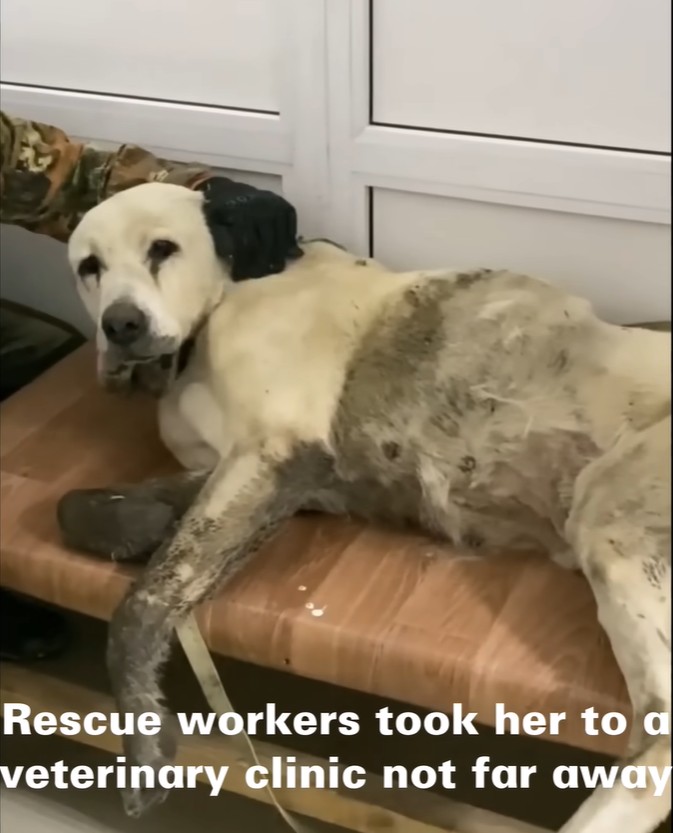
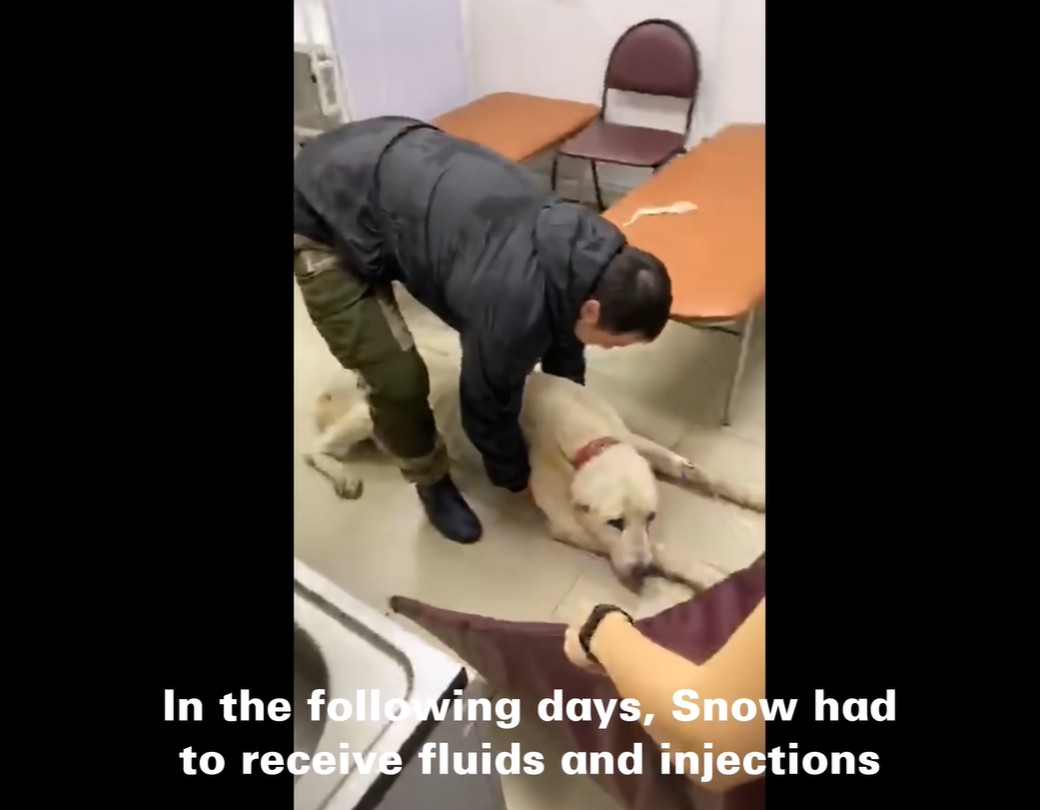
The veterinary team began intensive treatment, including intravenous fluids and medication.
There was no promise that she would recover.
In the early days, her behavior offered little encouragement.
She showed almost no interest in eating. Her responses to the people caring for her remained limited, and her body continued to appear profoundly tired.
The contrast was difficult to ignore.
The people around Snow were working to help her regain strength, but she could not yet perform even some of the simple activities associated with a dog beginning to feel better.
Eating remained a challenge.
Standing was still beyond her apparent strength.
Even acknowledging a person nearby seemed to require effort.
Her condition demanded patience because improvement, if it came, might not be immediately visible.
There were no dramatic moments to celebrate.
Only continuing treatment, close observation, and the hope that something inside her body was beginning to respond.
Then the next blood results offered a reason to look forward.
VIDEO: Snow Was Barely Responsive When Rescued — Watch Her Fight Through Kidney Failure and Begin Wagging Her Tail Again
One Small Number Offered a Reason to Hope
Snow's creatinine level began to decrease.
It was not a complete recovery.
It did not mean her kidneys had suddenly returned to normal, or that every danger had passed.
But it was meaningful.
For a dog whose first results had revealed such serious kidney impairment, a downward trend was an encouraging indication that treatment was having an effect.
The change was measurable before Snow could demonstrate much progress through her behavior.
She was still weak.
She still needed significant medical care.
And the road ahead remained uncertain.
Yet the improving results suggested that her condition was not entirely unchanged.
Something was moving in a better direction.
For the people treating Snow, that distinction mattered enormously.
When an animal is as unwell as she was, progress may begin with numbers on a laboratory report rather than visible energy or enthusiasm.
A blood test cannot tell the whole story of recovery.
It can, however, provide important evidence that the body is responding.
Snow's falling creatinine reading became one of the earliest positive developments in her treatment.
It gave her caregivers a concrete reason to continue hoping while maintaining the care she needed.
The improvement also changed the way the following days could be understood.
Instead of looking only at how far she still had to go, there was now something real to build upon.
Her recovery had not been secured.
But the possibility of recovery was becoming easier to see.
The Day Snow Began Looking Up Again
Snow's progress did not arrive in one dramatic moment.
It came through a series of small behavioral changes.
At first, she began lifting her head when someone entered the room.
For a healthy dog, that would hardly seem remarkable.
For Snow, it was a meaningful departure from the almost complete lack of response she had shown when rescued.
She was beginning to pay attention to her surroundings again.
Then her eyes started following the people who were caring for her.
The change was subtle, but it suggested increasing alertness and engagement.
Those who had known her only as a motionless, exhausted dog were now seeing more of her personality emerge.
She was no longer simply lying there while the world moved around her.
She was looking back.
There is something especially moving about this stage of recovery because it can be easy to overlook from the outside.
No single glance proves that an animal has fully healed.
No lifted head guarantees that every medical concern has been resolved.
But after days of limited response, these small actions can show that a dog is beginning to regain the energy needed to engage with life.
For Snow, each new movement represented progress beyond what she had been capable of when she first arrived.
Her caregivers continued helping her through recovery.
And gradually, Snow was able to do more.
Then came an achievement that would have seemed almost unimaginable when she was first found.
She stood up.
Her legs were unsteady.
Supporting her own weight was clearly difficult.
But she was on her feet.
The dog who had once needed to be lifted and carried was beginning to hold herself upright again.
It was not yet an effortless movement, and regaining physical strength remained a gradual process.
Still, standing on her own marked an important step.
Snow was beginning to reclaim abilities her illness had taken away.
A Tail That Had Been Still for So Long
The changes in Snow's movement were encouraging.
But another development carried a different kind of emotional meaning.
Her tail began to move.
At first, the motion was slight.
Just a small response that might have been missed by someone who did not understand how quiet Snow had been at the beginning.
Then it happened again.
As she became more responsive, those little movements developed into something unmistakable.
Snow began wagging her tail when familiar people approached.
The contrast with her first days was extraordinary.
When the rescuers found her, she had barely reacted to being touched, muzzled, or carried.
Now she was responding to the presence of people she recognized.
She looked toward them.
Her eyes appeared brighter.
And her tail moved with growing enthusiasm.
A wagging tail is not a complete medical assessment. Snow's health had required intensive veterinary treatment, and her improvements had developed over time.
But the change in her behavior showed something important about her quality of life.
She was becoming more active.
More engaged.
More comfortable interacting with the people around her.
For an animal who had once seemed almost disconnected from her surroundings, those developments meant a great deal.
There is a special kind of joy in watching a recovering dog begin to display ordinary canine behaviors again.
A curious look.
A response to a familiar face.
A tail moving in greeting.
Things that once seemed impossible can gradually become part of everyday life.
And with Snow, those small signs were especially precious because of everything that had come before them.
Walking Away From the Clinic on Her Own
Snow's journey from critical illness to increasing independence was not immediate.
Her progress had to be built step by step.
The medical team had addressed a serious kidney problem. Her caregivers had continued supporting her through days when she showed little appetite or interest in her surroundings.
Her first encouraging blood results had been followed by visible improvements in alertness, movement, and behavior.
Eventually, another important day arrived.
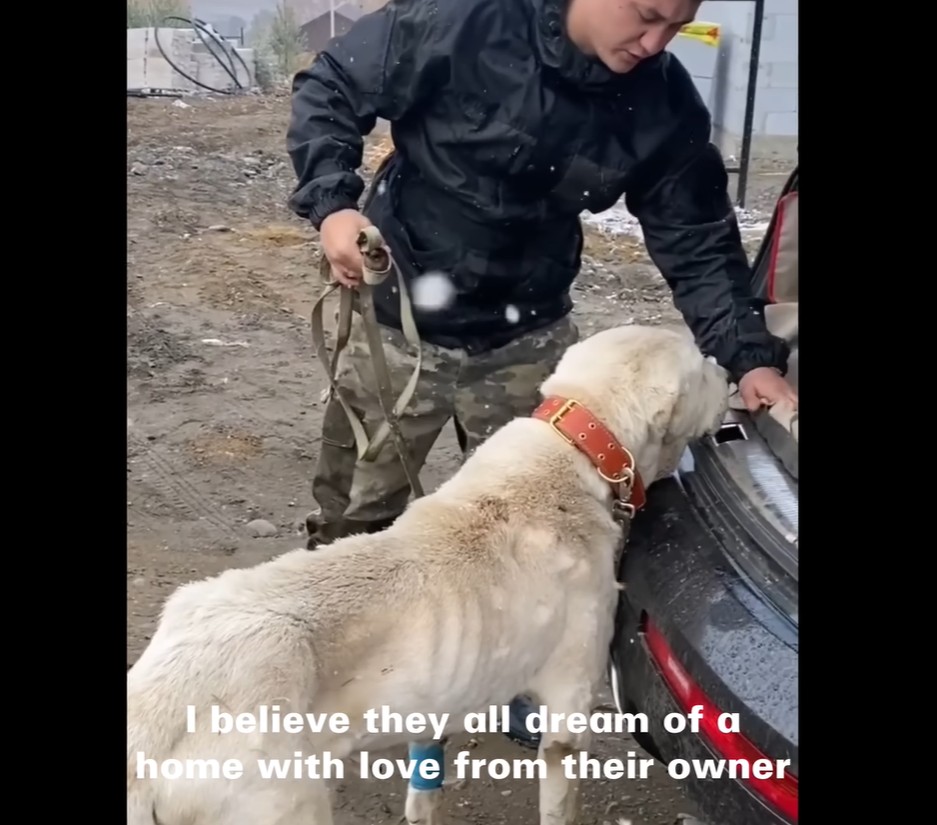
Snow was ready to leave the veterinary clinic.
What made that departure especially meaningful was the difference between how she had arrived and how she was now able to leave.
At the beginning, she had been too weak to manage the journey without being carried.
This time, Snow walked.
She used her own legs to move forward, no longer completely dependent on someone lifting her from one place to another.
Those steps reflected the progress she had made during her care.
The dog who had once lain almost motionless on the ground was now capable of walking out of the place where she had received treatment.
It was a powerful change, even without embellishment.
Her story did not need a dramatic announcement or an extraordinary final gesture.
The simple act of walking was enough.
It demonstrated how much had changed since the rescuers first found her.
From barely responding to her surroundings to recognizing familiar faces.
From struggling with serious illness to showing increasing strength.
From a still tail to an enthusiastic greeting.
And finally, from being carried into a hospital to walking out on her own.
The Quiet Strength Behind Snow's Second Chance
What makes Snow's journey memorable is not only the severity of her condition.
It is the gradual nature of her recovery.
So much of what happened to her could have been overlooked by anyone expecting a sudden and complete transformation.
Her first improvement was not a joyful bark or a playful leap.
It was a change in a laboratory result.
Her next victories were equally modest.
Lifting her head.
Following someone with her eyes.
Standing despite shaky legs.
Beginning to wag her tail.
Each step mattered because it came after a period when even the simplest movement appeared difficult.
Snow's story also highlights an important part of animal rescue that often receives less attention than the moment an animal is first saved.
Finding a dog in need is only the beginning.
For animals facing serious illness, the work that follows can involve intensive treatment, careful monitoring, and considerable uncertainty.
Improvement may be uneven.
Encouraging signs may be small.
And even when progress becomes visible, recovery must be understood in the context of the animal's individual health.
Snow's medical journey showed how important those small developments could be.
A falling creatinine level did not solve everything at once.
But it was an early indication that her condition was responding to care.
Her increasing alertness did not instantly restore all her strength.
But it was another step in the right direction.
By the time she was walking and greeting familiar people with a wagging tail, the accumulation of those small changes had become something remarkable.
The source does not establish every detail of Snow's later life or confirm a permanent home. What it does show is that she recovered sufficiently to leave the clinic on her own and had regained much of the responsiveness that was missing when she was rescued.
That confirmed progress is meaningful enough.
There was a time when Snow could barely acknowledge the people approaching her.
Later, those same kinds of human interactions became occasions for a bright expression and a wagging tail.
There was a time when she could not get up and walk away.
Later, she walked out of the veterinary clinic under her own strength.
Her story is a reminder that compassion is often expressed through persistence rather than grand gestures.
Through people choosing to help an animal who cannot help herself.
Through continuing medical care when the outcome is uncertain.
Through recognizing that a small improvement can be the beginning of something much larger.
Snow did not need to recover all at once for her progress to matter.
One better test result was important.
One lifted head was important.
One unsteady step was important.
And that first gentle movement of her tail was important, too.
Sometimes, a second chance does not announce itself loudly.
Sometimes, it begins with a tiny sign that a very tired dog still has the strength to keep going.


