
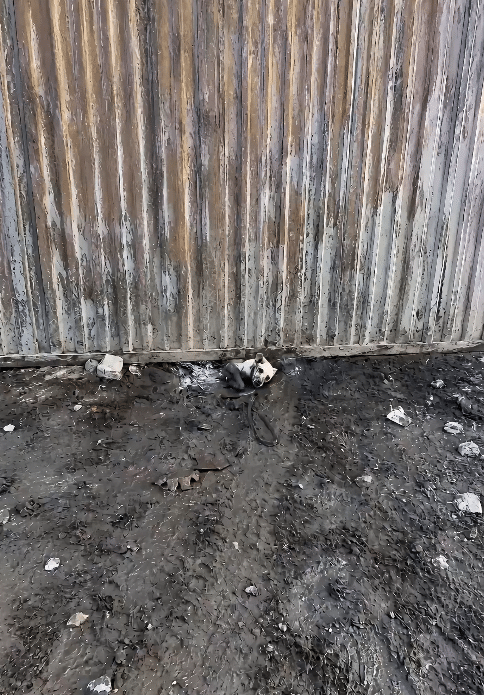
Every morning, two dogs looked toward the same road.
Every evening, they returned to the empty house where their family had once lived.
The doors stayed closed. The familiar people never appeared. Yet the two dogs continued to wait, remaining close to the place that had once given them food, shelter, and a sense of belonging.
Days passed.
Then weeks.
Nothing about the house suggested that their old life was coming back. The property was empty, the surroundings were neglected, and there was no one left to care for them.
Still, they stayed.
For these two dogs, the abandoned house was more than a building. It was the last familiar place they had, even after it stopped being a safe home.
And as the waiting continued, their situation became increasingly difficult.
The Home They Remembered Could No Longer Keep Them Safe
There is something especially sad about an animal returning to a place where comfort used to exist.
These two dogs had once known the ordinary security of having people around them. They had a home to return to and a familiar environment in which to live.
Then that security disappeared.
The house stood empty, surrounded by cracked walls and overgrown weeds. What had once been a place of belonging offered little protection from the challenges of living without human care.
The dogs continued moving through the property, sometimes wandering between rooms as though searching for familiar traces of the life they had lost.
But there were no meals waiting.
No one called them inside.
No familiar hands reached out to comfort them.
Their circumstances had changed completely, even if they remained attached to the place.
At first, staying near the house may have offered a sense of familiarity. But familiarity could not provide everything they needed to survive.
As time went on, hunger became an unavoidable part of their daily lives.
They began searching for food wherever they could find it.
Often, that meant garbage.
For animals accustomed to depending on people, having to search through discarded waste for something edible is a difficult change.
There is no certainty about what they will find.
One day might offer enough to keep going. Another might bring almost nothing.
And for these two dogs, searching for food carried another painful consequence.
Not everyone welcomed their presence.
Hunger Led Them Toward People Who Did Not Understand
The dogs were not rummaging through trash because they wanted to cause trouble.
They were hungry.
Without regular food or anyone looking after them, searching through garbage had become one of their few available options.
Unfortunately, the source describes how people sometimes reacted with frustration instead of understanding.
The dogs were reportedly shouted at and chased away. There were also reports of people striking them when they searched for food.
Experiences like these appeared to leave the pair increasingly cautious around humans.
They approached carefully.
Sudden movements could startle them.
And the possibility of being rejected seemed to follow them whenever they came close to someone.
Yet hunger did not disappear simply because people turned them away.
They still needed food.
They still needed water.
They still needed somewhere they could rest without feeling threatened.
So their difficult routine continued.
They searched for what they could find, then stayed close to the abandoned property that remained their only familiar home.
The contrast was painful.
They had been left without the people they depended upon, yet they continued to return to the place where those people had once been.
It was as though the house still held something important for them, even when it could no longer offer protection.
And despite everything they had experienced, they had not completely lost their willingness to approach a person.
That would become important when someone finally noticed them.
The Woman Who Saw Two Dogs in Need
The turning point began with an ordinary encounter.
A woman noticed the two dogs and recognized that they needed help.
To someone passing by without understanding their circumstances, the pair might have appeared to be stray dogs searching for food.
But their thin bodies, hesitant behavior, and neglected condition told a more troubling story.
These were animals struggling to survive.
They had remained near an empty house for an extended period, waiting while their physical condition gradually deteriorated.
When the woman approached, something encouraging happened.
Instead of immediately fleeing, the dogs moved toward her.
Their tails wagged gently.
They watched her closely.
Despite the fear and rejection they had experienced, they seemed willing to give this unfamiliar person a chance.
It was a small response, but an important one.
An animal that has been repeatedly frightened by people may need time before it feels comfortable approaching anyone again.
Yet these two dogs responded to the woman's presence with cautious openness.
When she offered food and an opportunity to reach safety, they accepted.
There was no dramatic struggle described.
No complicated pursuit.
Just two vulnerable dogs responding to someone who finally offered the assistance they needed.
For weeks, they had remained beside a house that no longer welcomed them with the familiar comforts of home.
Now, for the first time in a long while, someone was willing to take responsibility for helping them.
The encounter marked a change in their lives.
They would no longer have to depend entirely on whatever they could find among discarded rubbish.
There was finally a path away from the empty property.
VIDEO: Two Abandoned Dogs Kept Waiting Outside Their Empty Home — Until a Kind Woman Finally Stopped
Leaving the Empty House Behind
The woman brought both dogs to a rescue center, where their immediate needs could finally be addressed.
It was a significant change from the circumstances they had endured.
At the abandoned house, every meal had been uncertain.
At the rescue center, food was provided regularly.
Before, they had been searching through garbage and navigating situations in which people sometimes treated them harshly.
Now, they had fresh water, comfortable places to rest, and caregivers concerned about their welfare.
For dogs that had spent so long struggling to meet their most basic needs, these ordinary comforts mattered.
A safe place to sleep.
Enough food to eat.
People who did not chase them away.
These were not extravagant things. They were essential parts of the care that companion animals should receive.
But the two dogs had been living without them for far too long.
As the initial relief of reaching safety gave way to closer observation, the rescuers began to understand more about their condition.
The difficulties they had experienced were visible in their bodies.
Both animals were underweight and exhausted.
They were also heavily affected by ticks and other parasites, suggesting that they had been without proper care for a considerable period.
Their condition required attention beyond simply offering a meal.
They needed time, treatment, and ongoing support.
And during the examination, the caregivers discovered another concerning detail.
An Old Injury Revealed Another Layer of Hardship
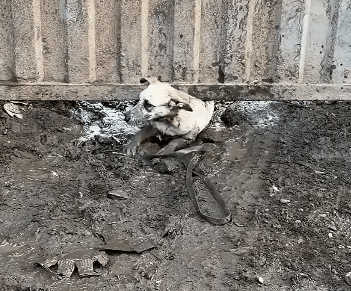
One of the dogs was missing part of his nose.
The injury appeared to be longstanding, although its exact cause was unknown.
There was no confirmed explanation of what had happened.
It may have been connected to the difficulties of surviving without protection, but the source does not establish when or how the injury occurred.
What was clear was that this dog had been living with a significant physical difference while also facing hunger, parasites, and the uncertainty of being abandoned.
The discovery made his circumstances even more concerning.
His companion had also suffered from neglect, and both dogs needed consistent care to regain their strength.
Yet something about their behavior stood out.
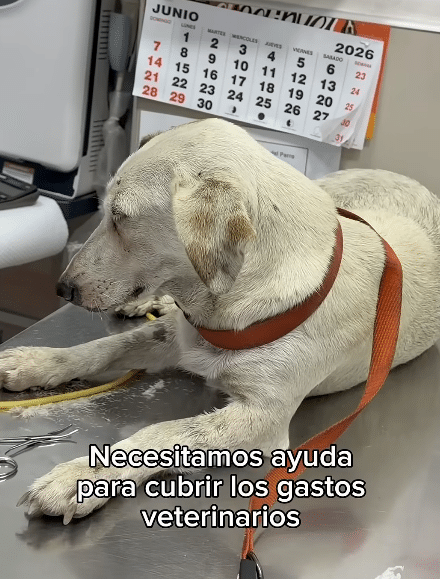
Despite their difficult experiences, neither dog showed aggression toward the people helping them.
They accepted gentle attention.
They responded positively to affection.
Rather than resisting every interaction, they seemed increasingly willing to remain close to the people caring for them.
That response did not erase what they had endured.
A dog can be affectionate while still recovering from fear and neglect.
A wagging tail does not automatically mean every difficulty has disappeared.
But their willingness to accept kindness offered a hopeful starting point.
Both dogs had reasons to be wary of people.
Some had frightened them or driven them away when they were simply trying to find food.
Yet here they were, allowing others to help.
The same animals that once had to search through discarded waste were finally being given the attention they deserved.
And the work of helping them recover was only beginning.
Small Changes Began to Replace Months of Uncertainty
Recovery from prolonged neglect is rarely a single event.
Providing safety is the beginning, but rebuilding strength requires continued care.
For these two dogs, regular nutrition became an important part of the process.
Their bodies had been weakened by periods of inadequate food, and consistent meals gradually helped them regain strength.
They also received medical treatment for the parasites that had caused discomfort.
Their caregivers provided comfortable bedding, fresh water, and an environment where they could rest.
Each part of that care addressed something they had previously been missing.
Food no longer depended on searching through garbage.
Rest no longer depended on finding a tolerable space around an abandoned house.
Human attention no longer automatically meant being shouted at or chased away.
The changes were practical, but they also helped create a different daily experience.
Instead of having to spend their time searching for the next meal, the dogs could begin settling into a more predictable routine.
Instead of returning to an empty property, they had people available to care for them.
And as their immediate physical needs were addressed, changes in their behavior gradually became noticeable.
They appeared more relaxed.
Their expressions softened.
Their tails began wagging more freely.
These were modest signs, but meaningful ones.
They suggested that the dogs were becoming more comfortable in their new surroundings.
It is important not to mistake these improvements for a complete recovery.
The source indicates that both animals still required ongoing medical care.
The injury affecting one dog's nose had not been fully explained, and there was no confirmed account of its eventual medical outcome.
Their future placement was also unresolved.
Still, the progress that had been observed was encouraging.
The dogs were no longer surviving alone.
They were receiving assistance.
And they had begun experiencing something that had been absent from their lives for too long: dependable care.
Learning That Gentle Hands Could Be Trusted
Physical recovery was only one part of their journey.
The dogs had also experienced the emotional uncertainty of losing their home and the people they had known.
For weeks, they had remained near the empty house.
They had searched for food in places where they were sometimes unwelcome.
They had learned to approach people cautiously because not every encounter was safe.
Those experiences could not simply be erased by entering a rescue center.
But having consistent, gentle attention gave them an opportunity to develop a different relationship with their surroundings.
Caregivers did not need to demand affection from them.
The dogs were already showing that they could respond to kindness.
They welcomed gentle contact and appeared to enjoy receiving attention.
Over time, the nervousness that had marked their earlier behavior began to ease.
Their growing confidence was reflected in ordinary moments.
A more relaxed posture.
A softer expression.
A tail moving more freely.
These changes were not spectacular, and they did not need to be.
For animals that had spent so long dealing with hunger and uncertainty, becoming comfortable enough to relax was meaningful progress.
The contrast with their former circumstances was striking.
Once, the pair had stayed beside an empty house, apparently expecting something familiar to return.
Now, they were beginning to experience a different kind of security.
They did not have to search for every meal.
They did not have to face each day without anyone responsible for their wellbeing.
Most importantly, they were no longer overlooked.
Their needs mattered to the people around them.
And that alone represented a profound change.
Their Journey Toward a Permanent Home Is Not Over
The two dogs had been rescued, but their story had not yet reached its final chapter.
At the time described in the source, they were still receiving care.
Their physical condition had begun improving, and their confidence was slowly returning.
However, they still needed continued medical attention.
They also needed permanent, loving homes where they could enjoy long-term security.
The source does not confirm that either dog had already been adopted.
Nor does it provide a final medical outcome for the dog with the nose injury.
Those parts of their future remain unknown.
But the difference between their earlier circumstances and their life after rescue is already significant.
They once depended on garbage for food.
Now, they receive regular meals.
They once returned each evening to an empty house.
Now, they have a safe place to rest.
They once faced rejection while trying to survive.
Now, they receive kindness and attention.
None of these changes can undo the weeks they spent waiting.
They cannot restore the family that disappeared from their daily lives.
But they have given the dogs something they desperately needed: a chance to move forward.
A permanent home would offer another important step in that journey.
It would mean knowing that the people caring for them intended to stay.
That the place where they slept was not simply temporary shelter.
That food, affection, and safety could become dependable parts of everyday life.
For two dogs whose world had been disrupted so completely, that kind of stability would matter enormously.
The Quiet Lesson Left Behind by Two Loyal Dogs
Perhaps the most memorable part of this story is not the abandoned house itself.
It is the image of two dogs continuing to wait beside it.
They had lost the familiar people around whom their lives once revolved.
The place they trusted had become empty.
Their circumstances had deteriorated until finding enough food was a daily challenge.
And still, they remained nearby.
Their story reflects the deep attachments companion animals can form to familiar places and people.
It also highlights the responsibility that comes with caring for them.
Dogs depend on humans for far more than affection.
They need food, protection, medical attention, and a stable environment.
When that care disappears, even an animal that once had a home can quickly become vulnerable.
These two dogs experienced exactly that.
But their story also illustrates how much difference one compassionate response can make.
The woman who noticed them did not ignore their condition.
She offered assistance and brought them somewhere they could receive proper care.
That decision changed the direction of their lives.
It did not instantly resolve every physical problem or guarantee a permanent home.
What it did was give them a safer beginning.
Today, the two dogs are no longer waiting outside the abandoned house.
They are being cared for, gradually regaining strength, and showing signs of renewed confidence.
Their future is still unfolding.
But the most important change has already happened.
The place they once called home may be gone from their daily lives, yet they have not been left to face the world alone.
For two loyal dogs who waited so long for someone to return, being noticed by a kind stranger became the beginning of another chance at the life they deserve.


