
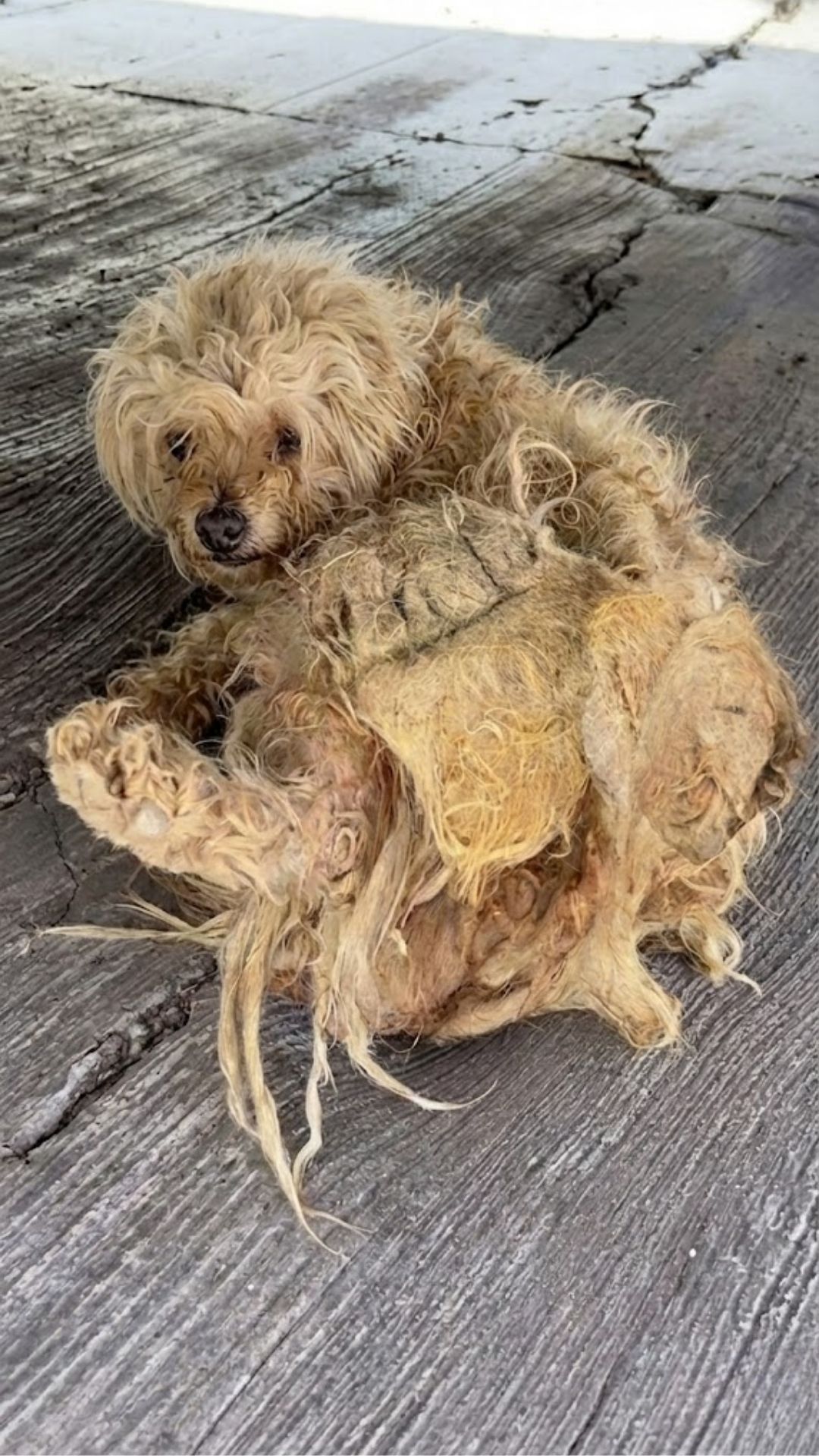
Tres was curled beneath a parked car when someone finally noticed her.
She was not barking for attention or trying to approach the people passing nearby. With one leg badly affected and her body weakened, even moving out of her hiding place appeared difficult.
She simply watched.
It was a quiet, painful sight. A dog who had once known the comfort of a home was now sheltering beneath a vehicle on an unfamiliar street, with no familiar person beside her.
The hardest part of Tres's situation was not only her physical condition.
It was how suddenly everything she had depended on had disappeared.
And yet, the place where her old life ended would eventually become the starting point of something very different.
The Home She Had Known Was Gone
Before she was found beneath that car, Tres had spent years living with an owner.
She knew what it meant to have a place to return to. Familiar surroundings, ordinary routines, and the presence of someone she recognized had been part of her daily life.
Then trouble developed in one of her legs.
Walking became increasingly difficult. Movements that should have been simple required more effort, and her condition gradually made everyday life harder.
It was a time when she needed additional care.
Instead, according to her story, her owner decided to leave her behind.
Tres was taken by car to an unfamiliar street and abandoned there.
There was no gradual adjustment to a new home or opportunity to become comfortable with different surroundings. One moment, she had been traveling with someone she knew. The next, she was alone.
We cannot know what Tres understood as the car drove away.
Perhaps she expected the familiar person to return. Perhaps she was simply confused by the sudden change.
What is clear is that her injured leg left her poorly equipped to cope with the situation.
She could not easily follow the vehicle.
She could not walk comfortably in search of another safe place.
So she moved beneath a parked car, where the space around her offered a small measure of shelter from the unfamiliar world.
For a dog already struggling physically, that narrow refuge became the only protection immediately available.
A Small Figure Beneath a Parked Car
Life continued around Tres.
People walked along the street. Vehicles arrived and departed. The ordinary movement of the neighborhood carried on while she remained hidden.
From a distance, it would have been easy to miss her.
She was thin, weak, and trembling. Her injured leg made movement difficult, and she seemed reluctant to leave the space beneath the vehicle.
The person who eventually rescued her described an unusually quiet first encounter.
Tres did not growl or bark.
She did not make a dramatic attempt to escape.
Instead, she looked directly at the person approaching her.
There was something deeply affecting about that stillness.
An abandoned dog does not need to make a sound to communicate distress. Sometimes the difficulty of standing, the way an animal remains withdrawn, or the uncertainty in its gaze can reveal just how much help is needed.
Tres appeared exhausted by her circumstances.
For the person who found her, walking away was no longer an option.
The immediate goal was to get her somewhere safe and find out how seriously her leg had been affected.
But her rescuer could not yet know just how urgent the situation would become.
Helping Tres out of hiding was only the first step.
The much harder decisions were still ahead.
VIDEO: Tres Was Hiding Beneath a Car With an Injured Leg — The Rescue That Changed Her Life
At the Veterinary Clinic, Time Was Running Out
Once Tres was brought to veterinary care, the seriousness of her condition became clearer.
She was underweight, weak, and feverish.
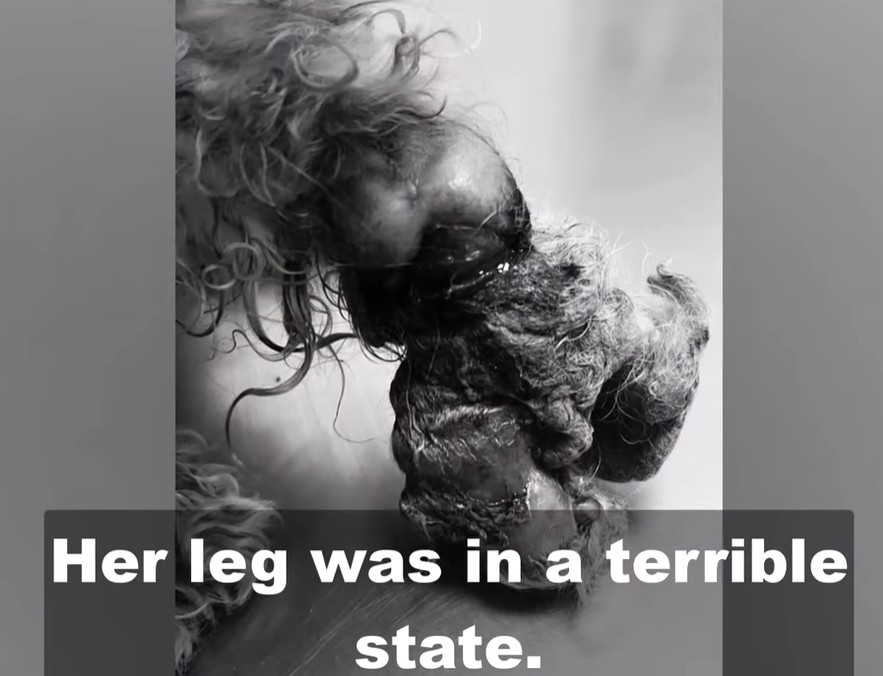
Her affected leg was not simply causing discomfort. The infection had become severe, and her condition required urgent medical attention.
The veterinary assessment brought difficult news.
Surgery was necessary, and further delay could put her survival at risk.
This was far more than her rescuer had expected when first noticing a frightened dog beneath a car.
Finding an abandoned animal is one challenge. Taking responsibility for an animal with a serious medical condition can involve decisions that are emotionally difficult and financially demanding.
Tres needed more than a temporary place away from the street.
She needed someone prepared to see her treatment through.
The operation carried risks, but leaving her condition untreated presented an even greater danger.
Her rescuer chose to proceed.
According to the account, the person caring for Tres used their savings to cover her medical needs and signed the necessary consent forms.
It was a significant commitment made for a dog who, until recently, had been left completely alone.
At that moment, there was no certainty about how quickly she might recover or what her life would look like afterward.
There was only the knowledge that treatment offered her a chance she would otherwise not have had.
For Tres, the decision marked a turning point.
She was no longer an overlooked animal struggling beneath a parked vehicle.
Someone had recognized that her life was worth protecting.
Surgery Was Only the Beginning of Her Recovery
The operation addressed the urgent medical problem, but Tres's recovery was not immediate.
Her body had already endured considerable strain. Healing required time, continued care, and close attention to her condition.
Her rescuer had initially expected surgery to be the greatest obstacle.
Instead, the weeks that followed revealed a different kind of challenge.
Tres remained unusually quiet.
She spent long periods resting, showing little interest in her surroundings. Even as she received care, she did not immediately become the lively, affectionate companion her rescuer hoped to see.
It was difficult to watch.
Medical treatment could address the condition of her leg, but no one could simply tell her that her circumstances had changed and expect her to understand.
She had gone from a familiar home to an unfamiliar street, experienced serious physical discomfort, and undergone an operation.
It was reasonable that adjusting would take time.
Her caregiver did not try to rush the process.
Medication was provided as needed. Time was spent sitting beside her, offering gentle words and companionship without demanding a response.
Day after day, that routine continued.
Some days brought little visible progress.
There were no dramatic transformations or sudden moments when every difficulty disappeared.
Tres still seemed withdrawn, and the person caring for her could only continue providing what she needed.
This part of rescue rarely receives as much attention as the moment an animal is first discovered.
Yet it can be just as important.
An injured dog may need extensive physical care, but an animal that has experienced abandonment may also require a long period of predictable, gentle treatment before becoming comfortable again.
For Tres, consistency gradually began to make a difference.
Her breathing appeared calmer.
Her expression became less fearful.
Small signs suggested that she was slowly growing accustomed to the safety of her new surroundings.
Then came one moment her rescuer would remember especially clearly.
One morning, Tres moved her tail.
Only a little.
It was not an energetic greeting or an invitation to play. The movement was so slight that another person might easily have overlooked it.
But after weeks of quiet recovery, it mattered enormously.
For the person who had stayed beside her, that small movement offered something that had been missing for a long time.
Encouragement.
Tres was beginning to respond to the care surrounding her.
And that was enough to keep moving forward.
The Day Her Fear Began to Give Way to Trust
As the months passed, Tres continued improving.
The dog who had once struggled to move beneath a parked car gradually became more active.
Her physical recovery allowed her to explore her surroundings with growing confidence.
Walking became easier.
Eventually, she was able to run and play.
These changes were especially meaningful given how limited her mobility had been when she was found.
But her transformation was not measured only by the strength of her legs.
Her behavior around the person caring for her changed, too.
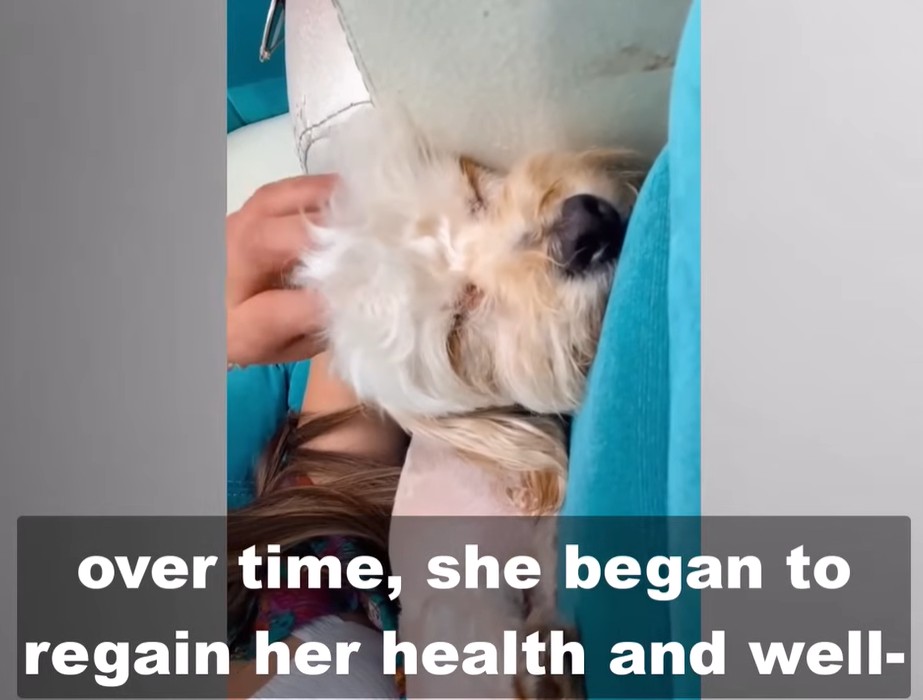
She began greeting her rescuer with excitement in the mornings.
She followed that familiar person through the house, choosing to remain nearby rather than withdrawing into a quiet corner.
Sometimes she rested her head against her caregiver, seeking closeness and comfort.
Those ordinary gestures told a very different story from the silent stare beneath the car.
Tres was no longer simply tolerating the presence of someone trying to help her.
She was actively seeking companionship.
The change had unfolded gradually, through months of care rather than one extraordinary event.
There had been no way to explain the future to her when she was first rescued.
Her caregiver could not promise her recovery would be quick or that every difficult day was behind her.
What they could offer was a pattern of care that remained consistent even when progress seemed slow.
Over time, Tres appeared to find reassurance in that pattern.
The person who brought her medication was also the person who stayed beside her.
The home where she rested was also the place where she could begin exploring, playing, and enjoying companionship again.
For a dog who had lost her former home, those everyday experiences became the foundation of a new life.
From a Temporary Rescue to a Permanent Family
Some rescue stories end when an animal is medically stable enough to leave veterinary care.
Tres's story continued beyond that point.
The person who had discovered her beneath the car became more than the individual responsible for her treatment.
That person became her family.
What began as an urgent decision to help an injured dog developed into a lasting bond.
Tres remained in the home where she had recovered, surrounded by the familiar care that had helped her regain confidence.
Her days were no longer defined by the difficulty of finding somewhere to hide.
She could rest comfortably.
She could move freely.
She could enjoy the simple routines of life with someone she trusted.
For her rescuer, the contrast was impossible to ignore.
The dog once found trembling on an unfamiliar street now greeted each day with enthusiasm.
The animal who initially showed so little response to human companionship had become affectionate and eager to stay close.
Even her injured leg, once the reason she had struggled so badly, was no longer preventing her from running and playing.
None of those changes happened all at once.
They were the result of medical treatment, patient recovery, and the decision to continue caring for Tres long after the immediate emergency had passed.
Her future had once been dangerously uncertain.
Now, she had a permanent place in someone's life.
And perhaps that was the most important part of her transformation.
She had not merely survived being abandoned.
She had been welcomed into a home where she was wanted.
What Tres's Second Chance Really Means
It is easy to look at a dog running happily and forget how difficult the journey to that moment may have been.
For Tres, there had been a time when walking itself was painful.
There had been a time when she was too weak to follow the person who left her behind.
And there had been a time when the shadows beneath a parked car seemed to offer her only available shelter.
Her recovery changed those circumstances.
Today, Tres can rest in comfort rather than hiding on the street.

She can run and play instead of struggling with every movement.
She can seek affection from someone who has made a lasting commitment to her care.
Her experience also illustrates an important truth about helping animals in need.
The first act of rescue matters, but what follows can be equally significant.
An animal recovering from a serious condition may need weeks or months of medical attention, patience, and reassurance.
Progress may appear in small forms long before it becomes obvious to everyone else.
For Tres, one of those early signs was a gentle movement of her tail.
Later came confident steps, playful behavior, and the affectionate routines of a dog who had learned to feel comfortable in her home.
Her rescuer did not know all of this would happen on the day they first looked beneath that parked car.
They only saw a dog who needed help and made the decision not to leave her there.
That choice gave Tres access to treatment, recovery, and eventually a permanent family.
Her story is a reminder that compassion is not always one dramatic gesture.
Sometimes it is the quiet decision to return each day, provide care, and remain present while healing takes its own time.
Tres once had nowhere secure to go.
Now she has a home, a person who loves her, and the freedom to enjoy the ordinary moments that every companion animal deserves.
The little dog who once watched the world from beneath a parked car no longer has to wait there.
She has someone waiting for her at home.


