
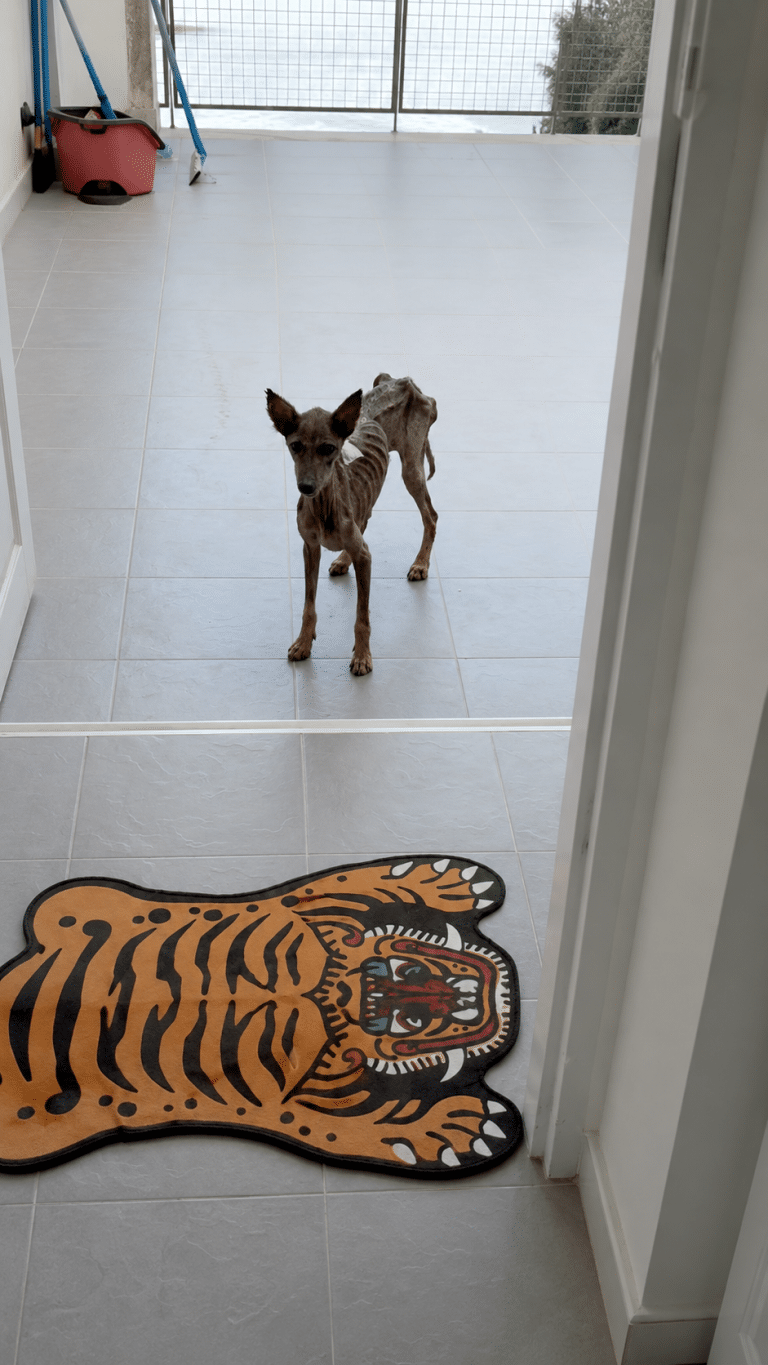
Two days before New Year’s Eve, Jack looked down at a small dog lying on the ground in rural Thailand and wondered whether help had come too late.
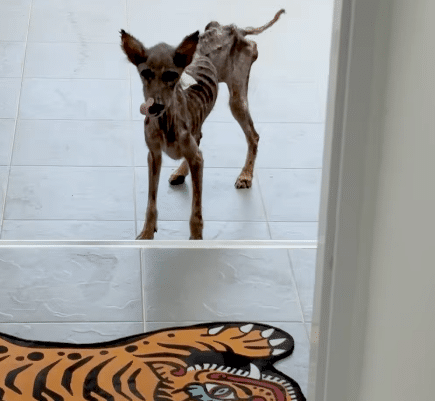
The dog was painfully thin. His ribs stood out beneath his skin, much of his fur was missing, and even the simplest movement appeared to demand more strength than he could spare.
His name was Sena.
There was something especially difficult about seeing a dog in this condition so close to the beginning of a new year. While life continued around him, Sena was struggling with something far more immediate.
He needed to survive.
No one knew exactly how long he had been suffering. But his appearance suggested that his weakness had developed over time.
And yet, despite everything his body had endured, he was still alive.
That was enough for Jack and the people who would soon care for him to try.
The Discovery That Changed Sena's Future
Jack found Sena in a quiet rural part of Thailand, just 48 hours before New Year’s Eve.
It was difficult to look at the little dog without worrying about how much longer he could continue in such a weakened state.
His body had become extremely thin. His coat was sparse, leaving areas of skin exposed. Standing appeared exhausting, and there was little visible energy left in him.
This was not the appearance of an animal that had simply missed a few meals.
Whatever had brought Sena to this condition had clearly taken a serious toll.
His full history remained unknown. There was no way to determine from his appearance alone exactly what had happened to him or how long he had been struggling.
What mattered most at that moment was that he needed help.
A veterinary examination confirmed the seriousness of his condition.
Sena was critically malnourished and extremely weak.
The assessment gave his caregivers a clearer understanding of the challenge ahead, but it could not guarantee that he would recover.
For a dog in such fragile condition, the path back to health was uncertain.
There was no promise that the coming days would be easier.
Still, someone had finally noticed him.
And this time, he would not be left to face his struggle alone.
A Home, a Chance, and Nights Filled With Worry
Beth and her partner decided to bring Sena home and care for him.
It was an important choice, but it did not immediately change how sick and frightened he appeared.
Rescue can sometimes look like a single dramatic moment: an animal is found, carried to safety, and given a new beginning.
For Sena, that moment was only the start.
His body still needed time to regain strength. His caregivers also had to confront the uncertainty of whether he would become strong enough to recover.
The first nights were particularly difficult.
Sena cried repeatedly, his voice reflecting the distress he was experiencing. He could barely lift himself, and his reactions suggested that he was not yet comfortable in his unfamiliar surroundings.
Being inside a home did not instantly make him feel secure.
He had been through an experience that left him physically depleted and visibly fearful.
Now, surrounded by people trying to help, he needed time to adjust.
Beth later acknowledged how uncertain those early days felt.
There were moments when she and her partner genuinely questioned whether Sena would survive.
That uncertainty was emotionally exhausting.
They were caring for a dog who needed attention and patience, while knowing that kindness alone could not guarantee the outcome.
Some days, progress was difficult to recognize.
At times, simply getting through another day was enough.
They continued caring for him despite those fears.
Their decision was not based on knowing that Sena would recover.
It was based on believing he deserved the opportunity.
The Smallest Movement Became the Biggest Encouragement
In those early days, there was no sudden transformation.
Sena did not immediately become energetic or playful.
He remained weak, and improvement came slowly.
But then something happened that his caregivers had been hoping to see.
Sena wagged his tail.
It was a small movement, lasting only a moment.
To someone unfamiliar with his condition, it might not have seemed remarkable. Dogs wag their tails every day.
For Sena, however, even a small expression of engagement mattered.
He had spent his first days in care struggling to move, crying during the night, and showing little confidence in his surroundings.
Now, there was a visible response that suggested something was beginning to change.
It was not proof that every danger had passed.
His body was still recovering, and there was much more progress to make.
But the movement offered his caregivers something they had desperately needed.
Encouragement.
Sena was beginning to respond to the life around him.
And for Beth and her partner, that small sign made the difficult work of caring for him feel even more meaningful.
VIDEO: Found Severely Malnourished Before New Year’s Eve — Watch Sena's First Steps Toward Recovery
One Meal, One Step, One Better Day
Sena's recovery unfolded through a series of modest improvements.
At first, the changes were easy to overlook.
He began eating a little more.
For a dog who had been critically malnourished, the ability to take in food more consistently was an important part of his progress.
But eating was only one challenge.
His body also needed to regain enough strength to support everyday movement.
Gradually, Sena managed to remain standing for longer periods.
Then he began taking a few steps.
Those steps were far removed from the energetic movements of a healthy dog. Yet compared with the animal Jack had first discovered, they represented meaningful progress.
The difference was not measured by how quickly he could move.
It was measured by what he could manage that he had previously struggled to do.
There was a time when simply lifting himself required enormous effort.
Now, he was beginning to move around his surroundings.
Eventually, Sena could explore a corner of the room without immediately becoming overwhelmed by exhaustion.
These developments did not happen all at once.
Recovery required time, and his caregivers had to accept the pace his body could manage.
That patience became an essential part of his second chance.
It would have been easy to focus only on how far he still had to go.
Instead, each improvement offered a reason to recognize how far he had already come.
A little more food.
A little more strength.
A few more steps.
Slowly, the dog who once seemed unable to do much more than endure another day was beginning to participate in it.
Four Weeks Later, the Changes Were Impossible to Miss
As the weeks passed, Sena's appearance began to change.
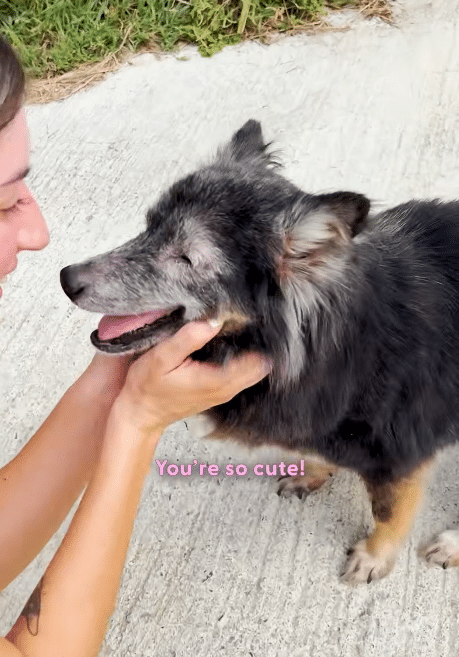
By the fourth week, soft new fur was growing over areas of skin that had previously been bare.
His body was also gradually filling out.
The sharply visible outline of his bones began to soften as he regained weight.
For Beth and her partner, these physical improvements were encouraging signs of how much progress he had made.
But another change was taking place alongside them.
Sena was becoming more comfortable with human affection.
During his earliest days, fear had shaped much of his behavior.
He seemed uncertain about the people around him and struggled to relax.
Over time, that hesitation began to lessen.
He started responding more positively to touch.
Rather than pulling away, he began leaning toward the affection being offered.
It was a quiet but meaningful shift.
His caregivers were no longer simply helping a frightened, weakened dog recover physically.
They were getting to know a companion who was beginning to show more of his personality.
Sena also started following them from room to room.
Where he had once appeared disconnected from his surroundings, he now showed curiosity about them.
He wanted to move.
He wanted to explore.
And he increasingly seemed comfortable being near the people who had cared for him through his most difficult days.
There was no single moment when all his fear disappeared.
Trust developed through repeated experiences of safety and kindness.
The changes were gradual, just like the return of his strength.
But together, they revealed something important.
Sena was not merely becoming healthier.
He was beginning to enjoy his life.
From Struggling to Stand to Running Beside the Water
As Sena grew stronger, his world expanded beyond the space where he had spent the earliest part of his recovery.
Movement became easier.
The floor that once seemed almost impossible for him to cross eventually became a place where he could run.
Simple activities no longer demanded the same exhausting effort.
And as his confidence increased, new experiences became possible.
Among the most memorable were walks at the beach.
For anyone who remembered Sena in those first days, the contrast was extraordinary.
The little dog Jack had discovered was so weak that standing appeared difficult.
Now, Sena could move freely beside the water.
His coat looked healthier.
His body had regained strength.
His eyes appeared alert and engaged with the world around him.
The beach outings were more than a change of scenery.
They showed just how dramatically Sena's everyday life had improved.
He was no longer limited to the small movements he could manage during his weakest days.
He could explore his surroundings with energy.
He could follow the people he trusted.
He could experience the simple pleasure of moving without the same overwhelming exhaustion.
Nothing about those ordinary activities would seem unusual for a healthy dog.
That was precisely what made them so meaningful in Sena's case.
The ability to enjoy an ordinary day had once seemed far beyond his reach.
Now, those days were becoming part of his life.
The Trust That Returned Alongside His Strength
Sena's physical transformation was striking, but Beth and her partner had witnessed something equally important.
His behavior around people had changed.
The frightened dog who once cried through the night had become increasingly affectionate and curious.
He was beginning to seek closeness rather than avoid it.
That shift was not something his caregivers could demand.
They could offer him care, companionship, and a safer environment.
But Sena needed time to become comfortable with those things.
His experience illustrates why recovery is not always complete simply because an animal has regained weight or can walk normally again.
An animal that has lived through prolonged hardship may need time to adjust to a different kind of life.
For Sena, the signs of growing trust were visible in ordinary interactions.
He accepted touch more readily.
He leaned into affection.
He followed his caregivers through the home.
These small behaviors helped reveal how much had changed since the days when he appeared frightened and withdrawn.
Beth later reflected on the emotional demands of caring for him.
The uncertainty had been difficult.
The nights of worry had been draining.
And the responsibility of helping such a fragile dog required more than she might have imagined at the beginning.
Yet she also made something clear.
She would choose to help him again.
After seeing Sena regain his strength and begin enjoying life, the effort had become deeply meaningful.
His recovery did not erase the difficult beginning.
It showed what had become possible because someone had refused to give up on him.
The New Year That Nearly Passed Without Him
Sena's story began at a time when one year was about to end and another was about to begin.
For Jack, finding him just two days before New Year’s Eve meant confronting a frightening possibility.
The little dog appeared so weak that his future was far from certain.
There was no guarantee that he would regain his strength.
No way to know whether he would eventually become comfortable with people.
And certainly no reason, during those earliest moments, to assume that he would someday enjoy running beside the sea.
What followed was not a sudden, effortless recovery.
It was a gradual process shaped by care, patience, and many small improvements.
His first tail wag mattered.
His growing appetite mattered.
The first steps he managed without becoming completely exhausted mattered.
Each development was part of a much larger change.
Over time, the fragile dog found in rural Thailand became a healthier, more confident companion.
His coat returned.
His strength improved.
And his willingness to accept human affection grew alongside his physical recovery.
Sena's experience is also a reminder that the circumstances of a struggling animal are not always fully known.
Jack and Sena's caregivers could see the condition he was in, but they did not have every answer about his past.
They did not need those answers before deciding he deserved help.
Sometimes, the most important part of a rescue story is not discovering exactly how an animal came to suffer.
It is seeing what becomes possible after someone responds with compassion.
Sena had been found at one of the weakest points of his life.
By the time his recovery had progressed, he could move freely, seek affection, and enjoy experiences that once seemed impossible.
The beginning of his story was filled with uncertainty.
What came afterward was built through steady care and the patience of people who chose to remain beside him.
And perhaps the most moving image is not the difference between his appearance before and after recovery.
It is something much smaller.
A dog who could barely move, finding just enough strength to wag his tail.
That tiny movement did not tell his caregivers what the future would hold.
But it gave them another reason to keep believing in his chance.
Today, the contrast between Sena's first days and the life he eventually began enjoying speaks for itself.
He was once too weak to stand comfortably.
Later, he was running beside the water.
All because, when his future seemed most uncertain, someone noticed him and chose to help.


