
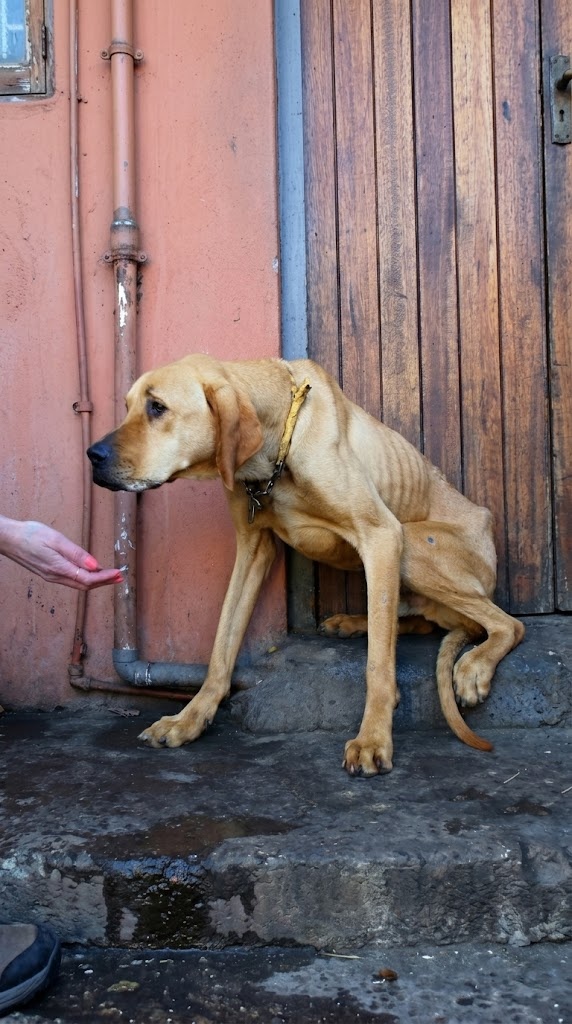
The enormous dog stood behind a small fence, his body so thin that his ribs and spine were clearly visible.
A chain kept him within a tiny dirt enclosure. His head hung low, and even the simplest movements appeared to demand more strength than he had left.
He should have been an impressive, powerful animal.
Instead, he looked exhausted.
When rescuers noticed him during an afternoon visit through the neighborhood, they immediately understood that something was terribly wrong.
But there was something about this dog that made his situation especially difficult to witness.
Despite his weakness, he remained remarkably gentle.
He would eventually be known as Crut. And the journey between that small yard and the healthy, affectionate dog he became would reveal just how much patience, kindness, and a difficult family decision can mean to an animal in need.
The Gentle Giant Behind the Fence
Crut's size made his condition impossible to overlook.
Large dogs naturally have substantial frames, but his body had become painfully thin. His hips were prominent, his backbone was easy to see, and his ribs showed beneath his coat.
The contrast was striking.
Here was a dog built to be strong, yet without enough physical reserves to maintain his own weight.
The rescuers had been looking through neighborhoods for animals that might need assistance when they came across the small enclosure.
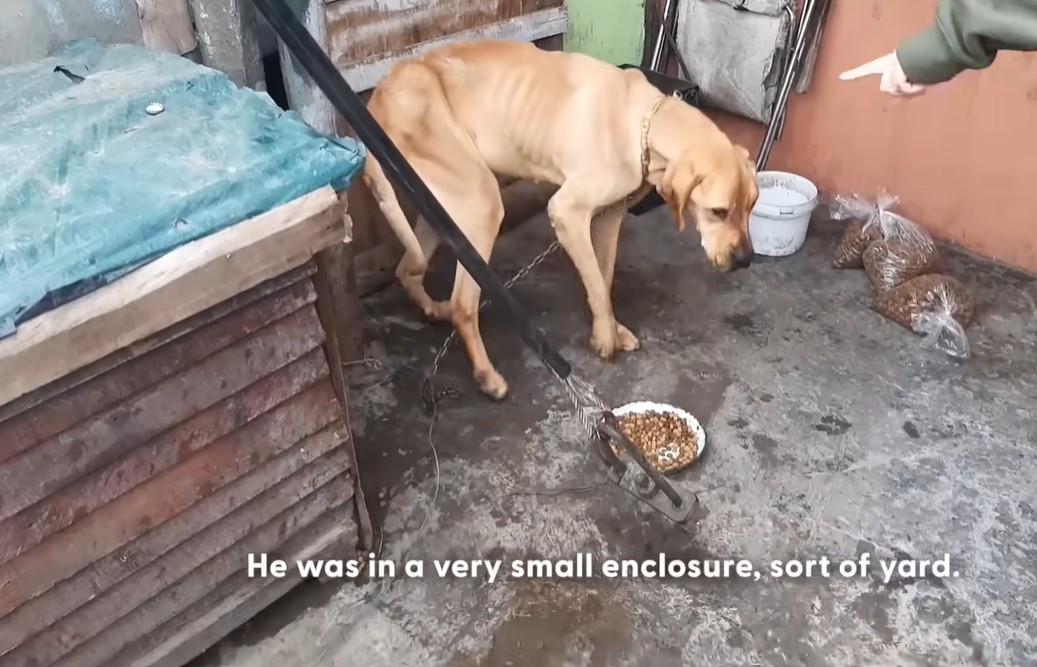
Crut was standing inside, attached to a chain.
There was little room for him to move around, and his weakened appearance raised immediate concern about how much longer he could continue without significant help.
At first, it might have been easy to form assumptions about the people responsible for him.
But as the rescuers learned more, the situation proved more complicated.
Crut belonged to a family experiencing serious financial hardship.
They were struggling to meet their own basic needs, let alone provide enough food and specialized care for such a large dog.
His physical condition was alarming.
Yet his behavior revealed a different side of his life.
When the rescuers approached with food, Crut accepted it carefully.
He did not react aggressively or attempt to guard every bite.
According to the rescuers, he sometimes even allowed other nearby animals to eat ahead of him.
For a dog who had been living with inadequate nutrition, that gentleness was especially moving.
He was hungry.
He was weak.
But he had not lost his affectionate nature.
The rescuers believed that the kindness he showed reflected the loving relationship he had experienced with his family, even as their circumstances made it increasingly difficult to care for him.
There was no simple villain in this situation.
There was a vulnerable animal, a family overwhelmed by poverty, and a growing need for help.
When Food and Good Intentions Were No Longer Enough
The rescuers did not immediately remove Crut from his home.
Instead, they began returning regularly with food and other supplies.
Their hope was straightforward: with better nutrition and consistent support, perhaps Crut could begin recovering while remaining with the people who loved him.
Each visit offered another opportunity to help.
Quality dog food was brought to the property, giving Crut access to nourishment that his family had struggled to provide.
For a time, everyone hoped this additional support might be enough.
But recovery from prolonged undernourishment is not always as simple as providing larger meals.
Crut had already spent a considerable period without adequate food.
His body had been weakened by that experience, and the rescuers soon recognized that progress was not coming as expected.
Week after week, the changes they hoped to see failed to appear.
His ribs remained prominent.
His body was still far too thin.
Despite receiving additional food, he did not begin gaining the weight he desperately needed.
The original rescue account describes difficulty processing nutrients after prolonged deprivation, suggesting that his condition required more than nutritional donations alone.
The rescuers were increasingly concerned that his health could continue deteriorating without veterinary attention.
It was a painful realization.
They had been bringing food.
The family had been trying to care for him.
Yet Crut was not getting stronger.
Sometimes, compassion begins with offering what is immediately available. But there are moments when helping an animal means acknowledging that the first solution is not enough.
For Crut, that moment had arrived.
A Family Faced With an Impossible Decision
As the visits continued, the rescuers came to understand just how difficult life had become for Crut's owners.
Providing enough food for their household was already a challenge.
Caring for a giant dog with serious nutritional and medical needs had become more than they could manage.
The rescuers knew that Crut needed professional treatment and carefully supervised recovery.
But they also understood that separating him from his family would be emotionally difficult.
They did not want to force that decision.
Instead, they allowed his owner to consider what would give Crut the best chance of surviving and becoming healthy again.
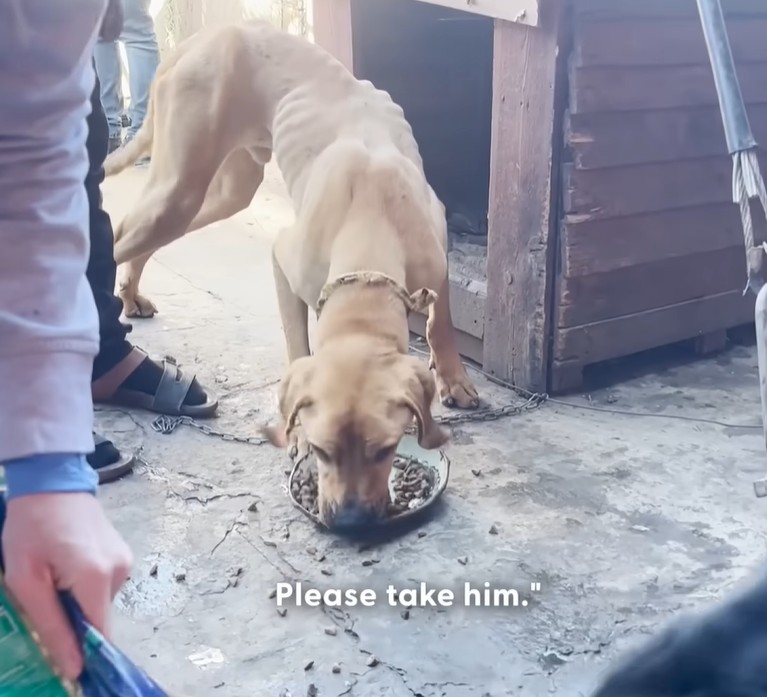
Eventually, the owner made the painful choice to ask the rescuers to take him.
It was not an easy goodbye.
Giving up a beloved animal can feel like losing a member of the family, especially when the decision comes from circumstances beyond one's control.
Yet keeping Crut where his needs could no longer be met was not helping him.
His owner recognized that he required a level of care the household could not provide.
And so, love took a different form.
Instead of holding on, the family allowed him to leave.
The rescuers left supplies behind to support the household and prepared Crut for his next journey.
Then came the small but significant act that marked the beginning of a new chapter.
They removed the chain from his neck.
The dog who had spent so much time confined to that little enclosure was finally able to walk away from it.
Crut did not fight or resist as the rescuers guided him toward their vehicle.
He followed them quietly.
Nobody could know what he understood about that moment.
But one thing was certain.
He was leaving the yard where his health had continued to decline, and he was moving toward the medical care he urgently needed.
VIDEO: Rescuers Find a Severely Underweight Giant Dog on a Chain — And Help Him Begin Again
Healing a Body That Had Been Weak for So Long
Taking Crut away from the yard was only the beginning.
His recovery required much more than a change of surroundings.
After prolonged inadequate nutrition, his body was not ready for sudden, unrestricted feeding.
The people caring for him had to approach his rehabilitation carefully.
Veterinary professionals monitored his condition, while his meals were managed gradually to support his weakened digestive system.
His care required attention and patience.
The goal was not simply to make him appear heavier as quickly as possible.
It was to help his body recover safely.
For a dog as large and underweight as Crut, rebuilding strength would take time.
His caregivers had to observe how he responded to the food he received and make adjustments when necessary.
There was no instant transformation.
The damage caused by prolonged nutritional deprivation could not be reversed in a single day.
But this time, Crut had something he had been missing.
Consistent access to appropriate care.
And with that care came the possibility of genuine recovery.
Gradually, his condition began to improve.
The changes were not immediate, but they became increasingly noticeable as the weeks passed.
His body started responding to the carefully managed feeding program.
The pronounced outline of his ribs slowly became less visible.
He began developing the healthy muscle that his large frame had been missing.
His movements also changed.
The dog who had once appeared exhausted by ordinary activity was beginning to regain energy.
As more time passed, his coat grew healthier, losing the dull appearance that had accompanied his earlier weakness.
Each improvement represented another step away from the desperate condition in which he had been discovered.
This was not simply about appearance.
It was about giving his body the resources and professional attention it needed to function properly again.
And the longer his recovery continued, the more clearly the results could be seen.
The Transformation That Revealed Crut's True Strength
Months after the rescuers first found him, Crut looked dramatically different.
The giant dog whose bones had once been so visible had developed a strong, healthy body.
His frame was no longer defined by severe thinness.
Instead, his renewed muscle and improved physical condition reflected the progress made through months of attentive care.
His coat had regained a healthier appearance.
His eyes were bright.
His movements carried energy that had been missing when the rescuers first encountered him.
The contrast between his original condition and his recovered appearance was extraordinary.
Looking at Crut now, it was difficult to imagine that he had once stood in a dirt enclosure, barely able to carry the weight of his own large body.
But the transformation had not happened by chance.
It was the result of a chain of compassionate decisions.
Someone noticed him.
People returned with food.
They recognized when their initial efforts were not enough.
His family agreed to let him receive more extensive care.
And veterinary professionals helped guide his recovery.
Every stage mattered.
Had the rescuers stopped visiting after their first attempt to help, Crut's situation might have remained unchanged.
Had his owner refused to let him go, the medical support he needed might have remained out of reach.
Instead, those involved worked toward the same goal.
Giving Crut a chance to become healthy again.
Beneath His Enormous Frame Was an Affectionate Puppy at Heart
Crut's physical recovery was impressive.
But the personality that emerged alongside it was just as memorable.
Given the hardship he had endured, his rescuers might reasonably have expected him to be cautious around people.
Some dogs become withdrawn or defensive after living through prolonged deprivation.
Crut, however, continued showing the same gentle disposition that had been visible even during his weakest days.
As his health improved, that affectionate personality became more apparent.
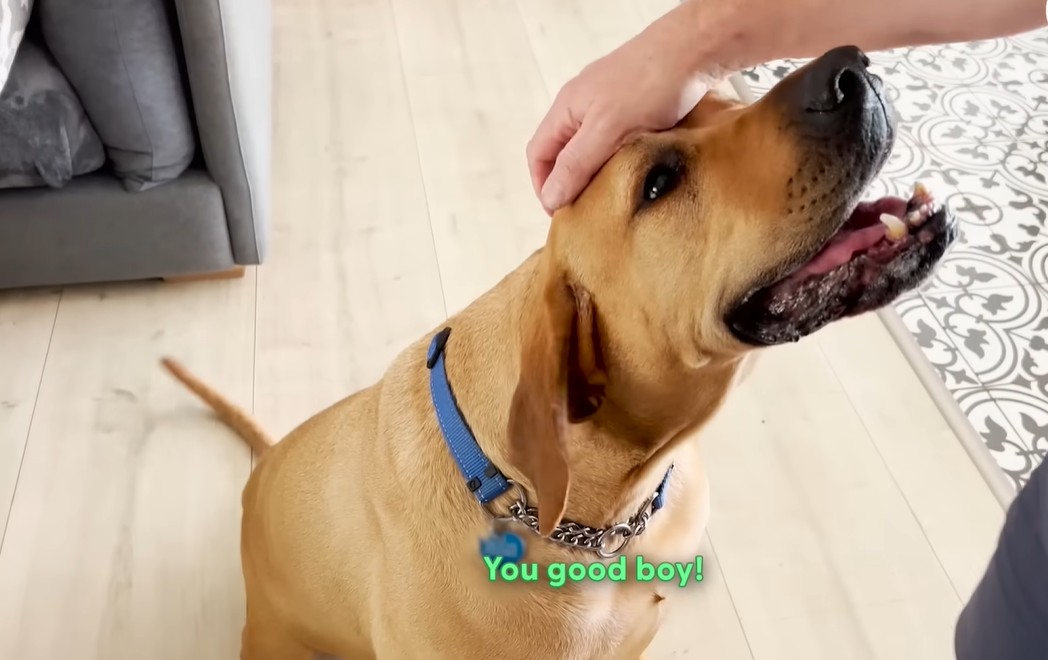
He enjoyed being around people.
He welcomed attention.
And he developed a particular fondness for belly rubs.
For such an enormous dog, his enthusiasm for affection was almost puppy-like.
The difference between his imposing size and his playful temperament made him especially endearing.
He could look like a powerful adult dog while behaving like an oversized youngster eager for love.
Perhaps the most meaningful part of his personality was how little it seemed to have changed.
Even when Crut had been desperately thin, he had accepted food gently from the rescuers' hands.
He had shown patience around other animals.
He had followed the people helping him without resistance when it was time to leave.
Those qualities had been present before he became healthy.
Recovery did not create his kind nature.
It gave him the strength to express it more fully.
The dog who had once spent his days conserving his limited energy could now engage with life in an entirely different way.
His restored physical health meant that ordinary pleasures were no longer overshadowed by the same level of weakness.
And his love of attention showed the affectionate companion he had been all along.
The Second Chance That Began With One Small Yard
There is something especially moving about rescue stories in which no single act solves everything.
Crut was not saved simply because someone handed him a bowl of food.
Nor did his future change the moment his chain was removed.
His recovery depended on people recognizing a difficult situation, returning to help, making compassionate decisions, and committing to a gradual process of healing.
The rescuers initially tried to improve his circumstances without separating him from his family.
When that approach failed to restore his health, they acknowledged that more specialized care was necessary.
And when his owner finally agreed to let him go, the decision opened a path toward recovery.
Crut's story also serves as a reminder that financial hardship can create painful situations for animals and the people who love them.
His family could not meet his needs, but the rescuers believed that he had been treated with affection.
The decision to surrender him was therefore not portrayed as an act of indifference.
It was a difficult recognition that he needed help they could not provide.
Today, the recovery documented in his story shows a dog who regained his strength, his healthy appearance, and the energy to enjoy human companionship.
He is no longer the severely underweight giant the rescuers encountered behind that fence.
He is a strong, affectionate dog whose favorite pleasures include the simple comfort of being loved.
His journey began with someone noticing what was happening in a small yard.
It continued because people cared enough to return.
And it succeeded because compassion was supported by practical action, veterinary attention, and patience.
Not every animal in need can recover through kindness alone.
Sometimes recovery also requires medical expertise, resources, and difficult choices.
Crut needed all of those things.
And because he received them, his life moved from prolonged weakness toward renewed health.
The gentle heart that had endured throughout his hardest days was still there.
Only now, it belonged to a dog strong enough to enjoy the life ahead of him.


