
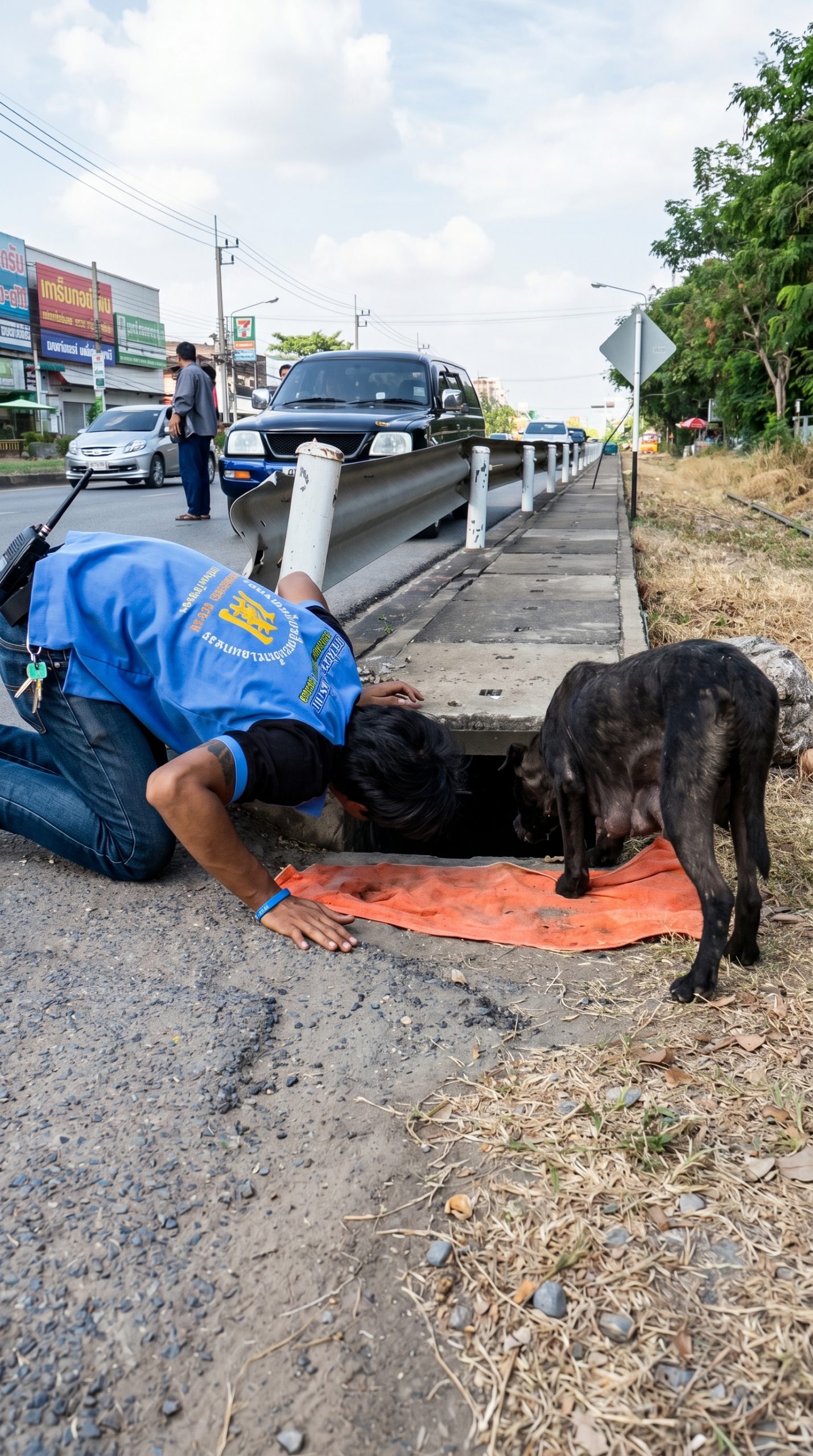
The mother dog kept circling the metal drainage cover, pausing again and again to stare into the darkness beneath the concrete.
She could hear something the people nearby were only beginning to notice.
A puppy was crying somewhere underground.
Every faint sound drew her attention back to the opening. She would move away for a moment, then return, watching and listening as though she could not bear to lose track of the little voice below.
Along a quiet railway road in Nakhon Ratchasima, Thailand, this worried stray dog was drawing attention for a reason that soon became clear.
Her puppy had fallen into an underground drainage system.
And getting the little animal out would be far more difficult than anyone initially expected.
A Mother's Cries Drew Attention to the Darkness Below
The trouble began when a curious puppy wandered away and accidentally entered the drainage network beneath the road.
The small animal became trapped inside the underground passages, unable to find its way back to the surface.
Above ground, its mother remained near a drainage opening.
Her anxious movements and repeated cries caught the attention of residents and passersby. What might otherwise have looked like an ordinary street drain had become the center of an increasingly urgent situation.
The puppy was somewhere beneath their feet.
But nobody could simply reach down and lift it out.
Local resident Chamree Srivichai was among those who heard the cries.
Throughout the night, she could hear the frightened puppy calling from beneath the pavement. Rather than ignoring the sounds, she spent hours trying to find a way to help.
Her efforts showed how difficult the situation had become.
The cries could be heard, but the puppy itself remained beyond reach.
The drainage passages extended farther than a person could access from the opening, and the trapped animal had moved deep inside.
According to reports of the rescue, the puppy was eventually found to be nearly 100 meters into the underground drainage system.
That distance turned an already worrying accident into a complicated rescue.
Above ground, the mother dog could do little except stay close and listen.
She could not enter the tunnel and bring her puppy back herself.
But she refused to walk away.
The Rescue Team Faced a Tunnel Too Small for Easy Access
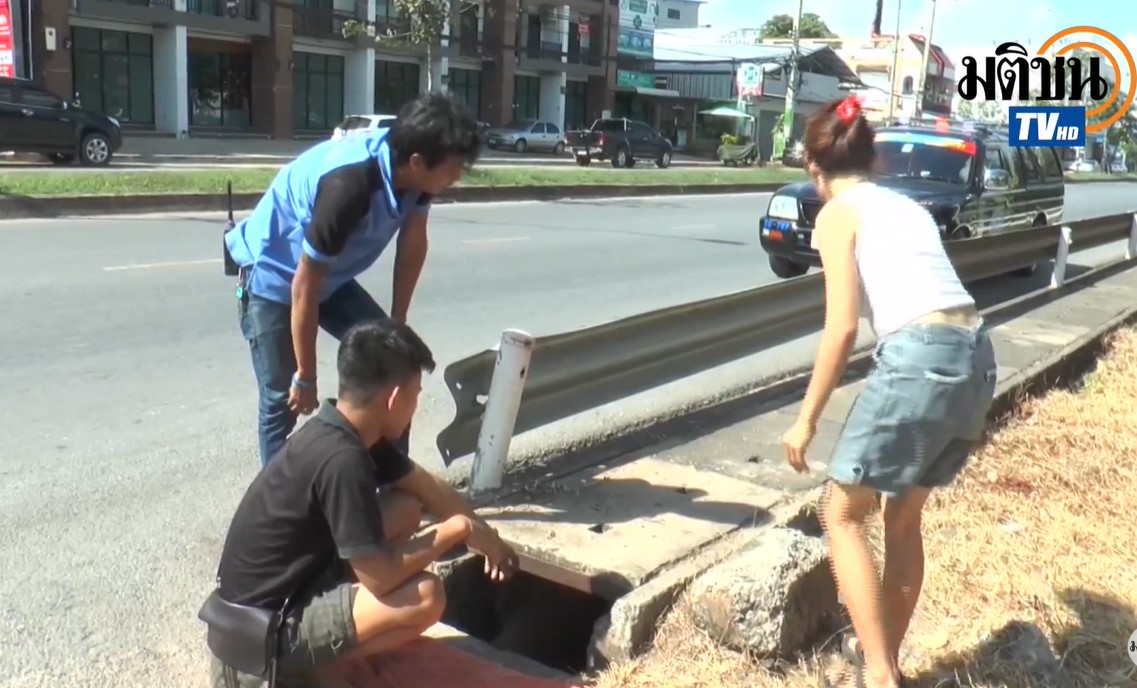
When local police officers and emergency responders from Thailand's Hook 31 rescue team arrived, they discovered that the physical conditions of the drain presented a serious obstacle.
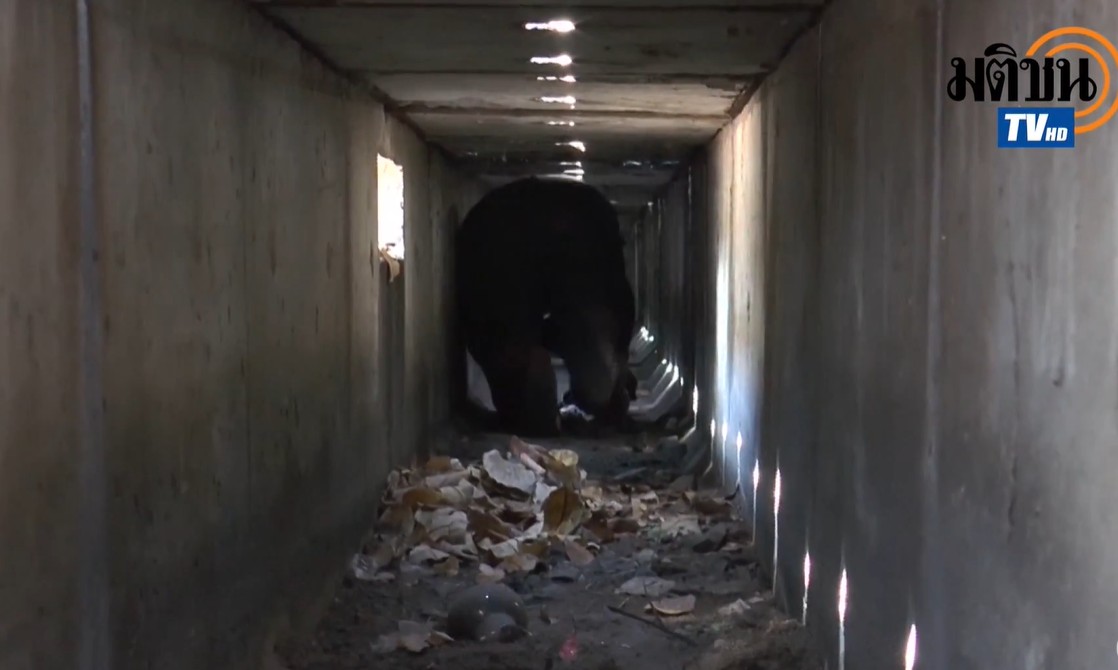
The passage was approximately 45 centimeters wide and 60 centimeters high.
It was an extremely confined space.
Even locating the puppy was difficult because the underground drainage network had passages running in different directions.
The rescuers initially attempted a method that would avoid sending anyone inside.
Using long poles, they tried to encourage the puppy to move toward the entrance.
It was a reasonable first approach.
If the little dog could be guided back through the passage, the team might be able to retrieve it without anyone having to crawl into the drain.
But the layout of the underground system worked against them.
The passages twisted and branched, and the puppy remained too far inside for the poles to solve the problem.
Each unsuccessful attempt left the rescuers facing the same difficult question.
How could they reach such a small animal in a place barely large enough for a person to move?
The puppy's cries had already continued through the night.
Waiting indefinitely was not a reassuring option.
And nearby, the mother dog remained focused on the opening, watching the activity around the drain.
One Officer Made the Decision to Go Inside
The rescue reached its turning point when an officer chose to enter the tunnel personally.
Instead of continuing to rely on tools from the surface, he lowered himself into the narrow concrete passage.
There was very little room to maneuver.
The dimensions of the tunnel meant that moving forward required crawling through a confined underground space, with the rescuer gradually making his way toward the trapped puppy.
It was a demanding decision.
The puppy was far from the entrance, and the twisting drainage system made the task more complicated than a straightforward crawl.
Yet the officer continued.
At the surface, the mother dog watched as the person trying to reach her puppy disappeared into the drain.
The people gathered nearby could no longer see what was happening farther inside.
For those waiting above ground, the next part of the rescue depended on the officer's ability to reach the little animal and bring it back through the same restricted passage.
The situation had moved beyond simply finding the source of the cries.
Someone was now inside the tunnel, attempting to carry the puppy out.
VIDEO: Brave Rescuer Crawls Into a Narrow Underground Drain to Bring a Trapped Puppy Back to Its Waiting Mother
The Long Wait Beside the Drain
While the officer worked underground, the mother dog continued moving anxiously around the opening.
She would pace nearby, then stop and look down.
At other moments, she listened.
Her behavior had been remarkably consistent from the beginning of the ordeal. Even as different people approached, examined the drain, and attempted to help, she remained near the place where her puppy had disappeared.
The animal had no way of knowing exactly what the rescuers were doing.
But the faint sounds from below continued to hold her attention.
For the people standing nearby, there was little to do except wait for the officer to return.
The rescue required patience.
The tight space left little room for quick movement, and the officer could not simply stand up or turn around freely.
He had entered a passage designed to carry drainage water, not to allow a person to travel comfortably through it.
The fact that a puppy could disappear so far into such a system showed why ordinary retrieval attempts had failed.
What seemed like a small opening at the roadside concealed a much larger network beneath the concrete.
For the mother dog, however, the situation remained painfully simple.
Her puppy was still down there.
And until the little animal returned, she showed no sign of wanting to leave.
A Small Puppy Finally Emerged From the Darkness
Eventually, there was movement inside the drainage opening.
The officer was making his way back.
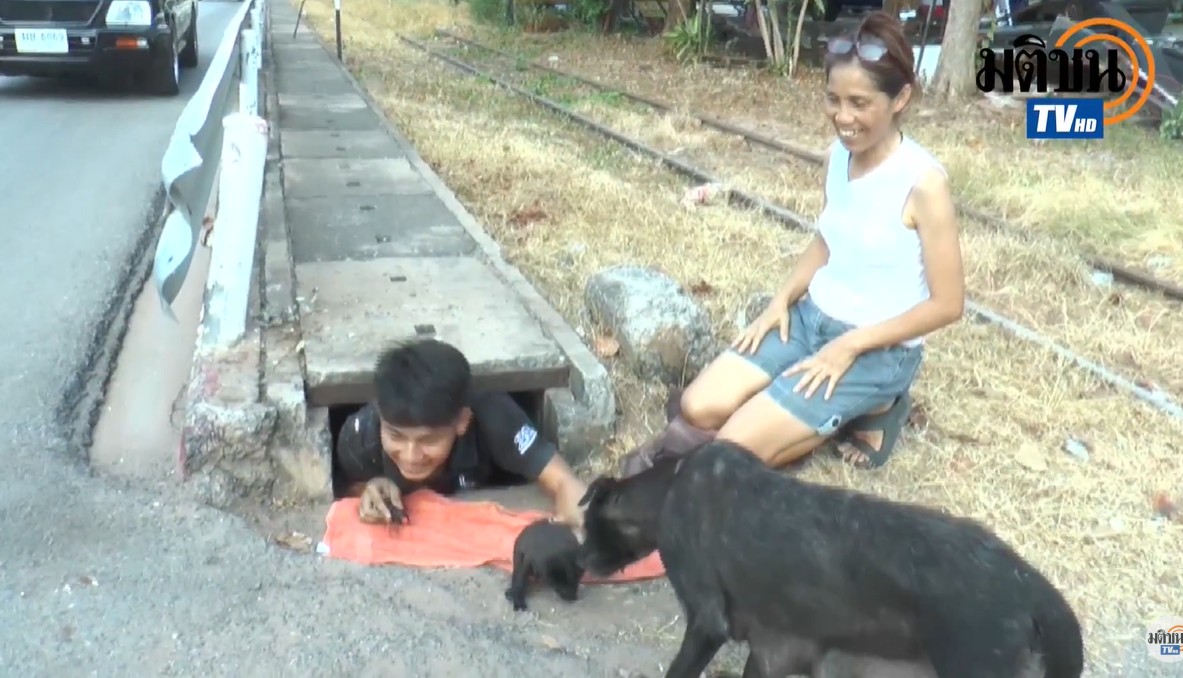
He slowly emerged from the confined passage, covered in dirt and visibly exhausted by the demanding rescue.
But he had not returned empty-handed.
He was carrying the puppy.
After hours of uncertainty, the little animal was finally coming back above ground.
The rescue team had succeeded where the earlier attempts with long poles could not.
The officer had reached the trapped puppy and brought it through the narrow underground passage to safety.
For the people watching, the moment brought visible relief.
The puppy had been trapped far beneath the road, out of reach and unable to find its own way out.
Now it was in human hands, no longer alone inside the drainage system.
Volunteers gently attended to the rescued animal, checking its condition and offering comfort after the frightening experience.
One bystander reportedly called the puppy a lucky little girl while softly petting it.
The comment captured the relief surrounding the rescue.
The animal had spent a long time trapped in a place where reaching it seemed almost impossible.
But the most emotional moment was still to come.
Because the puppy's mother was waiting nearby.
The Reunion Everyone Had Been Hoping to See
As soon as the mother dog recognized her rescued puppy, her behavior changed.
The restless pacing gave way to an eager rush toward the little animal.
Her tail wagged rapidly.
She moved close, sniffed her puppy, and began licking its face.
The same mother who had spent the ordeal circling the drainage opening was finally able to make contact with the baby she had been unable to reach.
The reunion was simple.
There was no elaborate celebration or dramatic display.
Just a mother dog moving toward her puppy, checking it through scent and touch, and remaining close after their separation.
Yet for the people who had watched the rescue unfold, those small gestures meant a great deal.
They had seen the mother's worry.
They had heard the puppy's cries.
They had watched rescuers struggle with an underground passage that offered almost no easy way to reach the trapped animal.
Now the two dogs were together again.
The mother continued showing affection toward her puppy, her tail moving as she greeted the little survivor.
Those who witnessed the reunion smiled at the sight.
The relief was shared not only by the animals but also by the people who had worked to make the reunion possible.
More Than a Difficult Rescue
For the rescue workers, bringing the puppy out of the tunnel was an achievement in itself.
The operation had required coordination, determination, and a willingness to confront an unusually confined space.
The team had first tried to solve the problem from outside the drain.
When that failed, one officer accepted the difficult task of crawling through the underground passage.
His efforts ultimately allowed the puppy to return to the surface.
But the emotional significance of the rescue became especially clear when the mother dog greeted her baby.
One officer later reflected that helping an animal in danger could mean something larger than saving a single life.
In this case, the team had also reunited a family.
That distinction mattered.
The puppy was not simply an animal trapped underground. It was a young dog whose mother had remained nearby throughout the ordeal, responding to its cries and refusing to abandon the place where it had disappeared.
Her actions gave everyone an unmistakable reason to keep trying.
The rescuers were not only working to free a frightened puppy.
They were working to return it to the mother waiting above.
The Quiet Power of Refusing to Walk Away
There are several reasons this rescue is memorable.
A local resident heard the cries and spent hours trying to help.
Emergency responders and police took the situation seriously enough to organize a difficult recovery.
An officer entered a drainage passage so small that moving through it required crawling.
And a mother dog remained close to the opening until her puppy was brought back.
None of those actions alone could have guaranteed success.
Together, they changed the outcome for the trapped animal.
The source does not describe a later veterinary examination, long-term recovery, or what happened to the dogs after the reunion.
What it does confirm is already meaningful.
The puppy was rescued from the underground drainage system, received immediate attention from volunteers, and was reunited with its mother.
For the little dog, the difference was enormous.
Instead of remaining lost inside a dark tunnel, it was back above ground.
Instead of hearing its mother from somewhere beyond the concrete, it could feel her close again.
And for the mother dog, the long period of watching, circling, and listening finally ended with the one thing she had been waiting for.
Her puppy came back.
This rescue reminds us that compassion is often expressed through practical decisions rather than grand promises.
A person stops to listen.
Someone asks for help.
A rescue team keeps trying after the first method fails.
And an officer chooses to enter a difficult space because a small life is still waiting inside.
The reunion beside that drainage opening in Thailand was the result of all those choices.
For everyone who witnessed it, the mother's eager greeting offered a fitting conclusion to an exhausting rescue.
After everything that had happened beneath the road, the most important sight was also the simplest.
A mother and her puppy were together again.


