
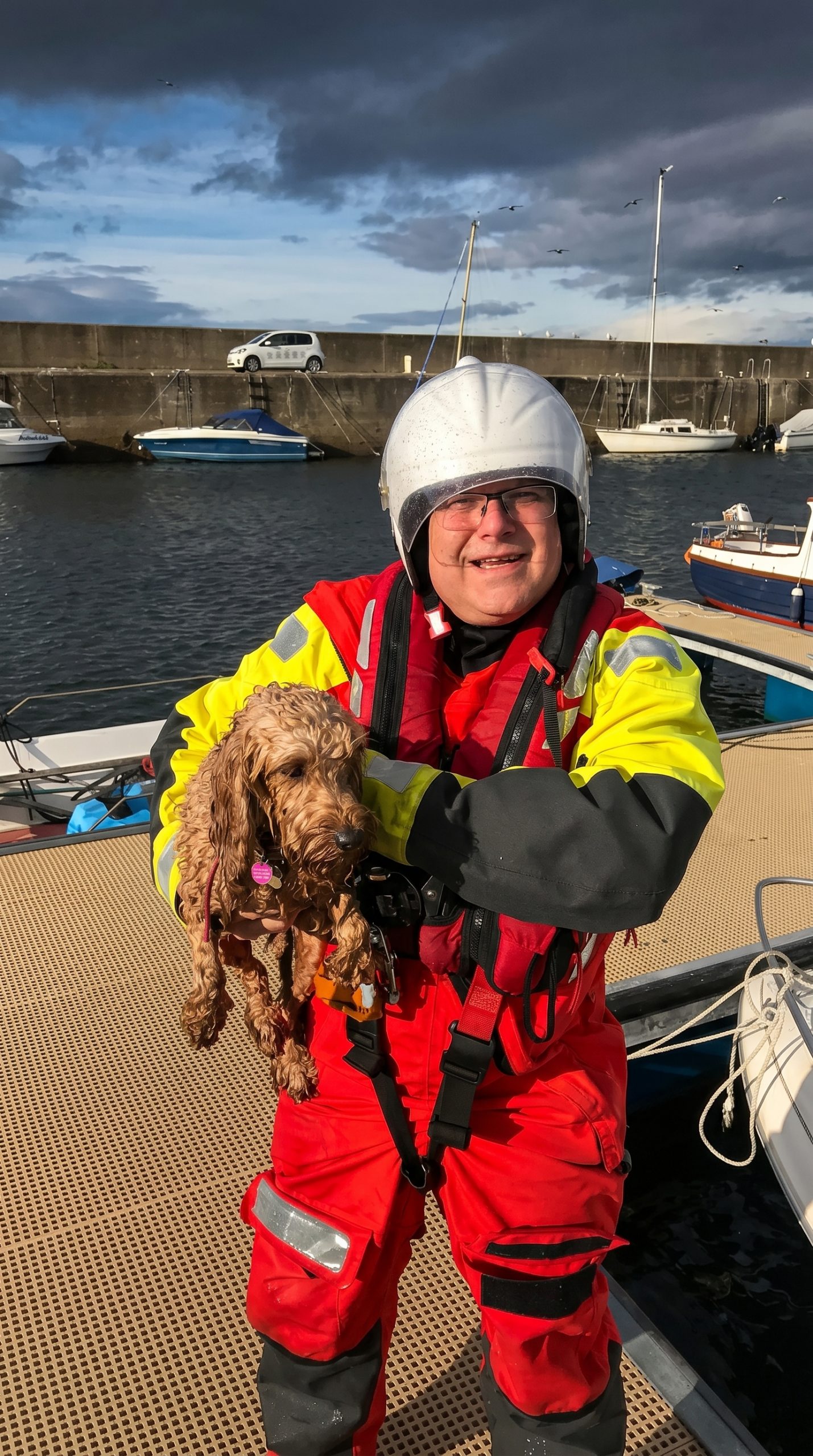
The little cockapoo was barely visible between the waves.
One moment, his small body rose above the gray water. The next, another swell seemed to swallow him from sight.
Along the rocky shoreline of Cummingston in Moray, Scotland, strong winds swept across the coast as powerful waves crashed against the rocks.
Somewhere beyond the safety of land, a frightened dog was struggling to stay alive.
His fur was soaked. The water was bitterly cold. And with every passing minute, the sea seemed to be taking more of his strength.
He could not simply turn around and walk home.
He needed someone to find him.
And in a stretch of ocean so vast, finding one small dog would be an extraordinary challenge.
A Morning Walk That Became a Race Against Time
The day had begun with a walk along the Scottish coast.
For the cockapoo's owner, it should have been time spent with a beloved companion near the sea.
Instead, the situation changed suddenly when the little dog disappeared into the rough water.
The shoreline at Cummingston offered little comfort that morning. Strong winds and relentless waves made the conditions dangerous, even for experienced people working near the water.
For a small dog caught in those conditions, the danger was even greater.
The cold sea quickly soaked his coat.
Currents carried him away from the rocks, while the movement of the waves made it difficult for him to keep his head above the surface.
His owner faced a frightening reality.
Her beloved companion was somewhere in the water, and trying to reach him herself could put another life at risk.
Rather than entering the dangerous sea, she contacted emergency services.
It was a decision that would become an important part of the rescue.
The UK Coastguard understood the urgency immediately.
Lifeboat crews along the Moray coast were alerted, and a search began for the missing cockapoo.
But there was a serious problem.
The rescuers were looking for a very small animal in an enormous stretch of moving water.
Even knowing approximately where he had disappeared did not guarantee that anyone would see him again.
Somewhere Between the Waves, He Was Still Holding On
Out in the North Sea, the cockapoo had no protection from the cold.
His little body moved with the swells, rising and falling as the water carried him farther from safety.
Every movement required effort.
Every passing minute meant more time in conditions that could quickly overwhelm an exhausted animal.
The dog was not described as a powerful swimmer capable of navigating the open sea. He was a small family pet caught in circumstances far beyond an ordinary walk.
And the water offered no place to rest.
There was no dry ground beneath his paws.
No sheltered corner.
No opportunity to escape the waves on his own.
The longer the search continued, the more urgent the situation became.
Coastguard press officer Sam Sinclair later acknowledged just how difficult such an operation could be.
Locating a small animal in rough seas is an enormous challenge. Waves constantly change the view, and something as small as a dog can disappear from sight almost instantly.
For the crews searching below, the problem was not simply reaching the animal.
First, they had to find him.
Meanwhile, the cockapoo continued fighting to remain above the water.
The sea was stronger than he was.
But he had not disappeared beneath it.
An Unexpected Pair of Eyes Above the Ocean
As lifeboat crews searched the unsettled water, an important opportunity emerged.
A Coastguard helicopter was already airborne during a training exercise.
When the emergency became known, the helicopter was redirected to help locate the missing dog.
From above, its crew had a wider view of the water than the rescuers operating at sea level.
Even so, the task remained difficult.
The ocean was gray and restless. Waves broke across the surface, making it challenging to distinguish a small animal from the surrounding movement.
Then something caught the crew's attention.
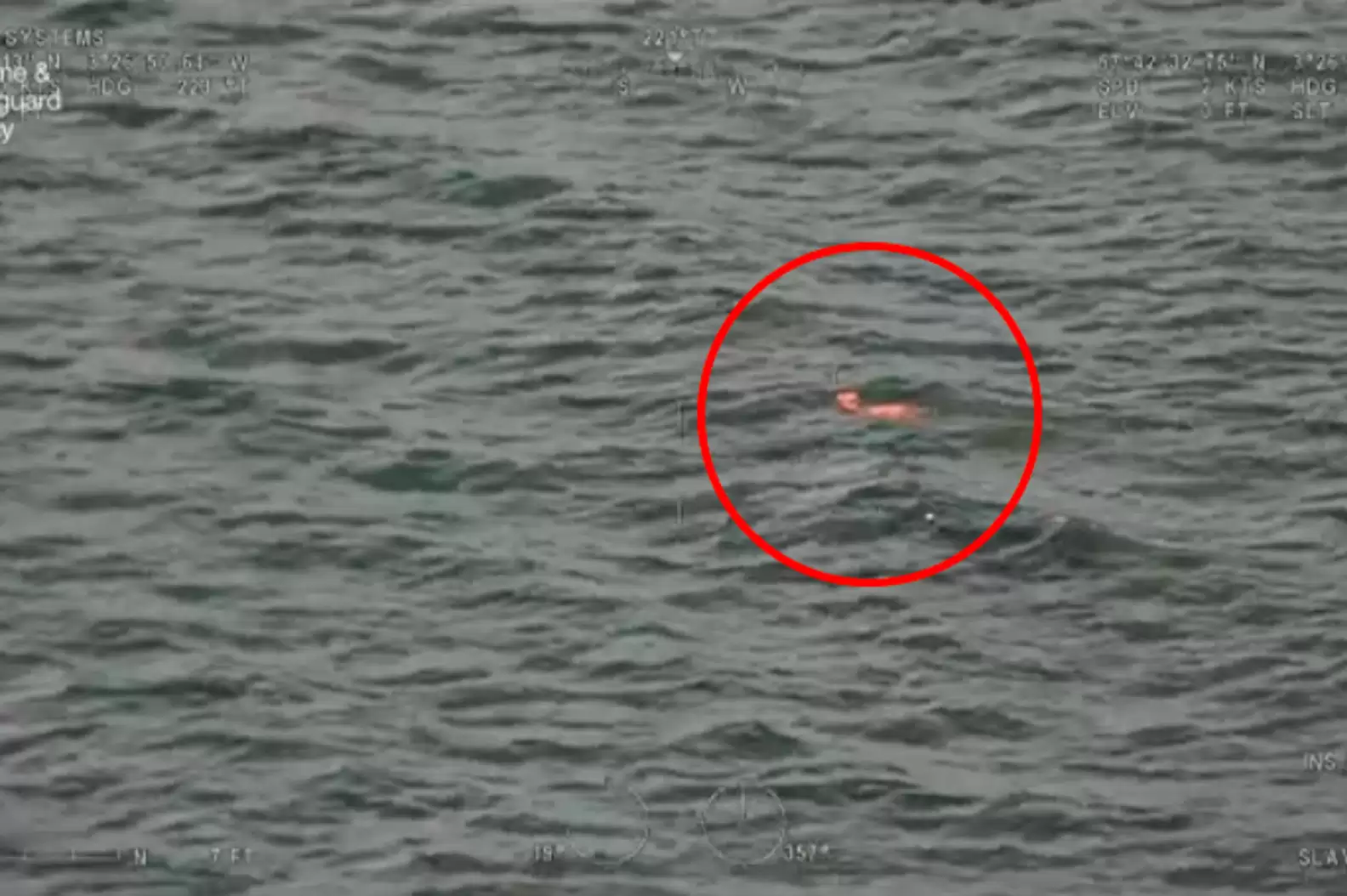
Approximately 50 meters from shore, they spotted a small dark figure among the swells.
It was the cockapoo.
After around 40 minutes in the freezing water, he was still alive.
The sighting transformed the operation.
The rescuers finally had a location.
And for the little dog, who had been battling the sea for so long, help was now moving directly toward him.
VIDEO: Lost Among the Waves for 40 Minutes — A Helicopter Spots the Little Dog Fighting to Survive
The Moment the Search Became a Rescue
Finding the cockapoo was only the first step.
The lifeboat still had to reach him through the rough conditions.
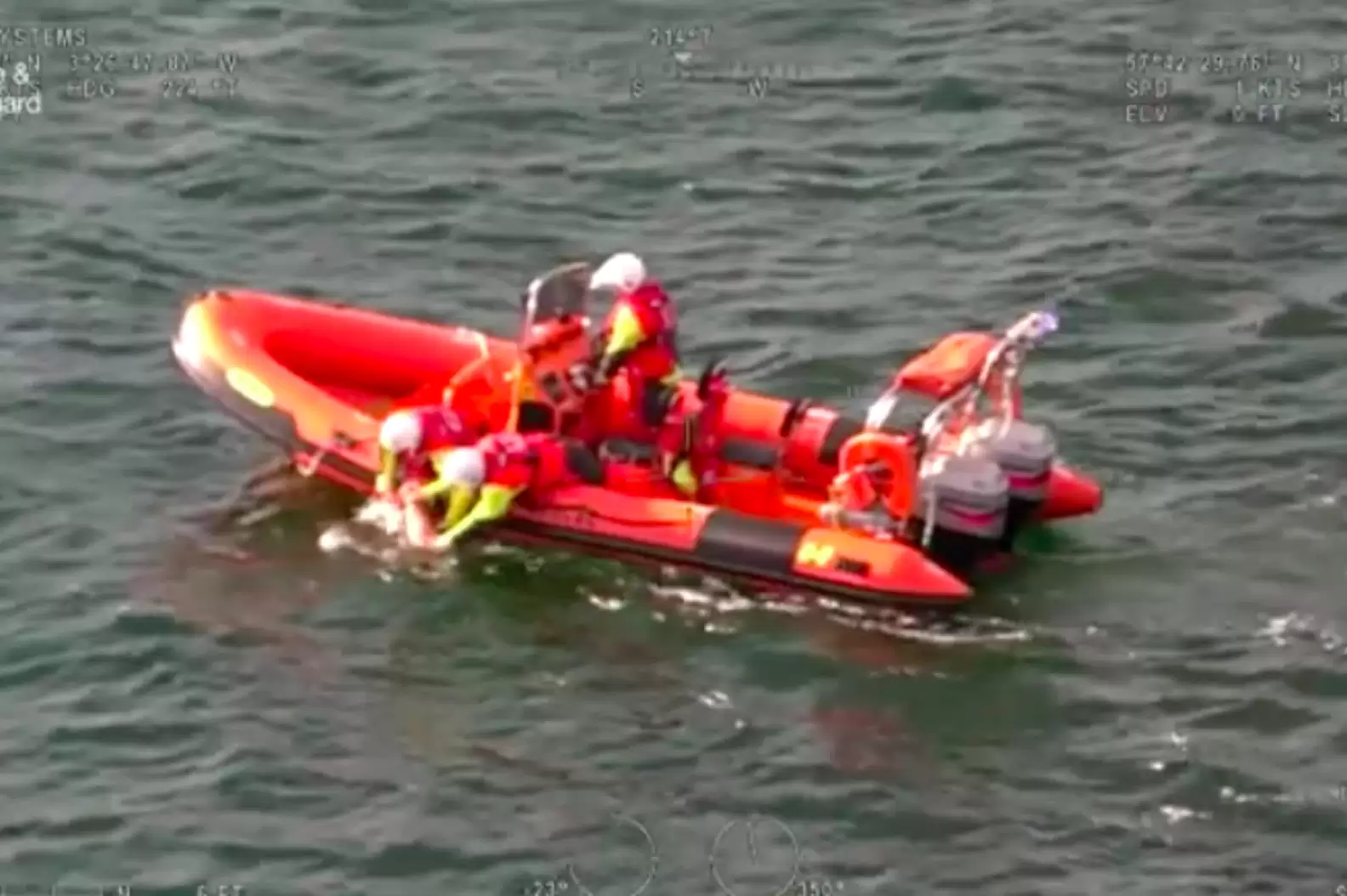
With the helicopter hovering above, its crew provided guidance to the rescuers on the water.
This coordination was essential.
From the lifeboat, the tiny dog could easily have been hidden behind another wave. From the air, the helicopter crew could help direct the vessel toward his position.
The distance separating the dog from safety was gradually reduced.
A search that had seemed almost impossible was becoming a carefully coordinated rescue.
The lifeboat crew maneuvered through the turbulent water, approaching the small figure that had been struggling for so long.
The cockapoo had already used an enormous amount of energy simply staying afloat.
There was little reason to believe he could endure such conditions indefinitely.
At last, the rescuers reached him.
They leaned down and lifted the soaked dog out of the freezing sea.
For the first time since he had been swept into danger, he was no longer being carried by the waves.
He was aboard the rescue vessel.
Safe from the water.
And surrounded by people who could begin helping him.
It was the moment his desperate struggle changed into a chance at survival.
A Small Body That Had Almost Nothing Left to Give
Once the cockapoo was aboard the lifeboat, the toll of his ordeal became clear.
He was exhausted.
His fur was completely soaked, and his body trembled from the cold.
After spending so long trying to remain afloat, he had very little strength remaining.
The rescuers did not treat his escape from the water as the end of the emergency.
He still needed immediate attention.
Crew members wrapped him in thermal blankets, working to protect him from the cold and help restore his body temperature.
They also began providing first aid.
The immediate priority was simple but vital: keep the little dog safe, help him regain warmth, and prevent his condition from worsening.
There was no dramatic change in an instant.
Being lifted from the water did not erase the physical strain of everything he had endured.
His trembling and profound fatigue showed how much the experience had cost him.
Sam Sinclair later described the cockapoo as extremely tired, thoroughly wet, and dangerously cold when rescuers brought him aboard.
Those observations made the importance of the timing unmistakable.
The helicopter had spotted him while he was still fighting to stay afloat.
The lifeboat had reached him before the cold and exhaustion completely overwhelmed him.
Another delay could have meant a very different outcome.
Yet the little dog was now receiving care instead of battling the sea alone.
The thermal blankets offered protection that the open water could never provide.
The hands reaching toward him were no longer trying to locate him among the waves.
They were working to keep him warm and safe.
The News His Family Had Been Hoping to Hear
Back on shore, there was still one important question.
Had the cockapoo suffered serious harm during his time in the water?
Although he had been severely exhausted and chilled, the rescue brought encouraging news.
Despite his ordeal, he had escaped serious injury.
As a precaution, he was taken for a veterinary examination.
The assessment brought relief: the little dog was expected to make a full recovery.
It was the outcome his owners had desperately hoped for when the emergency began.
The cockapoo who had vanished into rough water was alive.
The animal who had spent around 40 minutes fighting against the waves had been brought safely back to land.
And the family who feared losing him would see him again.
Soon afterward, the dog was reunited with his worried owners.
The reunion was emotional, filled with relief and gratitude after an experience that could so easily have ended in loss.
For his family, the rescue was more than a successful search operation.
It meant the return of a cherished companion.
The familiar presence that had suddenly disappeared during a walk was back within reach.
And the frightening uncertainty of not knowing whether he would survive had finally given way to hope.
One Decision Helped Protect More Than One Life
The successful rescue also carried an important message about emergencies near the sea.
When an animal is in danger, the natural instinct of a loving owner may be to rush forward and help.
But rough water can be dangerous for people as well as pets.
Strong currents, cold temperatures, and powerful waves can turn an attempted rescue into an even larger emergency.
In this case, the cockapoo's owner made the responsible choice.
She contacted emergency services rather than attempting to enter the hazardous water herself.
That call allowed trained personnel to coordinate the search using the equipment and resources available to them.
The lifeboat crews brought their knowledge of rescue operations at sea.
The helicopter crew provided a crucial view from above.
Together, they were able to locate a small animal that might otherwise have remained hidden among the moving waves.
The operation also showed how an unexpected circumstance can make a meaningful difference.
The helicopter was already in the air for training when it was redirected.
Its availability gave rescuers an additional way to search the vast stretch of water.
Without that aerial perspective, finding such a small dog in difficult sea conditions would have been even more challenging.
Sinclair emphasized the importance of seeking professional assistance during emergencies on the water.
The lesson applies well beyond this one rescue.
Protecting a beloved animal also means recognizing when a situation is too dangerous to handle alone.
Calling for trained help is not abandoning a pet.
Sometimes, it is the most important action an owner can take.
A Little Life Worth Searching For
There is something deeply moving about the contrast at the heart of this rescue.
An enormous, restless sea.
A tiny dog fighting to remain afloat.
And a group of people determined to find him despite the odds.
The cockapoo could not have known that rescuers were searching for him.
He could not have understood the helicopter moving above the waves or the coordination taking place between its crew and the lifeboat.
He was simply trying to survive.
Yet beyond the water, people were making every effort to bring him home.
The search required careful observation.
The recovery demanded precise teamwork.
And the care that followed helped protect him after one of the most frightening experiences a small family pet could face.
The outcome was not simply the result of luck.
It was made possible by his owner's immediate call for assistance, the Coastguard's response, the helicopter crew's sighting, and the lifeboat team that finally reached him.
Each part mattered.
And together, those actions gave one exhausted little dog another chance.
What makes this story memorable is not only how close the cockapoo came to danger.
It is the fact that his life was treated as worth the effort of searching.
Worth the difficult journey through the waves.
Worth the careful attention once he was brought aboard.
By the end of the ordeal, the tiny figure that had almost disappeared into the gray sea was no longer alone.
He had been rescued, examined, and returned to the people who loved him.
His recovery was expected to be complete.
And for a family standing on the Scottish coast, the day that began with fear ended with a reunion they would not soon forget.
Sometimes, a second chance begins with something as simple as making the right call for help.
And sometimes, it arrives from the sky, just when a little life needs it most.


