
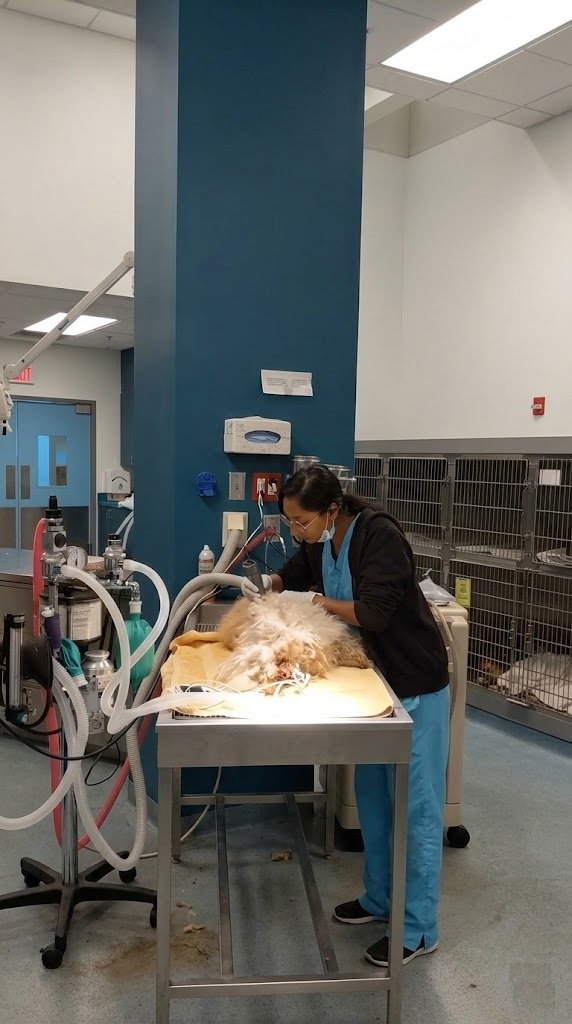
When the staff at the Richmond SPCA first saw Lionheart, they could barely recognize the small dog beneath the tangled mass of fur.
His coat had become so thick, dirty, and tightly matted that it was difficult to tell where his head ended and his body began.
Somewhere inside that heavy covering was a living animal.
A Poodle who had spent years without the ordinary comforts most dogs know.
A dog who had almost disappeared from the world around him.
And yet, despite everything he had endured, Lionheart was about to discover something he had been missing for a very long time.
The gentle attention of people who wanted to help him.
A Life That Had Slowly Disappeared Beneath a Bed
Lionheart's circumstances were difficult to comprehend.
By the time he arrived at the Richmond SPCA, he had spent seven years living in near-total isolation.
For the final two years with his former owner, his world had become even smaller.
He remained beneath a bed, rarely coming out.
According to the owner, food was pushed under the bed so he could eat without leaving his hiding place.
There were no regular walks.
No meaningful companionship.
No familiar routine of affection and attention.
For most dogs, life is filled with small interactions that provide comfort and security. They recognize footsteps, respond to voices, explore their surroundings, and seek connection with the people around them.
Lionheart had been deprived of much of that ordinary experience.
His existence had narrowed to the space beneath a piece of furniture.
As time passed, the condition of his coat deteriorated.
Poodles require consistent grooming because their hair continues growing and can become severely tangled without proper care.
In Lionheart's case, the neglected hair accumulated into dense, hardened mats surrounding his body.
What should have been a soft, manageable coat had become a physical burden.
Walking was difficult.
Even basic activities such as eating and drinking had become uncomfortable.
And because his body was concealed beneath so much tangled hair, the full extent of his physical condition remained hidden.
It would take the attention of experienced animal-care professionals to understand what he had endured.
The Day Lionheart Finally Became Visible
One spring morning, Lionheart was brought into the care of the Richmond SPCA.
His arrival left a lasting impression on the people who saw him.
Robin Robertson Starr, the organization's CEO, later described how difficult it was to identify the animal beneath the accumulated fur.
When she first looked into his kennel, she could not immediately distinguish the front of his body from the back.
It was an extraordinary indication of how severely his grooming needs had been neglected.
But the rescuers were not simply looking at a badly matted coat.
They were looking at a dog whose condition made even a routine medical examination difficult.
The thick covering concealed much of his body.
Handling him without causing additional discomfort required particular care.
For Lionheart, the journey toward recovery could not begin with an ordinary bath or a quick haircut.
His coat had become too severe for that.
The veterinary team needed to remove the accumulated hair carefully, while protecting a dog who had already experienced years of isolation.
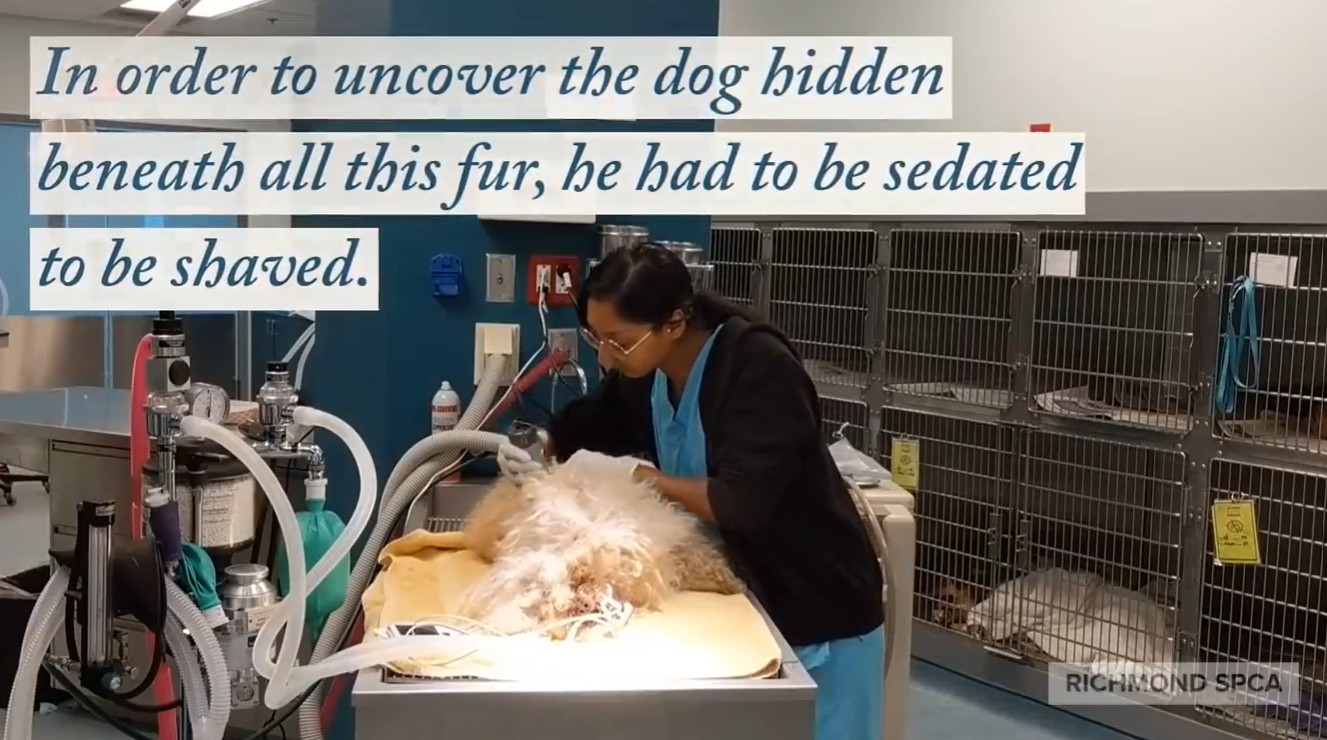
They chose to sedate him gently before beginning the extensive grooming process.
This would allow them to work through the hardened mats without adding unnecessary fear or stress.
It was a practical medical decision.
But it also represented something much larger.
For the first time in years, Lionheart's needs were being placed at the center of every decision.
His comfort mattered.
His health mattered.
And the people caring for him were prepared to take the time necessary to help.
Removing the Weight of Years
The process of uncovering Lionheart required patience.
His coat could not simply be brushed out.
The thick layers had to be carefully clipped away.
As the veterinary team worked, the enormous amount of accumulated hair began to separate from his body.
The task continued for hours.
Layer after layer was removed.
The tangled mass that had surrounded him for so long gradually gave way to the small Poodle underneath.
What emerged was a thin, physically weakened dog in need of continued veterinary attention.
The transformation was striking.
But it was important to remember that removing the matted coat did not mean the effects of neglect had disappeared.
It only made those effects easier to see.
VIDEO: After Years Hidden Beneath a Bed, Lionheart Is Finally Freed From His Severely Matted Coat
Beneath the layers of neglected hair, Lionheart's body showed just how much care he needed.
His nails had grown excessively long.
His skin showed signs of prolonged irritation and discomfort.
His body was thin.
These were not problems that could be solved through grooming alone.
The first essential step had been completed: the veterinary team could finally examine and care for him without the heavy obstruction of his coat.
For an animal who had spent so much time physically restricted by tangled hair, that was an important turning point.
Yet the greatest changes were still ahead.
The Medical Needs Hidden Beneath His Coat
Once Lionheart's coat had been removed, the Richmond SPCA staff could begin addressing his broader health problems.
His skin required attention because of the discomfort associated with the severe matting.
Veterinary examinations also revealed intestinal parasites and significant dental issues.
These problems had gone untreated during his previous life.
Each condition required professional care.
And together, they showed why his rescue could not end with a dramatic physical makeover.
Lionheart needed time to recover.
His body had to become stronger.
His medical needs had to be addressed.
Just as importantly, he needed an environment where his well-being would no longer be overlooked.
The contrast between his condition on arrival and his appearance after grooming was remarkable.
Without the heavy covering of hair, his small frame was visible again.
But his thinness also made clear that he had a longer recovery ahead of him.
A clean coat was not the same thing as a healthy body.
And physical improvement was only one part of the care he needed.
For a dog who had spent years with little companionship, learning to feel comfortable around people would also take time.
The Richmond SPCA staff understood that his progress could not be measured only by how different he looked.
It would also be reflected in his comfort, confidence, and growing ability to respond to human kindness.
Learning That Human Hands Could Be Gentle
Over the following months, Lionheart received veterinary treatment and patient attention from the shelter staff.
His physical condition gradually improved.
He became stronger.
And with continued care, his behavior began to change as well.
For years, interactions with people had been limited.
Now he was surrounded by caregivers whose purpose was to meet his needs rather than ignore them.
That difference mattered.
A dog recovering from long-term isolation cannot be expected to immediately understand that a new environment is safe.
Comfort may take time.
Trust may return slowly.
And even small improvements can represent meaningful progress.
Lionheart's rescuers gave him the opportunity to experience care consistently.
Day after day, he was treated as an animal worthy of attention and compassion.
The frightened expression he had shown during his early days began to soften.
His growing confidence suggested that he was becoming more comfortable with the people around him.
There was no single moment that erased his past.
His recovery was gradual.
But the changes were real.
The little Poodle who had once lived almost entirely out of sight was beginning to participate in a different kind of life.
A life where people noticed him.
Where his health was monitored.
Where he could receive affection rather than remain forgotten beneath a bed.
The staff had helped him recover physically.
Now they were seeing the equally meaningful changes that come when an animal begins to feel secure.
A New Name and the Family He Deserved
Lionheart's story did not end at the shelter.
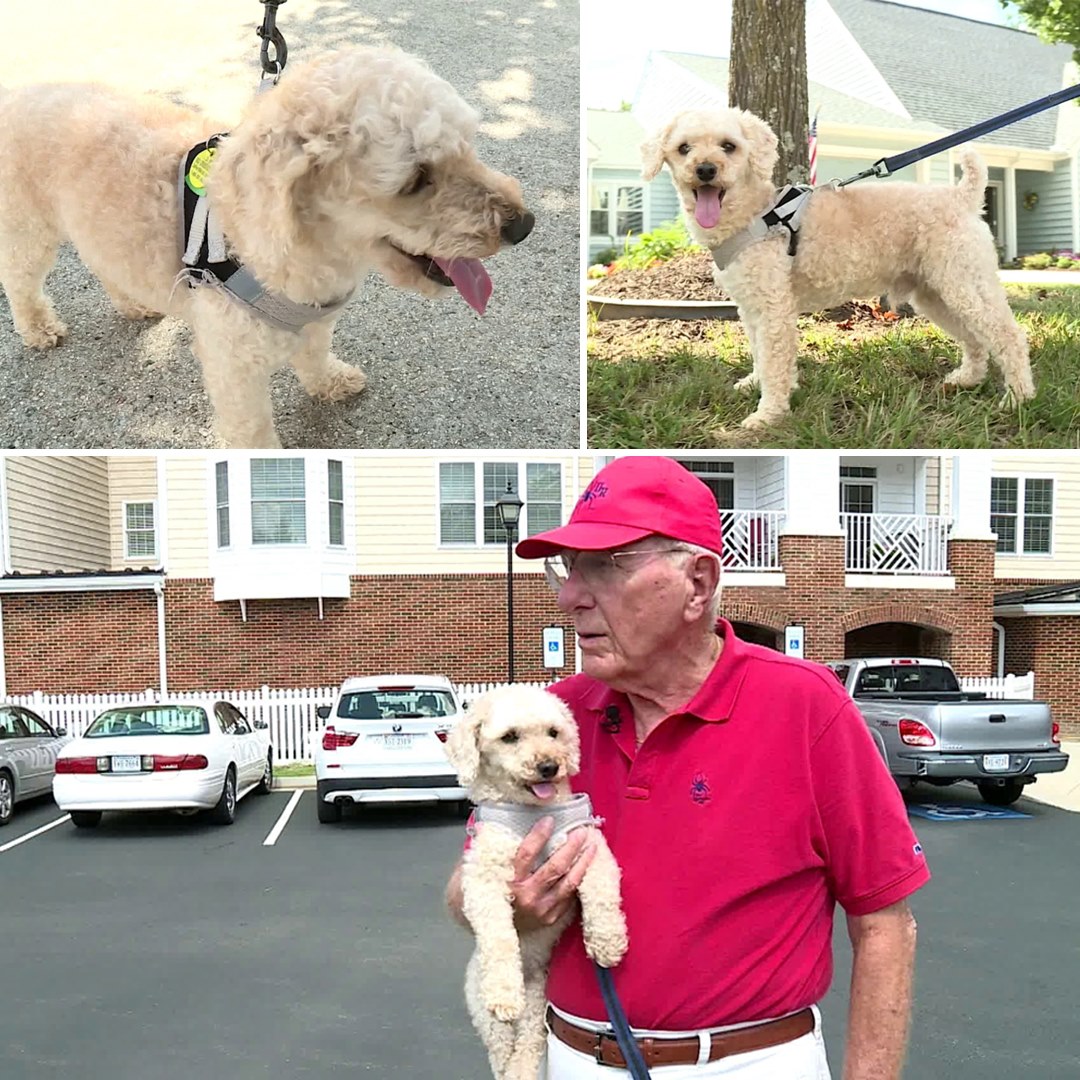
Eventually, he found a permanent home with Bill Brown and his wife.
By then, the little Poodle had been given a new name.
Cody.
For Bill and his wife, the dog they welcomed into their lives was much more than an animal with an unusual appearance or a difficult history.
He was a companion deserving of affection and stability.
Bill later recalled how thin Cody had been when they first got him.
Because the SPCA had removed his severely matted coat, there was little hair to conceal his fragile frame.
Learning about his earlier circumstances came as a surprise to the couple.
They had not expected such a difficult background.
But knowing what he had experienced gave additional meaning to the home they could now provide.
For years, Cody's life had been defined by isolation.
Now it included the everyday experiences of belonging to a family.
He had a safe place to sleep.
He received regular affection.
And he no longer had to spend his days hidden beneath a bed.
Those changes might seem ordinary to people who have always cared for a beloved pet.
But for Cody, they represented a completely different existence.
The comforts that many dogs experience throughout their lives had been absent from his for years.
Now they were part of his daily routine.
The little dog who had once been almost impossible to recognize beneath layers of neglected fur had become a cherished family companion.
His earlier suffering could not be undone.
But it no longer defined every part of his future.
The Remarkable Ability to Trust Again
One of the most meaningful parts of Cody's journey was not the dramatic change in his appearance.
It was his ability to build relationships with people after spending so much of his life without proper companionship.
Robin Robertson Starr has reflected on this quality when discussing animal rescue.
She described dogs as remarkably resilient animals that often retain the ability to love people, even after experiencing prolonged hardship.
Their willingness to give humans another chance is something she finds especially moving.
Cody's story illustrates that resilience.
Despite years of isolation, he eventually became comfortable enough to accept care and affection.
Despite the discomfort associated with his neglected coat and untreated medical problems, he recovered sufficiently to begin a new life.
And despite having spent so long hidden from view, he eventually found a place where he was genuinely wanted.
His transformation was not the result of one act alone.
It involved veterinary expertise.
Extensive grooming.
Medical treatment.
Months of patience.
And finally, a family prepared to welcome him into their home.
Each part mattered.
The rescue brought him into safety.
The veterinary care addressed his physical needs.
The shelter staff helped him regain strength and confidence.
And his adoptive family gave him the opportunity to experience the lasting security of a home.
There is an important lesson in that sequence.
Animal rescue is not always a single dramatic moment.
Sometimes, the most meaningful work happens afterward, through ordinary acts of dependable care.
From Forgotten to Finally Loved
Cody's journey began in circumstances no companion animal should have to experience.
For two years, he spent most of his time beneath a bed.
His coat grew into a heavy mass that restricted his movements and concealed his physical condition.
His health needs went unaddressed.
And the companionship that dogs depend on was largely missing from his life.
When he arrived at the Richmond SPCA, the staff could barely recognize the small Poodle beneath the tangled hair.
But they recognized that he needed help.
They gave him careful medical attention.
They removed the coat that had become such a burden.
They supported his recovery.
And they helped prepare him for the possibility of a better future.
That future eventually arrived through Bill Brown and his wife.
Today, Cody's story is remembered not only because of how different he looked after being rescued, but because of what came afterward.
He gained a home.
He gained companionship.
And he gained the safety and affection that had been missing for so many years.
His experience also offers a reminder about the responsibility that comes with caring for an animal.
Food alone is not enough.
Dogs need proper grooming, veterinary attention, physical comfort, interaction, and a safe environment.
Their needs do not disappear simply because they are out of sight.
Cody spent years living where few people could see what was happening to him.
But once he reached people willing to provide the care he needed, his life began to change.
The Poodle who was once hidden beneath a bed is now remembered as a dog who received another chance at happiness.
And perhaps the most moving part of his story is this:
After all those years without the love and attention he deserved, Cody was still able to welcome human affection into his life.
He did not have to spend the rest of his days in the shadows.
He finally had a place to belong.


