
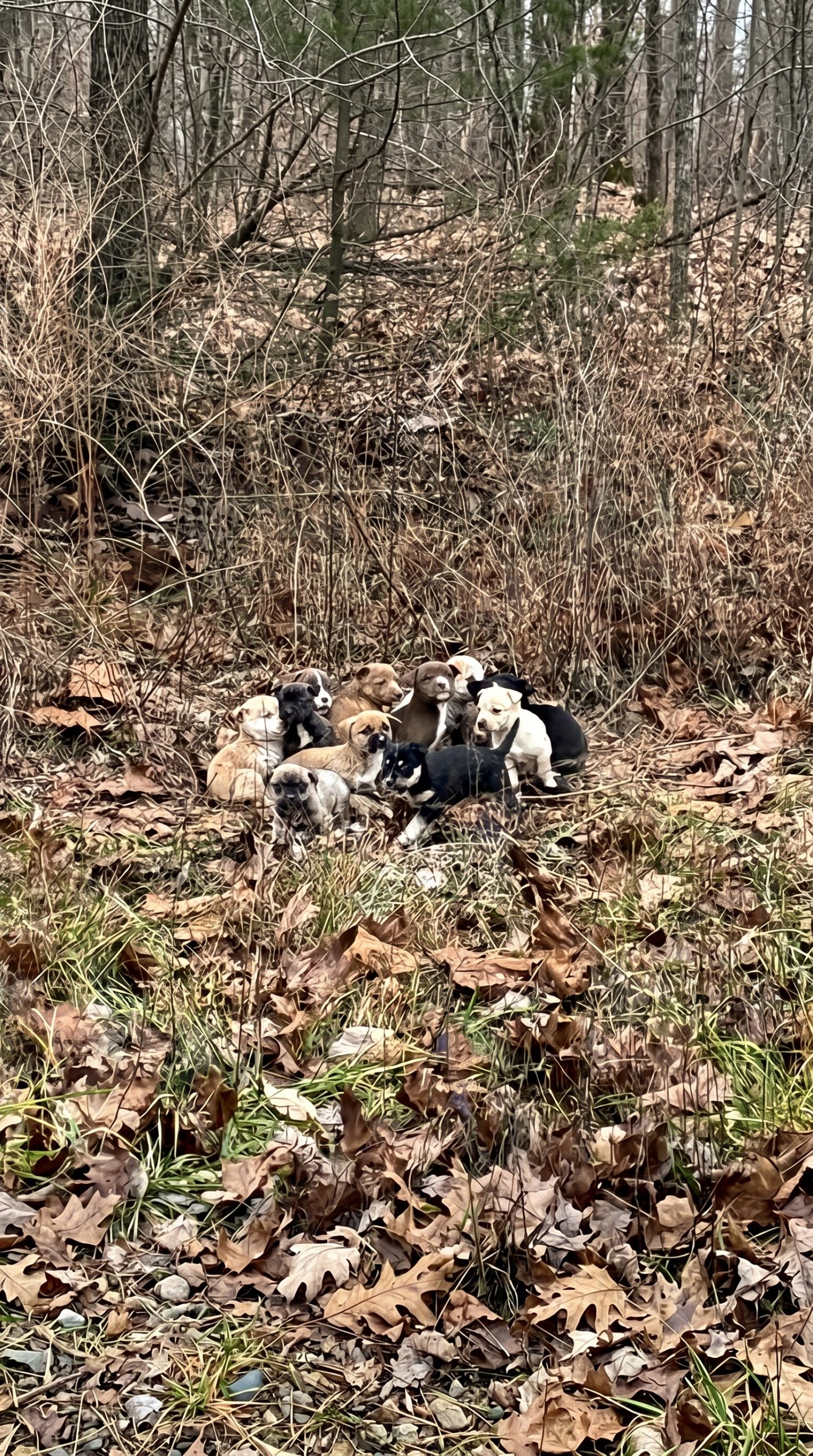
Sixteen tiny puppies were pressed together beneath a tangle of thorny bushes, their thin bodies sharing what little warmth they could find.
There was no comfortable bed beneath them.
Only the cold ground beside a quiet rural road near Tamms, Illinois.
Late autumn was giving way to winter, and the temperatures were dropping. The puppies were severely underweight, exhausted, and too weak to move around much.
They had been abandoned in a place where someone could easily pass without realizing they were there.
And for animals this small, that kind of isolation was dangerous.
No one knew how long they had been struggling or what had happened before they were left among the brush.
But one thing was becoming increasingly clear.
They needed help, and they needed it soon.
Then an ordinary mail delivery brought someone close enough to notice.
A Routine Delivery Revealed Sixteen Lives in Trouble
The mail carrier had been following her regular route through the countryside when she spotted something unusual near the dirt road.
Hidden beneath the thick vegetation was a group of puppies.
Not one or two.
Sixteen.
They were huddled so closely together that their small bodies formed a single cluster among the tangled branches.
Their condition made the discovery especially troubling.
The puppies were visibly thin. Their energy was almost gone, and the cold weather offered them little protection.
Instead of leaving the animals behind, the mail carrier contacted someone who could help.
That decision set a much larger rescue effort in motion.
The urgent message eventually reached Ali Rippin, co-founder of Save Them All Animal Rescue, also known as STAAR.
Rippin began organizing a response, knowing that the puppies' condition left little room for delay.
A rescue volunteer who lived nearby was able to reach the location first.
What had begun as one person's unexpected discovery was quickly becoming a coordinated effort to save an entire litter.
One by One, the Puppies Were Carried Out of the Brambles
Reaching the puppies meant working around the thorny bushes where they had been left.
The volunteer carefully removed them from the vegetation, lifting each small animal away from the cold ground.
There were sixteen puppies to account for.
Sixteen fragile bodies that needed warmth, nourishment, and medical attention.
The immediate goal was simple: get every puppy somewhere safer.
They were transported to a warm barn, away from the exposed roadside and the falling temperatures.
For the first time since their discovery, the puppies had a sheltered place to rest.
But getting them out of the bushes was only the beginning.
Their visible weakness raised serious concerns about what they had endured and whether they could recover.
When Rippin arrived and saw the rescued litter, the extent of their suffering became impossible to overlook.
Their ribs were visible beneath their thin bodies.
Some appeared dangerously close to collapse.
It was difficult to imagine so many young animals surviving in such a condition without help.
Rippin later described seeing them together as heartbreaking.
The rescue had succeeded in removing them from immediate danger, but their medical needs were urgent.
VIDEO: Mail Carrier Finds Sixteen Weak Puppies Hidden in Thorny Bushes Beside a Rural Road
The discovery was a powerful reminder that rescue does not always begin with trained professionals arriving at the scene.
Sometimes, it begins with someone carrying out an ordinary responsibility who notices something that should not be there.
The mail carrier could not provide everything the puppies needed.
But by recognizing their distress and seeking assistance, she gave rescuers the opportunity to act.
And that first act of compassion would prove essential to everything that followed.
The First Hours of Safety Revealed How Much Help They Needed
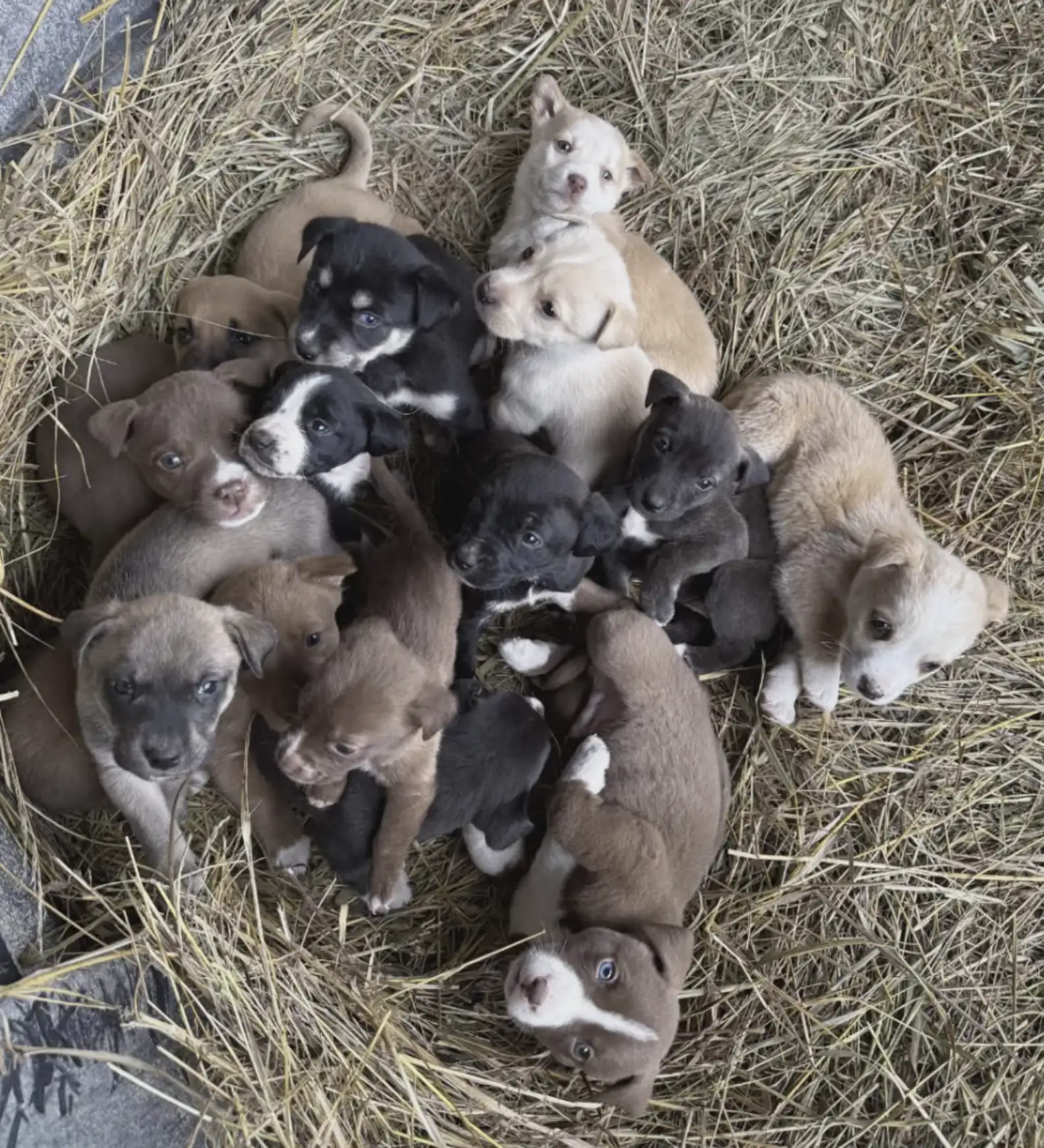
Once the puppies were safely removed from the countryside, attention turned to their health.
Their bodies showed clear signs that they had not been receiving adequate nourishment.
They were also extremely weak, making immediate veterinary care necessary.
The puppies were placed in a rescue vehicle and transported to a veterinary clinic.
There, the medical team began treating the conditions that threatened their survival.
Severe dehydration was among the most urgent concerns.
Veterinarians administered fluids to help address it, while also providing care for the extreme malnutrition affecting the litter.
The puppies were additionally suffering from heavy parasite infestations.
For such young and already weakened animals, these problems created an especially difficult situation.
Their treatment required more than a single comforting meal or a warm place to sleep.
They needed professional attention, consistent care, and time for their bodies to recover.
The rescue team had succeeded in getting them to help, but that did not guarantee every puppy would survive.
Sadly, two of the sixteen were too weak to recover.
Despite the efforts to save them, both passed away.
The loss was painful.
They had been found alongside their littermates, brought out of the same cold roadside shelter, and given the same opportunity for medical care.
Yet their bodies could not overcome the hardship they had experienced.
Their final moments, however, were no longer spent abandoned in the countryside.
They were surrounded by people trying to help them.
For the fourteen remaining puppies, the work of recovery continued.
There was still uncertainty ahead.
But there was also a reason to hope.
Fourteen Survivors Began Learning What Safety Felt Like
The changes did not happen all at once.
Recovery from severe weakness and inadequate nutrition takes careful attention, especially when several health problems are present at the same time.
The surviving puppies received proper food, warmth, medical care, and affection.
As the days passed, their condition began improving.
And slowly, their behavior started changing too.
The frightened, exhausted puppies who had barely moved beneath the bushes were beginning to show interest in their surroundings.
Their growing energy allowed their individual personalities to emerge.
Instead of spending their time trying to stay warm on the cold ground, they could rest on soft blankets.
Instead of remaining hidden among thorny branches, they were surrounded by caregivers who wanted them to feel secure.
Gentle attention became part of their daily experience.
These ordinary comforts represented an enormous change from the circumstances in which they had been found.
For the rescue workers, the improvement was encouraging.
It meant the puppies were doing more than surviving the immediate emergency.
They were beginning to experience a different kind of life.
Rippin later shared that the puppies eventually settled into their new surroundings and welcomed the petting and cuddles they received.
That development carried its own emotional weight.
Animals who had arrived frightened and physically depleted were becoming comfortable enough to enjoy human attention.
Their progress showed why the weeks following an emergency rescue matter so much.
Removing an animal from danger creates an opportunity.
Helping that animal recover requires continued commitment.
For these fourteen puppies, both were necessary.
More Helping Hands Gave the Puppies Room to Grow
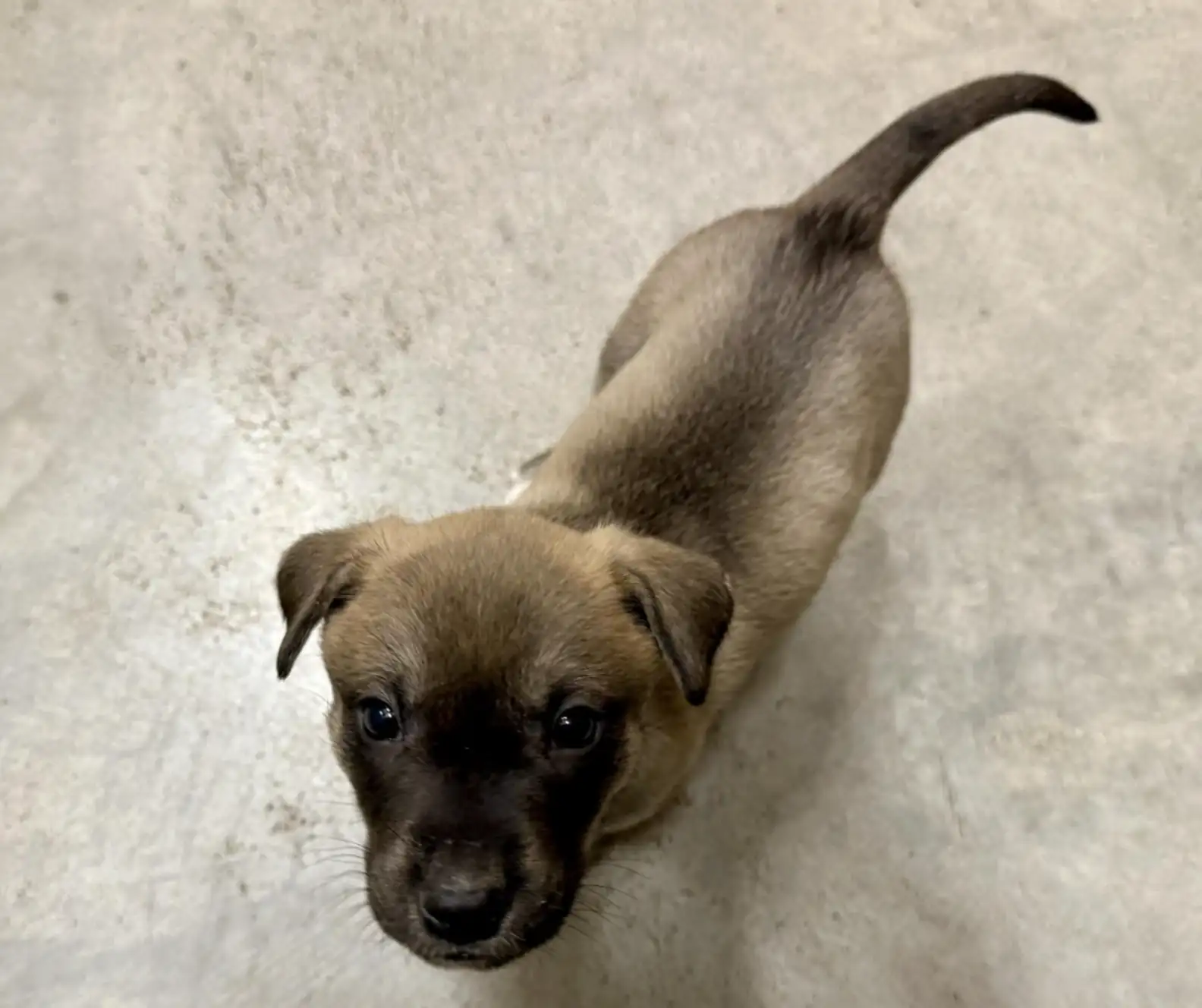
As the survivors became healthier, another challenge emerged.
Fourteen growing puppies require considerable resources.
They need appropriate food, clean and comfortable spaces, ongoing veterinary support, and regular personal attention.
For a foster-based rescue organization such as STAAR, managing so many young animals at once can place significant demands on available caregivers.
The organization had already helped the puppies through a critical period.
Now it needed a sustainable way to continue supporting them.
Fortunately, neighboring rescue organizations were willing to help.
Three other groups stepped forward and offered assistance.
Their involvement allowed the litter to be divided among experienced foster homes.
That arrangement meant the puppies could continue receiving care without placing the entire responsibility on one organization.
It also created opportunities for more individualized attention.
Each puppy had its own needs, its own pace of recovery, and a developing personality.
Being cared for in foster homes gave the survivors a supportive environment as they continued growing stronger.
The cooperation between the organizations became another important part of the rescue.
The mail carrier had made the first call.
A nearby volunteer had brought the puppies out of the bushes.
STAAR had coordinated emergency care.
Veterinary professionals had addressed their serious medical problems.
And now additional rescue groups were helping carry the responsibility forward.
No single person or organization had accomplished everything alone.
The puppies' progress depended on a network of people willing to contribute what they could.
From a Cold Roadside to Warm Beds and Playful Days
The transformation of the surviving litter became more apparent as their recovery progressed.
The puppies who had once been too weak to do much more than huddle together were now enjoying the everyday experiences that young dogs should have.
Regular meals.
Warm places to sleep.
Time to play.
And people who offered them affection without expecting anything in return.
Their lives no longer revolved around enduring cold temperatures and trying to conserve their remaining energy.
They had the opportunity to explore their surroundings and behave like growing puppies.
That change was especially meaningful when compared with their condition at the time of rescue.
The original discovery had revealed sixteen severely underweight animals facing an uncertain future.
Fourteen of them were now recovering in foster care, supported by people committed to their well-being.
The two puppies who did not survive remained an important part of their story.
Their loss showed how serious the original situation had been and why early intervention can make such a difference.
For the survivors, the hope was that recovery would eventually lead to permanent, loving homes.
The source describes that future as a promise and possibility, rather than confirming that every puppy had already been adopted.
But their circumstances had changed dramatically.
They were no longer hidden beside a dirt road, beyond the reach of ordinary care.
They were safe, receiving attention, and being given time to grow.
Those improvements were the result of many separate acts of kindness coming together.
The Difference One Observant Person Can Make
There is something particularly moving about the way this rescue began.
The mail carrier was not searching the countryside for abandoned animals.
She was simply completing her regular deliveries.
Yet when she noticed the puppies, she recognized that they needed assistance.
She could have assumed someone else would take care of the situation.
Instead, she reached out.
That choice helped connect sixteen vulnerable animals with people who had the experience and resources to respond.
The effort that followed also illustrated the importance of local rescue organizations and foster networks.
Emergency rescues are often only the first stage of a much longer process.
Medical treatment, nutrition, safe housing, and ongoing supervision all require support.
When neighboring organizations are willing to cooperate, they can share those responsibilities and help more animals receive appropriate care.
Rippin hopes the story will encourage people to support rescues in their own communities, whether through volunteering or other forms of assistance.
She also emphasizes the importance of spaying and neutering pets to help prevent unwanted litters and reduce the number of vulnerable animals needing rescue.
These efforts may seem separate from the dramatic moment when puppies are found abandoned.
But they are connected.
Helping animals already in danger is essential.
Preventing more animals from facing similar circumstances matters too.
Fourteen New Chances, and Two Lives Worth Remembering
The story of the sixteen puppies near Tamms, Illinois, cannot be described as a completely happy ending.
Two members of the litter did not survive.
Their loss is part of what happened, and it should not be overlooked.
But the story also holds fourteen remarkable examples of recovery.
Fourteen young dogs who were once curled together on the cold ground were given access to veterinary treatment, steady nourishment, foster care, and human affection.
Their future had seemed uncertain when they were first discovered.
Now, their days are filled with the comforts and experiences that every growing puppy deserves.
There is no way to undo the suffering they endured before the mail carrier found them.
The rescuers cannot change those earlier circumstances or restore the two lives that were lost.
What they could do was respond to the animals still needing help.
And they did.
Rippin's reflections on the rescue return to a simple idea: seeing animals finally rest without fear makes the difficult work worthwhile.
For the fourteen surviving puppies, that sense of safety is no longer something they have to struggle to find.
It has become part of their everyday lives.
And perhaps that is the most meaningful part of this rescue.
A person noticed what others might have missed.
More people answered the call.
And fourteen little lives, once hidden among the brambles beside a quiet road, were given the opportunity to move toward a safer, kinder future.


