
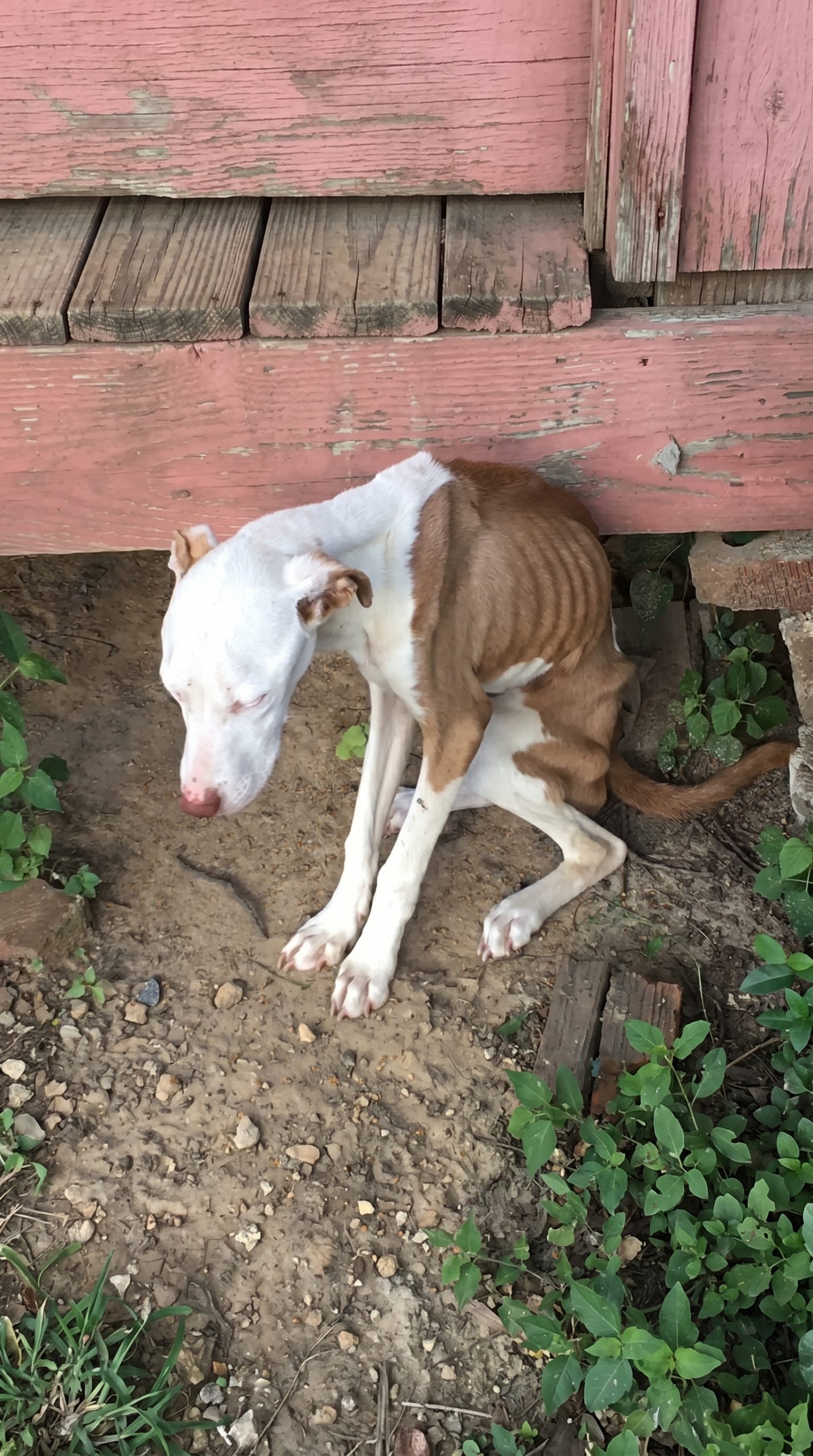
The backyard had almost no green grass left. Under the intense summer heat in Memphis, Tennessee, a young dog lay on the dry ground, too weak to do much more than breathe.
His name was Nino.
For approximately ninety days, he had been left inside a fenced yard without the consistent food and care he desperately needed.
By the time someone finally came to help, his body had become painfully thin. His ribs were clearly visible, and even the smallest movement appeared to demand more strength than he had left.
Yet Nino was still alive.
And although no one could undo those months of neglect, the people who found him were determined to give him something he had been missing for far too long.
A chance to recover.
Ninety Days Behind a Fence
There is a particular sadness in knowing that an animal has been suffering in a place where someone should have been responsible for its care.
Nino had not wandered into an unfamiliar wilderness or become separated from a family during an accident.
He had been confined to a backyard behind a home in Memphis.
According to the account shared by Memphis Animal Services, the young dog's owner, a 27-year-old man, acknowledged that he had stopped looking after Nino following the loss of his job.
The circumstances may have been difficult for the owner, but they left the dog in an increasingly dangerous situation.
Rather than arranging for someone else to care for Nino or seeking help from an animal shelter, the owner reportedly allowed the situation to continue.
Days passed.
Then weeks.
Eventually, nearly three months had gone by.
Throughout that time, Nino remained in the fenced enclosure without adequate attention or a reliable supply of food.
The yard offered little comfort from the summer heat. Its grass had dried out, and the young dog gradually lost the strength that a healthy animal should have had.
For Nino, the consequences were visible in every part of his weakened body.
His condition showed what prolonged deprivation can do when no one intervenes.
But his story would not end in that backyard.
The Moment Rescuers Saw How Much He Had Endured
When officers from Memphis Animal Services arrived at the property, they discovered a dog in exceptionally poor physical condition.
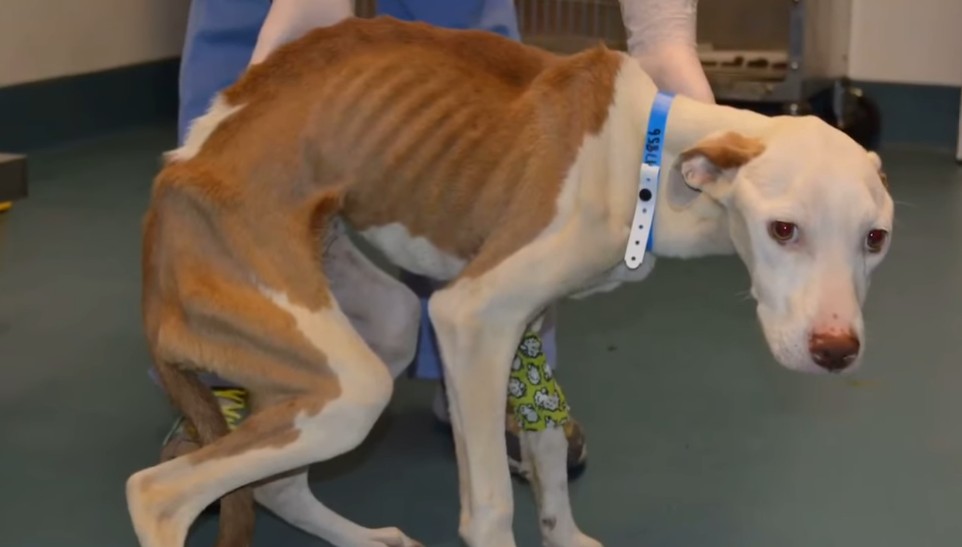
Nino was severely underweight.
His body had lost nearly all its fat reserves, leaving his bones sharply visible beneath his skin.
The scene deeply affected the people involved in his rescue.
Alexis Pugh, a rescue director connected with the case, later spoke about both the dog's condition and the information provided by his owner.
What made the situation particularly troubling was how openly the owner reportedly described the lack of care.
Alexis suggested that he may not have understood his legal responsibilities toward the animal.
But whatever the explanation, the result was undeniable.
Nino needed urgent help.
His weakness was not simply the result of missing a few meals. It reflected a prolonged period without the nutrition and consistent care necessary for his survival.
Rescuers also believed he might have been eating whatever material he could find in the yard in an attempt to sustain himself.
That possibility made his survival even more difficult to comprehend.
When Nino was finally taken into care, there was no reason to assume that a normal meal and a comfortable place to rest would be enough.
His condition required a much more cautious approach.
A Fragile Life That Needed More Than Food
Seeing a starving dog naturally creates an immediate desire to feed him.
But for Nino, recovery was not that simple.
After such a long period of deprivation, his digestive system had become extremely vulnerable. Giving him a large meal too quickly could have caused dangerous complications.
His caregivers therefore faced an important challenge.
They needed to restore his strength without overwhelming a body that had been struggling for so long.
Veterinary professionals began planning his recovery around carefully controlled nutrition and close observation.
It would require patience.
It would require consistency.
And it would require people willing to care for him through a process that could not be rushed.
The exhausted dog who had spent months alone was finally surrounded by people paying attention to what he needed.
That change was the beginning of everything.
VIDEO: After 90 Days of Neglect, Rescuers Found Nino Barely Able to Move — His Fight to Recover Began
Tiny Meals Became the Beginning of His Recovery
Nino's first stage of treatment centered on an essential but delicate task: helping his body accept nourishment again.
Instead of receiving ordinary portions, he was given small amounts of highly digestible food.
The meals were provided every two hours, including overnight.
It was a demanding routine, but one designed to give his weakened system time to adapt.
Each feeding mattered.
So did every period of monitoring between meals.
The veterinary team needed to watch for possible complications while gradually helping Nino regain the nutrition his body had been missing.
There was no immediate transformation.
A dog who has endured such severe starvation cannot rebuild his strength in a single afternoon.
Healing requires time, careful judgment, and the willingness to recognize progress even when it appears small.
For Nino, the earliest changes were subtle.
As his condition improved, he became more responsive to his surroundings.
He began lifting his head more often.
He showed curiosity.
And the dog who had once been almost motionless in the yard slowly started engaging with the people caring for him.
These ordinary behaviors carried special meaning.
They suggested that Nino was beginning to have enough strength for something beyond simply surviving.
He was gradually becoming an active participant in his own recovery.
The physical changes followed the same patient course.
Over time, his body began to regain some of the weight it had lost.
The pronounced outline of his ribs slowly became less severe.
His recovery remained a gradual process, but the direction was encouraging.
For the caregivers who had first seen him in such a fragile state, every improvement was meaningful.
The Gentle Personality That Neglect Had Never Taken Away
Perhaps one of the most moving details of Nino's story was the way he responded to people.
Despite everything he had endured, he did not display the aggression that some might have expected from a dog with such a difficult history.
Instead, his caregivers discovered a gentle animal.
At first, his behavior was understandably reserved.
He was weak, and the changes around him were significant.
But as his health improved, his personality began to emerge.
He became increasingly comfortable with the people looking after him.
The dog who had spent so much time without proper attention was now receiving consistent care.
There was food at regular intervals.
There were people monitoring his progress.
And there was a routine built around helping him become healthy again.
These things may seem ordinary for a well-cared-for pet.
For Nino, they represented an entirely different daily life.
One of the clearest changes appeared in his tail.
Previously tucked close to his body, it gradually began to move in small, cautious wags.
Those little movements became signs of his growing comfort.
It would be impossible to know exactly how Nino understood everything happening around him.
But his behavior offered an encouraging picture.
He was not only gaining physical strength.
He was also becoming more willing to interact with the people providing him with safety and affection.
There was something especially touching about that.
After months of neglect, Nino still had the capacity to respond gently to human kindness.
His past had not erased that part of him.
And with each improvement, the possibility of a happier future became easier to imagine.
Leaving the Clinic Was Another Important Beginning
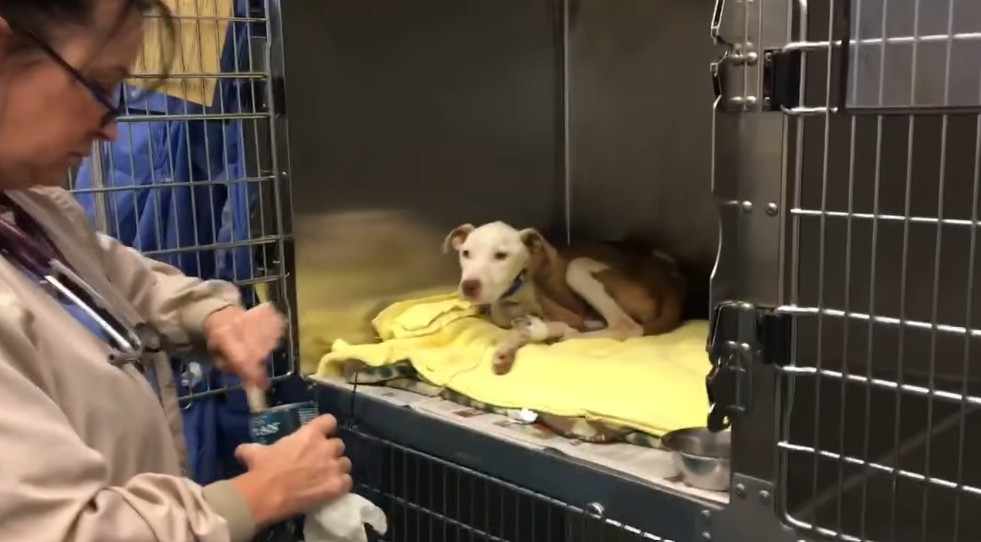
Nino spent weeks receiving intensive care.
During that period, the focus remained on helping his body recover sufficiently to continue the next stage of rehabilitation.
Eventually, he became strong enough to leave the clinic.
It was an important milestone.
The dog who had arrived in such a severely weakened condition had made enough progress to move beyond the earliest, most medically demanding phase of his recovery.
His care then continued with Blues City Animal Rescue.
This transition meant that Nino could begin adjusting to a more comfortable environment while still receiving the support he needed.
His rehabilitation was not finished.
He still required time to rebuild his health and prepare for a permanent home.
But the difference between his circumstances before rescue and his new situation could hardly have been greater.
He was no longer confined to the neglected backyard where he had spent so many difficult weeks.
He was now being cared for by people working toward his long-term well-being.
For an animal who had been deprived of consistent care, that stability was deeply important.
His life was no longer defined by the absence of attention.
Instead, it was shaped by the presence of people determined to help him heal.
A Foster Home Where Ordinary Comforts Became Precious
Nino eventually reached another meaningful stage in his journey: living in a loving foster home.
It was here that his recovery could continue in a gentler, more familiar environment.
A comfortable bed.
Regular meals.
Affectionate attention.
The security of being indoors.
For many family dogs, these are everyday parts of life.
But considering where Nino had come from, their significance was hard to overlook.
He had once been so weak that even moving appeared difficult.
Now, he had the opportunity to experience the simple comforts that every companion animal deserves.
The source describes him as thriving in foster care, an encouraging development after the severity of his initial condition.
That improvement did not mean his entire journey was complete.
Severe neglect can leave lasting needs, and Nino's rescuers continued focusing on his rehabilitation.
What had changed was the direction of his life.
Instead of becoming weaker with each passing day, he was receiving the support needed to grow stronger.
Instead of being forgotten in an enclosure, he was living among people who cared about his future.
And instead of enduring an uncertain existence without adequate food, he had a predictable routine designed around his well-being.
Those changes may not sound dramatic.
But to a dog recovering from prolonged starvation, they represent something extraordinary.
The opportunity to live with comfort, security, and kindness.
The Forever Family He Still Deserves
Nino's rescuers hope that, once his rehabilitation is complete, he will find a permanent family.
That is the next chapter they are working toward.
A forever home would mean more than having a place to sleep.
It would mean a lifetime of responsible care from people prepared to meet his needs.
Someone to provide proper nutrition.
Someone to notice when he is uncomfortable or unwell.
Someone to offer the attention and companionship that should always have been part of his life.
There has been no confirmed permanent adoption in the account of Nino's journey, so his story remains open in that respect.
But the progress already made is substantial.
He survived a prolonged period of serious neglect.
He received urgent veterinary attention.
He responded to careful feeding and rehabilitation.
And he moved into a foster home where his recovery could continue.
Each step required someone to act on his behalf.
His story is a reminder that rescue is rarely a single moment.
Taking an animal out of danger is essential, but what follows can be just as important.
The repeated meals.
The medical supervision.
The patience when recovery is slow.
The steady care that allows an animal to become stronger over time.
These are the parts of rescue that may receive less attention, yet they can determine whether a vulnerable dog has a real opportunity to recover.
From Nearly Forgotten to Finally Cared For
When Alexis Pugh reflected on Nino's case, she emphasized how fortunate he was to have survived.
Considering the severity of his condition when help arrived, it was an understandable reaction.
There was no simple explanation for how he had endured so much deprivation.
But there was a clear reason his circumstances eventually changed.
People intervened.
They recognized that his condition required urgent attention, arranged the care he needed, and committed themselves to helping him recover.
Nino's survival is remarkable, but the story does not need to be exaggerated to carry meaning.
Its most powerful details are the ones already known.
A young dog was left without adequate care for nearly ninety days.
He was found dangerously thin and weak.
A rescue organization and veterinary caregivers helped him through a difficult recovery process.
And today, he has a safe foster home while his rescuers hope to find him a permanent family.
His transformation did not happen all at once.
It came through small meals, careful monitoring, gradual improvements, and the return of behaviors that had once seemed beyond his strength.
A lifted head.
A little curiosity.
A cautious wag of his tail.
Each represented another step away from the conditions in which he had been found.
Nino cannot recover the time he lost in that backyard.
But his future is no longer limited to what happened there.
He has people caring for him now.
He has a place where he can rest safely.
And he has the possibility of spending the rest of his life surrounded by the love and attention he should always have known.
For Nino, the most meaningful part of his story may be what comes next.
Not another struggle to survive.
But the simple, beautiful experience of being someone's cherished dog.


