
The little dog walked slowly along a quiet country road, her small body carrying a weight she could no longer ignore.
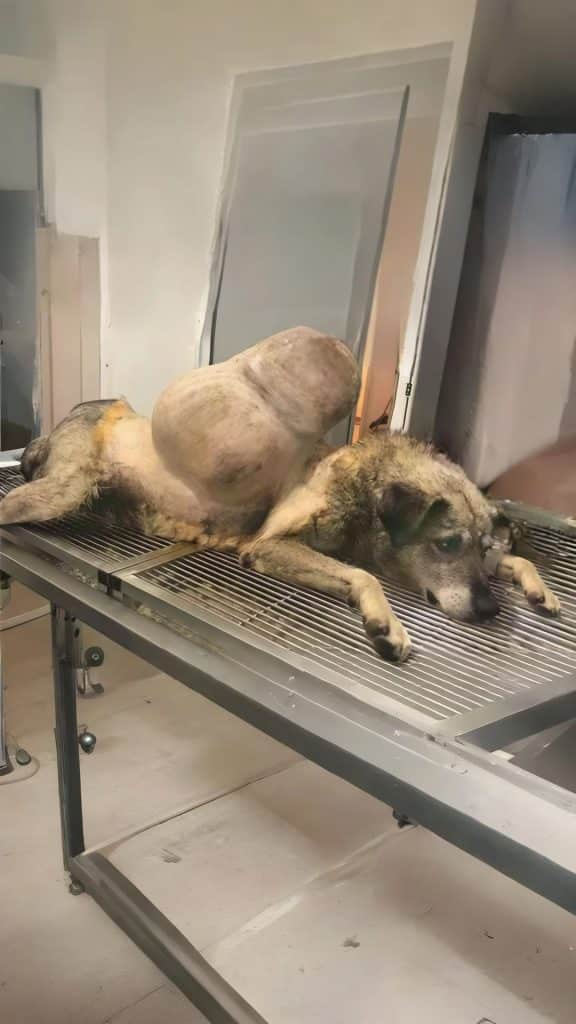
Every few steps seemed to require another effort. A large swelling rose from her back, changing the way she moved and making even ordinary walking difficult.
She was thin. Tired. Alone.
People passing through the area might have seen nothing more than a stray dog making her way down the road. But a closer look would have revealed an animal in serious need of help.
The swelling had been growing for months.
And somehow, despite her weakening condition, she was still moving forward.
There was no dramatic cry for attention. No obvious attempt to approach anyone.
Just a small dog continuing along an empty stretch of countryside, carrying a burden that had become part of every movement she made.
Her rescuers would eventually give her a name.
Bunica.
It means "grandmother," and although her age was not the reason for choosing it, there was something about her gentle, weary expression that made the name feel right.
Before Bunica could begin a new life, however, someone first had to convince her that help was safe.
A Small Dog Carrying More Than Her Body Could Bear
The call that brought rescuers to Bunica was initially straightforward.
A stray dog had been spotted along a rural road. She appeared weak, was moving unusually slowly, and needed assistance.
But descriptions could hardly communicate the full extent of her condition.
When the rescuers arrived, they found a small, underweight dog whose body seemed overwhelmed by the swelling on her back.
It was impossible to overlook.
The mass was large in proportion to her frame, and its position made movement uncomfortable. Her steps were careful and uncertain, as though she had learned to adjust every movement around the weight she carried.
For an already malnourished animal, such a condition presented an additional challenge.
Walking demanded energy.
Finding food demanded energy.
Even settling into a comfortable resting position had become difficult.
Bunica was dealing with all of this without the dependable care of a home.
How she had spent the months before her rescue was not fully known. There was no confirmed account of where she had previously lived or how long she had been surviving on her own.
What the rescuers could see was enough to understand that she needed help.
Yet recognizing her suffering was only the beginning.
Getting close enough to rescue her would require something that frightened animals often need most.
Patience.
She Wanted Help, but Human Hands Still Frightened Her
Bunica did not react to approaching people with barking or aggression.
Instead, she withdrew.
Whenever a rescuer tried to move closer, the small dog created more distance between them.
It was a quiet response, but a clear one.
She was not ready to trust the strangers standing nearby.
The rescuers could have tried to approach her more quickly, but doing so risked frightening an animal already struggling physically.
They chose a gentler method.
Rather than pursuing her, they lowered themselves to the ground and remained nearby.
They spoke in calm voices and placed small portions of food where she could find them.
Then they gave her room.
The sun was warm, and the process required more waiting than action.
Bunica watched.
At first, she continued to maintain a cautious distance.
Each movement from the people nearby seemed to require her attention. She was curious enough to observe them but uncertain about allowing them closer.
The rescuers did not interpret her hesitation as a reason to give up.
They understood that getting a frightened dog to accept help is not always a matter of reaching out a hand.
Sometimes, the first meaningful act of kindness is knowing when not to reach.
Minutes passed.
The people remained calm.
The food stayed within reach.
Gradually, something changed in Bunica's behavior.
She stopped retreating as readily.
Instead of continually moving away, she began watching the rescuers from a more settled position.
It was not complete trust.
But it was a beginning.
And for a dog who had been avoiding human contact while carrying such a heavy physical burden, that small change mattered.
The Moment Bunica Could Finally Stop Running
As Bunica's condition became more urgent, the rescue team had to balance two needs.
She needed prompt medical attention, but they also wanted to avoid placing her under unnecessary stress.
The solution was a carefully administered mild sedative.
It allowed the rescuers to handle her more safely and gently without forcing a prolonged struggle.
Once she was calm, they carefully lifted her into a carrier.
For the first time since they had approached her, Bunica no longer needed to keep her distance.
She was no longer wandering along the road, trying to manage the weight on her back while remaining alert to unfamiliar people.
She was being carried toward veterinary care.
The change was quiet.
There was no sudden display of excitement, no dramatic transformation in her behavior.
Bunica simply appeared more relaxed.
After the long uncertainty of trying to approach her, the rescuers could finally concentrate on what came next.
Her medical condition needed to be evaluated.
Her exhausted body needed support.
And the large mass that had been restricting her movement needed professional attention.
VIDEO: Bunica Carried a Heavy Tumor for Months — Watch How Gentle Rescuers Finally Brought Her to Safety
At the Veterinary Clinic, Her Long Struggle Became Clear
Once Bunica reached the veterinary clinic, attention turned to the unusual swelling on her back.
It had not developed suddenly.
According to the rescue account, the growth had been present for months, gradually becoming larger and more difficult for her small body to accommodate.
That explained much of what her rescuers had witnessed on the road.
Her cautious steps were not simply the movements of a tired stray.
She was carrying a substantial physical mass while already weakened by poor nutrition and exhaustion.
The growth affected her posture and made comfortable movement increasingly difficult.
For the people caring for her, the immediate question was how to give her the best possible chance of recovering.
Removing the mass would eventually become the central goal of her treatment.
But Bunica was not yet ready for surgery.
Her body had already endured considerable strain, and the veterinary team needed to address her weakness before moving forward with a procedure.
There was another observation that made her early days at the clinic memorable.
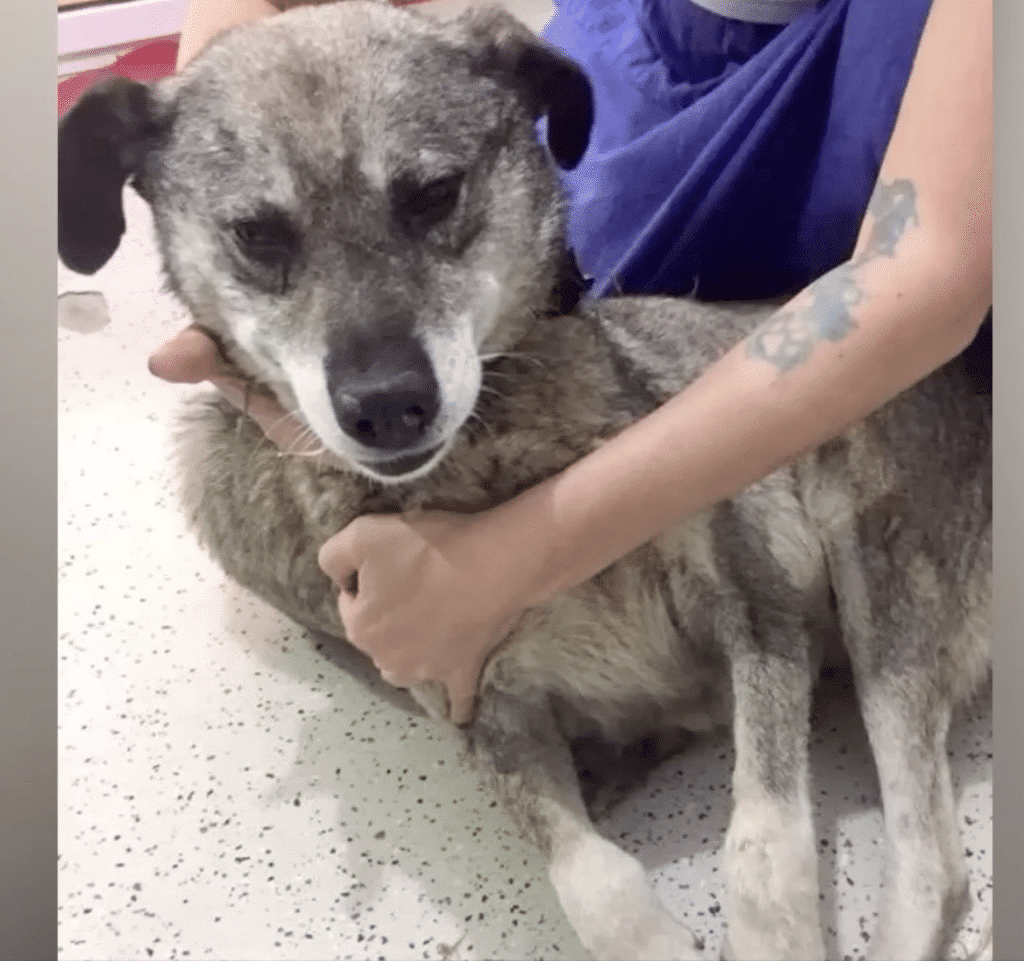
Despite having been frightened of people during the rescue, Bunica did not respond to her new surroundings with the same persistent attempts to escape.
She remained gentle during care.
Her behavior seemed calmer than it had been along the roadside.
It was impossible to know exactly what she understood about the people helping her.
But the difference was meaningful.
The dog who had repeatedly stepped away from rescuers was now allowing herself to receive care.
And for the first time in this part of her story, her greatest challenge was no longer finding a way to survive on her own.
It was regaining enough strength to heal.
Before Surgery, She Needed to Learn What Comfort Felt Like
Bunica's first stage of treatment was not focused on an operating room.
It was focused on the most basic things her body needed.
Food.
Water.
Rest.
Warmth.
Gentle attention.
She was malnourished and physically depleted, so rebuilding her strength became an essential part of preparing her for surgery.
The pace was deliberately careful.
There was no instant recovery from the condition in which she had been found.
Instead, her progress appeared through ordinary moments that would have meant little to a healthy dog but represented important changes for Bunica.
She began eating food offered by gentle hands.
That alone marked a shift from her earlier behavior.
On the country road, unfamiliar people had made her retreat.
Now, she was beginning to accept their presence during one of the most basic and vulnerable parts of her day.
She also started allowing soft touches.
The people around her could offer comfort without receiving the same frightened response that had made her rescue so difficult.
And when it was time to rest, Bunica had a clean, comfortable bed.
For a dog whose large back mass had made resting difficult, the opportunity to lie somewhere safe and receive attentive care was especially important.
She began sleeping peacefully.
It was a simple change, but one that carried considerable meaning.
Her rescuers were no longer only preventing her from wandering into further hardship.
They were helping her regain the strength she needed for the next stage of treatment.
And slowly, their patient care began to make a difference.
Bunica became strong enough for the veterinary team to proceed.
The operation that might free her from the weight she had carried for months was finally possible.
The Operation That Changed the Way She Could Live
The goal of Bunica's surgery was clear.
The large mass on her back needed to be removed.
Although the growth had become a familiar part of her appearance, it was not something her body could comfortably continue carrying.
It had restricted her movement, placed additional demands on her weakened frame, and contributed to the discomfort that made her roadside struggle so difficult.
The surgical procedure required careful work from the veterinary team.
For the people who had helped her reach this point, it was a significant moment.
They had seen how slowly she walked when they first found her.
They had watched her withdraw from human contact.
They had helped her eat, rest, and regain enough strength to undergo treatment.
Now, there was a real opportunity to remove the physical burden that had shaped so much of her recent life.
Bunica successfully came through the operation.
But there was still an important question about the mass itself.
The results eventually brought reassuring news.
The tumor was benign.
That finding meant the growth was noncancerous, offering important reassurance about the condition that had caused her so much difficulty.
The surgery had removed the large mass, and Bunica could begin recovering without its weight pulling against her small body.
Her transformation was not simply a matter of appearance.
The difference became visible in the way she moved.
A dog who had once struggled through each careful step now had the opportunity to walk with greater ease.
For Bunica, that was a profound change.
Small Steps Became Signs of a Different Future
Recovery after surgery did not turn Bunica into an energetic, carefree dog overnight.
Her improvement came gradually.
But the changes were noticeable.
Without the large mass on her back, she could hold herself more comfortably.
Her posture improved.
Her steps grew steadier.
Movements that had once appeared difficult became easier.
And as her physical condition improved, another change emerged.
She began showing more energy.
The difference was especially apparent during her walks.
Before her rescue, walking had seemed like a task that consumed almost all her remaining strength.
Now, she could move at a gentler, more comfortable pace.
She had opportunities to experience the simple pleasures of being outside without carrying the same weight.
The grass beneath her paws.
The feeling of a breeze.
The freedom to lift her head and explore her surroundings.
These were not extraordinary activities.
For most healthy dogs, they were simply part of an ordinary day.
But for Bunica, whose movements had been limited for so long, their return mattered.
Her recovery was not measured only by the successful removal of the tumor.
It could also be seen in the smaller details.
How she stood.
How she walked.
How willingly she engaged with the world around her.
The most meaningful changes were sometimes the least dramatic.
A few comfortable steps.
A little more curiosity.
A peaceful moment outdoors.
Each one represented something she had been missing during those difficult months on the road.
The Dog Who Once Kept Her Distance Now Has People Beside Her
The contrast between Bunica's life before and after her rescue is striking.
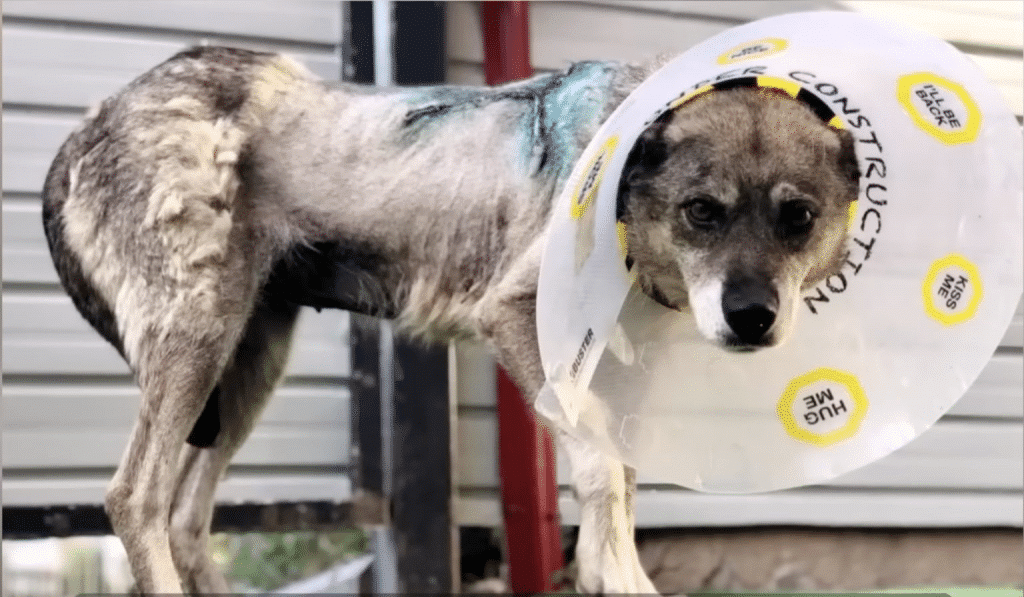
When she was first seen along the country road, she was underweight, weak, and burdened by a growth that made ordinary movement uncomfortable.
She avoided people who tried to approach her.
Even when help arrived, accepting it was difficult.
Today, her circumstances are very different.
Bunica is safe and receiving care.
She has comfortable places to rest, food, and people who treat her with patience and kindness.
Her large tumor has been removed, and her physical recovery has allowed her to enjoy greater freedom of movement.
The account does not establish whether she has been adopted into a permanent home, so that part of her future remains unknown.
What is clear is that she is no longer facing the same struggle alone.
The dog who once needed careful coaxing before allowing anyone close has learned to accept gentle human attention.
And the people caring for her have been able to see changes that go beyond the successful surgery.
Her body is stronger.
Her movements are more comfortable.
Her days are no longer defined by the need to keep walking despite an overwhelming physical burden.
That is a meaningful outcome in itself.
What Bunica's Second Chance Teaches Us About Compassion
Bunica's journey began with an animal who was easy to overlook.
She was small.
She was quiet.
She did not demand attention.
Even the seriousness of her condition might have gone unnoticed by someone who saw her only briefly from a distance.
But when rescuers learned about her situation, they chose to act.
And when she was too frightened to accept their help immediately, they did not abandon the effort.
They remained patient.
They gave her space.
They worked to make the rescue as calm as possible.
Then they made sure she received the medical care and physical support she needed.
None of those steps could have been skipped without changing the course of her recovery.
The rescue brought her off the road.
The early care rebuilt her strength.
The surgery removed the tumor.
The days that followed allowed her to discover what it was like to move without carrying such a heavy burden.
Together, those ordinary acts of compassion changed the direction of one small dog's life.
Bunica's story is also a reminder that a frightened animal may not immediately recognize an offer of help.
A dog who backs away is not necessarily refusing kindness.
She may simply need time to feel secure enough to accept it.
For Bunica, that time was essential.
And because the people who found her were willing to offer it, she eventually received the treatment that made her recovery possible.
The empty road where she once struggled is now part of her past.
The large weight that shaped her movements is gone.
What remains is a gentle dog with a safer, more comfortable life and people willing to care for her.
Sometimes, the beginning of an extraordinary change is a very ordinary decision.
To notice an animal in need.
To approach with patience.
And to make sure that being seen is followed by being helped.
For Bunica, that decision meant everything.


