
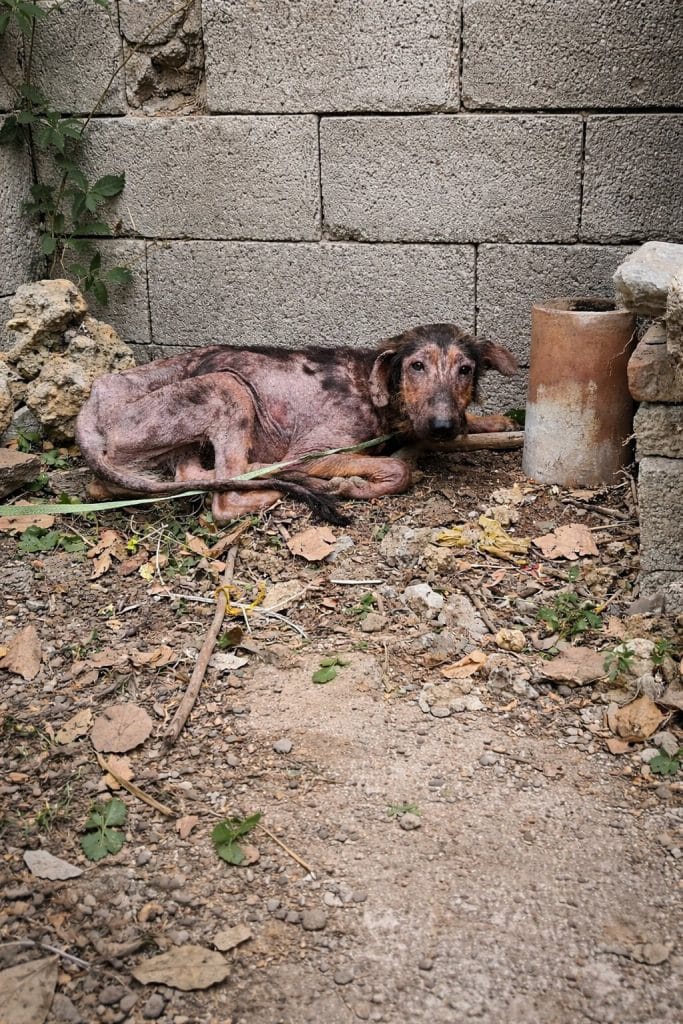
The chain was still around his neck, but the familiar person he had spent years loving was nowhere to be seen.
For a long time, the German Shepherd had known a simple, dependable life beside his elderly owner. Then one hospital visit changed everything.
The man was taken away for medical care.
The dog remained behind.
And as the days passed, the life he had known slowly disappeared.
By the time rescuers reached him, he was painfully thin, struggling with serious skin disease, and so frightened of people that even an attempt to help could make him pull away.
Yet this would not be the final chapter of his life.
Months later, the same dog would be running freely, greeting people with excitement, and carrying a name that seemed almost impossible to imagine during those first difficult days.
They would call him Little Sun.
The Home Where Everything Suddenly Changed
Before his suffering began, the German Shepherd had spent years living with an elderly man.
Their days followed a familiar routine. The dog had a home, a person he knew, and the comfort of a stable environment.
For a loyal companion, that kind of consistency can mean everything.
There was no indication that his entire world was about to change.
Then his owner was hospitalized.
The sudden separation left the dog without the person who had been central to his daily life. Instead of arranging proper care, the man's family tied him outside.
He remained attached to a chain as the days continued.
The gate did not open to restore the life he remembered. His owner did not return.
And the care he needed became increasingly unreliable.
Food was not provided consistently. Water was sometimes unavailable. The yard became dirty, and the dog's physical condition began to deteriorate.
What made the situation especially painful was how ordinary his life had been before.
He had not always been a frightened, neglected animal.
He had once belonged somewhere.
Now, the place that had provided familiarity offered little of the security he needed.
There is no way to know exactly what he understood about his owner's absence. But the consequences of being left without dependable care became increasingly visible.
His body grew weaker.
His coat began to disappear.
And his behavior around people changed.
The dog who had once lived beside someone he trusted was becoming afraid of human contact.
The Condition That Confronted His Rescuers
When rescuers finally arrived, they found a German Shepherd whose appearance revealed the seriousness of his neglect.
He was extremely underweight.
His ribs were clearly visible, and his body had lost much of the strength a healthy dog should possess.
Large areas of his coat were missing.
Severe mange had affected his skin, leaving it inflamed and irritated. His condition had progressed far beyond something that could be solved with a single bath or a few good meals.
He needed veterinary attention and ongoing care.
But his physical health was only one part of the challenge.
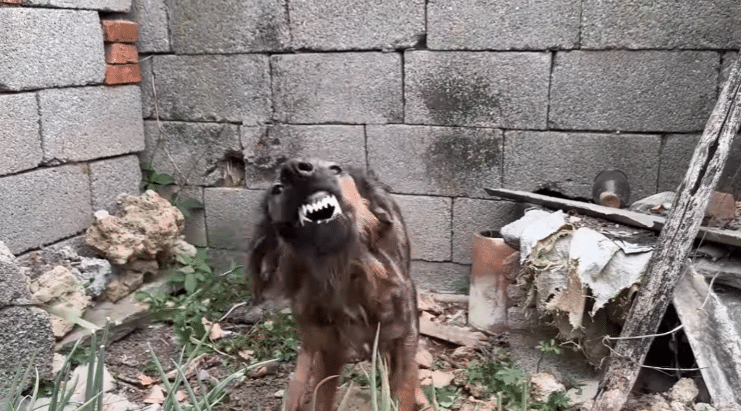
The moment people approached, his fear became apparent.
He growled.
He snapped when he felt threatened.
He tried to move away from contact.
To someone unfamiliar with his circumstances, those reactions might have looked like aggression.
For the rescuers, however, they were signs that he needed an especially careful approach.
This dog had spent a prolonged period chained outside while his basic needs went unmet. His reluctance to trust unfamiliar people was understandable.
He could not know that the people approaching him intended to help.
All he could do was respond to what felt frightening.
The rescuers recognized that forcing contact would only make the situation more difficult.
So they slowed down.
They gave him room.
And they allowed the process of getting him to safety to unfold carefully.
The First Step Away From the Chain
Helping a frightened dog requires more than good intentions.
Every movement matters when an animal is unsure whether a nearby person represents safety or danger.
The rescuers approached with patience, respecting his defensive reactions rather than trying to overpower them through hurried handling.
His fear did not disappear immediately.
He remained wary as they worked to guide him away from the conditions in which he had been living.
But eventually, they succeeded in bringing him to a veterinary clinic.
It was a turning point.
For the first time since his circumstances had changed, he was receiving the attention his condition urgently required.
The veterinary examination confirmed that his recovery would be difficult.
He was suffering from severe malnutrition and anemia.
His skin disease was advanced, with parasites responsible for much of the damage.
His immune system was also seriously weakened.
Taken together, these findings showed how profoundly the long period of inadequate care had affected him.
This was not a dog who simply needed rest before returning to normal.
His health had declined over time, and rebuilding it would require sustained treatment.
There were no guarantees of rapid progress.
His caregivers understood that the process might take months or longer.
But they were prepared to continue.
VIDEO: Chained Outside and Afraid of Everyone, This German Shepherd Finally Received the Help He Needed
Healing Began With the Smallest Things
At the clinic, the focus shifted from getting him out of danger to helping his weakened body recover.
The first steps were deliberately gradual.
After suffering from severe malnutrition, he needed nutritious food provided in carefully managed portions.
Feeding him too much too quickly was not the approach his caregivers chose.
Instead, they concentrated on giving his body a chance to regain strength steadily.
It was basic care, but it represented an enormous change from the inconsistent meals he had been receiving.
Food was now part of a plan.
His condition was being monitored.
And someone was taking responsibility for his progress.
Treatment also addressed the serious skin problems that had left much of his body without healthy fur.
Medication was provided to manage infection, while regular medicated baths helped combat parasites and soothe his irritated skin.
These were not instant solutions.
Skin damaged by advanced disease needs time to recover, just as a severely undernourished body cannot regain its strength overnight.
The work required repetition.
Meals had to remain consistent.
Treatments had to continue.
His caregivers had to pay attention to how he responded.
And throughout the process, his fear of people remained another important part of his recovery.
A dog can receive the medical treatment he needs and still feel uncertain about the hands providing it.
That was the challenge facing Little Sun's rescuers.
His body needed care.
His trust needed time.
Neither could be hurried.
The First Gentle Touch Meant More Than Anyone Expected
In the beginning, he remained cautious.
Even as his caregivers continued feeding and treating him, he preferred to keep some distance.
He watched people carefully.
He appeared unsure about allowing them close.
His physical recovery was underway, but the emotional effects of his experience were not going to disappear simply because his surroundings had improved.
The rescuers continued approaching him gently.
They avoided rushing interactions and gave him opportunities to become familiar with their presence.
Gradually, his reactions began to change.
He no longer retreated as readily when someone approached.
He started standing closer.
The growling that had once accompanied human contact became less frequent.
These developments might have seemed insignificant to someone who had never met him.
For the people who remembered his condition at rescue, they were meaningful signs of progress.
His fear was no longer controlling every interaction.
Then came a moment that showed how far he had already traveled.
He allowed someone to touch him.
Not through force.
Not because he had nowhere to move.
He accepted a gentle hand.
For a dog who had previously responded to approaching people with snapping and defensive behavior, that simple contact represented a remarkable change.
And then something even smaller happened.
His tail moved.
It was only a slight wag.
But it was a sign that his response to human attention was becoming different.
The same animal who had once been frightened by attempts to approach him was beginning to accept affection.
There was no dramatic overnight transformation.
Instead, trust returned through ordinary interactions repeated consistently over time.
Each calm encounter helped create the conditions for another.
And another.
Until a hand that once caused fear could finally become a source of comfort.
Seven Months That Revealed a Different Dog
The rescue and recovery unfolded over a period stretching from June 2025 to January 2026.
Across those months, the changes became increasingly visible.
The dog who had arrived in such poor condition began to regain the weight and strength he had lost.
His damaged skin gradually improved.
Healthy fur started growing again.
As his coat returned, his appearance changed dramatically.
The thick black-and-gold coloring of a German Shepherd emerged where there had once been extensive hair loss and irritated skin.
The transformation was striking.
But the return of his beautiful coat told only part of the story.
His growing confidence was equally important.
At first, he had watched people from a distance.
Then he had tolerated their presence.
Later, he had accepted their touch.
Over time, those tentative interactions developed into something much warmer.
He began approaching people willingly.
His movements became more energetic.
The defensive dog who had once growled at unfamiliar hands was becoming playful and enthusiastic.
This was the kind of progress that could not be measured solely by his appearance.
His improved health mattered enormously, but the change in his behavior showed that his daily experience of life had also become different.
He was no longer simply enduring each interaction.
He was participating in them.
He was discovering that people could offer food, care, attention, and companionship without causing him fear.
And as his recovery continued, the people caring for him gave him a name.
Little Sun.
It was a gentle name for a dog whose personality had begun to shine through his earlier suffering.
The name reflected the warmth and happiness he now brought to those around him.
It also marked how different his present life had become from the one rescuers had first encountered.
No More Waiting at the Gate
The difference between Little Sun's former life and his recovered condition is difficult to overlook.
Once, his days had been shaped by a chain and the absence of dependable care.
His body had become frail.
His coat had nearly disappeared.
And the approach of another person was something he feared.
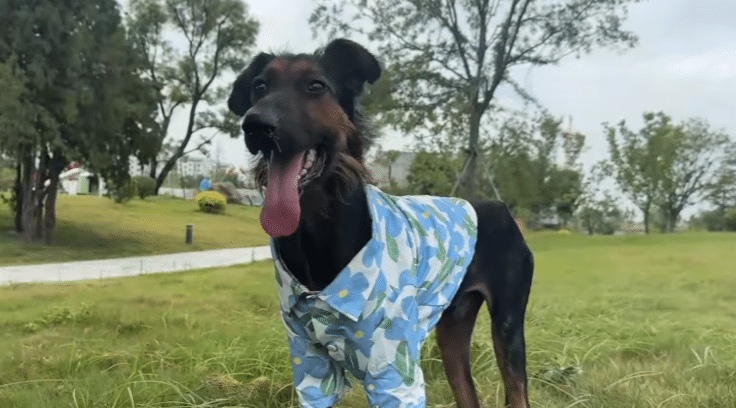
Now, he can run freely.
He plays with enthusiasm and greets people with excitement.
His healthy coat and stronger body reflect the months of care that helped him recover.
But perhaps the most moving difference is the way he responds to affection.
A dog who once pulled away from human contact now seeks it out.
The chain no longer defines his movements.
The neglect that once surrounded him is no longer part of his daily life.
And he no longer spends his days waiting outside for an owner who never returned.
The source does not describe a separate adoption or identify a permanent new family. What it does confirm is that Little Sun recovered under the care of people who remained committed to helping him.
That confirmed outcome is meaningful on its own.
He was rescued from prolonged neglect.
He received the medical attention he needed.
And over months of steady care, he regained both physical health and a willingness to trust people.
What Little Sun's Recovery Teaches Us About Compassion
It is easy to admire the final images of a rescued dog.
A full, healthy coat.
A stronger body.
A playful personality.
A wagging tail.
Those are the moments that make recovery stories so rewarding.
But Little Sun's journey also draws attention to everything that happened before those visible results became possible.
His caregivers had to respond to serious medical problems.
They had to manage his nutrition carefully.
They had to continue treating his skin even when improvement required time.
And they had to respect the fear that made simple interactions difficult.
His progress was built through consistency rather than one extraordinary gesture.
A carefully provided meal mattered.
A necessary treatment mattered.
A calm approach mattered.
So did the decision to continue offering care while he was still too frightened to welcome it.
His story also illustrates an important responsibility that comes with caring for an animal.
When a pet's primary caregiver becomes ill or can no longer provide care, that animal still depends on someone to protect its basic needs.
Food, water, a safe environment, and appropriate medical attention cannot simply be put aside.
Little Sun's elderly owner was hospitalized, and the dog was left in circumstances that caused serious harm to his health.
The people who later rescued him could not undo those months.
They could, however, change what happened next.
And that is exactly what they did.
Little Sun's recovery was neither immediate nor effortless. It took months for his body to regain strength, his coat to return, and his behavior toward people to soften.
Yet the gradual nature of that progress makes the outcome especially meaningful.
The frightened German Shepherd who once stood at the end of a chain did not remain trapped in that condition forever.
With sustained care, he recovered.
With patient handling, he began trusting people again.
And with the freedom to move and play, he finally had the opportunity to enjoy the kind of life every dog deserves.
There is something quietly beautiful about the name his caregivers chose.
Little Sun.
Not because his difficult past disappeared, but because his recovery revealed a joyful companion who had been hidden beneath illness and fear.
He once waited for someone who never came back.
Now, he runs toward the people who care for him.
And in that simple change lies the most powerful part of his story: sometimes, the greatest gift a rescued animal receives is not a single moment of kindness, but the certainty that care will continue tomorrow.


