
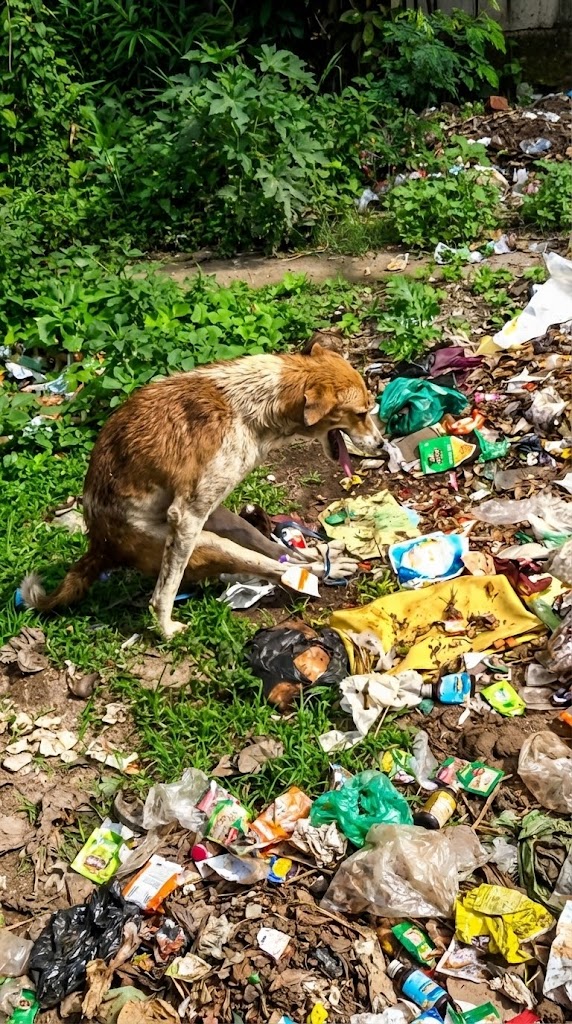
Comfy couldn't stand when he was found. His hind legs showed no response, and someone had loosely tied them together.
The physical injuries were serious enough to make his future uncertain.
But there was something else his rescuers couldn't immediately see.
Behind his unusually quiet behavior was a fear that would eventually make even the gentlest human touch difficult for him to accept.
Comfy needed help to regain his mobility. Yet the very hands that could guide him through rehabilitation were the hands he seemed most afraid of.
Before anyone could help him stand again, they would have to show him that he was safe.
And that would become one of the most important parts of his recovery.
A Dog Who Could No Longer Move His Back Legs
When Comfy was discovered, his physical condition raised immediate concerns.
He had suffered damage to his spine, and his hind legs were completely unresponsive. He couldn't stand or move normally, and the loss of muscle strength added another challenge to his recovery.
The rescuers also noticed something difficult to understand.
His back legs had been loosely bound together.
No one knew why.
Perhaps someone had misunderstood his condition and attempted to help. Perhaps the restraint had been used for another reason. Without knowing his earlier circumstances, the rescuers couldn't determine what had happened.
What they did know was that Comfy needed careful, ongoing attention.
His spinal injury and weakened muscles meant that improvement, if it came, would require a lengthy rehabilitation process.
There was no quick solution.
The team would need to work with him regularly, supporting his body as he gradually attempted movements he could no longer perform independently.
At first, however, Comfy appeared surprisingly easy to care for.
He accepted food without protest. He rarely reacted when people approached. There was little barking, growling, or resistance.
Compared with the challenges of his physical condition, his quiet personality seemed almost reassuring.
The caregivers began calling him Comfy, a name inspired by the calmness he appeared to show.
But they would soon discover that his silence wasn't necessarily a sign of comfort.
When His Quiet Behavior Gave Way to Fear
During Comfy's early care, his lack of resistance seemed to suggest a naturally gentle temperament.
He didn't challenge the people helping him.
He didn't make much noise.
He simply remained still.
As medication began easing his discomfort and he became more aware of his surroundings, however, his behavior changed significantly.
The once-quiet dog started barking when people approached.
He growled when someone moved too close.
At times, he snapped in response to attempts at contact.
For his caregivers, the change revealed that Comfy's initial stillness had likely been connected to shock rather than genuine relaxation.
Now that he was becoming more alert, his fear was much easier to recognize.
His reactions made routine care increasingly difficult.
The team couldn't simply approach him and begin handling his legs. Even necessary contact could cause him to become distressed and defensive.
It would have been easy to focus only on the barking and growling.
But the people caring for Comfy began to recognize something important.
His behavior appeared rooted in fear.
Whatever experiences had shaped his response to human contact, the result was clear: he didn't yet feel secure enough to accept the physical assistance he desperately needed.
And without that assistance, his chances of regaining mobility would remain limited.
The team faced a difficult question.
How could they help a dog recover physically when he was frightened of the very contact that rehabilitation required?
The answer would involve changing the way they approached him.
VIDEO: Paralyzed and Afraid of Human Touch — Watch Comfy's Six-Month Journey From Fear to Running Again
The Care He Needed Was the Care He Feared
Comfy's rehabilitation depended on more than medication and rest.
His weakened hind legs needed movement and repeated therapeutic exercises. His muscles required gradual work, and his body needed support while attempting to recover lost function.
But each attempt to begin that process brought the same obstacle.
Comfy didn't want to be touched.
Approaching too quickly could trigger barking or growling. Trying to handle him before he felt ready could make him retreat into defensive behavior.
The caregivers couldn't ignore his physical condition.
But they also couldn't build a successful rehabilitation routine around constant fear.
So they began changing their priorities.
Instead of concentrating immediately on what Comfy's legs couldn't do, they started paying closer attention to what he could tolerate emotionally.
Their first goal became simple.
Help him feel safe in the presence of people.
That meant slowing down.
They spent time sitting quietly near him without demanding interaction. They spoke softly and allowed him to become familiar with their presence.
Food was offered without immediately reaching toward him.
When he needed distance, they respected it.
The change might have looked small from the outside. After all, sitting near a frightened dog doesn't resemble the physical exercises usually associated with rehabilitation.
But for Comfy, those quiet interactions mattered.
They gave him opportunities to experience human company without the immediate expectation of being handled.
There was no pressure to accept a touch.
No demand that he respond affectionately.
No expectation that he would suddenly become comfortable simply because the people around him meant well.
The team understood that his trust couldn't be forced.
It had to develop gradually, through repeated experiences in which nothing frightening happened.
And although the progress was difficult to measure at first, the caregivers continued.
The Smallest Movement Became a Sign of Hope
Comfy's emotional recovery didn't announce itself through one dramatic transformation.
It appeared in small changes.
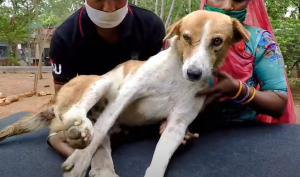
One of the earliest encouraging moments came when his tail moved.
It was only a slight flick.
For a dog whose body had been so unresponsive, even that modest movement carried significance.
It gave his caregivers another reason to keep working patiently with him.
Changes in his behavior followed.
The growling that had once accompanied attempts to approach him began to ease.
His barking became less frequent.
Instead of reacting defensively to every nearby person, he sometimes watched with a more curious, observant expression.
He still needed space.
He still had difficult moments.
But his reactions were no longer entirely shaped by the need to keep people away.
Then came another meaningful sign.
Comfy began leaning slightly toward a person nearby.
It wasn't a dramatic gesture.
He didn't suddenly become a dog who welcomed every embrace or touch.
Yet the movement suggested that he was beginning to approach human companionship differently.
For so long, the presence of a person had seemed to bring uncertainty.
Now, at least occasionally, Comfy was choosing to move closer.
That distinction mattered.
Rather than having contact imposed on him, he was beginning to show a willingness to accept it.
The rehabilitation team had been trying to create exactly that kind of change.
They didn't need Comfy to trust everyone immediately.
They needed him to feel safe enough to take the next small step.
And gradually, he was beginning to do just that.
Learning to Trust the Hands That Helped Him
As Comfy became more comfortable with his caregivers, the team could begin focusing more directly on his physical rehabilitation.
The process was demanding.
His hind legs had been inactive, and his muscles had lost strength.
Recovering movement wasn't something his body could accomplish simply because he was finally less afraid.
He still needed repeated exercises, assistance, and time.
Some therapy sessions were difficult.
Comfy became tired.
There were days when he resisted participating, and other moments when frustration interrupted his progress.
His recovery didn't follow a perfectly steady path.
One encouraging session didn't mean that the next would be easy.
But there was a meaningful difference between these challenges and the difficulties of his earliest days.
Comfy was gradually becoming more willing to accept help.
The hands that once triggered defensive reactions were now part of his rehabilitation routine.
As trust developed, the caregivers could work with him more effectively.
They supported his movements while helping his weakened muscles begin working again.
Every small improvement mattered because standing and walking required more than the return of a single movement.
His body needed strength.
His legs needed practice.
And Comfy needed the confidence to keep participating, even when the exercises were tiring.
There was no way to rush those steps without risking the trust the team had worked so carefully to establish.
So they continued at a pace he could manage.
When he struggled, progress meant respecting the difficulty rather than treating it as failure.
When he responded positively, it meant giving him another opportunity to build on that success.
Over time, his relationship with the people helping him became an important part of the physical work itself.
The dog who had once feared their approach was beginning to rely on their support.
That change didn't erase everything he had experienced.
But it made the next stage of recovery possible.
Six Months Later, Comfy Took His Own Steps
Nearly six months after Comfy first arrived unable to stand, his long rehabilitation began showing a remarkable result.
He took a step.
It wasn't smooth or effortless.
His movement was unsteady, and the strength and coordination required for walking were still developing.
But after months of being unable to use his hind legs normally, Comfy was moving forward.
The importance of that moment went far beyond the distance he covered.
For the caregivers, it represented months of physical work and patient relationship-building.
They had seen how frightened he became when someone tried to touch him.
They had watched him struggle through rehabilitation.
They had learned that his emotional readiness mattered just as much as the exercises themselves.
Now, those efforts were beginning to come together.
Comfy's recovery continued beyond his first steps.
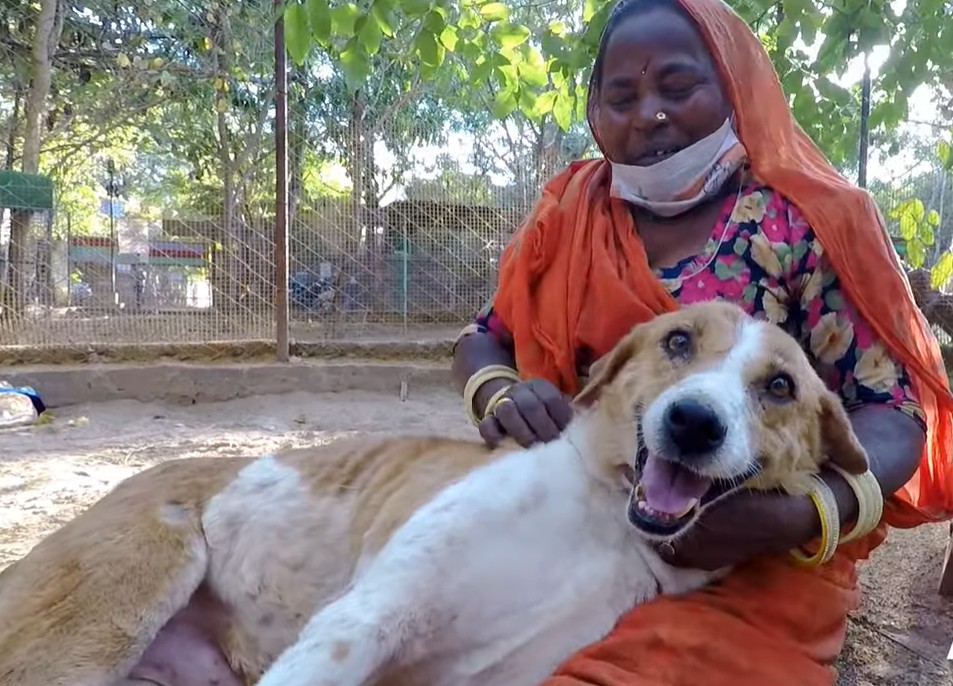
Gradually, the dog who had once been unable to stand regained enough mobility to run.
It was an extraordinary contrast with his condition when he was found.
His hind legs, once completely unresponsive, were now carrying him forward.
The team even gave him another affectionate nickname.
The Joyful Jogger.
It reflected the lively movement and enthusiasm that had become part of his new chapter.
Comfy wasn't merely tolerating assistance anymore.
He was enjoying the freedom of movement that had once seemed so far away.
More Than Learning to Walk Again
Comfy's transformation is memorable because the challenges he faced were never limited to his spine or hind legs.
His physical condition required sustained rehabilitation.
But his fear of human contact created another barrier that couldn't be solved with exercises alone.
He needed time to understand that the people caring for him weren't going to disregard his discomfort.
He needed opportunities to choose when to approach.
He needed gentle, consistent interactions that allowed trust to grow without pressure.
For his caregivers, this meant accepting that some of the most meaningful progress wouldn't be measured in steps.
Sometimes progress was a quieter response when someone entered his space.
Sometimes it was the absence of a growl.
Sometimes it was a small movement of his tail.
And sometimes it was simply his willingness to lean toward a person rather than pull away.
Those moments helped create the conditions in which physical rehabilitation could succeed.
Comfy's story also offers an important reminder about frightened rescue animals.
A dog that barks, growls, or resists contact isn't necessarily unwilling to receive kindness.
Those behaviors can reflect fear, discomfort, or uncertainty.
Responding with patience can make a meaningful difference, particularly when an animal must learn to accept necessary care.
In Comfy's case, that patience became part of a remarkable recovery.
The dog who was found unable to use his back legs eventually regained the ability to run.
The dog who once reacted fearfully to approaching hands gradually learned to accept their support.
And the name that had originally described his misleading stillness came to represent something more hopeful.
Real comfort.
Not the silence of a frightened animal who cannot respond, but the growing confidence of one who finally feels safe enough to move forward.
Comfy's journey took nearly six months to reach those first unforgettable steps.
His story shows why the quietest acts of care can sometimes be just as important as the most visible achievements.
Because before Comfy could enjoy running again, he first needed to learn that a helping hand didn't always have to be something to fear.
And thanks to the patience of those who stayed beside him, he was given the opportunity to learn both.


