
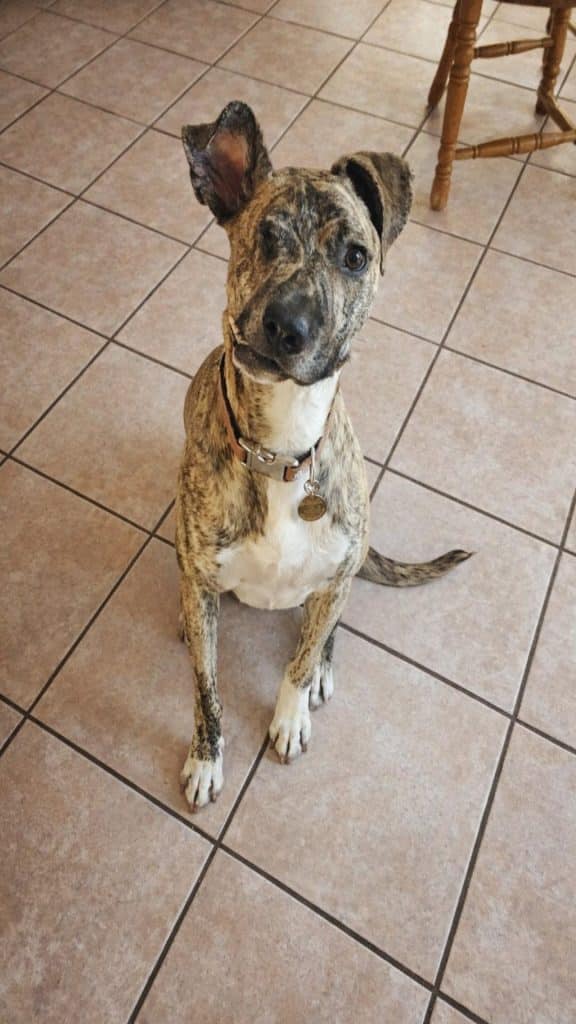
The little puppy could barely move his jaw, yet his tail still wagged whenever someone approached him with kindness.
His name was Squish.
At only four months old, he should have been discovering the world, enjoying his meals, and learning the simple pleasures of being a puppy.
Instead, he was facing a medical crisis that threatened his young life.
His face was unusually swollen. His small body was underweight, and eating had become an exhausting struggle.
But there was something about Squish that made his situation especially difficult for the people trying to help him.
Even while he was uncomfortable and growing weaker, he remained remarkably affectionate.
He welcomed gentle attention.
He leaned toward the hands that comforted him.
And he offered the kind of awkward little puppy kisses that made it impossible to overlook the personality behind his injuries.
Before long, the question was no longer simply what was wrong with Squish.
It was whether anyone could find a way to give him the life he deserved.
A Small Puppy With a Problem No One Could Explain
Squish arrived at a county animal shelter in Ohio in a condition that immediately concerned the staff.
He was far too thin for a growing puppy, and the swelling around his face suggested that something serious was happening.
Most troubling was the limited movement of his jaw.
For a healthy puppy, eating is an ordinary part of every day. It provides the energy needed to grow, play, and recover from illness.
For Squish, even that basic activity had become difficult.
The shelter staff could see that he wanted attention and responded warmly to people. His affectionate behavior made a striking contrast with his physical condition.
He did not withdraw from every interaction.
He still wagged his tail.
He still seemed eager to connect with the people around him.
Yet affection alone could not solve the problem threatening his health.
He needed answers, and he needed them quickly.
Veterinary professionals initially considered the possibility that an infection or another treatable condition was responsible for the swelling and difficulty moving his mouth.
Antibiotics were tried in the hope that his condition would improve.
But the expected improvement never came.
The swelling and restricted jaw movement remained a serious concern, and Squish continued to lose strength.
Each unsuccessful attempt to help him made his future more uncertain.
The people caring for him were confronted with a painful reality: without an effective treatment, this young puppy might not survive.
When the Usual Treatment Wasn't Enough
There is a particular helplessness that comes with watching an animal struggle when the reason is still unknown.
Squish could not explain what had happened to him.
He could not tell anyone where the discomfort was coming from or why opening his mouth was so difficult.
All the veterinary team could do was examine the evidence in front of them and try to find an explanation.
The first approach had not worked.
His condition was worsening rather than improving.
Eating demanded more energy than his weakened body could comfortably manage, leaving him increasingly vulnerable.
The possibility of euthanasia entered the discussion as his suffering continued and his prospects appeared limited.
It was not a decision anyone wanted to make lightly.
Squish was still a young puppy with an affectionate personality. His response to human kindness made it especially hard to accept that there might be nothing more anyone could do.
Rather than reaching a final decision without understanding his condition, the veterinary team pursued another diagnostic step.
They decided to take X-rays.
That choice would reveal something important that the earlier treatment had not addressed.
It would also change the direction of Squish's story.
VIDEO: Squish Could Barely Open His Mouth — See How One Decision Changed His Future
The X-Rays Revealed Why Squish Could Not Eat
The images provided an explanation that was both troubling and significant.
Squish was not simply dealing with the infection that had initially been suspected.
He had suffered serious injuries to his skull and upper jaw.
The fractures appeared to be several weeks old, and they had not received the treatment they needed when they occurred.
As his body attempted to heal, scar tissue had developed around the damaged area.
That tissue had become so restrictive that his jaw could barely move.
Suddenly, the difficulty eating made sense.
Squish had not been unwilling to eat.
The damage to his jaw had prevented him from opening his mouth properly.
For a puppy already weakened by inadequate nutrition, this was a particularly serious situation.
The discovery also helped explain why the antibiotics had failed to produce the hoped-for improvement.
The primary problem was structural damage, not simply an infection that medication could resolve.
Although the findings were alarming, identifying the cause meant that the veterinary team could finally consider a more specific treatment.
For the first time, there was a possible path forward.
But it was not a simple one.
A Difficult Choice With No Guaranteed Outcome
Surgery offered Squish a chance, but the procedure would be complicated.
His injuries involved delicate areas of the face, and his weakened condition increased the concern surrounding any major operation.
The treatment would also be expensive.
There were no guarantees that he would recover completely.
And even if he survived the procedure, his future as an adoptable dog remained uncertain.
These were difficult considerations for everyone involved in his care.
Saving an animal is not always a straightforward matter of providing medicine and waiting for improvement.
Sometimes, the available treatment carries substantial risks of its own.
Squish's case required a decision about whether to pursue an operation that might restore his ability to eat and live more comfortably.
The veterinary team understood the seriousness of what lay ahead.
Meanwhile, Squish remained the same gentle puppy who had captured their attention from the beginning.
His injuries had changed the appearance of his face, but they had not taken away his affectionate nature.
And someone who had spent time around him was beginning to see him as much more than a patient facing an uncertain outcome.
Her name was Danielle.
One Quiet Night Created an Unexpected Bond
Danielle was a young veterinary intern who became involved in Squish's care.
At a time when his future was still uncertain, she asked for permission to bring him home for a night.
The intention was simple.
She wanted the fragile puppy to experience comfort and a peaceful place to rest.
It was a small decision compared with the medical challenges ahead, but it became one of the most meaningful moments in their relationship.
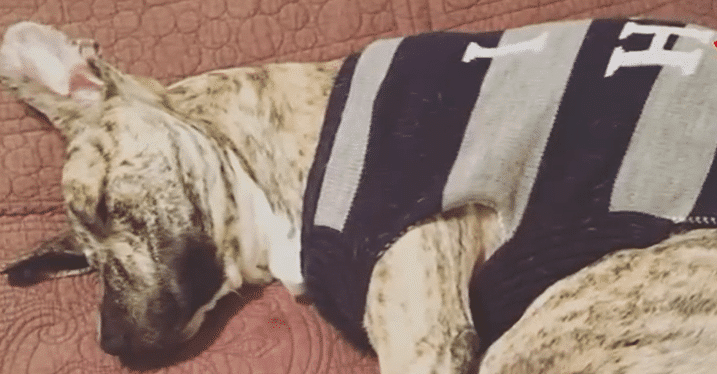
Squish was wrapped in blankets and held close.
Away from the immediate pressures surrounding his treatment, he appeared to relax completely.
Then he slept deeply.
For a puppy who had spent so much of his young life struggling with a painful physical condition, that peaceful rest was deeply moving.
There was no dramatic transformation that night.
His injuries were still there.
He still needed medical treatment.
Nothing about the seriousness of his condition had disappeared.
But Danielle had seen how comfortable he could become when he felt safe and cared for.
The experience changed the way she thought about his future.
What began as an offer of temporary comfort became a much deeper commitment.
She did not want his story to end before he had been given the chance to recover.
Danielle decided that she was not ready to give up on Squish.
Her connection with him became part of the reason his journey continued toward the difficult treatment he needed.
The Surgery That Changed His Everyday Life
The operation was far from routine.
To address the damage affecting Squish's face and jaw, surgeons had to remove a damaged tooth, part of his jaw, and one of his eyes.
These were significant procedures for such a young puppy.
The goal was not to restore his original appearance.
It was to relieve the physical restrictions and suffering that had prevented him from living comfortably.
Squish had already endured weeks of difficulty with something as essential as eating.
Without intervention, that problem threatened to continue weakening him.
The surgical team faced the challenge of treating severe, previously untreated injuries in a patient whose body had already been placed under considerable strain.
When Squish came through the operation, the most important change was not something that could be measured by appearance alone.
He could open his mouth.
And he could eat.
For most dogs, these abilities are so ordinary that no one gives them a second thought.
For Squish, they represented an extraordinary change in his quality of life.
The puppy who had struggled with every meal could finally begin to receive nourishment without the same physical restriction.
It was a turning point, although it was not the end of his recovery.
His body still needed time.
He had to regain strength.
And he had to adjust to the changes brought about by the operation.
The surgery had created an opportunity for a different future.
Now Squish needed the time and care to grow into it.
A Tennis Ball Became a Symbol of Everything He Had Overcome
Recovery did not happen all at once.
Squish's progress came gradually as he regained the strength that had been missing during the worst period of his illness.
The improvement was meaningful because of how limited his life had been before treatment.
A puppy who could not open his mouth properly had been unable to enjoy many of the ordinary activities associated with growing up.
Food had been a challenge.
His body had been weak.
The future had looked uncertain.
As his recovery progressed, those limitations began to change.
Then came a moment that might have seemed completely unremarkable to someone unfamiliar with his history.
Squish picked up a tennis ball.
There was nothing complicated about the action.
He simply used his mouth to hold a toy.
But this was the same puppy whose jaw had once been so restricted that eating was almost impossible.
The tennis ball became a visible reminder of how far he had come.
It represented more than play.
It showed that Squish could begin enjoying ordinary puppy experiences that his injuries had previously prevented.
There is something especially moving about this kind of recovery.
The most meaningful achievements are not always dramatic.
Sometimes, they are the small things healthy animals do every day without anyone noticing.
A comfortable meal.
A moment of play.
The freedom to pick up a favorite toy.
For Squish, those simple experiences had become precious milestones.
The Puppy Danielle Couldn't Imagine Leaving Behind
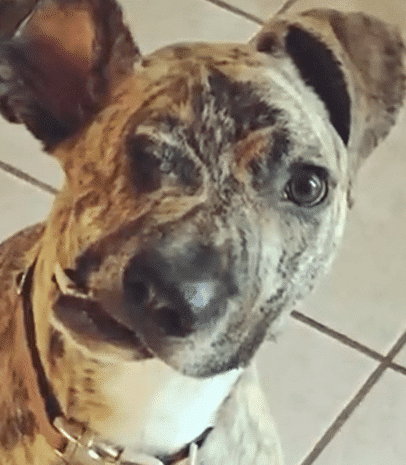
By the time Squish had recovered, the bond between him and Danielle had grown into something lasting.
She had been there during one of the most uncertain periods of his life.
She had taken him home when his future was unclear and offered him a peaceful place to rest.
And she had witnessed the difference that treatment and patient care could make.
When the time came to decide where Squish would belong, Danielle chose to adopt him.
The decision carried additional emotional meaning.
Only days before, Danielle had experienced the loss of her own dog.
She was grieving a companion who had been part of her life.
Squish entered her world during that difficult period.
He could not replace the dog she had lost, and his adoption did not erase her grief.
But caring for him offered the beginning of a new relationship.
Danielle had helped give Squish a chance to survive.
In return, he became a new companion at a time when she was coping with loss.
Their connection had begun with uncertainty and a single night of comfort.
It developed into a permanent home.
For Squish, adoption meant that the kindness he had experienced during his treatment would continue beyond the veterinary setting.
He would no longer be a fragile shelter puppy with an unknown future.
He had someone who wanted him, cared for him, and was prepared to share everyday life with him.
His Scars Remain, but His Life Looks Different Now
Squish's recovery did not erase the physical evidence of what he had experienced.
His appearance remains different because of his earlier injuries and the surgery that helped him survive.
But those differences no longer define the limits of his life.
He can eat.
He can run.
He can play.
And he can enjoy the ordinary experiences that once seemed so far beyond his reach.
The same puppy who arrived at an Ohio shelter severely underweight and unable to move his jaw properly now has the opportunity to live as a loved companion.
What makes his journey memorable is not simply that he survived a difficult operation.
It is the series of compassionate choices that made his recovery possible.
The shelter staff recognized that his condition required attention.
The veterinary team continued searching for an explanation when the initial treatment failed.
Diagnostic imaging uncovered the real problem.
Surgeons took on the challenge of treating his serious injuries.
And Danielle saw a future for him even when that future was far from certain.
Each decision mattered.
Without the X-rays, the underlying damage might have remained unexplained.
Without appropriate surgery, the restriction affecting his jaw would have continued to interfere with a basic need.
And without someone willing to offer him a permanent home, his recovery would have led to a different kind of uncertainty.
Squish's story is also a reminder that a dog's ability to give and receive affection does not depend on having a perfect appearance.
Long before he could eat comfortably or play with a tennis ball, he was already reaching toward people with trust and gentleness.
His wagging tail and affectionate nature were part of the reason his caregivers found him so difficult to forget.
Today, the most meaningful part of his story is the life he has been able to build after recovery.
A life with meals he can enjoy.
Toys he can carry.
Room to play.
And a person who chose to make him part of her family.
Squish will always carry visible signs of the difficult beginning he endured.
But those signs exist alongside something much more important: the everyday happiness he was finally given the chance to experience.
His journey illustrates what can happen when medical care, patience, and compassion come together.
Sometimes, a second chance begins not with certainty, but with someone deciding that an animal's future is still worth fighting for.
For Squish, that decision helped turn a life of pain and limitation into one filled with companionship, comfort, and play.
And for Danielle, the little puppy she once brought home for a single night became family.


